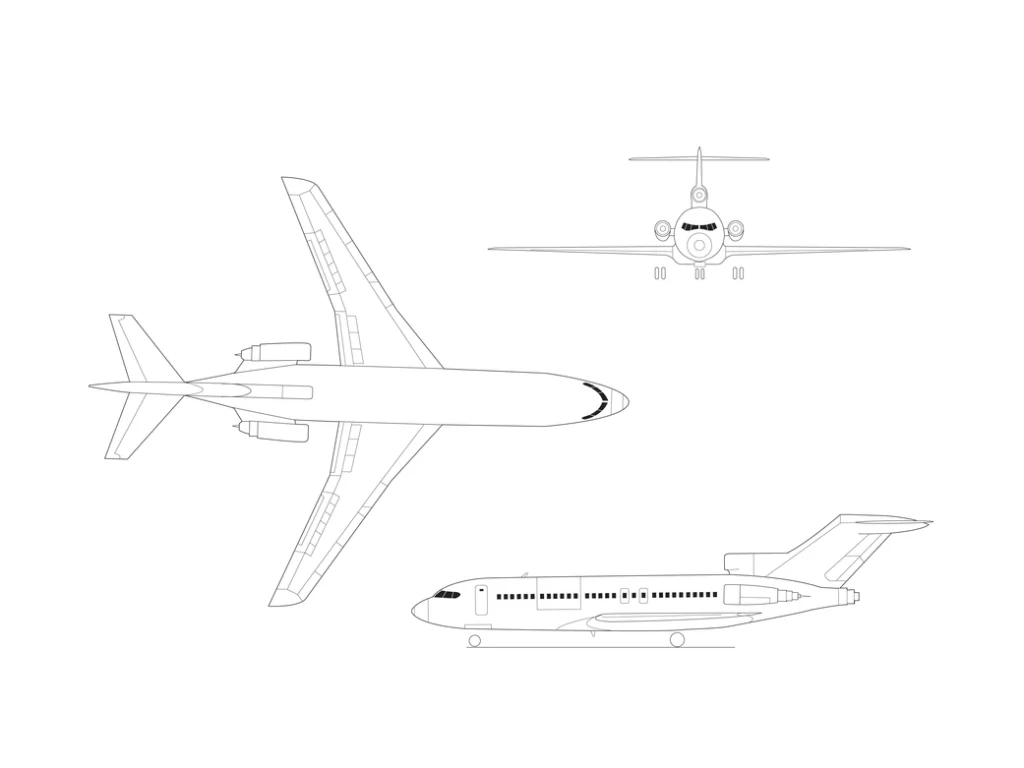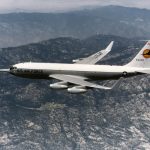
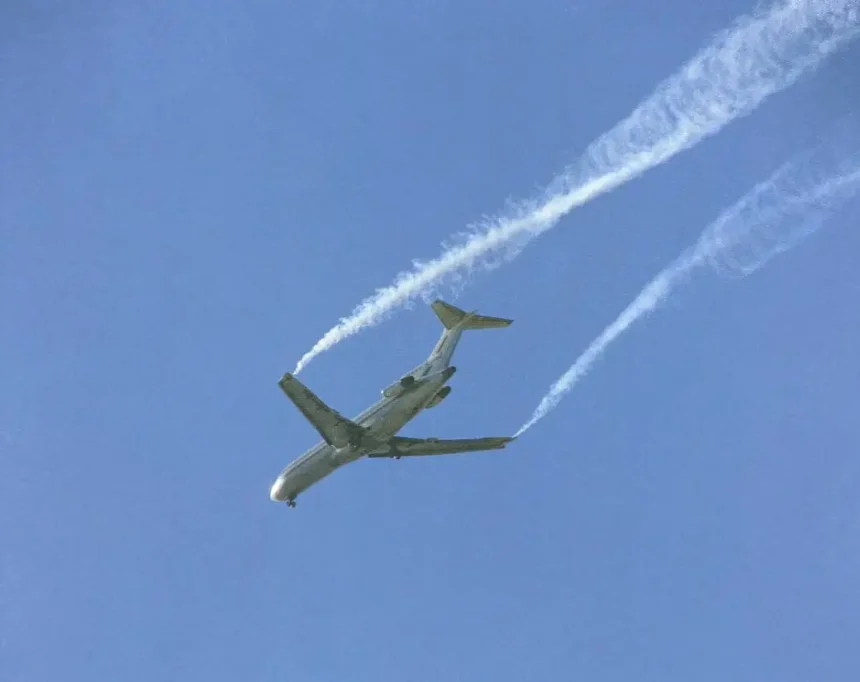

In the early 1970s, the growth of large jet transport aircraft introduced a new operational problem to the aviation world. Smaller aircraft flying behind these jets were encountering strong disturbances in the air caused by wake vortices generated at the wingtips. To study this problem, a series of flight tests was conducted using the Boeing 727 at the NASA Flight Research Center, later known as the Dryden Flight Research Center and now Armstrong Flight Research Center. Several tests were carried out between 1973 and 1974 jointly by NASA and the Federal Aviation Administration to understand how wake vortices behave during landing approaches and how they affect following aircraft. At the time, new large jet aircraft were entering service in large numbers, and reports showed that smaller aircraft could experience sudden rolling motion, known as an “upset,” when flying into the wake of a larger aircraft. The scientists wanted to know safe separation distances during approach and landing. The Boeing 727 used in the program was modified with smoke generators to make the wake vortices visible. In this manner, the engineers could track the airflow behind the aircraft. Several smaller aircraft were used to measure the effects of the wake, including the Learjet 23 and the Piper PA-30 Twin Comanche. In some cases, even a Lockheed F-104 Starfighter was used.
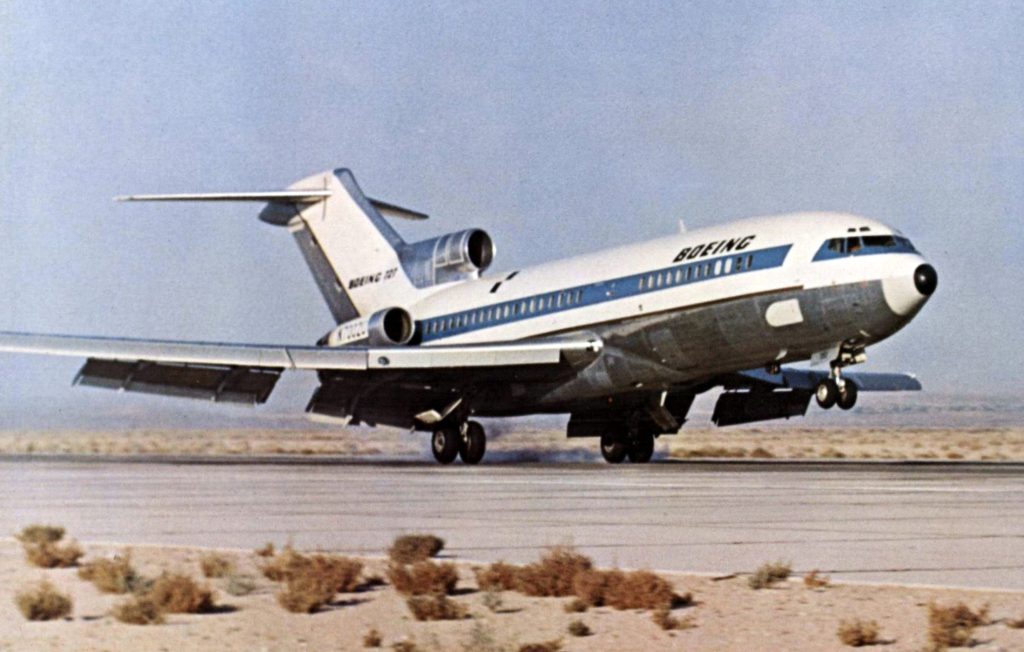
The smaller aircraft were equipped with instruments to record motion and control response while flying through the wake. The wake location was measured using ground-based photo-theodolites, which tracked the position of the smoke trails in space. The vortex location during landing approach was measured, and the effect of the wing vortex was studied on two different airport landing glide slopes. The first was a standard instrument landing system approach with a glide slope of about 3 degrees. The second was a steeper, two-segment approach with a glide slope of about 6 degrees. The two approaches helped define vortex drift and dissipation near the runway under different meteorological conditions and glide slopes. The tests showed that the vortices generated by the Boeing 727 tended to sink below the flight path after formation, and measurements indicated that they descended to about 300 feet below the aircraft’s path during approach. As a result, the clean wing produced a strong, concentrated vortex, but as the flaps were lowered, the vortex system became more diffuse, according to NASA. Such a change in vortex structure was important because landing configurations were used during approach, when the separation between aircraft was reduced. The chase aircraft were flown into the wake of the Boeing 727 to measure its effects, and they provided direct data on roll motion and control response. The results showed that, at a given separation distance, there was no major difference in the severity of upsets between the standard approach and the steeper approach.
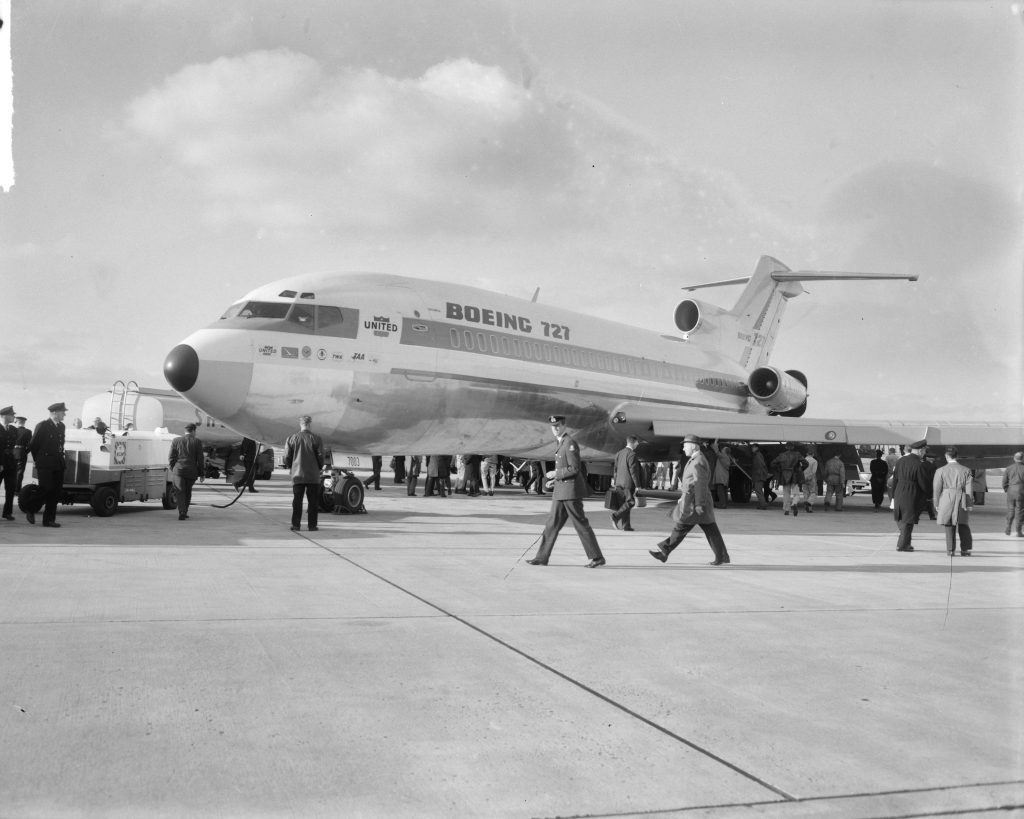
However, the tests confirmed that the wake could produce powerful rolling forces on light aircraft weighing less than 12,500 pounds and that pilots needed sufficient control authority to counter them. Data from the flights indicated that a separation distance of about 4.5 nautical miles (nearly 5 miles) was required for light aircraft to maintain roll control during parallel encounters with the wake of a Boeing 727 in landing configuration. The smoke visualization made it possible to observe how vortices moved sideways and downward after being generated, helping define how long they remain dangerous under different conditions. The Boeing 727 wake vortex tests provided detailed flight data on a problem that could not be fully understood through theory or ground testing alone. The results were used to improve separation standards between aircraft during approach and landing. They also helped pilots and controllers better understand how wake turbulence behaves in real conditions. The program showed that aircraft configuration, especially flap settings, played an important role in vortex strength and structure. In the Flight Test Files series, the Boeing 727 provided data on wake vortex formation and its effects. It explained how large transport aircraft influence the airspace behind them and how that influence affects smaller aircraft. The findings from these tests are still a part of modern wake turbulence spacing rules used in the aviation world today. Read more Flight Test Files articles HERE.