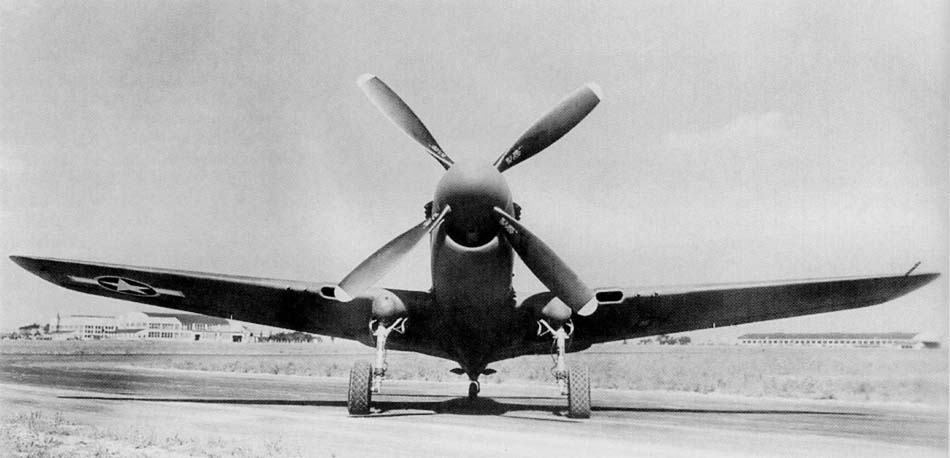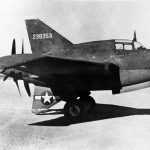
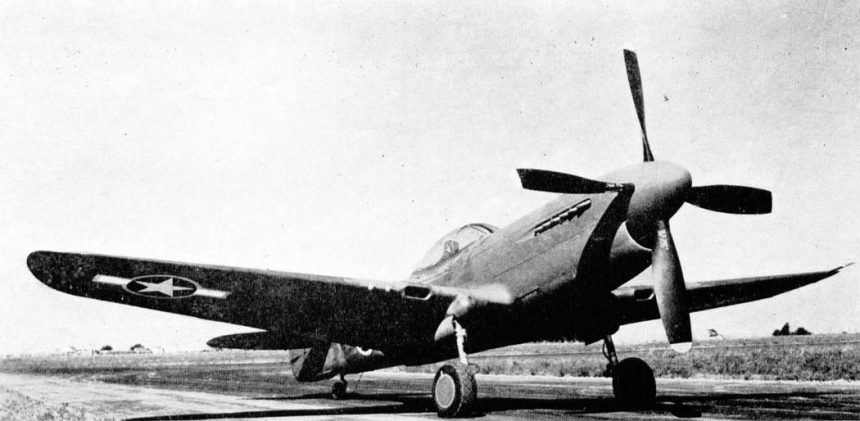

During WWII, Curtiss was developing several aircraft, but its last successful model, the P-40 Warhawk, was introduced in 1938, and the newer models, such as the XP-46, failed to enter production. However, there was a model that generated some interest, called the Curtiss XP-40 Q. The Curtiss XP-40 Q development started in 1943 with the intention of making the P-40 perform better than the newer fighters. The improved performance of the Curtiss XP-40 Q was expected to justify its continued production. Its resemblance to previous P-40s would help avoid production delays. According to the Old Machine Press, three prototypes of the XP-40Q were built. The first prototype, XP-40 Q-1, was developed in 1943. The Curtiss XP-40 Q-1 had the wings and canopy of a standard P-40 and was painted olive drab. Its nose was lengthened to fit a V-1710-101 (F27R) engine, which produced 1,325 hp at 3,200 rpm for takeoff and 1,500 hp at 6,000 ft. The engine’s air intake was located above the cowling. Similar to the XP-40K, the water and oil radiators were moved from under the engine to the centre section of the fuselage. The Curtiss XP-40 Q-1 was 35.4 feet long, with a wingspan of 37.4 feet. According to the Old Machine Press, the XP-40 Q-1 had its first flight on June 13, 1943, at the Curtiss factory airfield in Buffalo, New York.
Design of Curtiss XP-40 Q
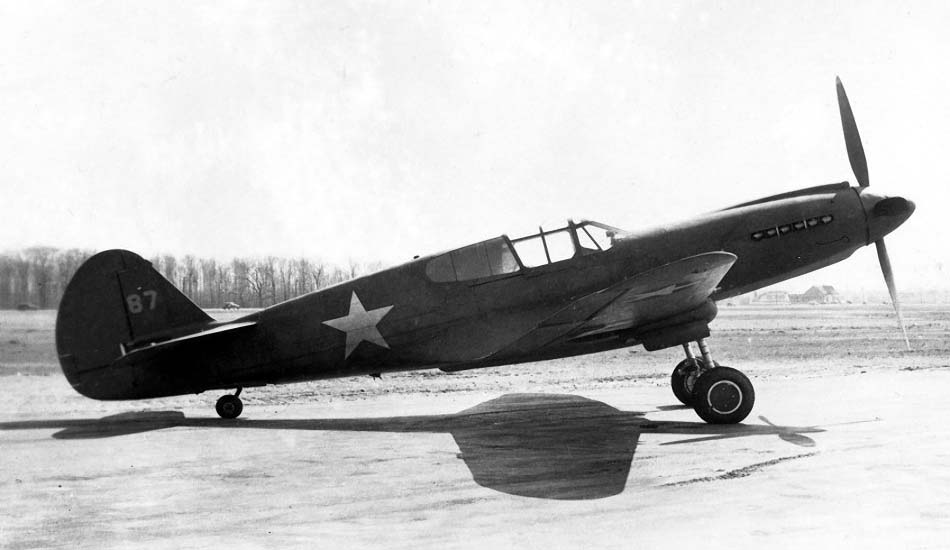
By November 1943, the Curtiss XP-40 Q-1 was modified and renamed the XP-40 Q-2. The rear fuselage was shortened, and a teardrop-shaped cockpit canopy was added. Engine cooling radiators were placed in the wings behind the main landing gear. The XP-40 Q-2 fighter prototype retained the V-1710-101 (F27R) engine and showed great control and visibility. Captain Gustav Lundquist tested the XP-40 Q-2, called it the best in the P-40 family, and suggested more flight tests. In December 1943, the US Army Air Forces Air Material Command noted that the Curtiss XP-40 Q-2 performed better than earlier P-40 models and recommended building two more prototypes. The XP-40 Q-2 aircraft was delivered to Eglin Field, Florida, in January 1944. In March, it was sent back to the Curtiss plant in Buffalo, New York, for flight tests. At that time, the wingtips of the Curtiss XP-40 Q-2 had been shortened by about one foot, and a new V-1710-121 (F28R) engine was installed. This water-injected engine produced 1,425 horsepower at 3,200 rpm during takeoff and 1,800 horsepower at an altitude of 20,000 feet. Flight tests in April 1944 showed that the Curtiss XP-40 Q-2 outperformed other P-40 variants and was a strong aircraft overall. When the engine was set to 3,000 rpm with water injection, the aircraft reached 420 mph at 15,000 feet. At 3,200 rpm with water injection, it reached a top speed of 422 mph at 20,500 feet.
The Cancellation
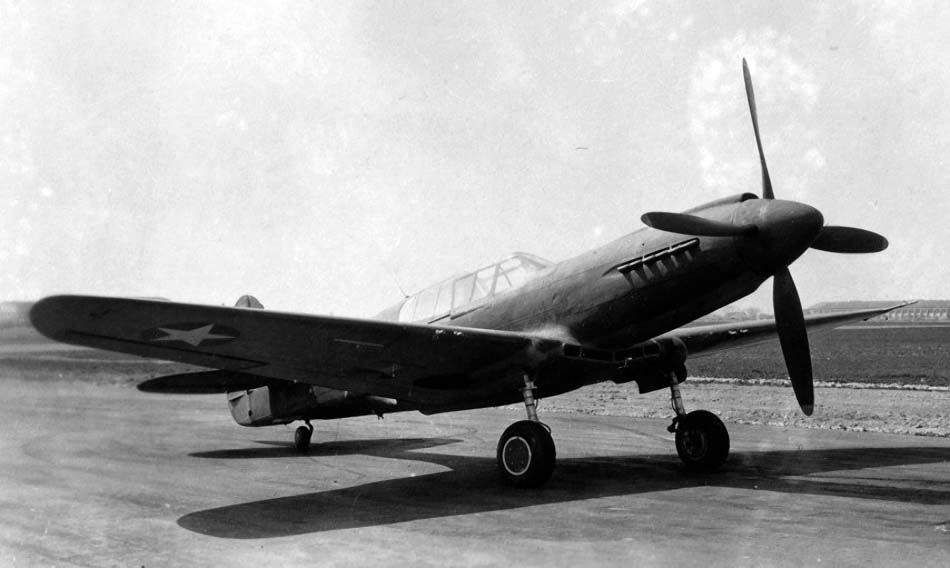
In combat mode, the Curtiss XP-40 Q-2 reached a speed of 407 mph at 24,000 feet. On March 24, 1944, the nose of an XP-40 Q-2 aircraft was damaged during a test flight. The plane was repaired and flew to Wright Field in Ohio in mid-1944. On July 31, 1944, the aircraft was damaged again when the pilot made a sharp turn while landing. It is unclear if the aircraft was repaired again or if the damage was too severe to fix. Later, two more prototypes, the Curtiss XP-40 Q-2A and the XP-40 Q-3, were developed. In April 1944, the US Army Air Forces received the last XP-40 Q-3 fighter prototype. The XP-40 Q-2A spent most of its testing on the ground for repairs. As a result, the US Army Air Forces moved on to the next aircraft, the Curtiss XP-40 Q-3, and transferred the XP-40 Q-2A to Allison for engine testing. During a forced landing after an engine failure, the Q-3 suffered moderate damage. However, by this time, the Army Air Forces already had fighter planes that outperformed the XP-40Q. Because of this, the service decided not to rebuild the Curtiss XP-40 Q-3 since the Curtiss P-40Q was no longer needed. In March 1946, the XP-40 Q-2A was classified as surplus by the US Army Air Forces. Later, as the jet age arrived, the US Air Force never looked back and went on to better models. In the Grounded Dreams series, the Curtiss XP-40 Q was an unlucky aircraft. It arrived at the right time, but trials made it obsolete as the aviation world moved ahead quickly. Read more Grounded Dreams articles HERE.