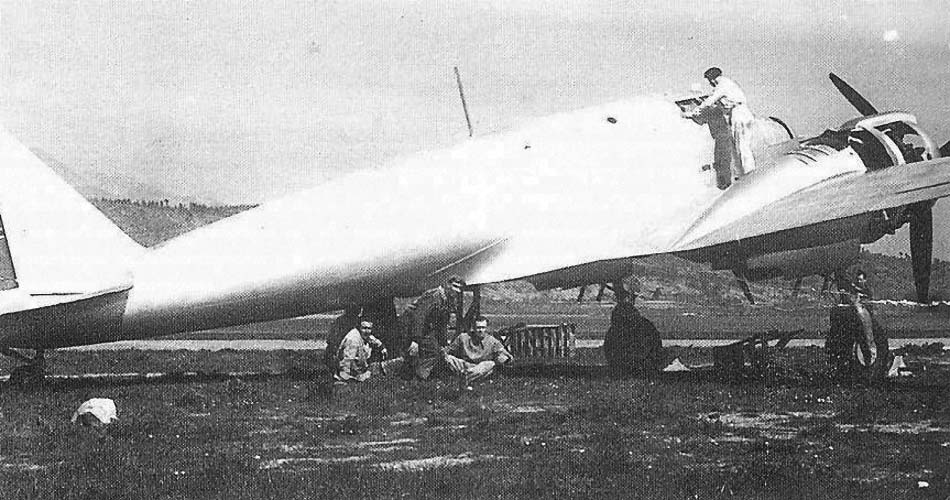
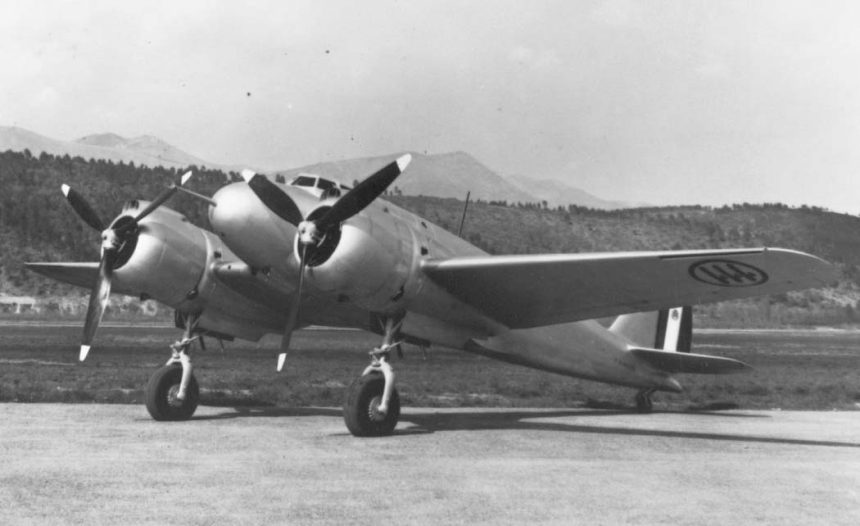

During the 1930s, Mussolini’s Italian government was using aviation to boost the prestige of its regime. It had set world speed and range records and was looking for an altitude record. In May 1937, the Fédération Aéronautique Internationale (FAI) announced that Colonel Mario Pezzi had set a record by flying a Caproni Ca.161 biplane to an altitude of 56,000 feet. Seeing this success, the Italian Royal Air Force asked Piaggio to design a high-altitude bomber the next year. The bomber also had to be long-range, have two engines, be able to carry three people, and be able to fly at about 32,800 feet. Piaggio responded with an experimental aircraft called the Piaggio P.111.
Design of Piaggio P.111
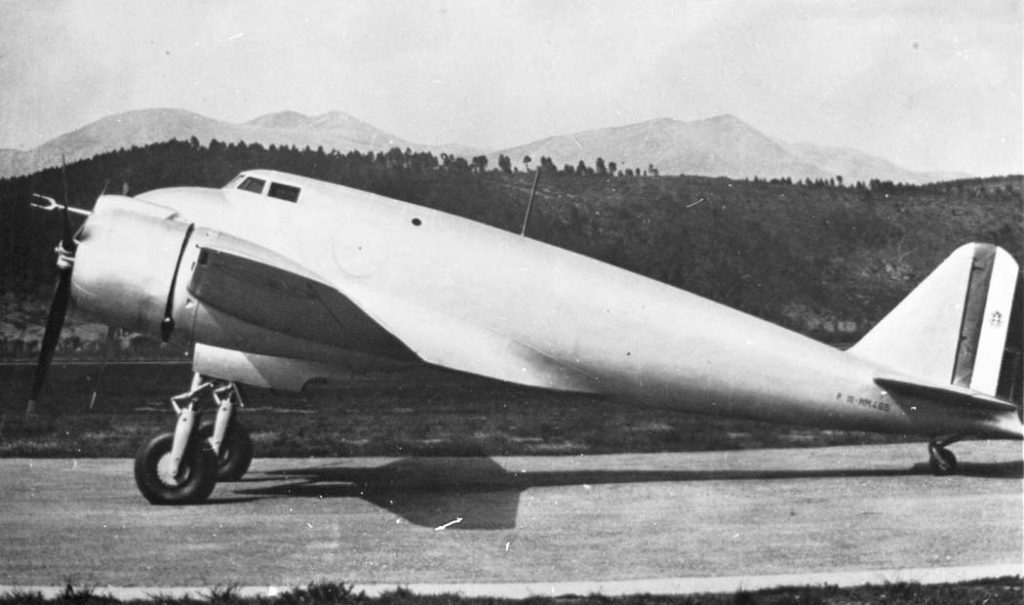
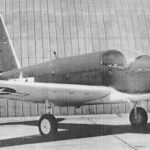
The Piaggio P.111 was made mostly of metal, except for its control surfaces, which were covered in fabric on a metal frame. It also included retractable tailwheel landing gear. The wings had fixed slotted slats near the tips to improve performance. The Piaggio P.111 was powered by two new 18-cylinder, twin-row, air-cooled Piaggio P.XII RC Tornado engines, each producing 1,000 horsepower. The engines drove three-bladed Piaggio P.4003 variable-pitch propellers. With a crew capacity of three, the aircraft was 40.8 feet long, 12 feet high, with a wingspan of 56.9 feet and a wing area of 430 square feet. The empty weight was 11,550 pounds, the gross weight was 16,698 pounds, and the maximum takeoff weight was 16,733 pounds. The maximum speed of the Piaggio P.111 was envisioned at 357 mph at 33,000 feet, with a cruise speed of 279 mph, a range of 1,031 miles, and a service ceiling of 39,400 feet. While the Piaggio P.111 prototype was being built, the Italian Royal Air Force decided to use it as a high-altitude research aircraft instead of a bomber prototype.
The Cancellation
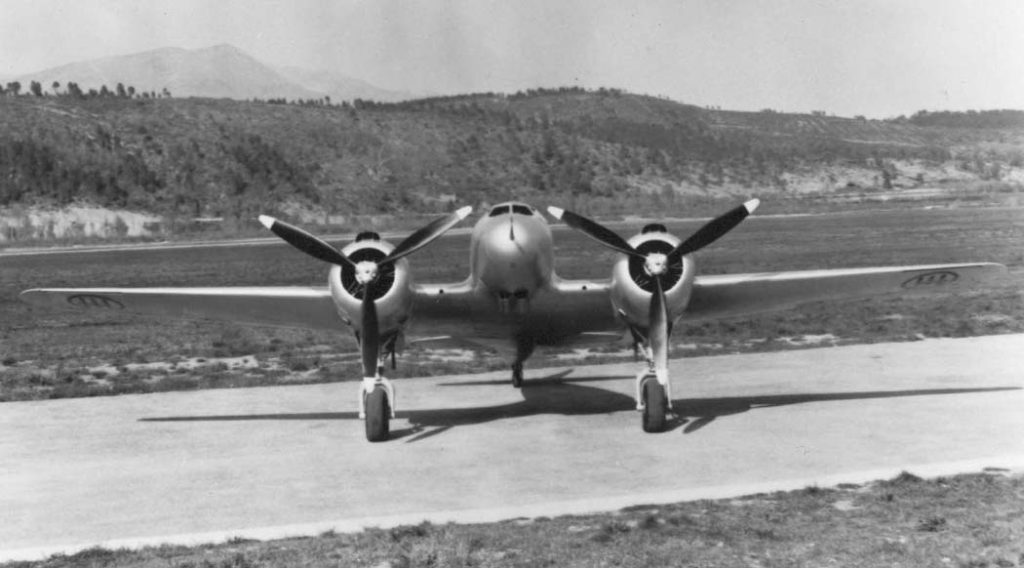
In August 1940, the Piaggio P.111 program began receiving funding from the Directorate General of Aeronautical Engineering, with support from the Italian Air Force Command and other organizations. The prototype was finished in late 1940, and it made its first flight on April 9, 1941, at Villanova d’Albegna airfield, flown by test pilot Niccolò Lana. The test flights went well and provided valuable information, but this information was not used during WWII. Later, the Piaggio P.111 prototype, with military registry number MM465, was used to test a high-altitude version of the Piaggio P.XI RC 60/72 engine. This engine had less power than the P.XII. The prototype completed 110 test flights before the country faced military and economic collapse. In early 1943, the military removed the prototype from its inventory and returned it to the manufacturer. The manufacturer also found no use for it and scrapped it that spring. In the Grounded Dreams series, despite the Piaggio P.111 being a good aircraft, Italian aircraft designers could only use the knowledge gained from testing it. After 1945, Piaggio faced many challenges due to a lack of aircraft orders. The company found a way to survive by starting mass production of the popular Vespa scooter in 1946, and it still makes it today. Read more Grounded Dreams articles HERE.