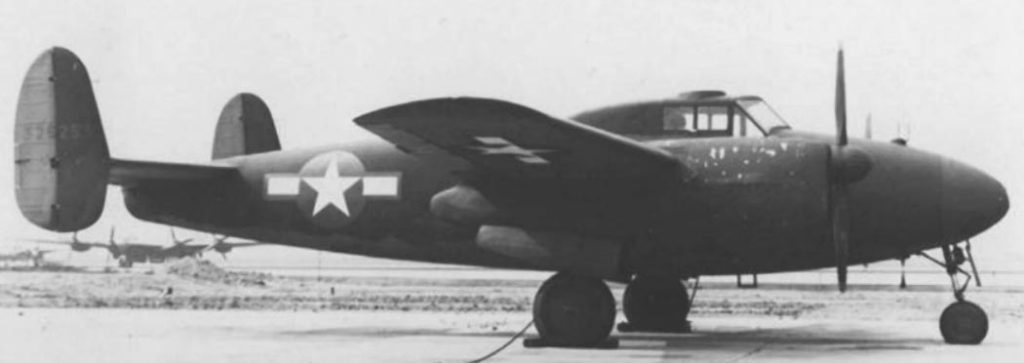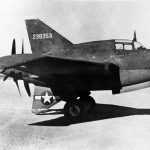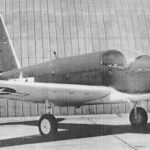
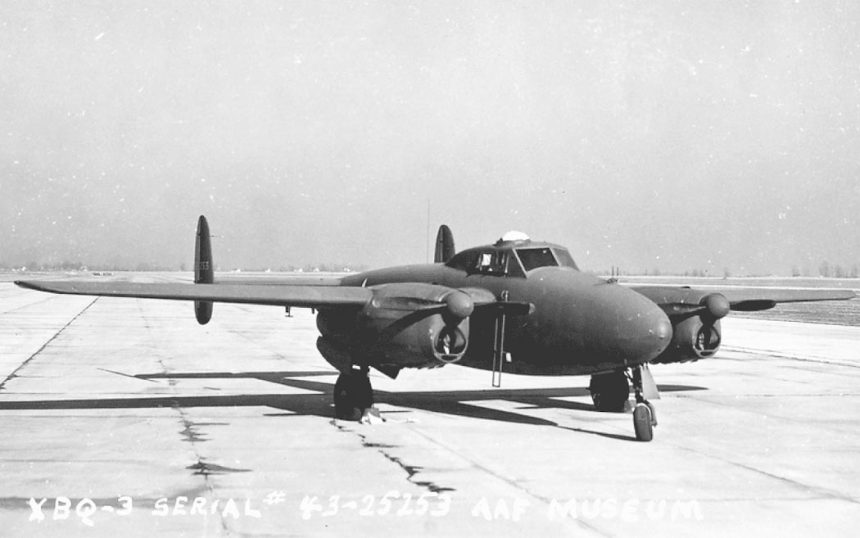


Kamikaze drones, or attack drones, are well known in modern warfare. But the US Army Air Forces (USAAF) was also developing similar attack drones during WWII. In 1942, the United States Army Air Forces asked manufacturers to create “aerial torpedoes,” commonly called “assault drones.” Fairchild took part in the competition with its BQ-3, the development of which began in October 1942. Later, Fairchild received a contract to build two Fairchild BQ-3 prototypes. These prototypes were based mainly on the AT-21 Gunner, which was an advanced gunnery trainer already used by the USAAF.
Design of Fairchild BQ-3
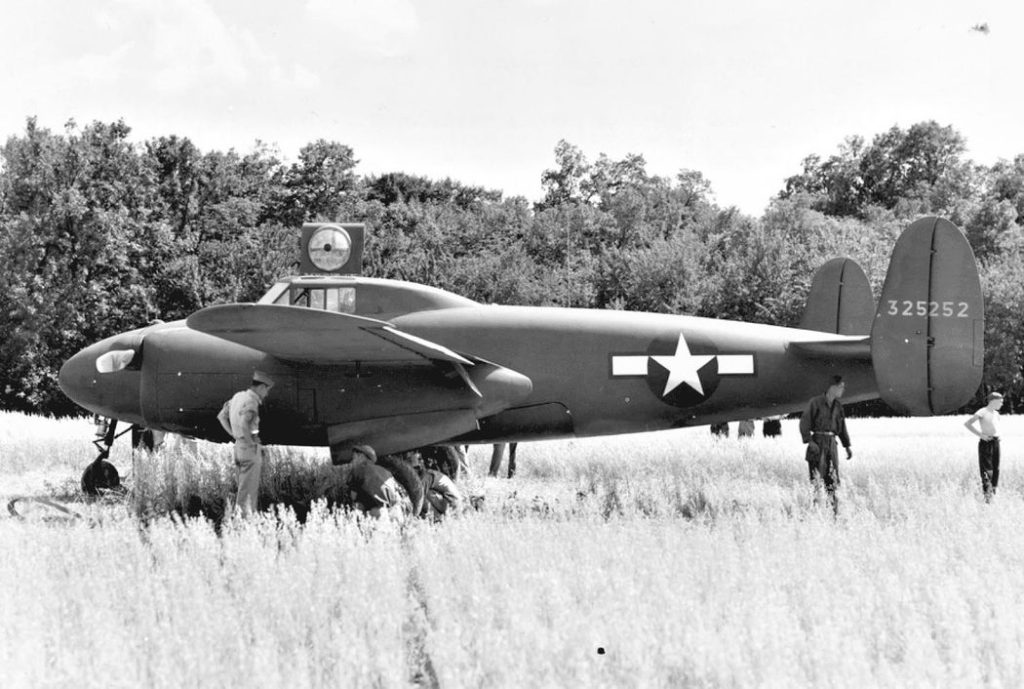
The Fairchild BQ-3 was a low-wing aircraft with two engines and retractable landing gear. It had a twin-finned tail design. Although it was meant to be controlled by radio with television support, the design included a two-seat cockpit for testing and ferry flights. The XBQ-3 was 52.8 feet long, 31.1 feet high, with a wingspan of 37 feet. Its gross weight was 15,300 pounds. The Fairchild BQ-3 was powered by two Ranger V-770-15 inline piston engines, each producing 520 horsepower. The maximum speed of the aircraft was 220 mph, and the range was 1,500 miles. The aircraft could carry 4,000 pounds of explosives when it was unmanned. The aircraft, like Fleetwings BQ-1 and BQ-2, would be destroyed when it hit the target.
The Cancellation
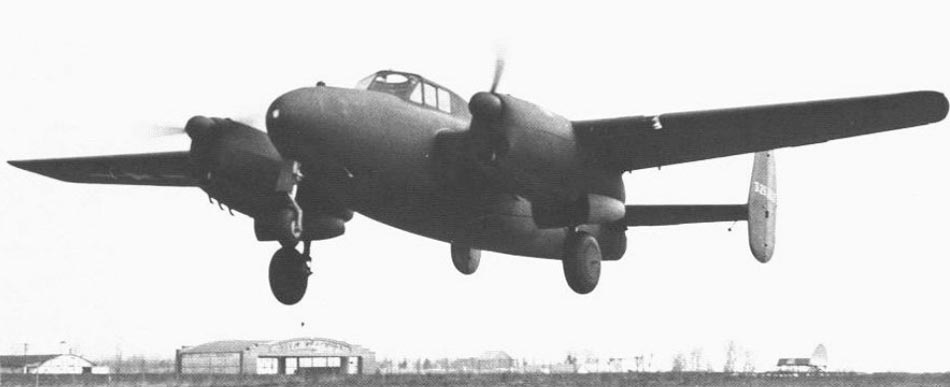
The BQ-1 was meant to carry a 2,000-pound warhead over a distance of 1,717 miles at a speed of 225 miles per hour. However, the XBQ-2 was intended to be the same as the XBQ-1, but it would have Lycoming XO-435-3 engines and removable landing gear. However, the XBQ-2 was never built either. Instead, it was replaced by the XBQ-2A, which was upgraded with two Lycoming R-680-13 engines. The first flight of the Fairchild BQ-3 happened in July 1944. Later that month, one of the prototypes was badly damaged during a forced landing. Despite this accident, testing continued. However, it was found that the assault drone did not offer any significant benefits over regular bombers. At the same time, advancements in guided missiles were quickly making the concept obsolete. Because of this, the program was canceled towards the end of 1944. The BQ-1 and BQ-2 were already canceled. In the Grounded Dreams series, the Fairchild BQ-3 was not a bad aircraft, but the doctrine did not demand it, and the role it was made for was taken away by missiles. Read more Grounded Dreams articles HERE.