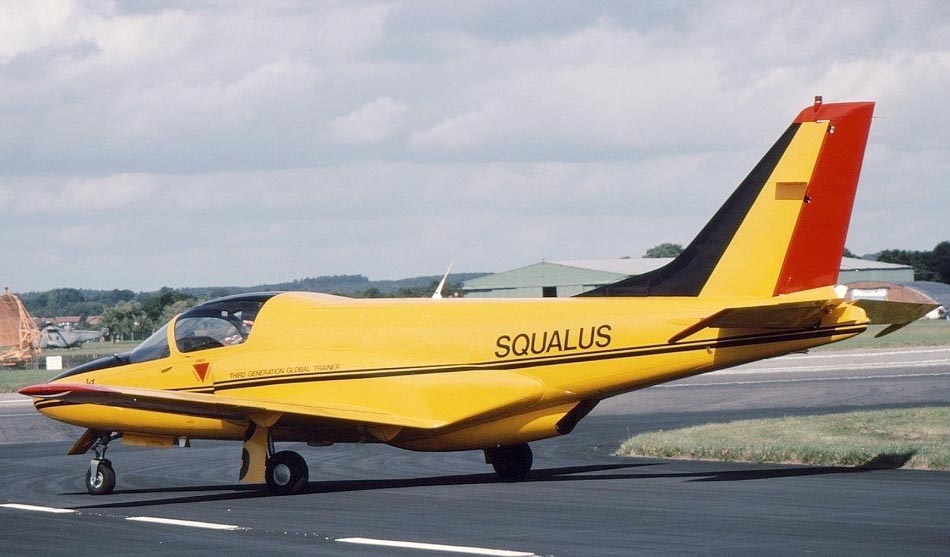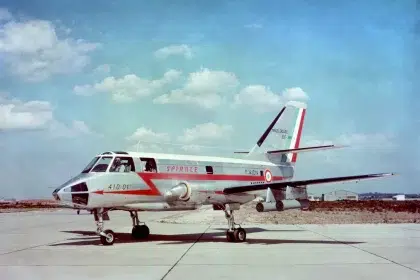
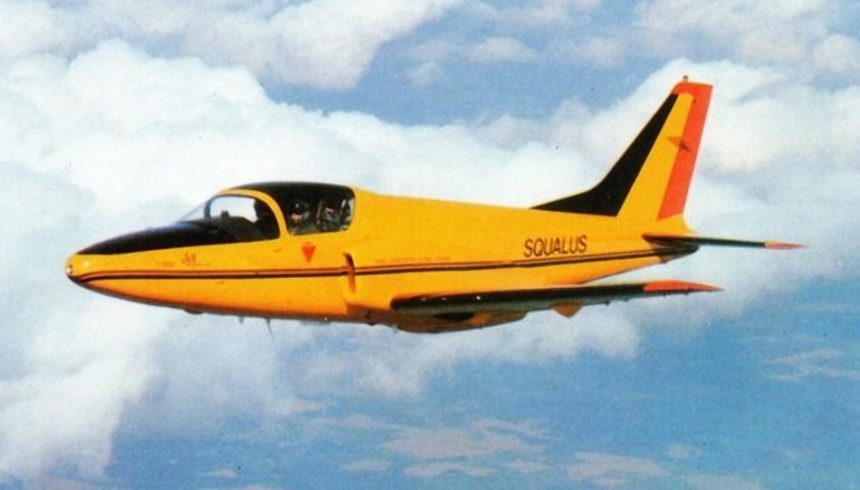


In the early 1980s, an Italian aerospace engineer, Stelio Frati, who previously crafted the designs of the F.5 Trento and F.400 Cobra trainers, designed a new lightweight multi-utility jet trainer. His new design was intended to perform various roles, such as training both military and commercial pilots, serving as a light attack platform, conducting maritime surveillance, reconnaissance, border patrol, and target towing. Initially intended to meet the requirements of the Italian Air Force, the aircraft found a real opportunity when the Belgian Air Force began to show interest in the project. In 1983, a group of Belgian companies and financial institutions completed market research for an aircraft. Soon after, the Belgian Government supported the project by providing funding to develop a prototype aircraft. The project also received additional private sponsorship, which led to the creation of Promavia SA, a group formed by Sonegal, Aspair, Prominvest, SONACA, Société Générale, and BBL banks, along with a couple of Belgian industrialists. The aircraft was designated Promavia Jet Squalus.
Design of Promavia Jet Squalus
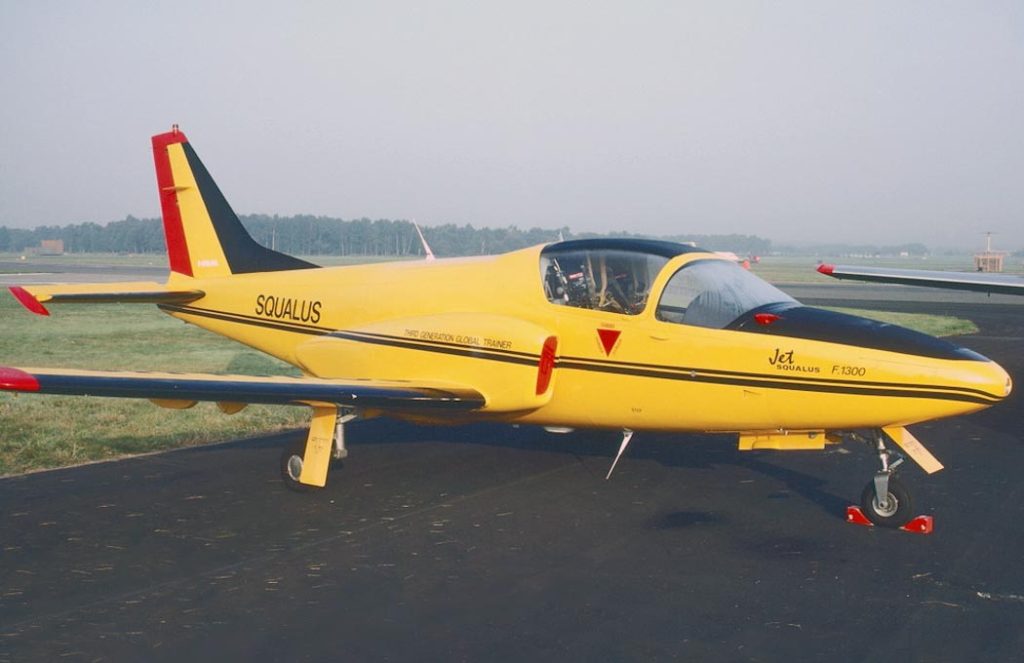
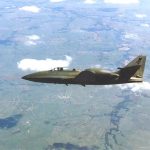
The Promavia Jet Squalus was designed as a low-wing airplane with a single vertical fin and straight horizontal stabilizers. The horizontal tail had elevators, and a trim tab was on the left elevator. The plane used tricycle landing gear with single wheels, and the two-seater cockpit had a single-piece canopy. It included an electronic flight instrument system from Rockwell Collins and an oxygen generation system from Negretti. Both pilots have Martin-Baker ejector seats. Originally, the Jet Squalus was powered by a Garrett TFE109-1 turbofan engine that produced 1,330 pounds of thrust and drew air through intakes above the wing root. Later, the aircraft was also tested with different engine options. The aircraft also had four hard points under the wings that could carry various types of weapons or extra fuel tanks. The first prototype of the Promavia Jet Squalus made its maiden flight on April 30, 1987, with its planned Garrett TFE 109-1 engine. However, it was intended to be reequipped with a Garrett TFE 109-3 engine once it became available. The Promavia Jet Squalus was 30.9 feet long, 11.10 feet high, with a wingspan of 29.8 feet and a wing area of 146.2 square feet. Its empty weight was 2,866 pounds, and its maximum takeoff weight was 5,291 pounds. It could carry 190 gallons of fuel, providing it with a ferry range of 1,150 miles at 20,000 feet. The maximum speed of Promavia Jet Squalus was 322 mph, with a cruise speed of 300 mph. The service ceiling was 36,991 feet. In terms of armament, it had four hardpoints with a capacity of 330 pounds each.
The Cancellation
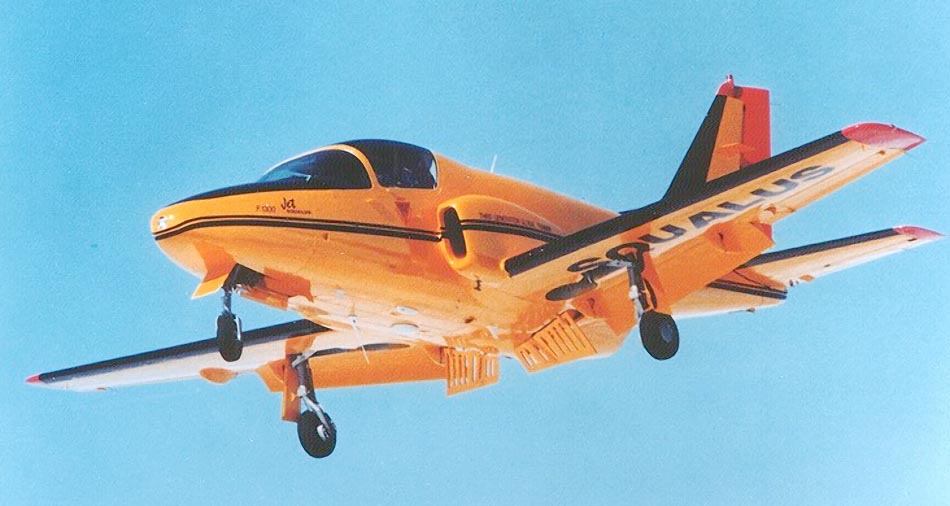
The aircraft participated in the Belgian Air Force’s evaluation in mid-1988, but was not selected. It flew well in the tests, but was considered a slow trainer in the modern jet world. It received another opportunity to prove itself in the US Air Force and Navy’s Joint Primary Aircraft Training System (JPATS) program. The Promavia Jet Squalus was redesignated ATTA 3000 for the JPATS and also proposed a two-engine version called the ATTA 4000. When used for tactical training, the ATTA 3000 could carry gun pods for 7.62 mm, 12.7 mm, or 20 mm rounds, as well as rocket launchers, infrared missiles, or bombs. After the failure of a similar American Fairchild T-46 trainer in 1986, support for the Promavia Jet Squalus’s original engine ended, requiring a redesign to use the Williams-Rolls FJ44 engine. But the aircraft was not ordered by the US military. Following the failure of its military acquisitions, Promavia sought to explore the commercial market for its Jet Squalus and, in September 1988, showcased it at the Farnborough Air Show. In 1989, the company announced an agreement with the Belgian airline Sabena to sell an undisclosed number of aircraft. That same year, Promavia also announced a production deal with Portugal’s Oficinas Gerais de Material Aeronautico (OGMA) for 100 Jet Squalus trainers, with plans to deliver 30 to the Portuguese Air Force. However, the Air Force never placed an order for them. In August 1991, Promavia and the government of Saskatchewan, Canada, agreed to assemble the Jet Squalus in Saskatoon and set up a pilot training academy, a proposal which was later canceled. Two more prototypes were believed to be made but never flew. Only one prototype ever flew, and the company went bankrupt in 1998 after failing to commercialize the aircraft for over 18 years. In the Grounded Dreams series, the Promavia Jet Squalus, despite being a good trainer, suffered from poor marketing and insufficient financial support. Read more Grounded Dreams series articles HERE.