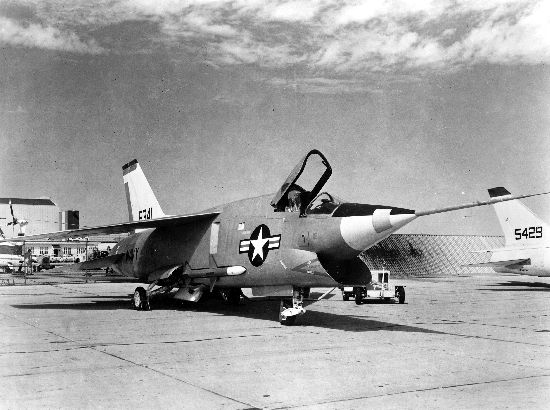
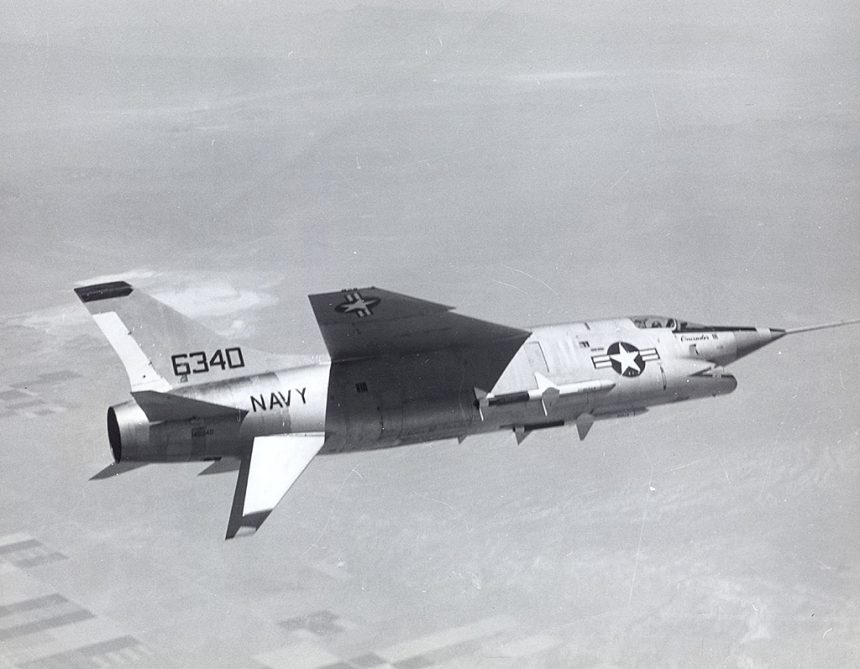


In the mid-1950s, the US Navy wanted an interceptor aircraft capable of achieving speeds of more than Mach 2. Two companies, including McDonnell Aircraft with its F-4 Phantom II and Vought with its XF8U-3 Crusader III, submitted their designs. The Crusader III was first developed as a larger version of the F8U-1 and F8U-2 aircraft. It looked similar to the Crusader, but was powered by a larger Pratt & Whitney J75-P-5A engine, which produced 29,500 pounds of thrust with afterburner. The Vought XF8U-3 Crusader III was designed to reach speeds of up to Mach 2.7, for which it was equipped with a special air inlet called a “Ferri scoop.” The aircraft used three shock waves to slow the air before it entered the engine. The angled sides helped the airflow to move out from behind the shock when the aircraft reached the right speed. The vertical fin on the Vought XF8U-3 Crusader III helped keep it stable in flight. The Crusader III was designed to fly at Mach 2.7 and, therefore, required larger horizontal fins for takeoff and landing.
Design of Vought XF8U-3 Crusader III
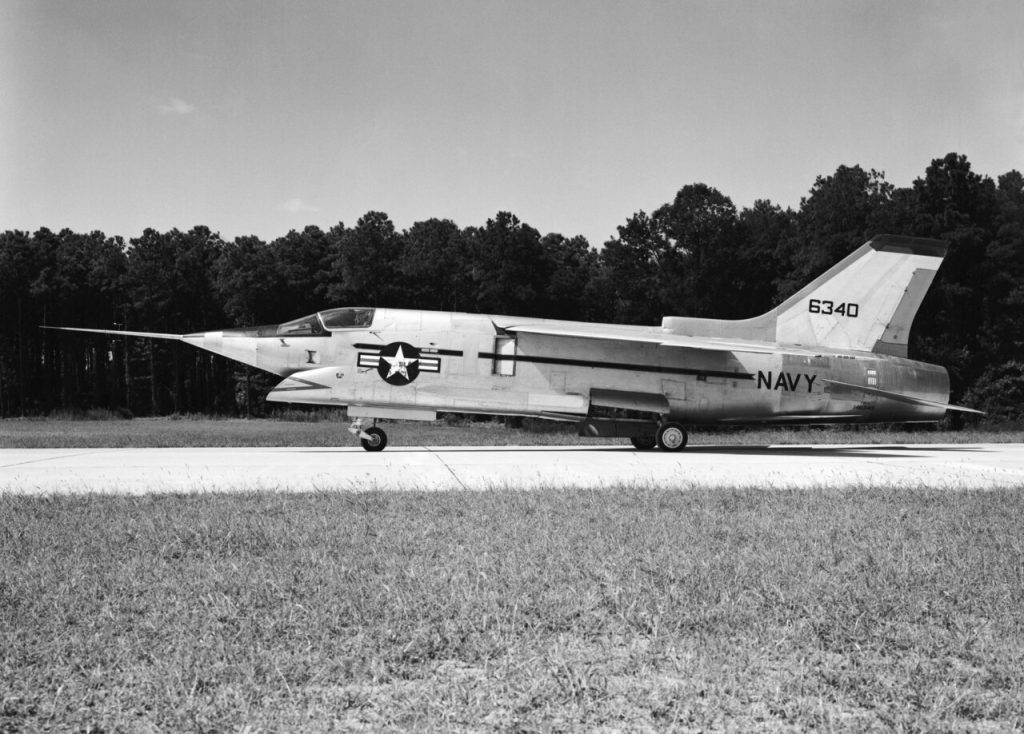
The Vought XF8U-3 Crusader III made its first flight on June 2, 1958. The single-seat aircraft was 58.8 feet long, 16.4 feet high, with a wingspan of 39.11 feet and a wing area of 450 square feet. Its empty weight was 21,860 pounds, the gross weight was 32,200 pounds, and the maximum takeoff weight was 38,770 pounds. It could be armed with four 20 mm Colt Mk 12 cannons, three AIM-7 Sparrow radar-guided missiles, and four AIM-9 Sidewinder missiles. Many articles claim that the aircraft reached Mach 2.6 at 35,000 feet during testing. However, the highest speed achieved was Mach 2.39, and the normal operating speed was no more than Mach 2.32. The Vought XF8U-3 Crusader III first exceeded Mach 2 in level flight on August 14, during its 38th test flight, before the competing F4H-1. Some sources say that Vought believed the aircraft could reach a top speed of Mach 2.9 with a tail rocket, but the windscreen and most aluminum frames were not designed to withstand heat at speeds above Mach 2.35. In December 1955, the US Navy started a competition for a Mach 2+ fleet defense interceptor. Tests against the Vought XF8U-3 Crusader III ‘s main competitor, the McDonnell Douglas F-4 Phantom II, showed that the Vought design was better at maneuvering.
The Cancellation
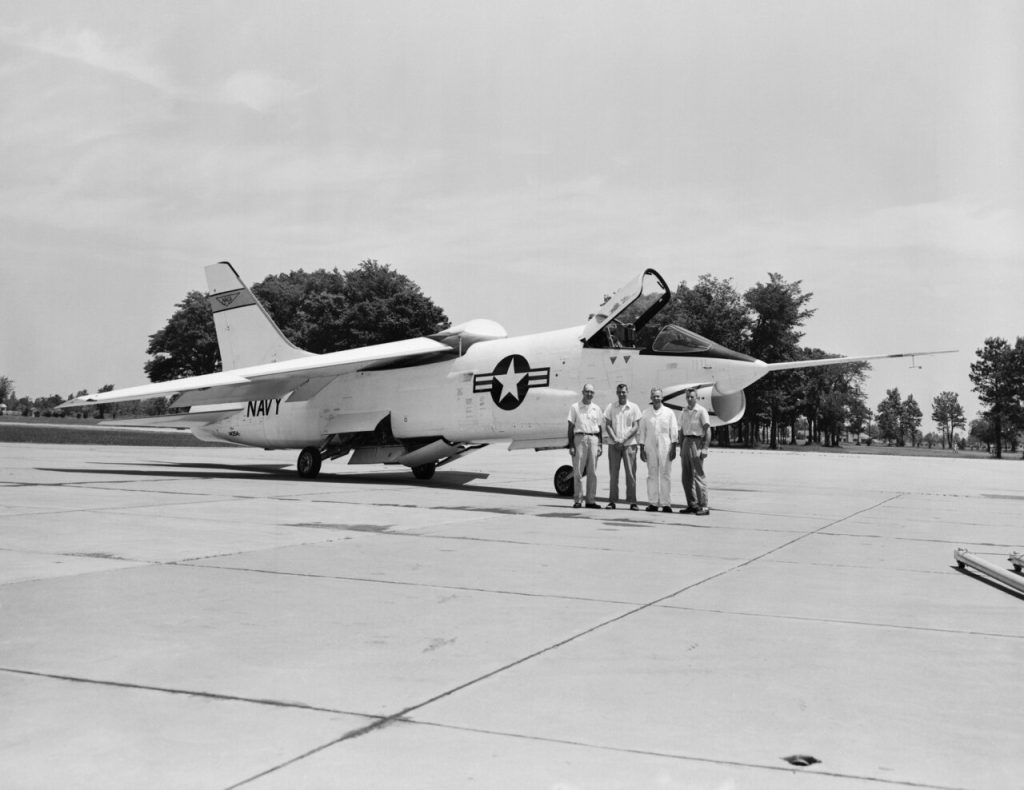
John Konrad, Vought’s chief test pilot, later said that the Vought XF8U-3 Crusader III could easily outmaneuver the Phantom II. The aircraft had a combat thrust-to-weight ratio of 0.97, close to one, while the early F4H had a ratio of only 0.87. However, the pilot in the XF8U-3 had a heavy workload during interception and when firing Sparrow missiles, which required constant radar tracking. In contrast, the Phantom II had a radar intercept officer to help with this workload. In addition, the Phantom was preferred over Vought’s faster but less versatile fighter because it could carry a larger payload and perform both air-to-ground and air-to-air missions. As the Navy recognized that the era of traditional dogfights was ending, the Phantom replaced the F-8 Crusader as the primary daytime air superiority fighter in the Vietnam War. Originally, the Phantom was introduced as a missile-armed interceptor to support day fighters like the Crusader. The Vought XF8U-3 Crusader III program was canceled after five aircraft were built. Three of these aircraft flew during testing, while the other two were given to NASA for atmospheric testing because the Vought XF8U-3 Crusader III could fly above 95% of the Earth’s atmosphere. Some reports said that NASA pilots often intercepted and defeated US Navy Phantom IIs in practice dogfights until the Navy complained, which ended the practice. All prototypes were later scrapped. In the Grounded Dreams series, despite being a better aircraft than its competitor in many areas, the Vought XF8U-3 Crusader III failed to impress military leaders. Read more Grounded Dreams articles HERE.