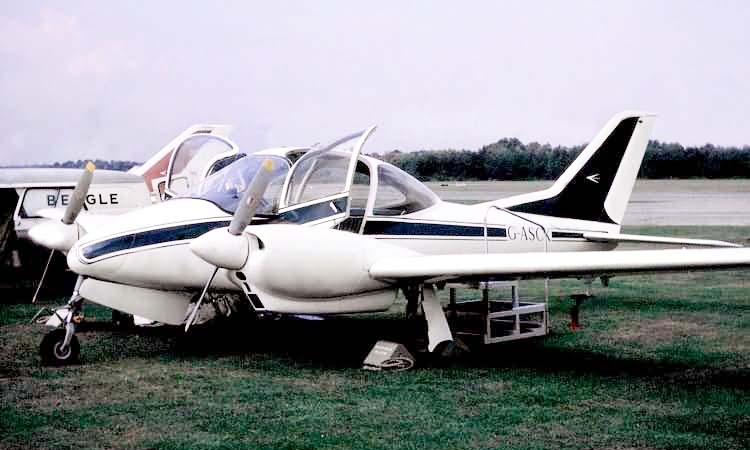
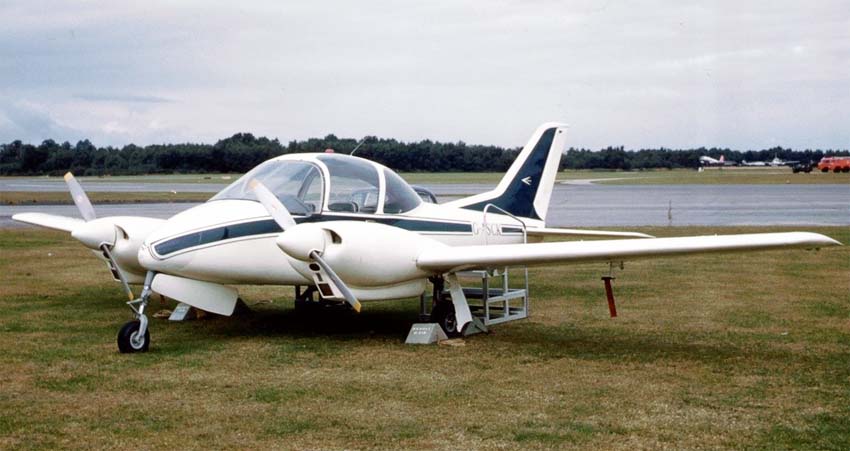


On this day in aviation history, 64 years ago (August 19, 1962), the Beagle-Miles B.218 took flight for the first time from Shoreham Airport in England. Registered G-ASCK, the B.218X was a four-seat, twin-engine light transport developed by Beagle Aircraft Limited from an earlier F.G. Miles design. The aircraft originated with an effort by F.G. Miles to develop replacements for its Messenger and Gemini aircraft. Following the formation of Beagle, the company elected to construct a prototype of the proposed Miles 115 twin, which became the Beagle-Miles M.218X. The aircraft featured an unusual combination of plastic and metal construction, retractable tricycle landing gear, and two Continental engines. It appeared at the 1962 Farnborough Air Show, where potential customers showed interest but expressed a preference for all-metal construction.
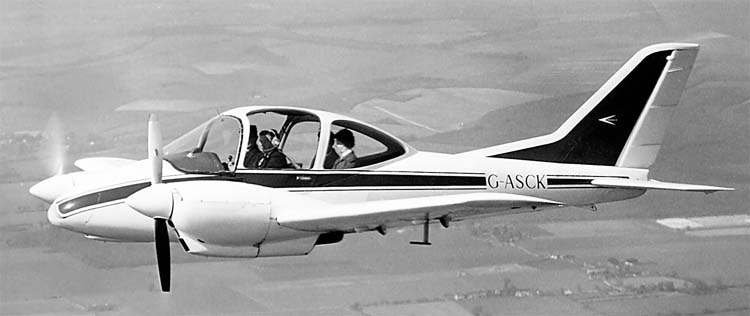
Production aircraft were to receive the name “Martlet,” but Beagle lacked the resources to put the design into production. The prototype was subsequently rebuilt largely in aluminum, fitted with more powerful engines, and redesignated the B.242X. It flew again in 1964, but further development was abandoned as Beagle concentrated on the B.206 and Pup. The sole prototype was ultimately destroyed in a building fire in 1969. The B.218X measured 25 feet 4 inches in length with a wingspan of 37 feet. Power came from two 145-horsepower Rolls-Royce Continental O-300-C engines. The aircraft could reach a maximum speed of 185 mph, cruise at 160 mph, and had a maximum range of approximately 1,000 miles. Its service ceiling was 21,700 feet, with accommodations for one pilot and three passengers.