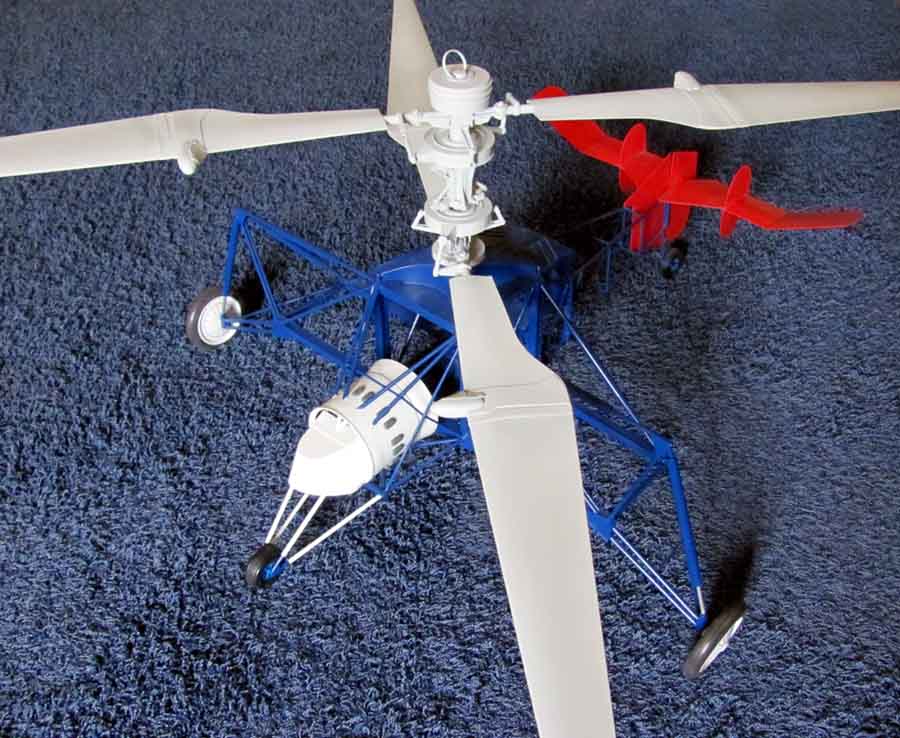
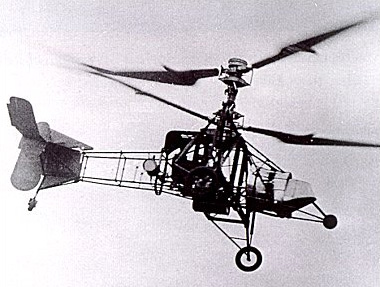


On this day in aviation history, 91 years ago (June 26, 1935), the first flight of the Breguet-Dorand Gyroplane Laboratoire took place. An early helicopter design, the Gyroplane Laboratoire was a product of French designer Louis Breguet. Breguet was no stranger to rotorcraft design, as he had been experimenting with the art since 1909. His focus shifted to traditional aeroplanes until the late 1920s, at which point he delved back into the helicopter scene. In 1929, Breguet revealed a patent for a solution to the flight stabilization of helicopters. In 1931, Breguet teamed up with Rene Dorand to create the Syndicat d’Etudes de Gyroplane (“Syndicate for Gyroplane Studies”).
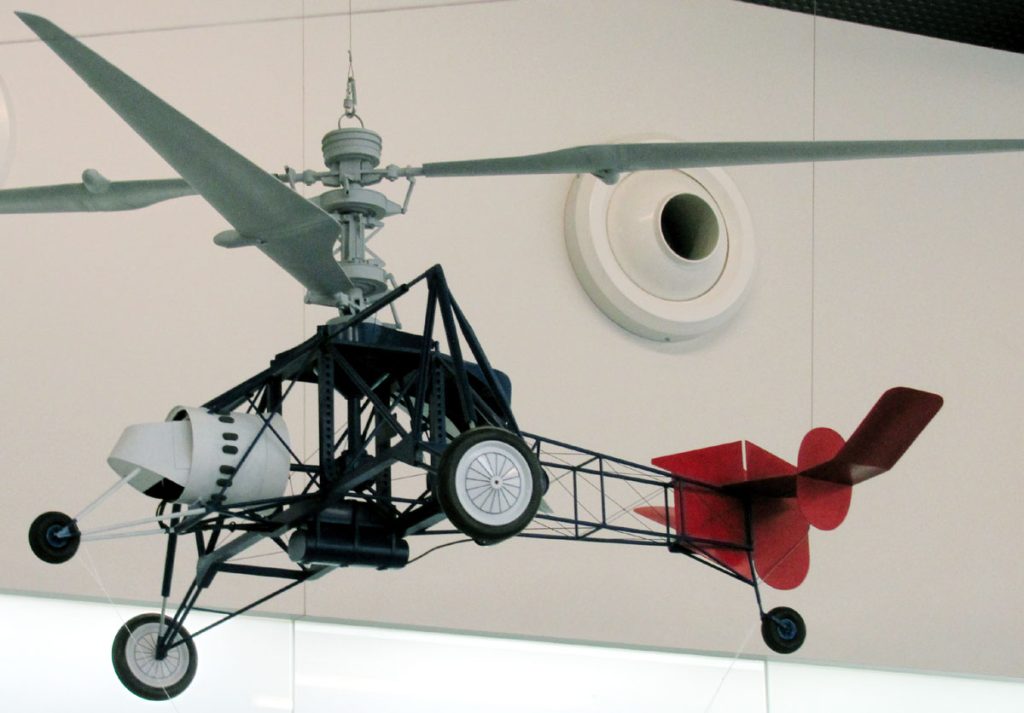
The new venture by Breguet and Dorand sought to develop a new experimental helicopter. Their resulting prototype was constructed of an open steel tube framework, which surrounded the rotorcraft’s 302-hp Hispano-Suiza 8F V-8 water-cooled engine, fuel tank, and cockpit. Breguet-Dorand opted to use a coaxial rotor design for the Gyroplane Laboratoire, as the rotors turning in opposite directions canceled out each other’s torque. Construction of the Gyroplane Laboratoire was completed in 1933, and ground tests soon followed. An accident delayed the rotorcraft’s first flight until 1935. Maurice Claisse was the pilot for this first flight, along with a series of record-setting jaunts, including flight duration, height, and speed. The Gyroplane Laboratoire could fly at 75 mph, had a range of 24 nmi, and reached a service ceiling of 518 ft. The German-designed Focke-Wulf Fw 61 would soon overshadow the French Gyroplane, but flight testing and experimentation continued at Breguet-Dorand. In June of 1939, the aircraft experienced a hard landing. The outbreak of WWII shortly thereafter delayed any further development. In 1943, an Allied air attack on Villacoublay airfield destroyed the sole Gyroplane Laboratoire prototype.