





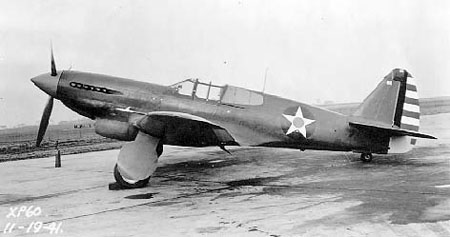


On this day in aviation history, 85 years ago (September 18, 1941), the Curtiss XP-60 took flight for the first time. Developed as a potential successor to the P-40 Warhawk, the single-seat American fighter incorporated a laminar-flow wing and a British Rolls-Royce Merlin engine. Despite extensive development, the P-60 never entered production. The XP-60 originated with the Curtiss XP-53, which combined elements of the P-40 with a new laminar-flow wing and a Continental engine. The U.S. Army Air Corps subsequently asked Curtiss to investigate fitting the design with the Rolls-Royce Merlin. Curtiss modified the second XP-53 while it was under construction, creating the Model 90, designated XP-60 by the Army. The aircraft first flew with a British-built Merlin 28 on September 18, 1941.
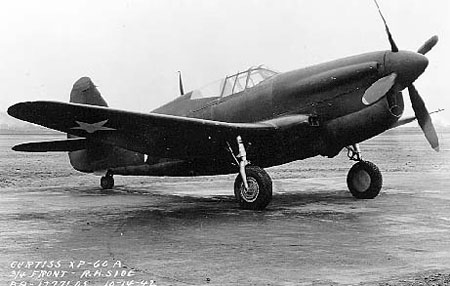
Flight testing revealed disappointing performance, including excessive radiator drag, problems achieving the required surface finish on the laminar-flow wing, and lower-than-expected engine output. The P-60 subsequently went through a bewildering series of redesigns using Allison, Chrysler, and Pratt & Whitney engines, along with both conventional and contra-rotating propellers. Although thousands of P-60s were ordered at various stages, changing wartime priorities and continued development problems prevented the fighter from reaching production. The later XP-60C measured 33 feet 11 inches in length with a wingspan of 41 feet 4 inches and was powered by a 2,000-horsepower Pratt & Whitney R-2800-53 radial engine driving contra-rotating propellers. It could reach 414 mph at 20,350 feet, had a range of 315 miles, and a service ceiling of 35,000 feet. Armament consisted of four .50-caliber Browning machine guns.
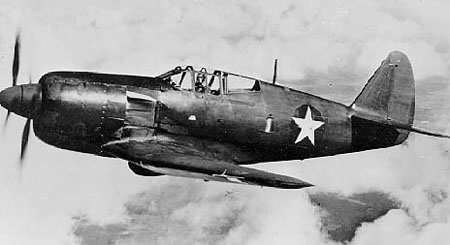









there were a number of these follow on planes that were prototyped at the end of WW2 – the Fisher XP-75 and there was a boeing design called the XF8B using the Navy designator system. the jets came along shortly thereafter