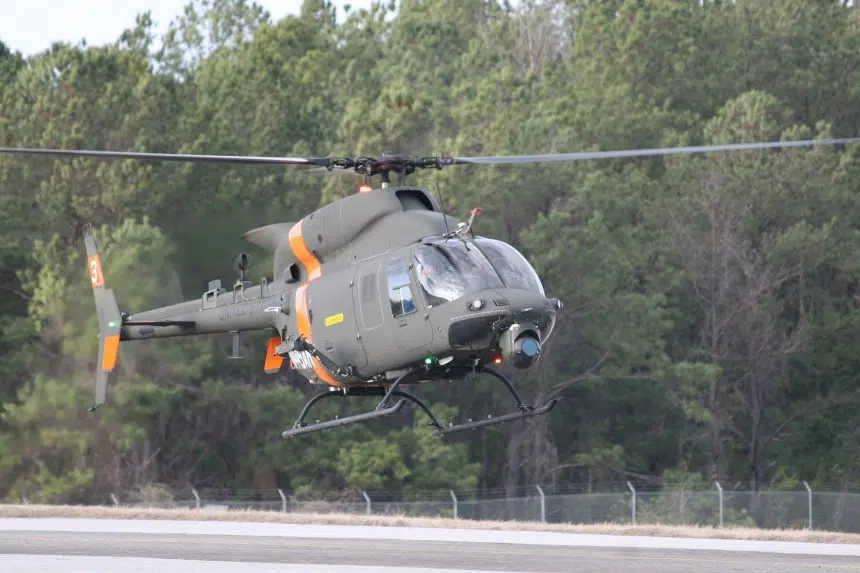


In the 1990s and 2000s, the US Army needed a light reconnaissance helicopter to replace its fleet of OH-58D helicopters, which had been flying since the mid-1980s. As a result, in 1995, the US Army began evaluating the Boeing–Sikorsky RAH-66 Comanche. However, after nearly a decade, the US Army canceled the RAH-66 program on February 23, 2004. The decision came after a six-month study suggested ending the program, following 20 years of development and costs exceeding $6.9 billion. The study found that canceling the program could save the Army $14 billion, helping fund the modernization and replacement of its old helicopters. However, the study recommended replacing the OH-58D helicopters. On December 9, 2004, Army officials requested proposals for new helicopters. The Army aimed to use commercially available technology to produce 30 operational and 8 training helicopters by September 2008. Two companies, Boeing and Bell, submitted bids. Boeing proposed the MH-6M Mission Enhanced Little Bird, an upgraded version of the MH-6 Little Bird already in use by the 160th Special Operations Aviation Regiment, making it a strong candidate. Bell Helicopter proposed an updated version of the OH-58D, based on the Bell 407. The company’s plan included a more powerful Honeywell HTS900 engine, a new composite main rotor similar to the Bell 430’s rotor, and a tail assembly from the Bell 427. The helicopter was called the Bell ARH-70 Arapaho.
The Bell ARH-70 Arapaho program

On July 29, 2005, the Army announced that Bell won a contract to deliver 368 Bell ARH-70 Arapahos. There was some confusion about the contract’s value. Bell reported it at $2.2 billion, while the Army’s estimate was over $3 billion, higher than its previous estimate of $2.36 billion. The contract required Bell to develop prototypes and provide preproduction aircraft for the Army to test. The first unit was expected to be ready by the end of September 2008. Bell’s ARH demonstrator made its first flight on June 3, 2005. In February 2006, the demonstrator flew with some basic avionics and a Mission Equipment Package (MEP). In April, Bell added a Honeywell HTS900-2 engine to the helicopter and conducted several ground tests. The first flight was postponed twice, first in March and then in May, to allow Bell to adjust the prototypes for preproduction. Both Bell and the Army agreed that these delays were significant to keep the development on track. The Bell ARH-70 Arapaho had its first flight on July 20, 2006, at Bell’s XworX facility in Arlington, Texas. On February 21, 2007, during a test flight, prototype #4 lost engine power after running out of fuel. The aircraft made an emergency landing on a nearby golf course. It was damaged beyond repair when it rolled over during the landing. The test pilots survived the incident and were not injured. A month later, on March 22, 2007, the Army issued a “Stop Work” notice to Bell. The service gave Bell 30 days to provide a plan to get the Bell ARH-70 Arapaho program back on track. Costs for the System Development Demonstration part of the program had increased from $210 million to over $300 million. Textron, which owns Bell, informed investors that it might incur losses of $2 to $4 million per aircraft under the contract. Bell appealed the notice and was allowed to keep developing the program using its own funds until the issue was resolved. On May 18, 2007, the Army approved Bell to continue work on the Bell ARH-70 Arapaho program.
The Cancellation

The House Appropriations Committee’s Defense panel created a bill for the 2008 Defense Budget that cut all funding for the Bell ARH-70 Arapaho helicopter production. This was due to Bell’s failure to start production, but they continued to fund research and development. Government officials began developing export policies to allow international sales of the Bell ARH-70 Arapaho. The US Army expected to need a total of 512 helicopters, with total orders potentially exceeding 1,000. On July 9, 2008, the Army reported a cost and scheduling problem for the ARH-70 program, as new estimates showed costs had risen by 40% compared to initial estimates. In August 2008, the Army asked Bell to stop recruitment for the Bell ARH-70 Arapaho program while it reviewed the situation. On October 16, 2008, the Army’s Acquisition Executive Office for Aviation instructed the Army to cancel the ARH contract for government convenience. The decision came because the US Department of Defense did not certify the $6.2 billion ARH-70 program to Congress. The program’s costs had reportedly exceeded expectations by 70%, reaching an estimated $14.5 million per unit, up from $8.5 million. Although the US did not buy the Bell ARH-70 Arapaho, the Iraqi Air Force purchased Bell 407 armed scouts in a similar setup starting in 2009. Read more Grounded Dreams articles HERE.