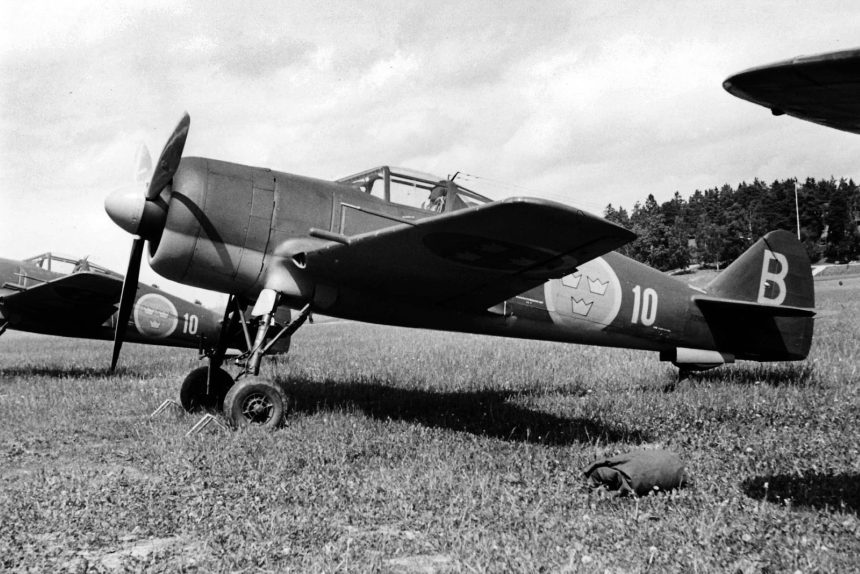

On this day in aviation history, 84 years ago (September 20, 1942), the FFVS J 22 took flight for the first time. Developed in neutral Sweden during WWII, the single-seat fighter was created in response to the country’s urgent need for modern combat aircraft at a time when obtaining fighters from foreign manufacturers had become increasingly difficult. Sweden had ordered large numbers of American fighters, but the outbreak and expansion of WWII disrupted those plans. With Saab already occupied developing the twin-engine Saab 18 bomber, a new organization known as FFVS was established to develop and manufacture another fighter. The resulting J 22 was designed around the locally produced Pratt & Whitney Twin Wasp radial engine and used a steel-tube structure covered by molded birch plywood.
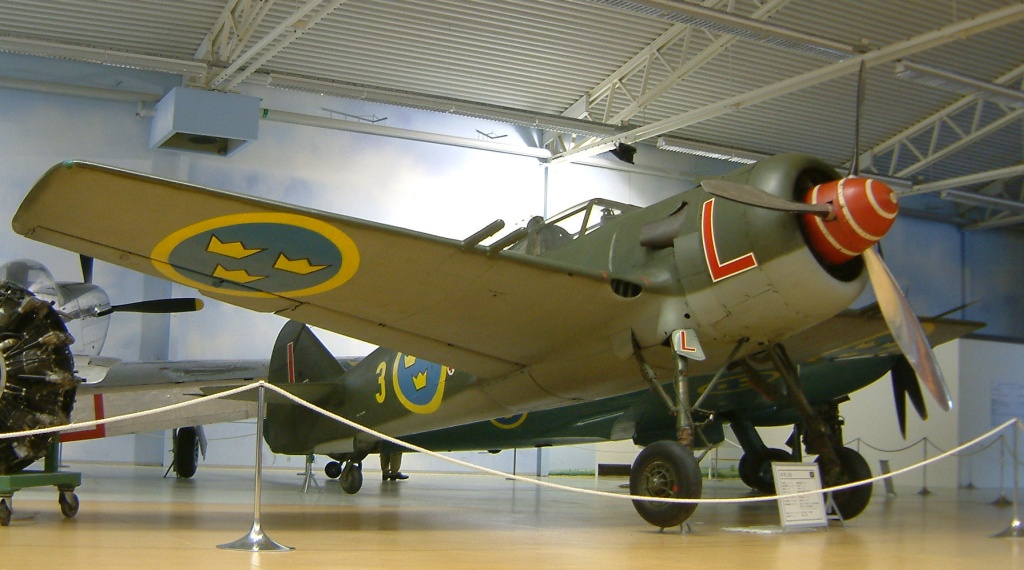
The J 22 entered Swedish Air Force service in October 1943 and proved to have good performance despite its relatively modest engine power. Pilots praised its maneuverability and responsive handling, although visibility on the ground and directional control during takeoff were criticized. A total of 198 aircraft were constructed before production ended in 1946. The fighter remained in Swedish service until 1952, while nine were later sold to Ethiopia. The J 22 measured 25 feet 7 inches in length with a wingspan of 33 feet 10 inches and was powered by a 1,065-horsepower SFA STWC-3G Twin Wasp radial engine. It could reach approximately 357 mph, had a range of around 790 miles, and a service ceiling of 30,800 feet. Armament varied by version, with the J 22B carrying four 13.2 mm Akan m/39A machine guns in the wings.