






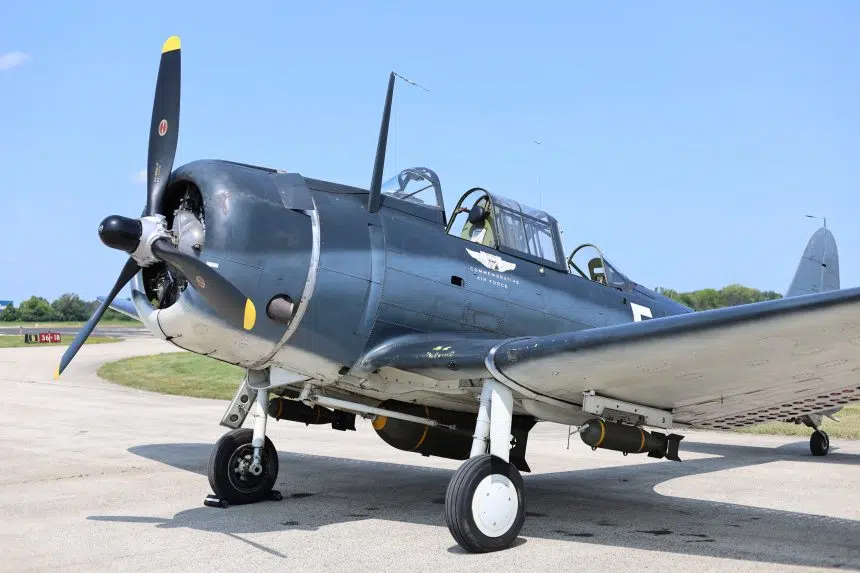

The second part of the series (click HERE to read more) covered Hamilton Standard’s invention of the first practical controllable-pitch propeller and its impact on the aviation industry. The invention and subsequent production of the controllable-pitch propeller by Hamilton Standard had enabled a major leap forward in aircraft performance. The merger of Hamilton Aero Manufacturing and Standard Steel Propeller under the ownership of United Aircraft and Transport Corporation (UATC) had created the world’s leading propeller company. With its major technological advance in the form of the controllable-pitch propeller, Hamilton Standard increased its lead in its sector of the aviation industry.

In 2026, the largest sectors of the aerospace industry are commercial airline transport and defense. But ninety years ago, both of these market segments were small in the United States. It would take the Douglas DC-3, which did not yet exist, to make the carriage of passengers by airlines a profitable business. The Great Depression-era military was small and poorly funded. The major source of revenue in American aviation in that era was government contracts to carry airmail. Because of airmail contracts, the United States government had a powerful role in directing the aviation industry, and one result was the Air Mail Act of 1934. This law had many provisions, but the one that most affected UATC was the imposition of a prohibition on one company both manufacturing aircraft and providing air transportation. The new law struck at the heart of the vertically and horizontally integrated aviation company that was the rationale for UATC. In response to the Air Mail Act of 1934, UATC was broken up into three successor companies. The airline holdings of UATC became United Airlines. UATC aircraft manufacturing in the western United States, including Boeing and Stearman, became the modern Boeing company. UATC aircraft manufacturing operations in the eastern United States, including Hamilton Standard Propeller Company, Pratt & Whitney, Vought, and Sikorsky, became United Aircraft Corporation (UAC).
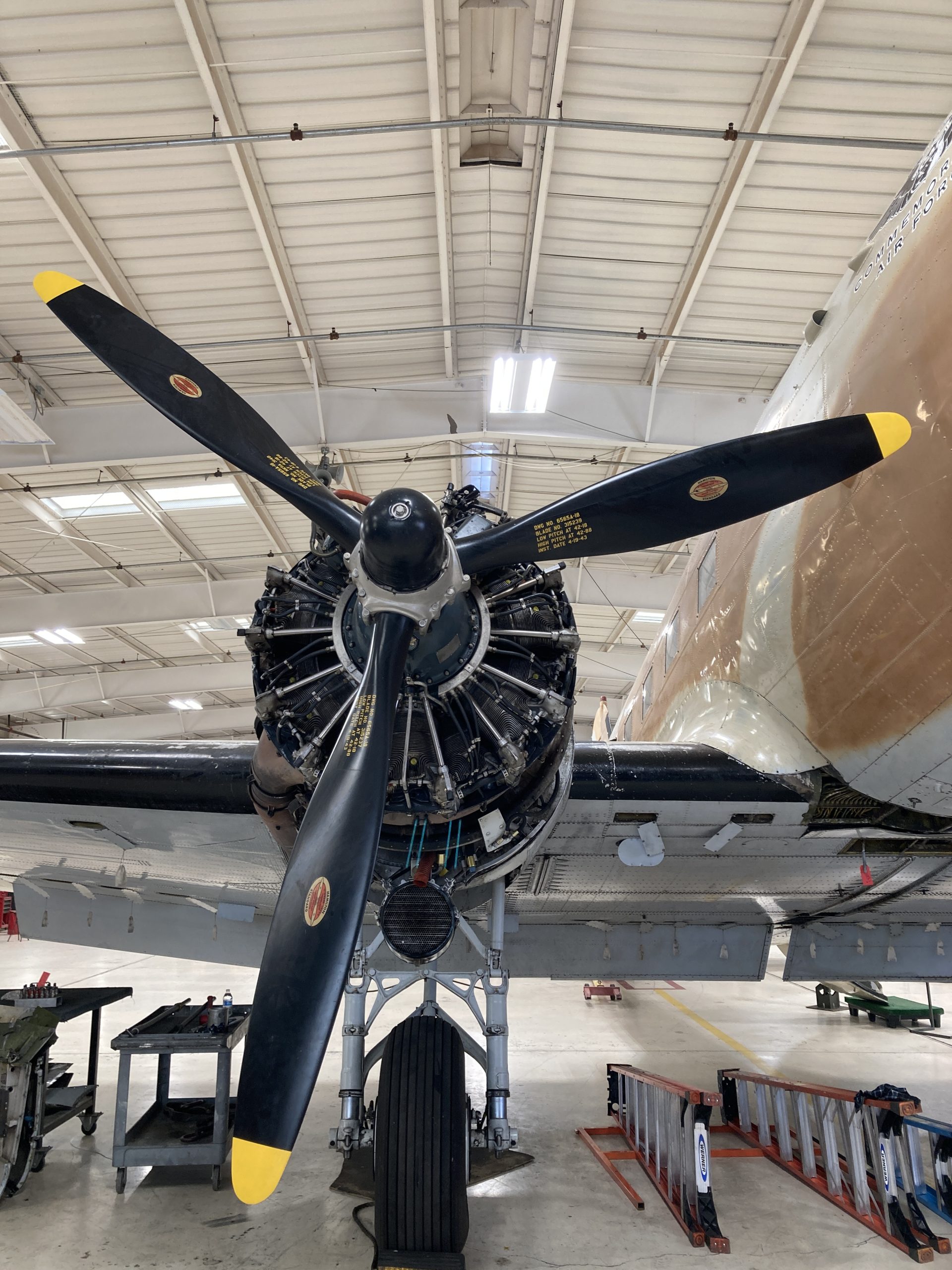
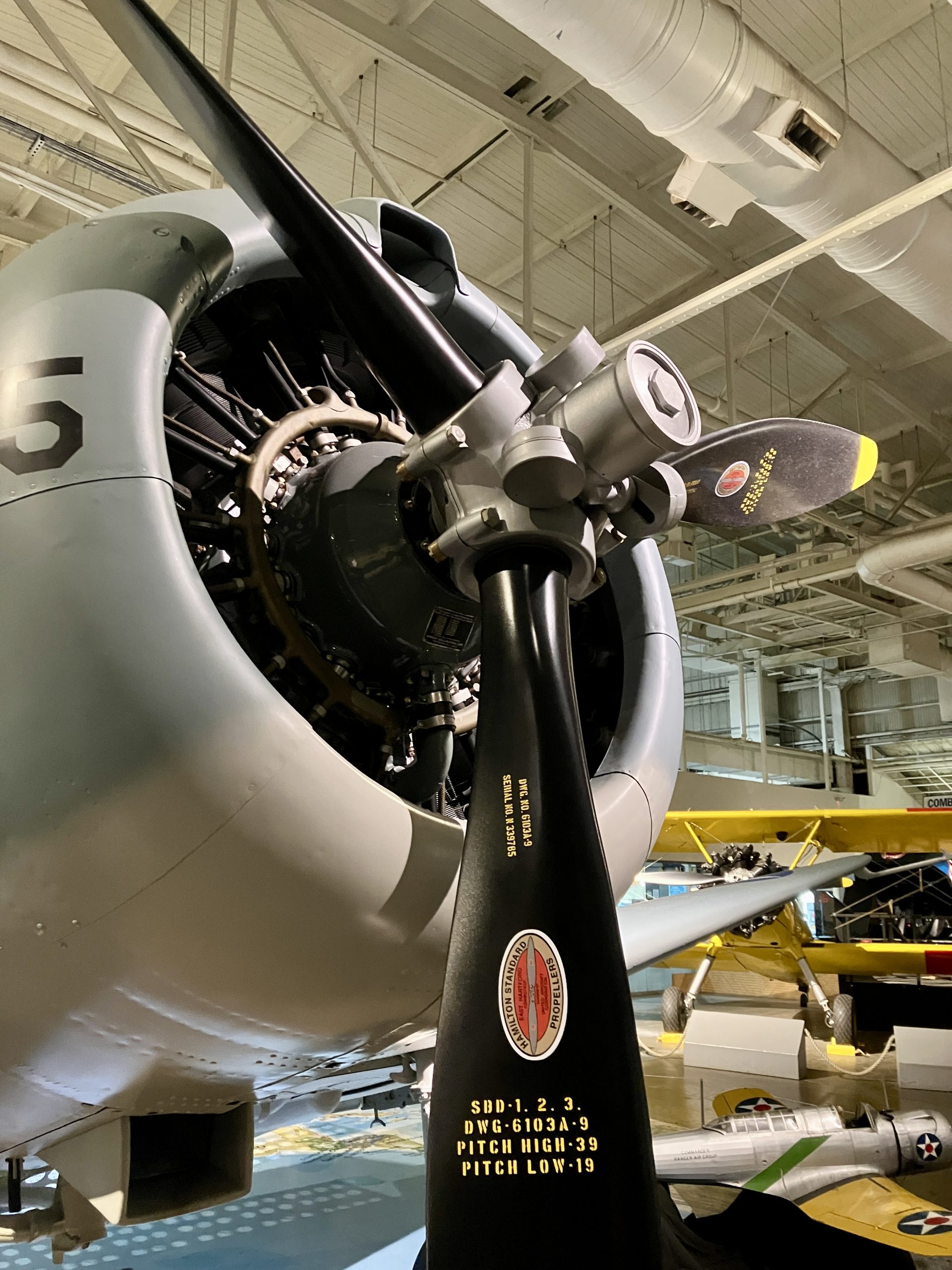
Even though the controllable-pitch propeller with its innovative control system was a breakthrough, there were further advances in propeller technology in work at Hamilton Standard under the engineering leadership of Frank Caldwell. The first of these advances was the constant-speed propeller. The controllable-pitch propeller improved aircraft performance, but it also increased pilot workload. In order to take advantage of the potential increased efficiency of the propeller, the pilot needed to set the propeller blade pitch to the appropriate position for the airspeed and engine power. In contrast, with a constant-speed propeller there would be a governor to control blade pitch so that propeller and engine rotation rate were kept constant over the different speeds and power settings. The first generation of Hamilton Standard constant-speed propellers built directly on the controllable-pitch design. Instead of the pilot directly controlling blade pitch as he did on a controllable-pitch propeller, with a constant-speed propeller the pilot set propeller and engine speed. Based on the pilot’s setting, a governor sensed propeller and engine speed and used that speed to meter the flow of pressurized engine oil to the propeller hub. In the propeller hub, the same balance of oil pressure and centrifugal force found in the controllable-pitch propeller changed blade pitch. Hamilton Standard sourced its governors from the Woodward Governor Company, which had gotten started controlling the speed of waterwheels that powered American factories of the 19th century. For the constant-speed propeller, Woodward needed to miniaturize its governor design to fit in an airplane. The Hamilton Standard constant-speed propeller reached the market in 1935-36.
Despite the Great Depression, this was a dynamic period in aviation technology, and the market demanded further advances in propeller technology. More powerful engines driving larger propeller blades needed propeller hubs that could change pitch faster and with more force than was possible with the existing Hamilton Standard hub. Also, multi-engine airplanes required the capability to feather the blades of their propellers. A propeller pitches its blades to create thrust. But if the engine driving the propeller stops operating, the propeller blades create drag. Not only does the drag decrease the performance of the aircraft, which already has decreased performance because of the inoperative engine, but the combination of thrust on one side of the airplane and drag on the other creates a yaw moment, which can result in loss of control. Large multi-engine aircraft such as the Boeing B-17 Flying Fortress and Douglas DC-3 were in development and soon to enter service, but without the ability to feather their propeller blades, they were dangerous to fly if an engine failed.

Hamilton Standard did not bring the first featherable constant-speed propeller to the market. That milestone was achieved by Hamilton Standard’s competitor, Curtiss-Wright. However, a team at Hamilton Standard under the leadership of Erle Martin soon introduced its own featherable constant-speed propeller, which was superior to the Curtiss-Wright product. That propeller was the famous Hydromatic propeller, sometimes referred to as the “automatic transmission of the air.”

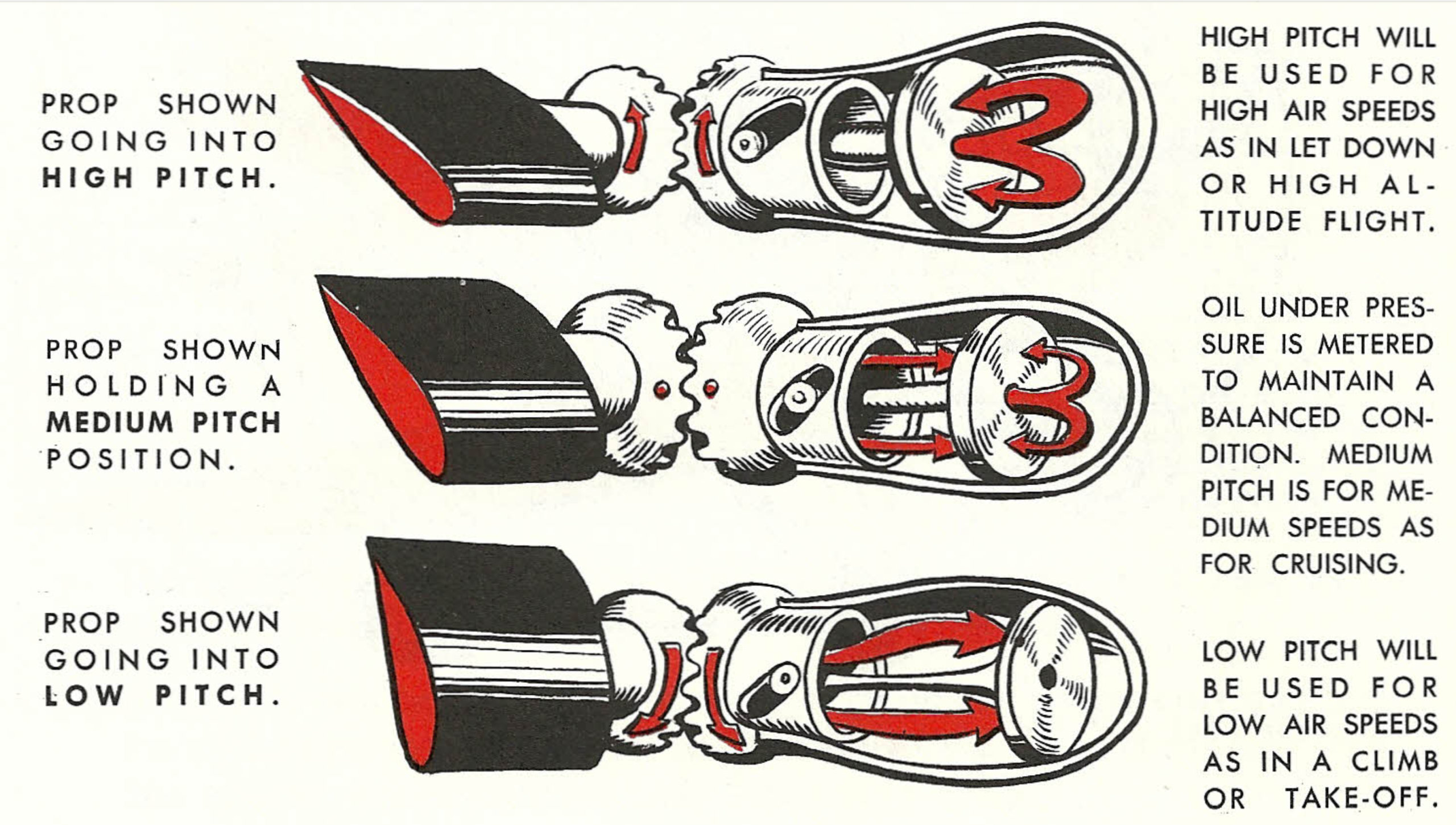
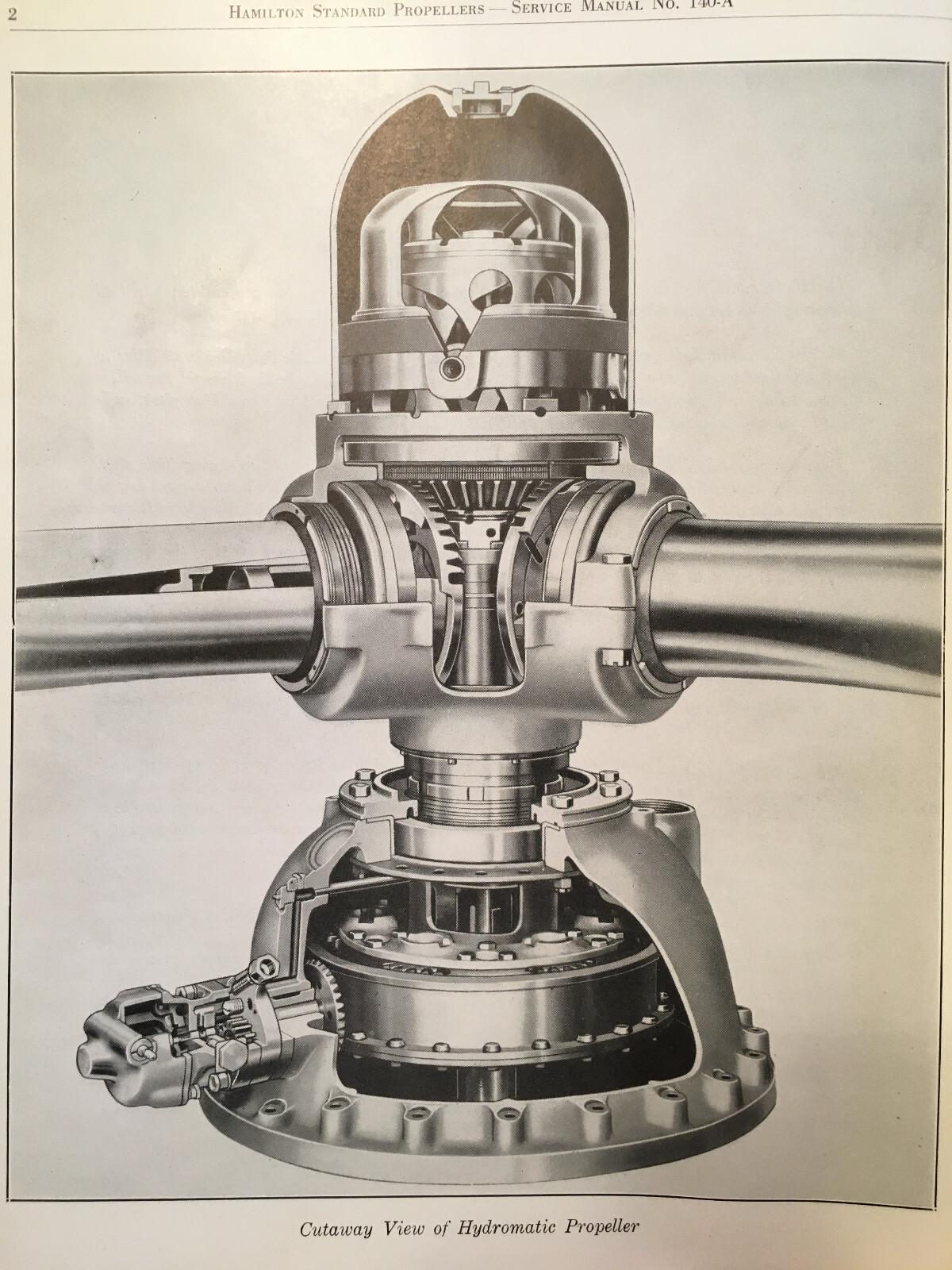
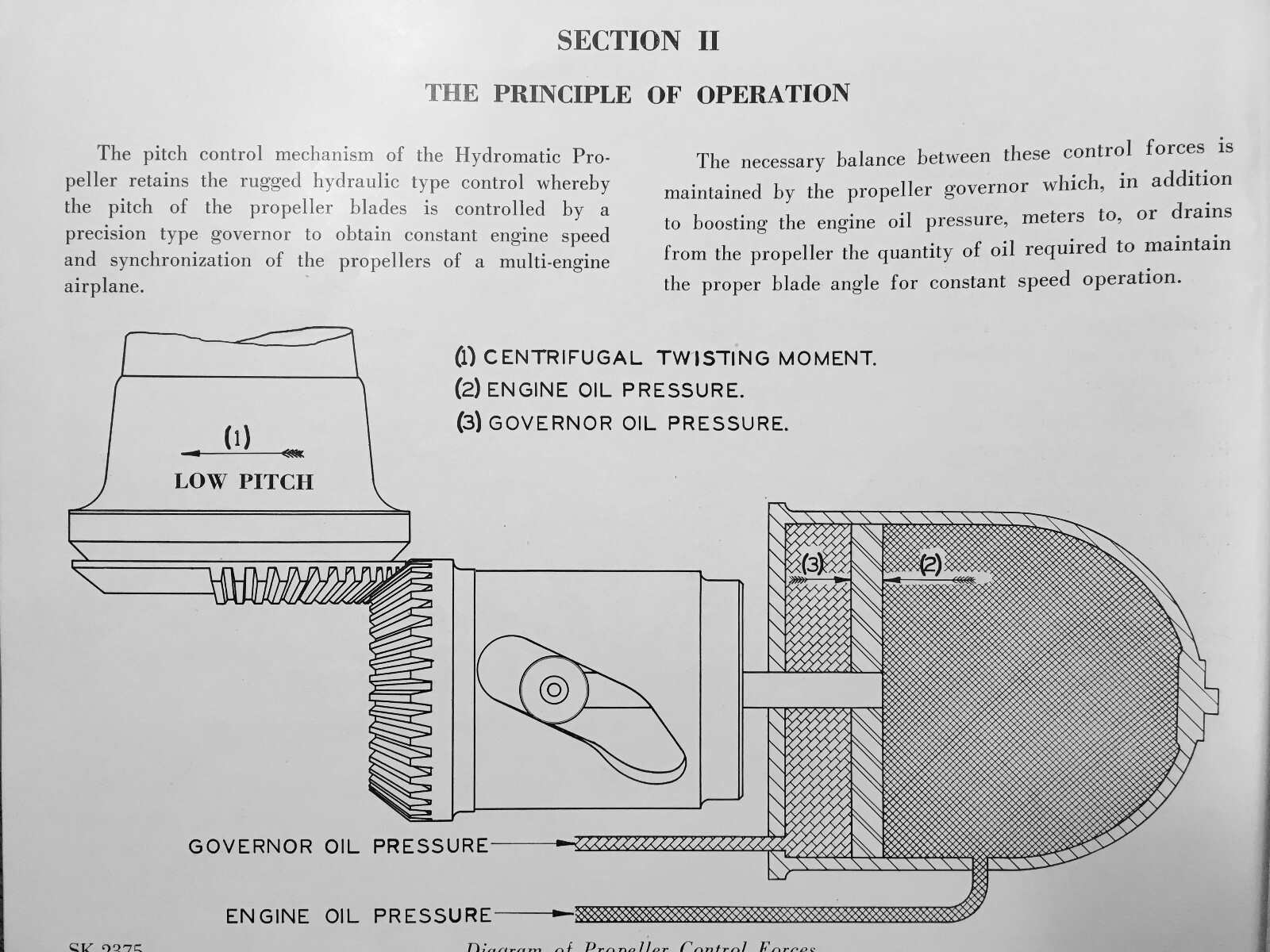
The Hydromatic propeller was a truly brilliant design, simple in concept although highly engineered in practice. In previous Hamilton Standard controllable-pitch and constant-speed propellers, the metered and pressurized oil from the engine increased the pitch of the propeller blades, which was balanced by centrifugal forces from counterweights, which decreased the pitch of the propeller blades. The balance between the two forces (pressurized oil and centrifugal) determined the pitch of the propeller blades. In contrast, the Hydromatic propeller had a prominent and distinctive dome on the front end of the propeller hub, which in some aircraft was concealed under a spinner. The dome contained a piston which could move forward and aft in the dome. The flow of pressurized oil from the engine to the hub was controlled by a valve which in turn was controlled by a governor. Depending on whether the oil pressure was higher on the forward or aft side of the piston, the piston moved forward or aft. The movement of the piston moved a cam, which converted the linear motion of the piston to a rotary motion. The cam had a bevel gear on its base, which mated to gears on the bases of the propeller blades. Therefore, the linear motion of the piston moved the cam, which rotated the cam, and then the cam rotated the blades. The operation of the Hydromatic propeller is truly a case of “a picture being worth a thousand words,” and the following pictures illustrate the principles of it.

First arriving at customers in 1938, the Hydromatic propeller was enormously successful in both civil and military applications. It was durable, reliable, and had high performance. The product further increased Hamilton Standard’s dominance of the propeller market. Yet the true impact of the Hydromatic propeller could not yet have been fully appreciated by those who devised it. That impact will be covered in the next article in this series.















Fascinating. Really interesting and the cutaways really help show what is going on.