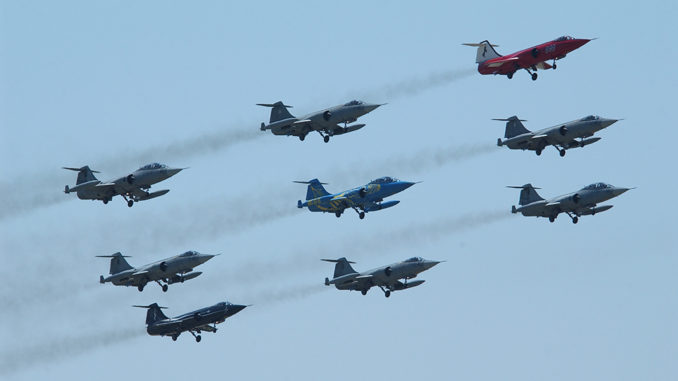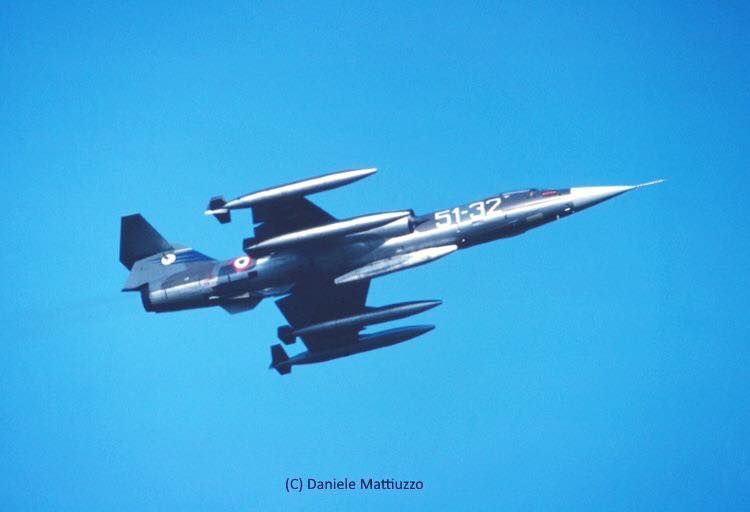

An Italian F-104 pilot from the 51st Wing managed to put the far more maneuverable American jets in difficulty during a simulated dogfight in the 1980s. It was a surprising victory that left the U.S. Navy genuinely impressed. Anyone who has flown the F-104 Starfighter—the high-performance, supersonic interceptor that served the Italian Air Force for a full forty years—will always make one thing clear: the 104 was a “special” aircraft. One could fly other airplanes, even “more modern” ones, but nothing quite matched the experience of piloting “a missile with a man in it. For this reason, those qualified to fly Lockheed’s Starfighter have always considered themselves a little special as well.
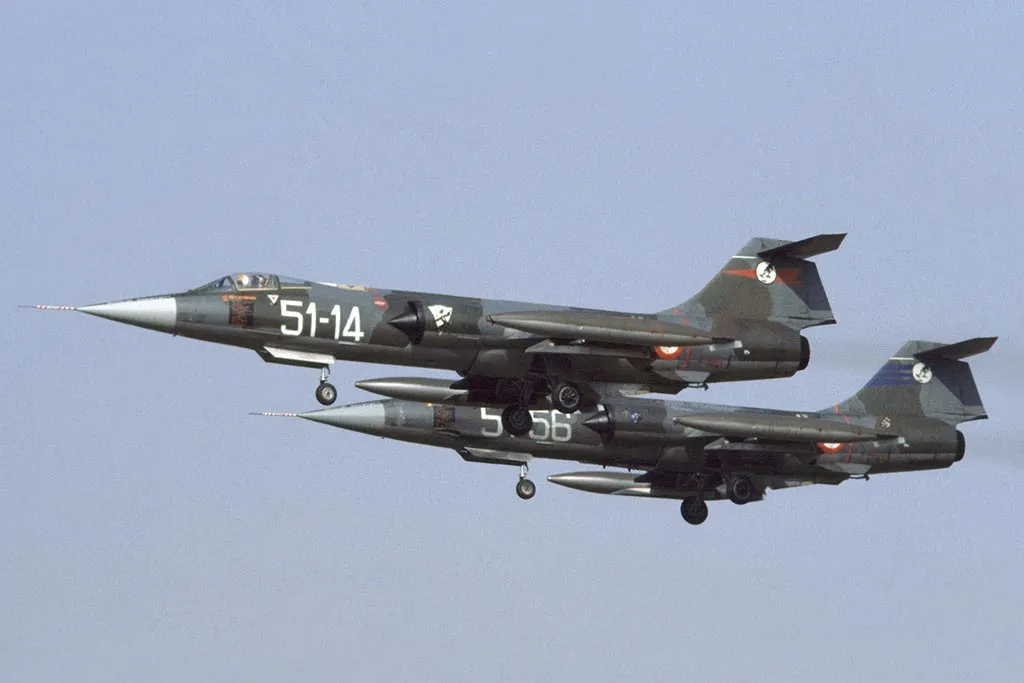
The “Spillone” (Italian for “big needle”), as it was nicknamed by Italian pilots who began flying the first F-104Gs back in 1963, was the protagonist of many gripping—and at times controversial—stories. F-104 pilots were among those who observed unusual activity on the evening of the Ustica incident in June 1980. It was also F-104 crews who prevented the possible engagement by two U.S. Navy F-14 Tomcats against the Egyptian Boeing 737 carrying the hijackers of the cruise ship Achille Lauro during the famous night at Sigonella. Less well known, however, is the story of an F-104 facing one of the legendary U.S. Navy carrier-based air superiority fighters in a simulated aerial duel.
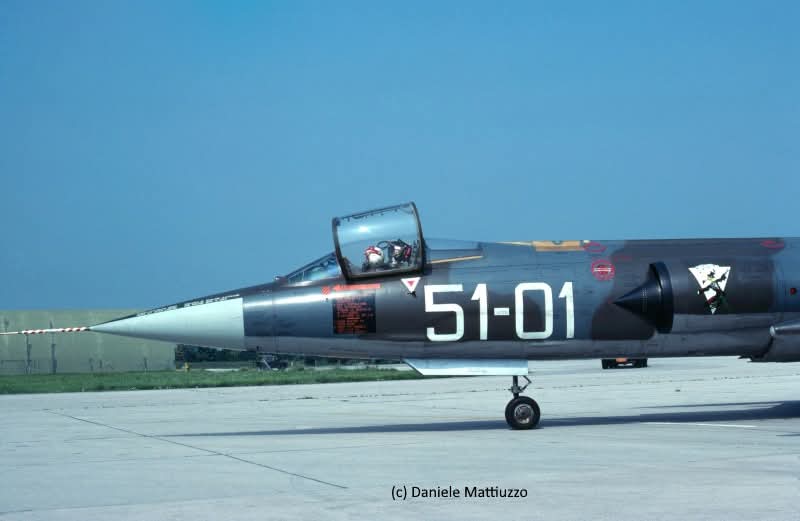
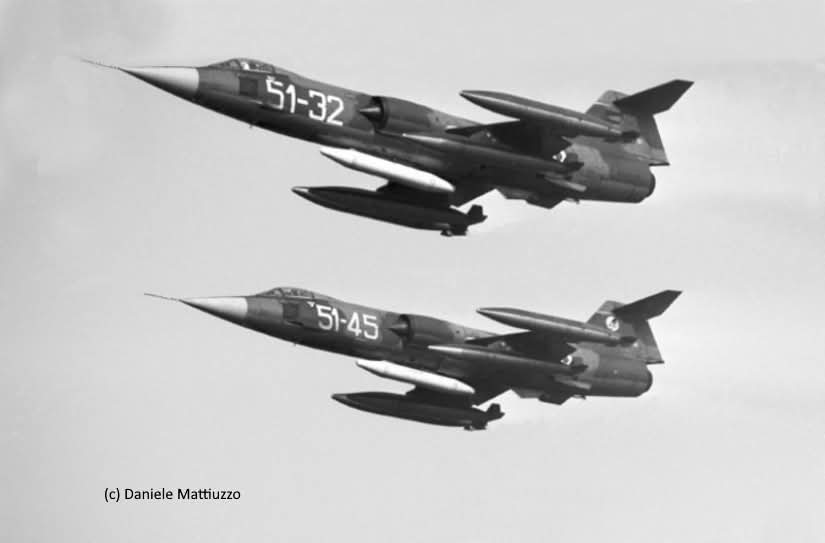
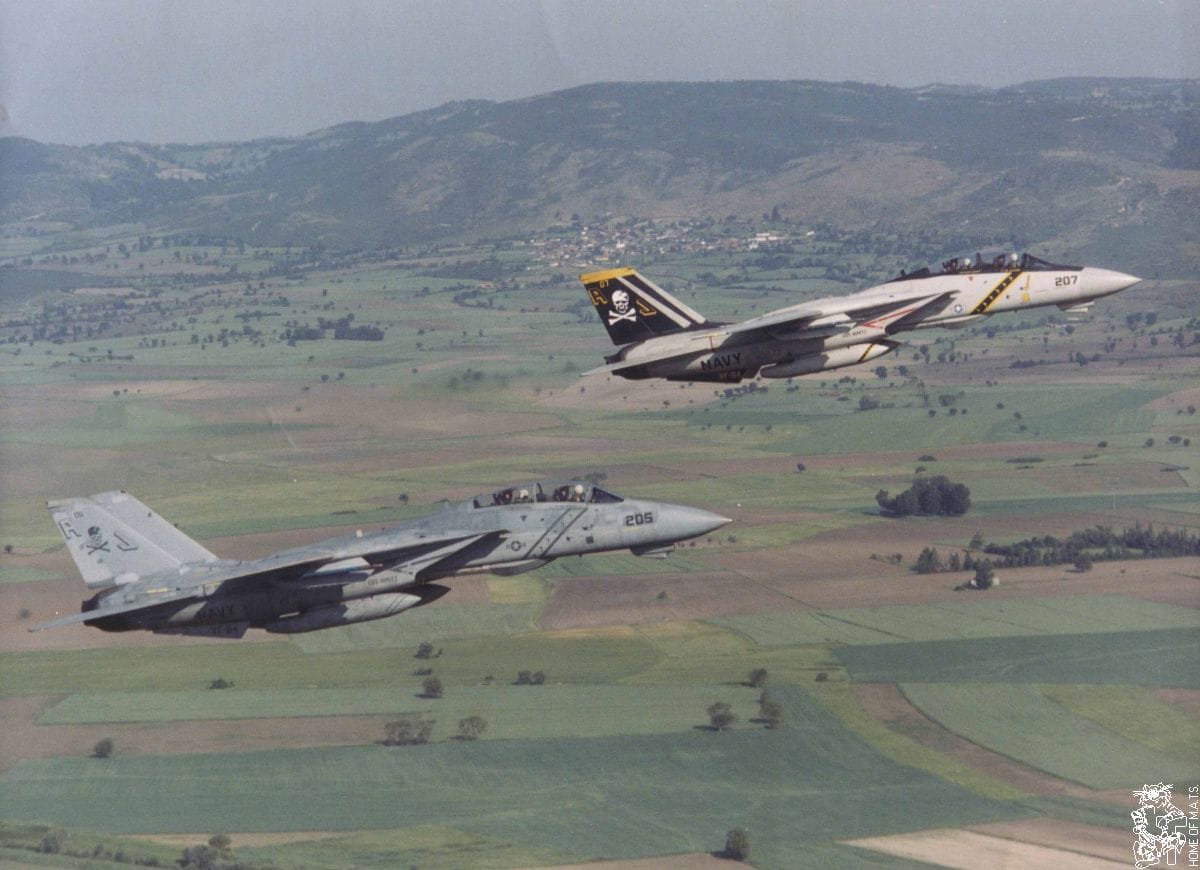
The protagonists of this episode were a pair of “Spilloni” assigned to the 51st Wing “Ferruccio Serafini” at Istrana, which scrambled together with a pair of fighters from the 4th Wing “Amedeo d’Aosta” to intercept Tomcats launched from the deck of USS Nimitz. The purpose of the mission was to act as “aggressors” during a joint exercise. It was one of many such exercises involving Italian Air Force interceptor wings during those years, confirms Luca Anedda, former commander of the 23rd Squadron of the 5th Wing “Giuseppe Cenni” based at Rimini.
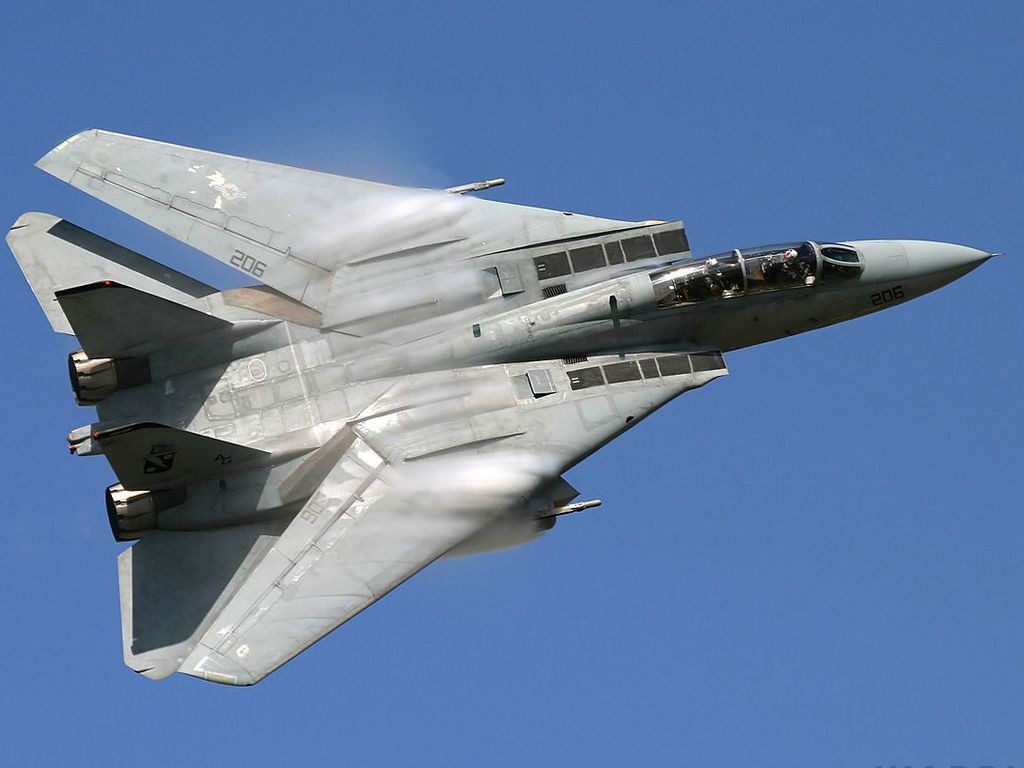
According to the account, which dates back to 1987–88, the American pilots did not use their radar systems during the interception—systems that would have allowed the F-14s to detect, identify, and shoot down the Starfighters well before visual contact. Confident in the Tomcat’s superior maneuverability, they allowed themselves to be drawn into what was later described as “a highly entertaining maneuvering dogfight.” The F-104 pilots, flying a seasoned interceptor, relied entirely on speed, fully aware that the Starfighter’s small wing area would never allow it to match the tight maneuvers immediately displayed by the Tomcats as they reduced wing sweep. As many will recall from the iconic film Top Gun, the F-14 was equipped with variable-geometry wings.
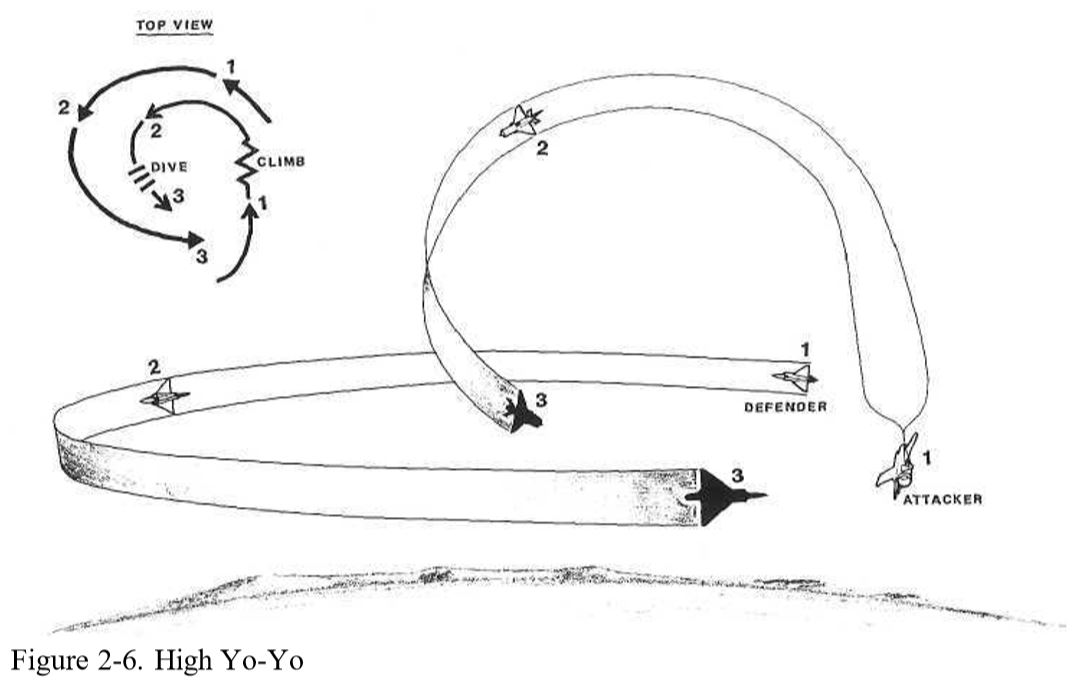
The Tomcat turned more tightly than the Starfighter, as expected. However, the Italian pilot—fully aware of the F-104’s limitations and unique characteristics—chose to employ the so-called “yo-yo tactic.” Named after the well-known toy, this maneuver is believed to have been first adopted by MiG-15 pilots during the Korean War, back when air combat still relied on machine guns and cannons, and pilots could not depend on radar target acquisition or air-to-air missiles, which would later revolutionize aerial combat.
The yo-yo tactic was developed to place an aircraft “on the tail of a highly maneuverable opponent” by executing a rapid climb using the ailerons to roll the aircraft, followed by pushing the nose down at the top of the maneuver, anticipating the direction in which the target would be, and diving onto its tail from above with a speed advantage. Explaining it to a layperson is likely harder than performing it for a skilled fighter pilot. What is certain is that the pilot from the 51st Wing—whose iconic emblem depicts a Black Cat clutching the famous “Green Mice”—applied “maximum dry thrust and a decisive pull on the stick” to gain a position of advantage over the Tomcat. The American crew reportedly appeared “perplexed,” having lost sight of the Starfighter, which announced its return only through the roar of its engine, causing the U.S. Navy’s “big cat” to shudder.
The Italian “Spillone” had entered a dive, passing directly over the back of the F-14 after “gun-camera shooting” it, the Italian lieutenant later recounted. In a real engagement fought using cannon fire alone—though it should be noted that the F-104S, unlike the G-model fighter-bomber, was not equipped with the internally mounted M61 Vulcan cannon in the forward left underside—the conclusion was that, thanks to the maneuver, the American fighter would already have been shot down or severely damaged. An outcome that left both the pilot and his radar intercept officer, or Weapon Systems Officer, decidedly shaken.
The story was published in the May 1988 issue of Aeronautica & Difesa magazine, concluding that the Italian fighter disengaged as the victor, leaving the Americans with only the echo that briefly drowned out the deep rumble of its engine. But this was not the only notable victory achieved by an Italian F-104. Commander Anedda himself would become the protagonist, just a few years later, of a simulated shootdown of a MiG-29—one of the principal fighters that had served “behind the Iron Curtain” in the air forces of the Warsaw Pact. In that case, the F-104s of the 23rd All-Weather Interceptor Squadron of the 5th Wing faced German MiG-29s which, following the dissolution of the Soviet Union, had rapidly transitioned from “enemies” to “friends.” The Italian pilots exploited a weakness in the MiG-29’s onboard radar: its “dotted” target track could detect contacts at long range, but when facing a tightly spaced fighter formation, it would display a single target rather than the actual number of opposing aircraft.