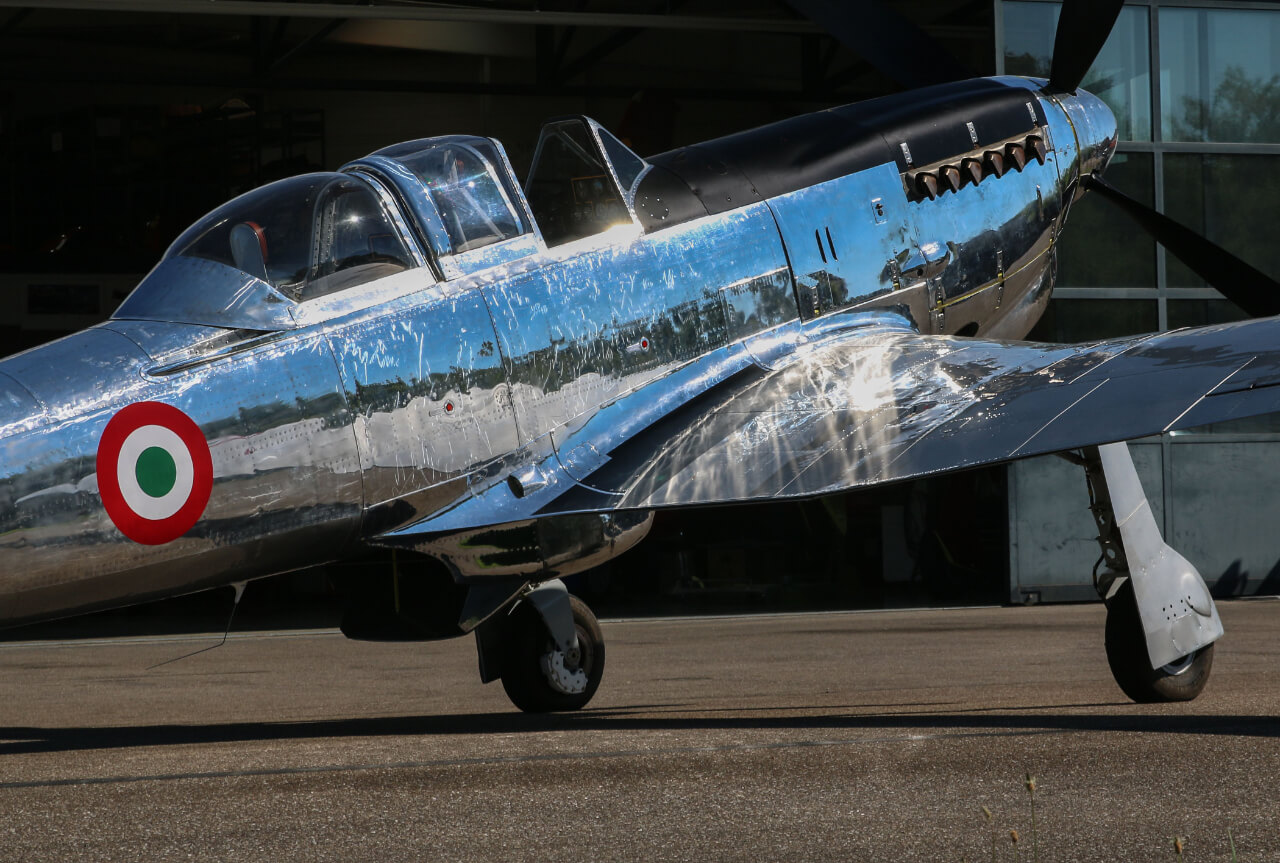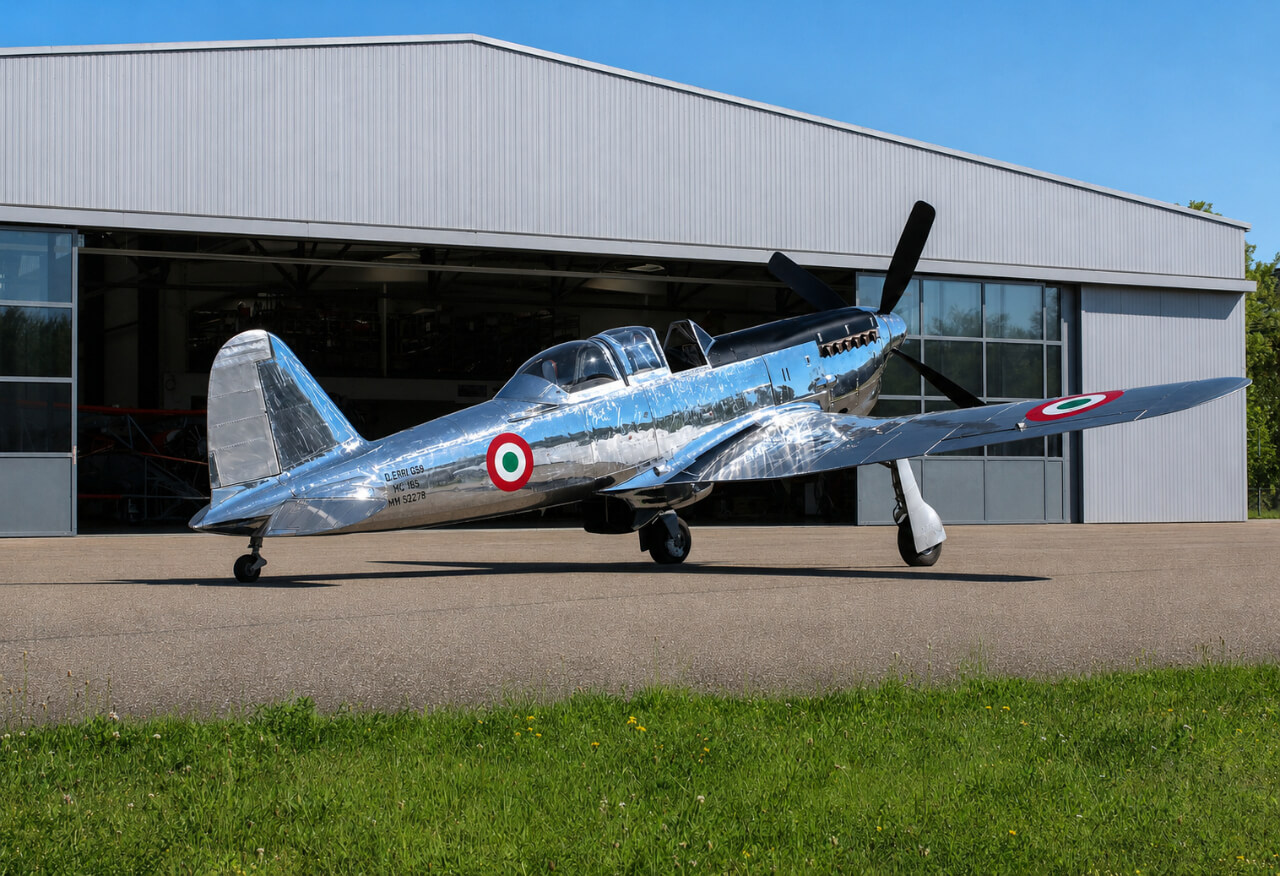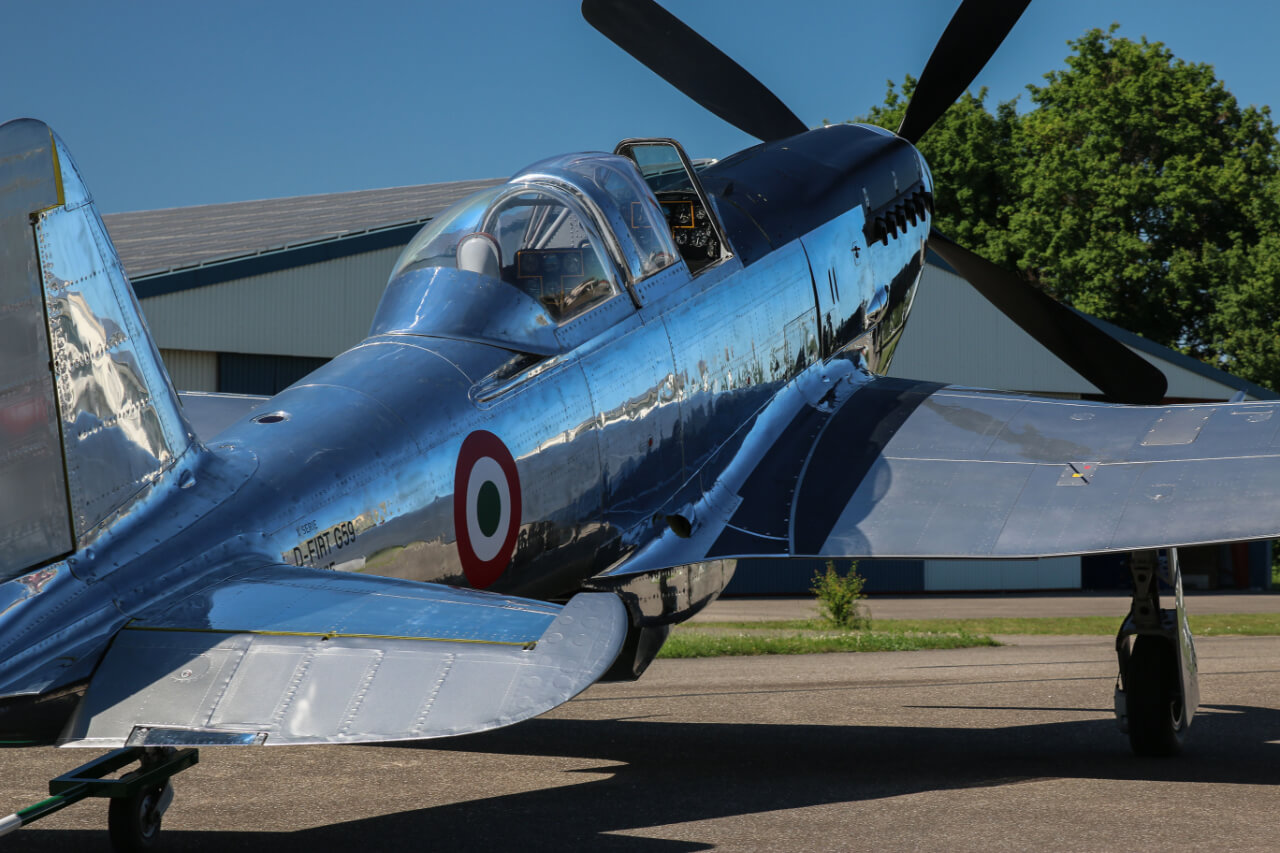
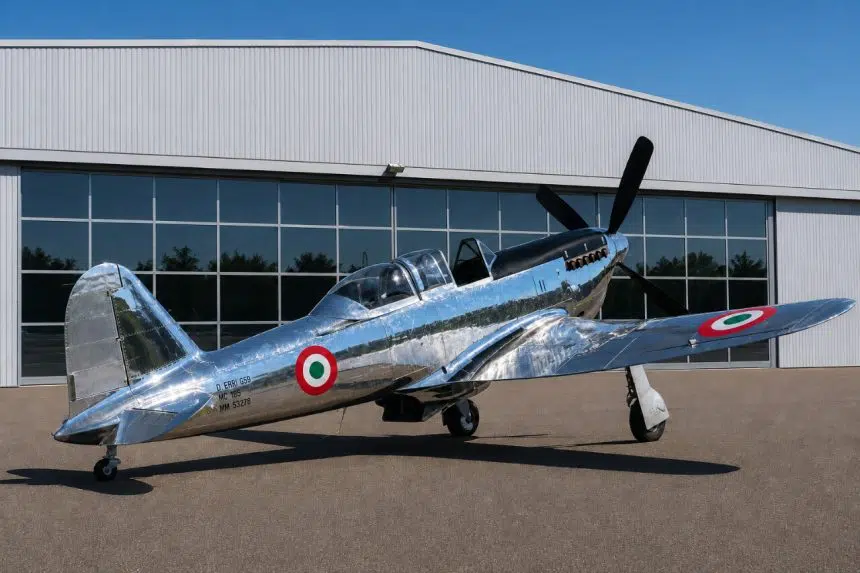

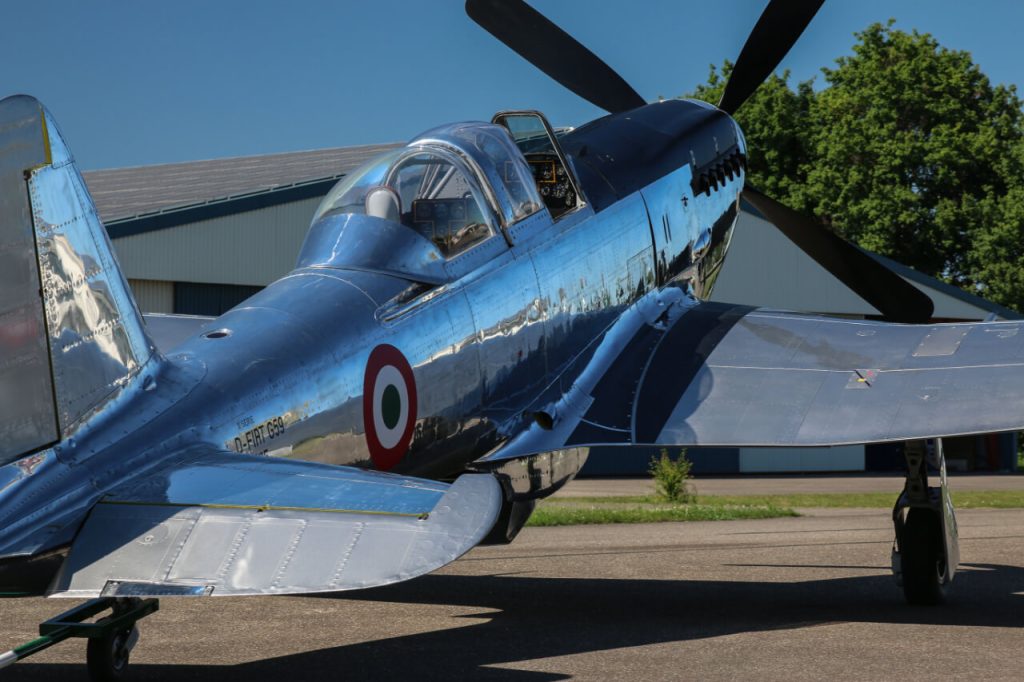
Another rare warbird has entered the market through Platinum Fighter Sales. The company recently listed Fiat G.59-4B MM53278, a beautifully restored 1952 example formerly owned by renowned Italian-born Australian aviator Guido Zuccoli. Widely respected within the international aviation community, Zuccoli was one of the pioneers of Australia’s classic aircraft and warbird movement. The Fiat G.59 was developed from the G.55 Centauro, one of Italy’s most capable fighters of WWII. Designed by celebrated Italian aeronautical engineer Giuseppe Gabrielli, the G.55 combined excellent handling with impressive performance and was considered a formidable contemporary of fighters such as the North American P-51 Mustang. One important detail concerns the aircraft’s identity. Although it has often been identified as MM53278, research by aviation historian Geoff Goodall, supported by several other Italian sources, indicates that its correct Matricola Militare—the Italian term for military serial number—is MM53772. The aircraft also holds the distinction of being the last Fiat G.59 to fly in Italian Air Force service.
(Image credit: Platinum Fighter Sales)
Following WWII, dwindling supplies of Daimler-Benz DB 605A engines and their license-built Fiat R.A.1050 derivatives prompted Fiat to adapt the G.55 airframe to accept the more readily available Rolls-Royce Merlin. The resulting aircraft was powered by the 1,610-hp Merlin T.24-2. The first prototype, converted from a two-seat G.55B and designated G.55BM, flew in early 1948. Six single-seat G.55As and six two-seat G.55Bs were subsequently converted into G.55AM and G.55BM fighter-trainers. These were later redesignated G.59-1A and G.59-1B, respectively. One G.59-1A was equipped with four wing-mounted 20 mm Hispano cannons. Gabrielli later designed several other important Italian military aircraft, including the Fiat G.91 jet fighter and the Aeritalia G.222 transport. An extensively modernized development of the G.222 remains in service today as the Leonardo C-27J Spartan.

The G.59-2A and two-seat G.59-2B were broadly similar to the earlier versions. Syria acquired 26 G.59-2As equipped with four cannons and four G.59-2Bs fitted with two .50-caliber machine guns. A single G.59-2A was also delivered to Argentina for evaluation. The G.59-3A was developed as a prototype navigation trainer powered by a 1,420-hp Rolls-Royce Merlin 500/20. That engine was retained for the final G.59-4A and two-seat G.59-4B variants, both readily identifiable by their bubble canopies. Including prototypes and the 12 aircraft converted from G.55s, Fiat produced approximately 200 G.59s.

The aircraft now offered for sale was built in 1952 as a G.59-4B Series 10. It served with the Italian Air Force under military serial MM53278 and carried the code RS-25. After being withdrawn from service, it was placed in storage at Pratica di Mare Air Base near Rome. Zuccoli acquired the aircraft during an auction held by the Italian Air Force Museum at Vigna di Valle in November 1983. It was subsequently shipped to Sanders Aeronautics in Chino, California, for restoration to airworthy condition. Completed in July 1987, the restoration returned the aircraft to flight under the American registration NX59B. Finished in metallic gray with Italian markings, it carried the name Ciao Bella—Italian for “Hello, Beautiful.”

In 1989, the Fiat was shipped to Australia and registered as VH-LIX on September 5. By 1995, it had been converted into a single-seat configuration and repainted in a fictional camouflage scheme inspired by Italian WWII fighters. Its markings incorporated a cat emblem resembling that used by the Italian Air Force’s 51º Stormo, while the name Centauro recalled the G.55 from which the G.59 had been developed. The aircraft flew for a period as a single-seater before being returned to its original dual-control configuration ahead of its sale.
(Image credit: Platinum Fighter Sales)
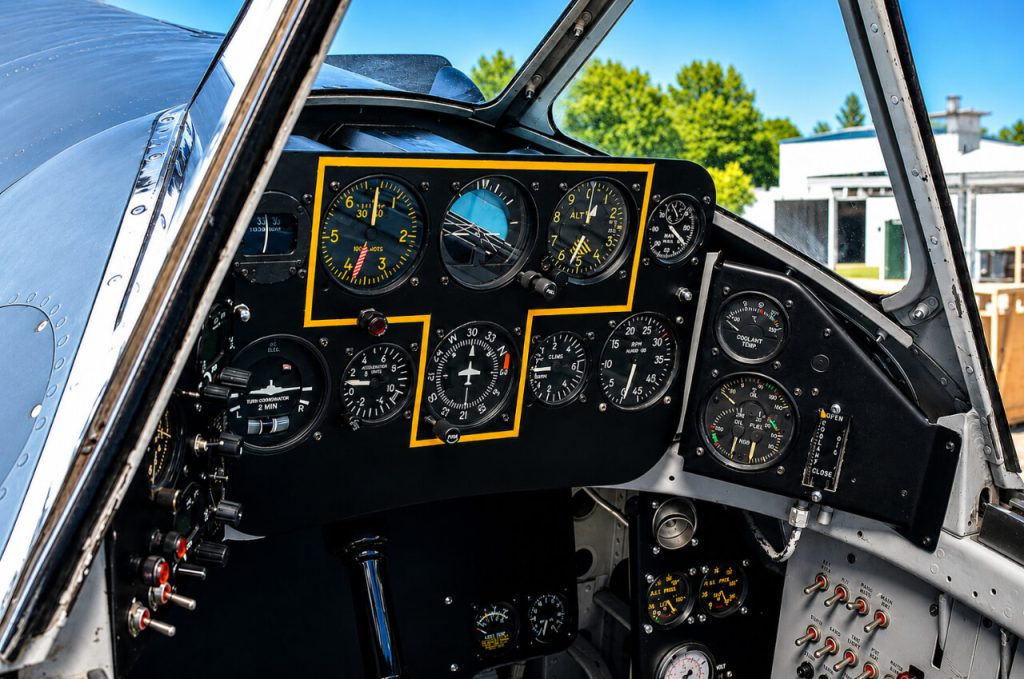
According to the listing, the airframe has accumulated approximately 580 hours since its ground-up restoration by Sanders Aeronautics in 1987. It has flown approximately 30 hours since an inspection and repair as necessary—commonly known as an IRAN—was completed by MeierMotors in Germany around 2017. Power is provided by a Rolls-Royce Merlin 500/20 with approximately 10 hours since a major overhaul by Vintage V-12s of California. Additional information about this exceptionally rare Italian warbird is available through Platinum Fighter Sales.