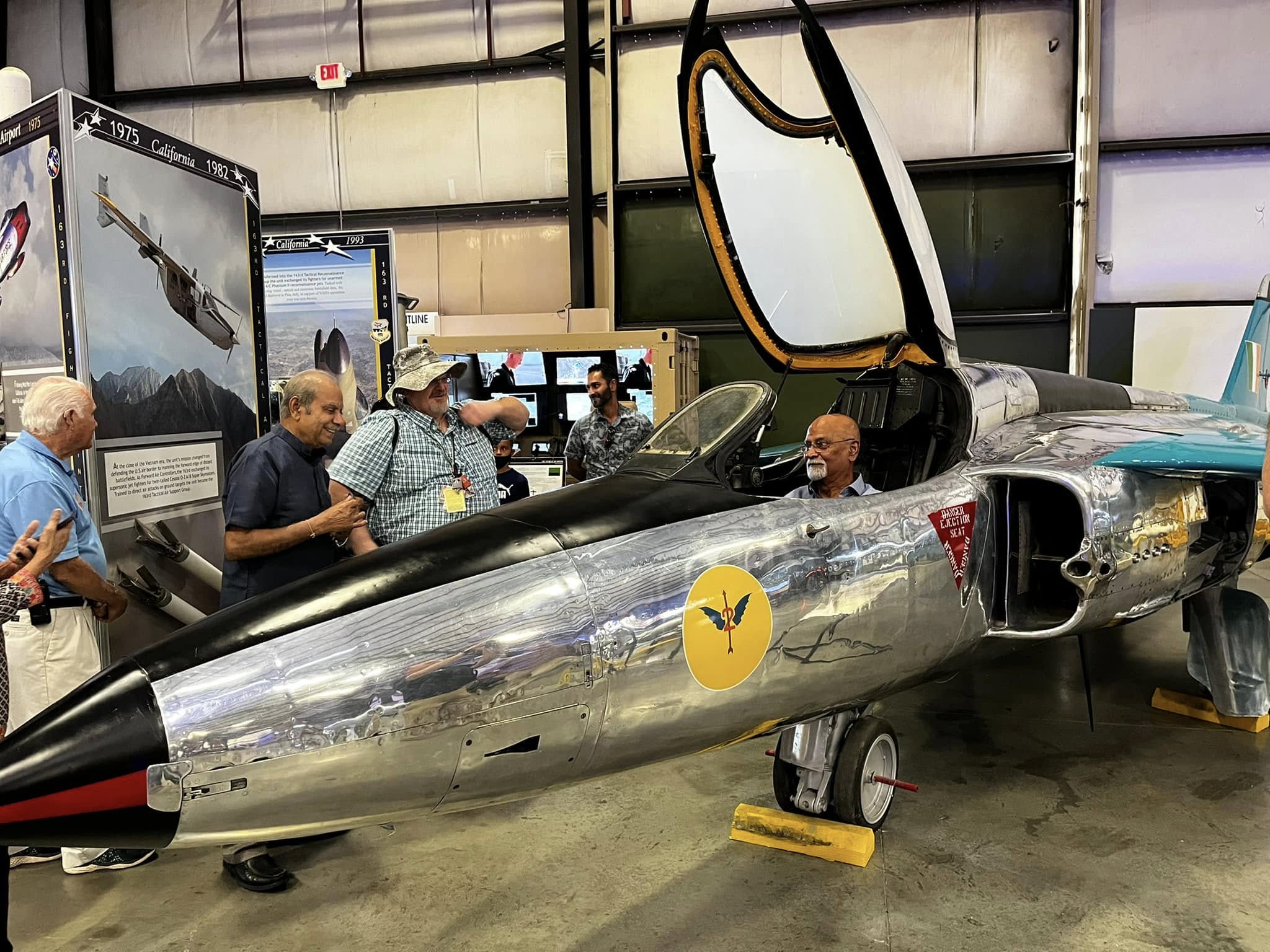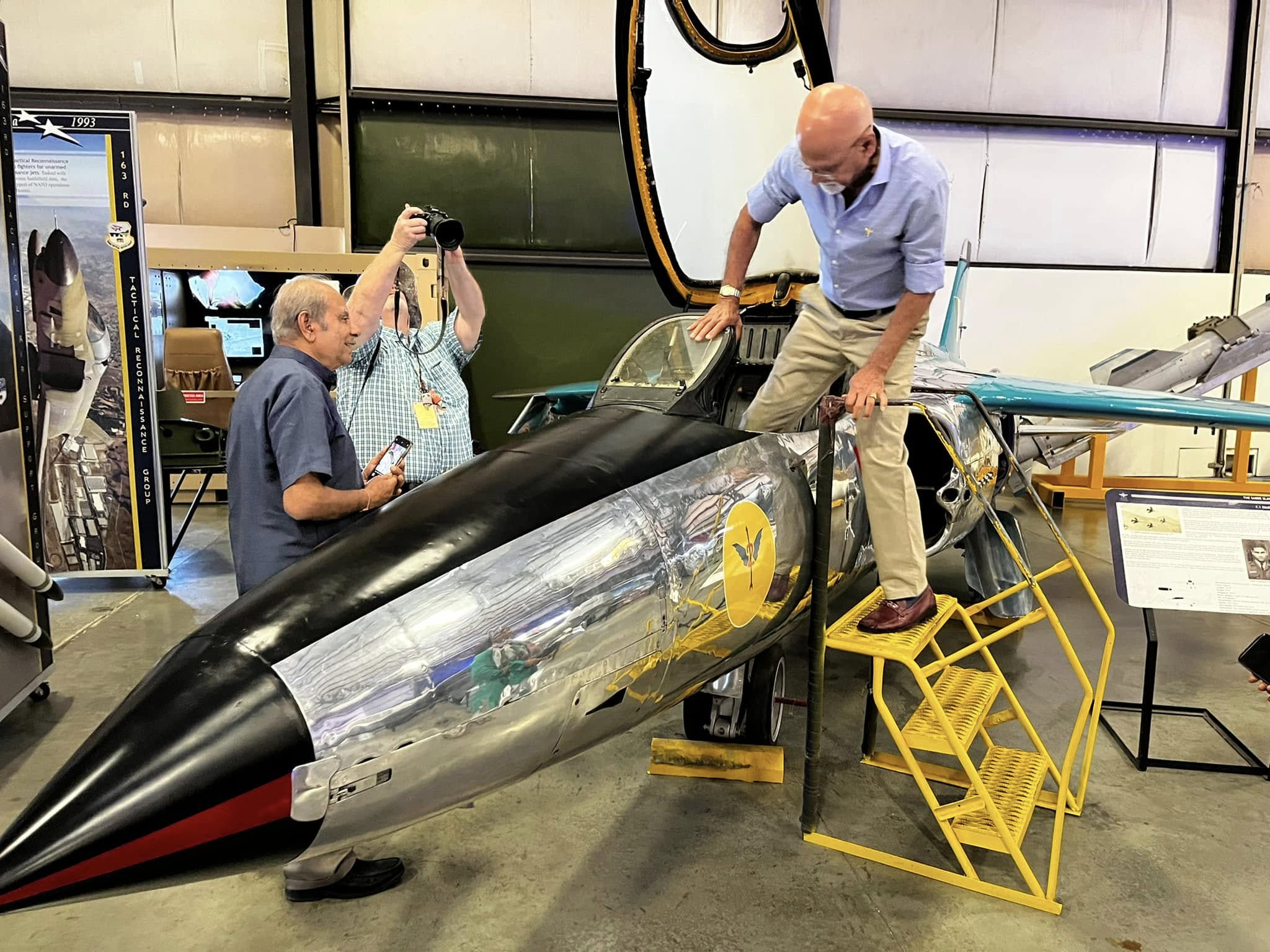
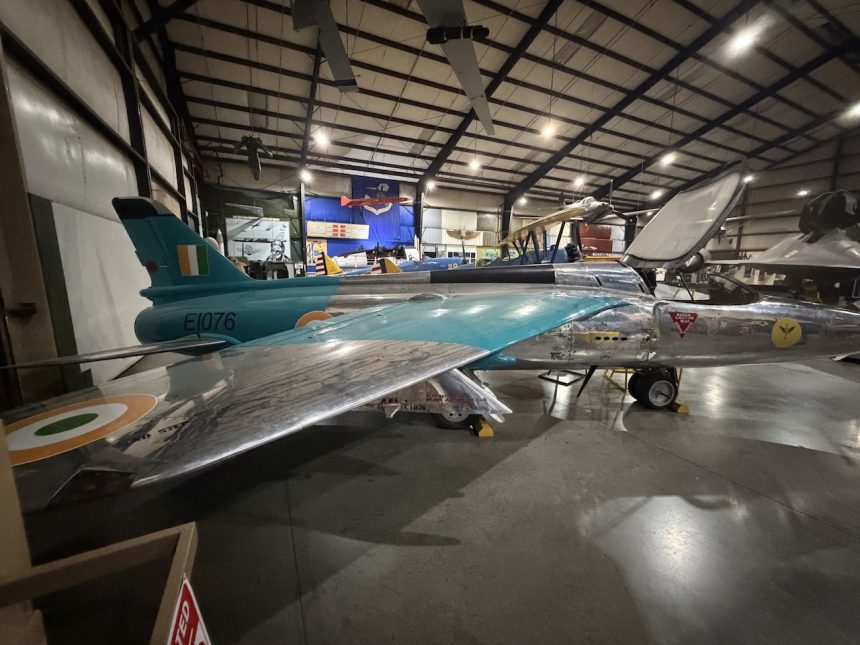

At the March Field Air Museum in Riverside, California, sits an FO-141 Gnat with a unique history. The plane on display in the museum was part of two wars between India and Pakistan in the 1960s and 1970s. The Gnat was a small, subsonic fighter and trainer aircraft designed in the mid-1950s by W.E.W. Petter. It was developed as a low-cost option to military planes that were becoming more expensive and complex. The Gnat was designed in the United Kingdom by Folland Aircraft Ltd for production. The design made it easy for countries with limited industrial resources to build and maintain the aircraft without specialized tooling. The FO-141 Gnat was popular among pilots. While the Royal Air Force did not use it as a fighter, the Gnat proved useful as a trainer and was an important member of the RAF Red Arrows Aerobatics Demonstration Team. The aircraft was 29.9 feet long, 8.9 feet high, with a wingspan of 22.2 feet. It was powered by a Bristol Siddeley Orpheus 701 turbojet engine, producing 4,850 pounds of static thrust. The FO-141 Gnat could reach a top speed of 695 miles per hour, with a service ceiling of nearly 50,000 feet. It was armed with two 30 mm ADEN cannons and had provisions for either two 500-pound bombs or 18 rockets of 76 mm.
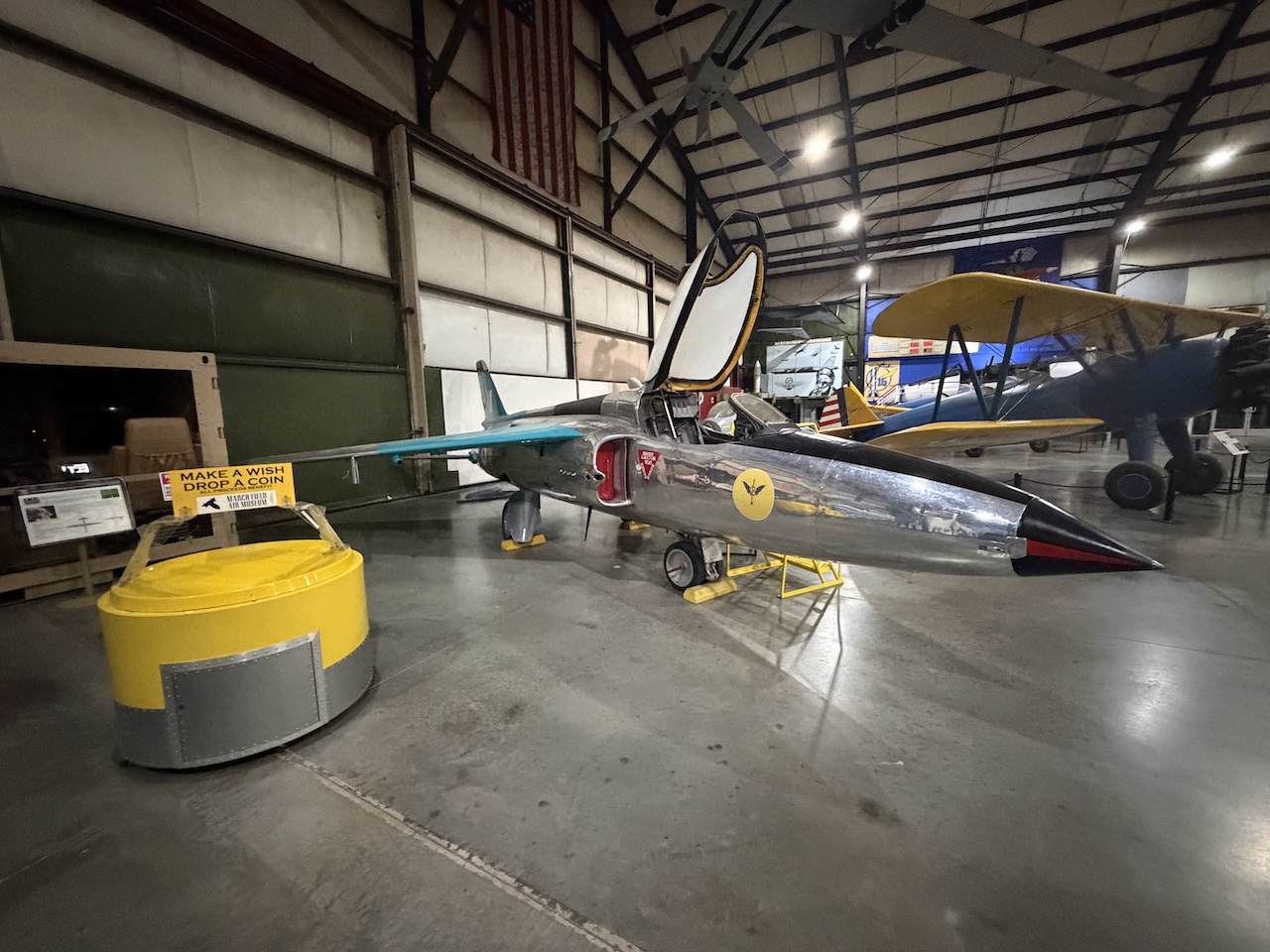
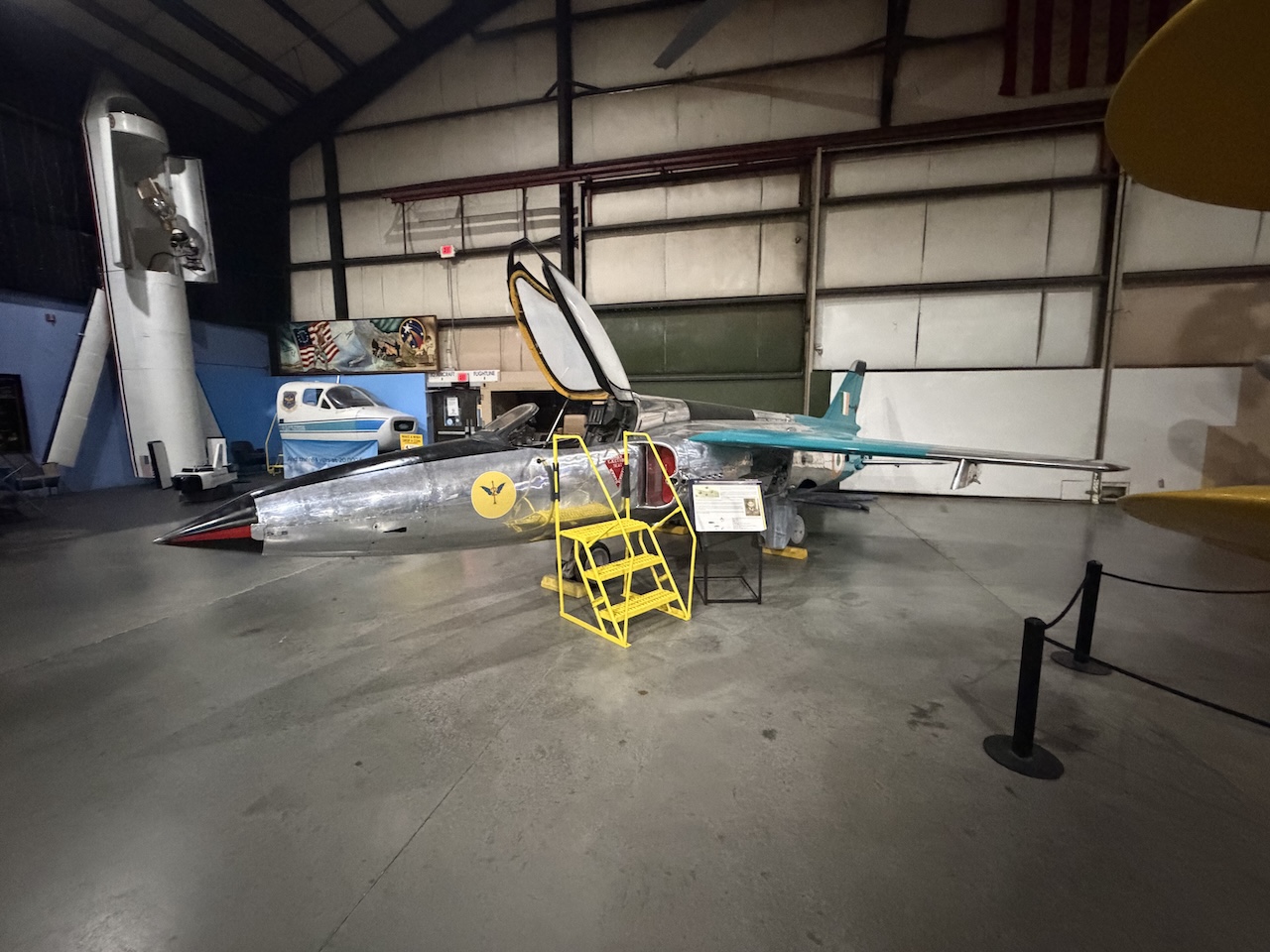
FO-141 Gnat – The ‘Sabre Slayer’
The most famous service of the FO-141 Gnat was as a fighter pilot with the Indian Air Force in the conflicts with Pakistan from 1965 to the early 1970s. It earned the nickname “Sabre Slayer” for its success against the Canadair Sabre, a variant of the US F-86. The Gnat E1076, displayed at the March Field Air Museum, was made by Folland and assembled by Hindustan Aeronautics Limited. It served with the Indian Air Force’s No. 2 Squadron, known as the “Winged Arrows,” during the Indo-Pakistan Wars in 1965 and 1971. In 1971, a young fighter pilot, Flight Lieutenant V P Vadera, flew E1076 on 20 combat missions during the war. Vadera described the FO-141 Gnat as “the most feared of fighters.” In April 1972, following a conflict, Flt Lt Vadera was returning from a firing-range sortie in E1076. As he prepared to land, he tried to lower the speed brakes but found the lever was loose. He realized that the connection between the Teleflex cable and the landing gear had come loose, probably due to vibrations from firing the cannons. He quickly went through the emergency checklist and attempted different methods to deploy the landing gear, including rolling the aircraft upside down and pulling negative ‘G’s. None of these worked. Standard procedure asked him to eject, which would save his life but destroy E1076. After being advised by his Flight Commander to eject, Vadera chose to try to save the FO-141 Gnat by making a belly landing.
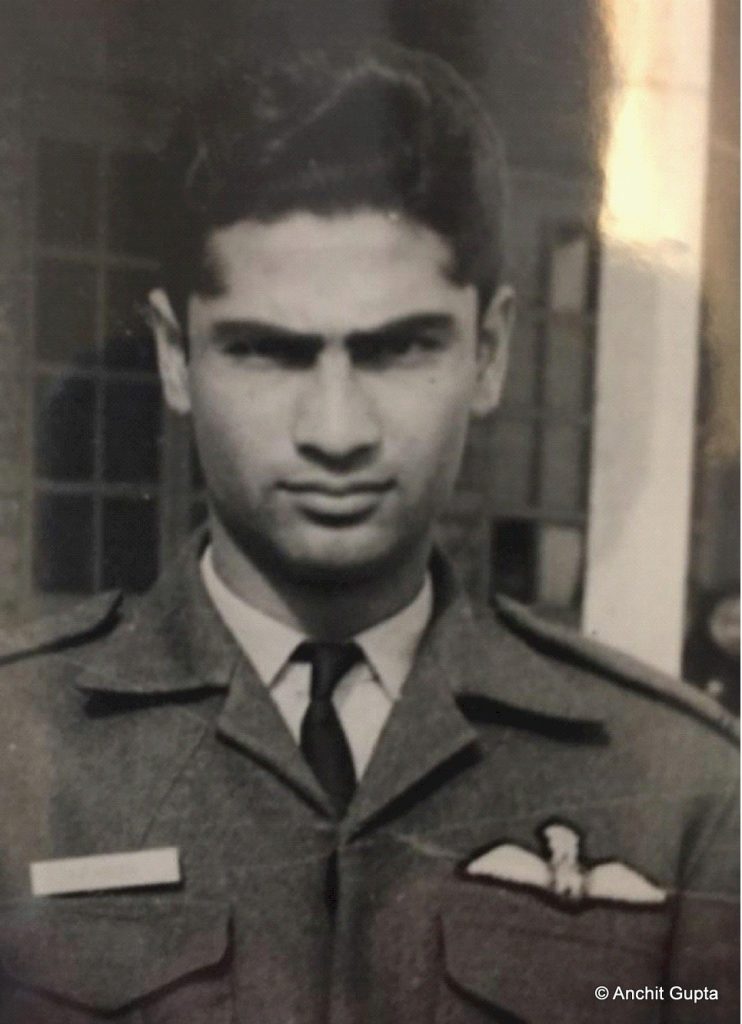
(Image credit: Indian Air Force)
A Belly Landing
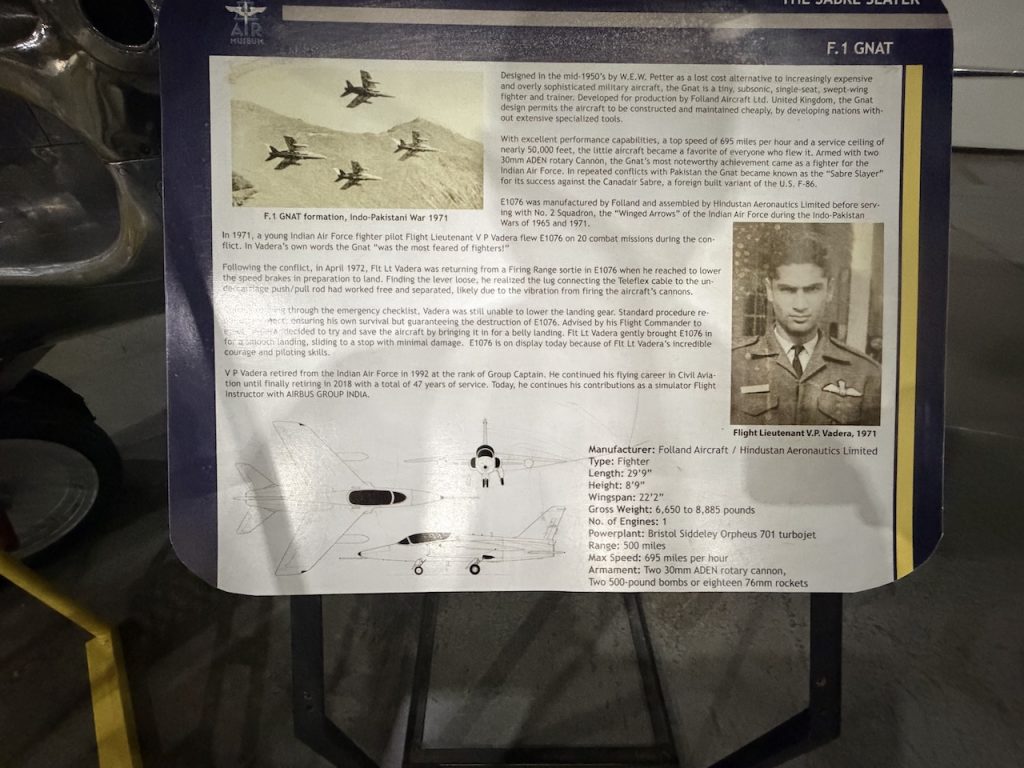
Flight-Lieutenant Vadera burned off the FO-141 Gnat’s fuel before landing. As the plane landed on the runway, the right drop tank broke off, causing the Gnat to spin into the dirt beside the runway, where it came to a stop with little damage. Knowing the aircraft still carried live ammunition that could explode at any moment, Flt Lt Vadera quickly exited the cockpit and took cover in a nearby ditch. When emergency crews arrived, they found the aircraft sitting idle, with the young pilot relaxing nearby. Flt Lt Vadera’s bravery and flying skills were preserved in the aircraft, which was later brought to the United States by the Military Aircraft Recovery Company and donated to the museum. Tim Carlson, a volunteer at the museum, restored this FO-141 Gnat. He painted it in the original colors of the Indian Air Force’s Second Winged Arrows Squadron as part of his Eagle Scout project. In August 2022, V P Vadera, who retired from the Indian Air Force in 1992 as a Group Captain and then continued flying in Civil Aviation until he finally retired in 2018, visited the March Field Air Museum with his family to see the FO-141 Gnat fighter he flew during the Indo-Pakistani Wars in the early 1970s. During his visit, he said that the FO-141 Gnat was polished to such a high shine that he believed he could have gained an extra 15 knots in speed if it had looked that smooth while in service. For more information about March Air Field, visit www.marchfield.org.