






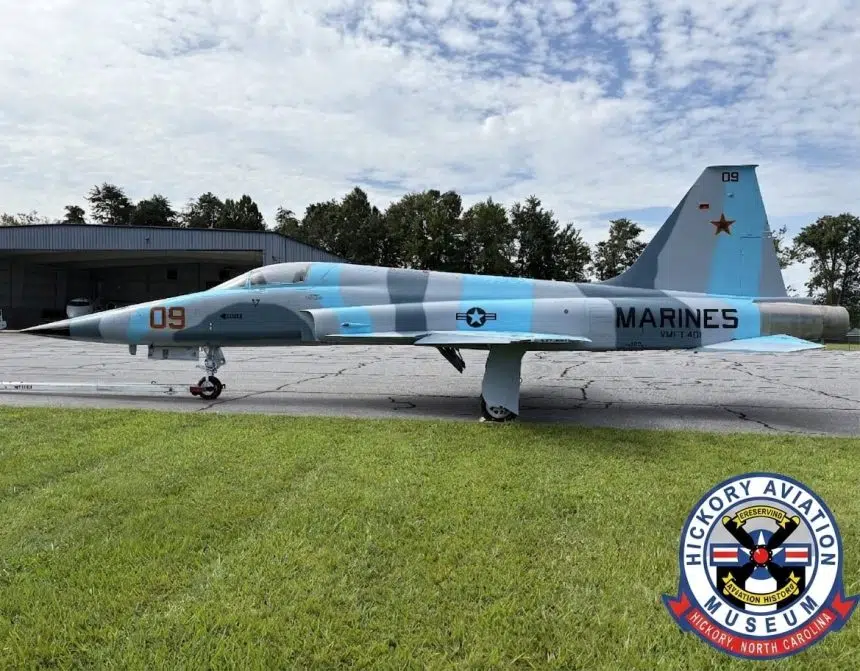

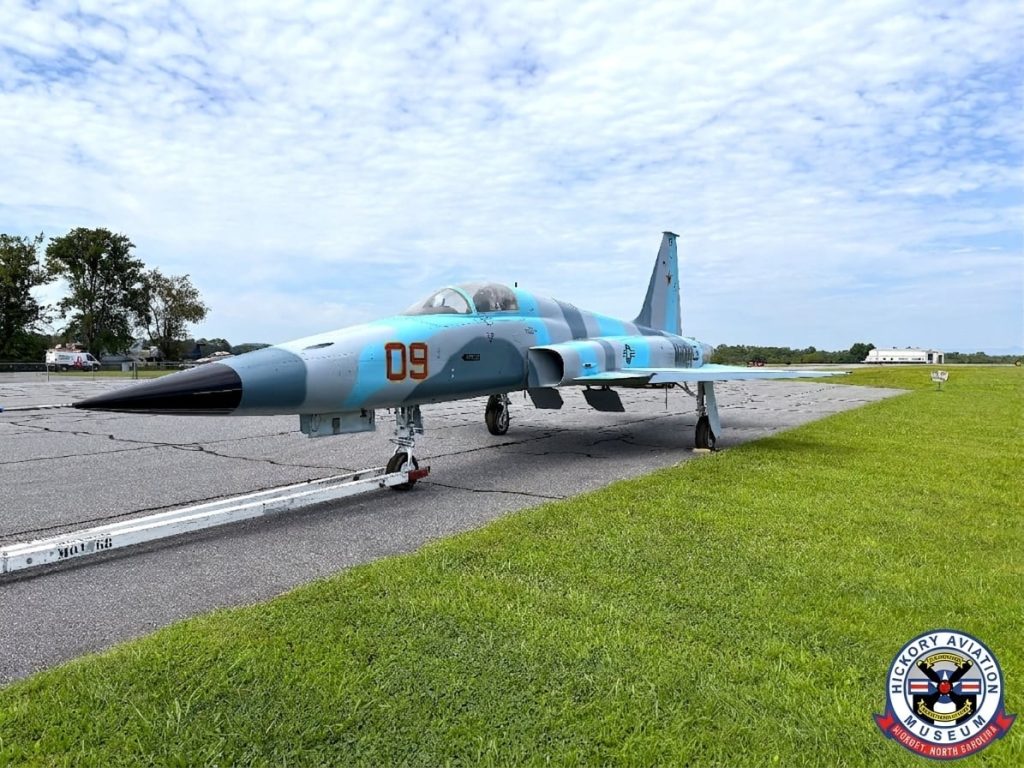
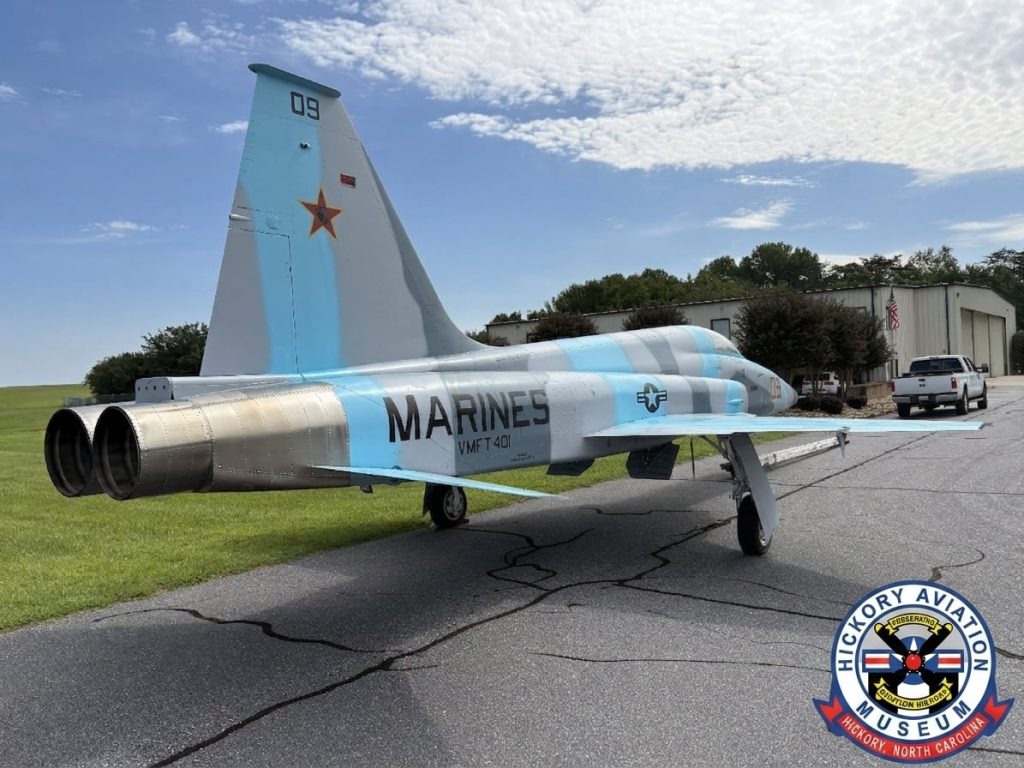
The Hickory Aviation Museum’s volunteer restoration team has completed work on its Northrop F-5E Tiger II, a project the museum describes as the team’s finest restoration to date. The aircraft will be placed on public display inside the museum’s new hangar beginning September 1. The aircraft, identified by the museum as BuNo 741540, originally served with the U.S. Air Force as serial number 74-1540. Accepted by the Air Force in 1974, it was later transferred to the U.S. Marine Corps and assigned to Marine Fighter Training Squadron 401 (VMFT-401) at Marine Corps Air Station Yuma, Arizona.

Known as the “Snipers,” VMFT-401 operates as an adversary squadron, providing dissimilar air combat training for frontline Marine Corps units. During these exercises, the lightweight and highly maneuverable F-5 was used to replicate the performance and tactics of potential enemy aircraft, particularly the Soviet-designed MiG-21. Northrop developed the F-5 primarily as an affordable fighter for allied nations, although limited numbers also served with the U.S. Air Force and Marine Corps. The original F-5 family emerged from Northrop’s privately developed N-156 design, which first flew in 1959. The more capable F-5E Tiger II followed in 1972.
(Image credit: Bill Baker)
Powered by two General Electric J85-GE-21 afterburning turbojet engines, the F-5E can reach approximately Mach 1.6, or just over 1,000 mph. Nearly 1,400 Tiger IIs were produced, in addition to more than 1,200 aircraft belonging to the earlier F-5A, F-5B, F-5C, and F-5D series. The newly restored Tiger II reflects the high standards and close attention to detail that have become hallmarks of the museum’s volunteer restoration program. Visitors can see similar work throughout the museum’s collection of completed aircraft.
(Image credit: Bill Baker)
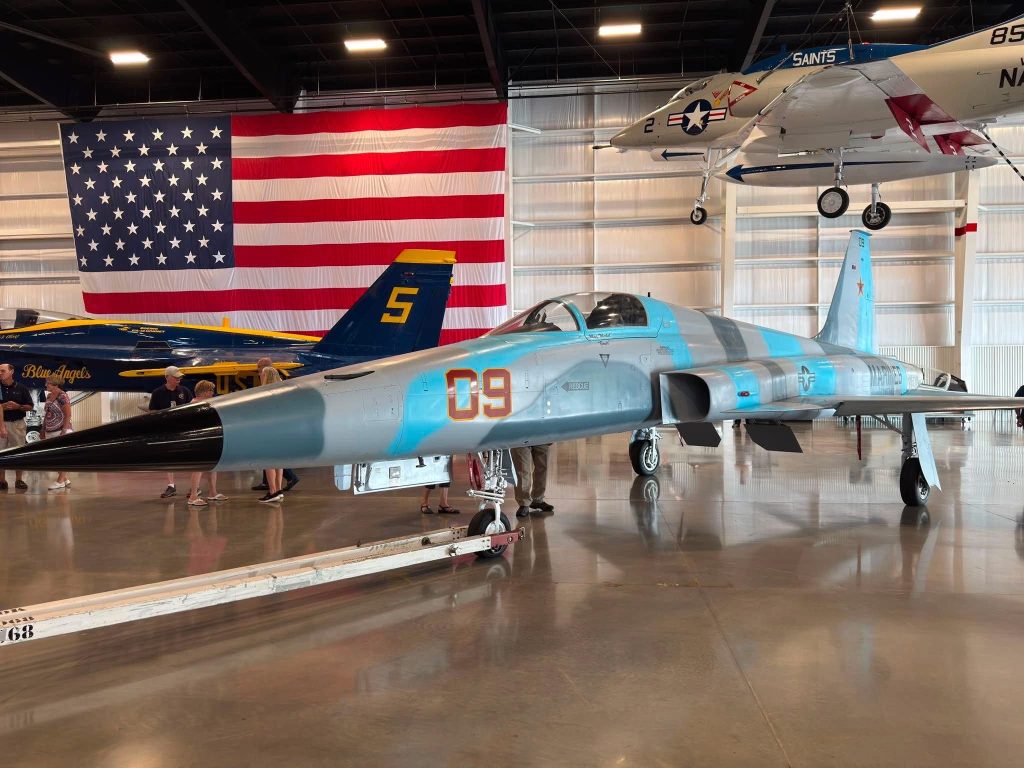
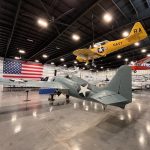
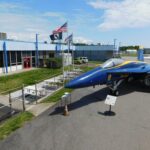
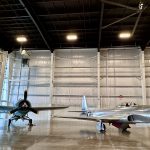
The F-5E will join the exhibits inside the museum’s recently completed facility at Hickory Regional Airport in Hickory, North Carolina. The Hickory Aviation Museum officially opened the long-awaited hangar on May 15, 2026, during a ribbon-cutting ceremony attended by approximately 200 invited guests. The opening marked a major milestone in the museum’s continued growth, which Vintage Aviation News has followed in its previous coverage. With the Tiger II completed, the restoration team will next turn its attention to LTV A-7A Corsair II BuNo 154345.
(Image credit: Mark Benedict)







As a huge admirer of the F-5 and two-time museum staffer, I’m certainly pleased to know of the restoration.
As a onetime editor, I wonder why we don’t learn where the Hickory museum is located until the last paragraph.
Otherwise, keep up the good work.
It’s actually there…last paragraph “The F-5E will join the exhibits inside the museum’s recently completed facility at Hickory Regional Airport in Hickory, North Carolina.”