






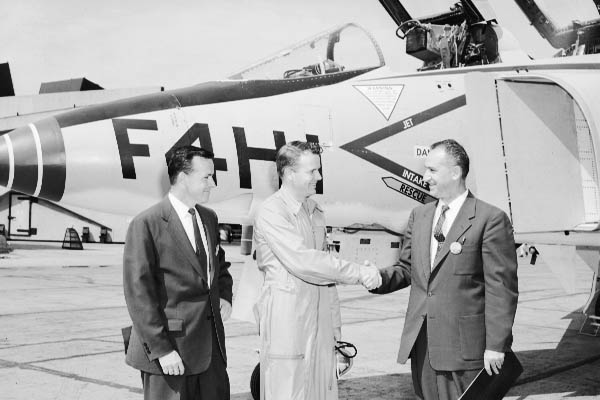

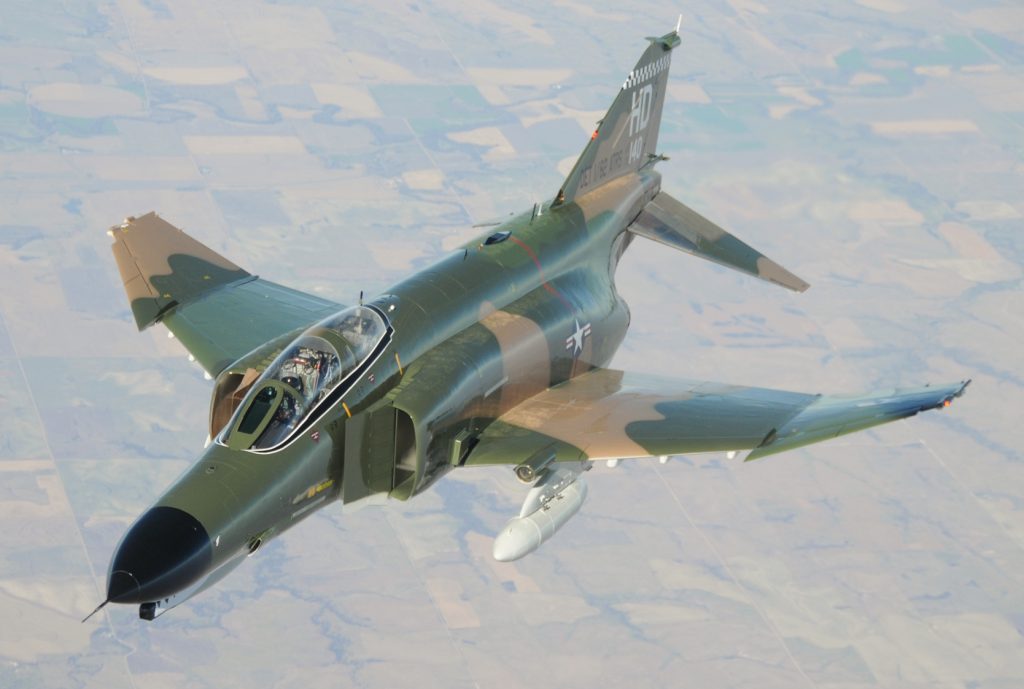
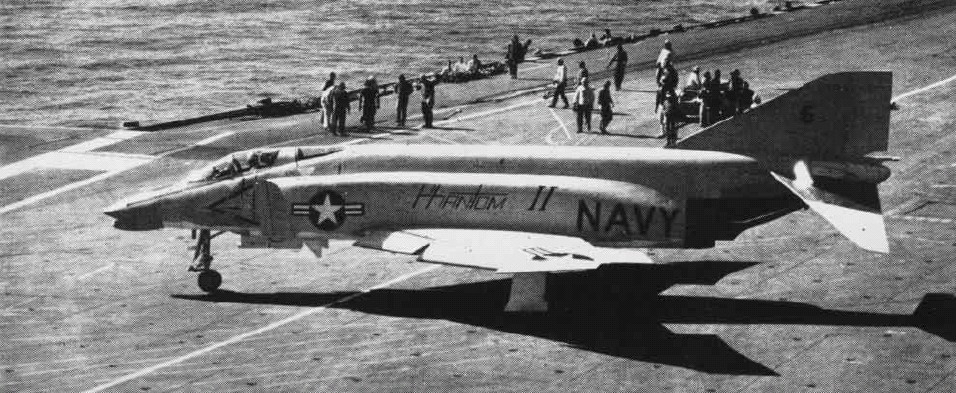
Some aircraft are famous for how many were built, how long they served, and their performance in combat. The McDonnell F-4 Phantom stood out for all three reasons. It was a supersonic jet designed to do every classic fighter job. It first flew on May 27, 1958, and set 16 records for speed, altitude, and time-to-climb. In 1959, it reached a world altitude record of 98,556 feet. In 1961, it set the world speed record at 1,604 mph. It was also the first supersonic jet fighter to be in service with the U.S. Navy, Marines, and Air Force at the same time. In 1969, it was the only fighter to fly alongside the Air Force’s Thunderbirds and the Navy’s Blue Angels. The Phantom II also flew for the air forces of eleven other countries. The last Phantoms were delivered in 1979, and some are still in use today.
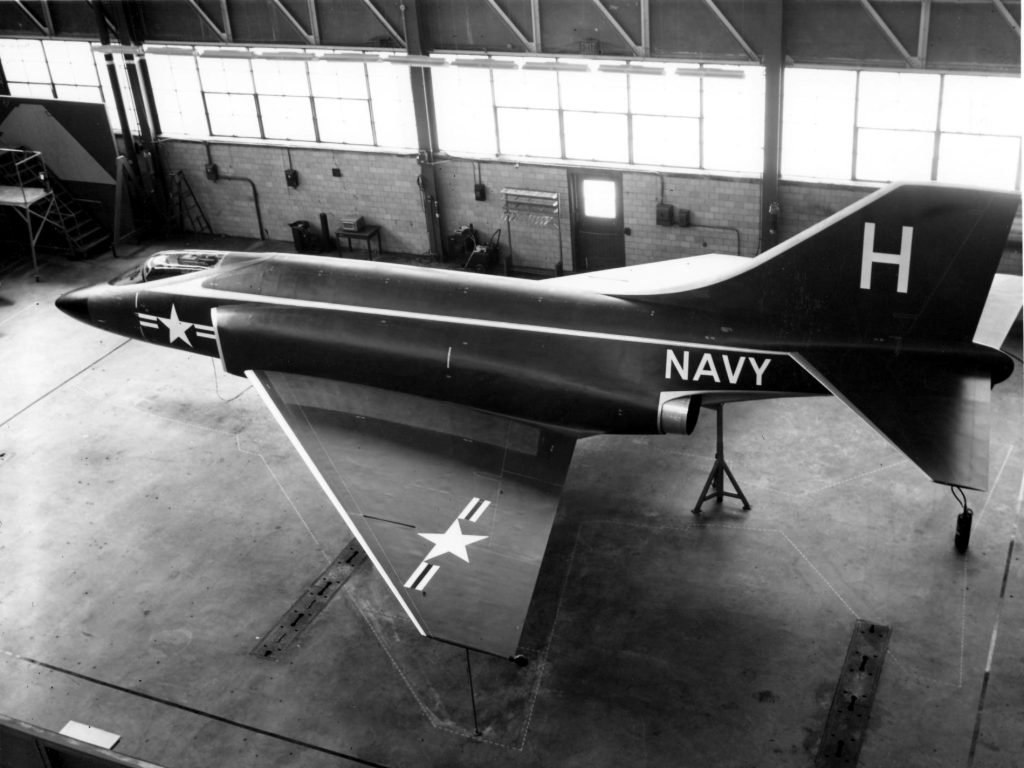
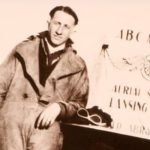
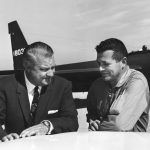
And the person behind the McDonnell F-4 Phantom was Herman Barkey. He was born on April 12, 1909, in North Judson, Indiana, to German immigrant parents, Daniel and Mary Barkey. He attended secondary school in Kewanna, Indiana, and earned a degree in mechanical engineering from the University of Notre Dame in Indiana, as well as another degree in aeronautical engineering. After completing his studies, he joined Curtiss-Wright. In 1945, Herman Barkey joined McDonnell Aircraft Corporation, which was founded by James Smith McDonnell in July 1939. Herman Barkey led the design team for the F-4 Phantom and served as the chief engineer responsible for its development. The aircraft was initially designed for two types of engines, the Wright J65 and the General Electric J79. On May 26, 1955, he decided to make the Phantom a two-person aircraft. The outboard panels would have a 12-degree upward angle. Later, the company produced the 1000th Phantom in 1965; the 2000th Phantom on March 12, 1967; the 3000th Phantom on September 5, 1968; the 4000th Phantom on February 1, 1971; and the 5000th Phantom on May 24, 1974, with George Graff attending the rollout ceremony.
The highest production rate occurred in June 1967, and the last Phantom was made on October 26, 1979. In 1973, Herman Barkey won an award from the American Institute of Aeronautics and Astronautics, with a citation, “For outstanding contribution during the past 19 years to the initial design and evolutionary development of the highly successful free World Fighter, the F4 Phantom.” Herman Barkey retired in 1974. He married Nettie Arline Foglesong in 1937 in Indiana and lived in Missouri, starting in 1996. He died at the age of 96 in Missouri. His funeral took place in Manchester, Missouri, on Thursday, December 15, 2005. As one of the pioneers of aeronautical engineering, Herman Barkey helped build an aircraft in the 1950s that is still used today. Read more similar stories HERE.










The only Nations still flying the F-4 are Greece, and Turkey. Also, the F-4 flew with both the Thundebirds, and the Blue Angel’s, not “alongside”.