






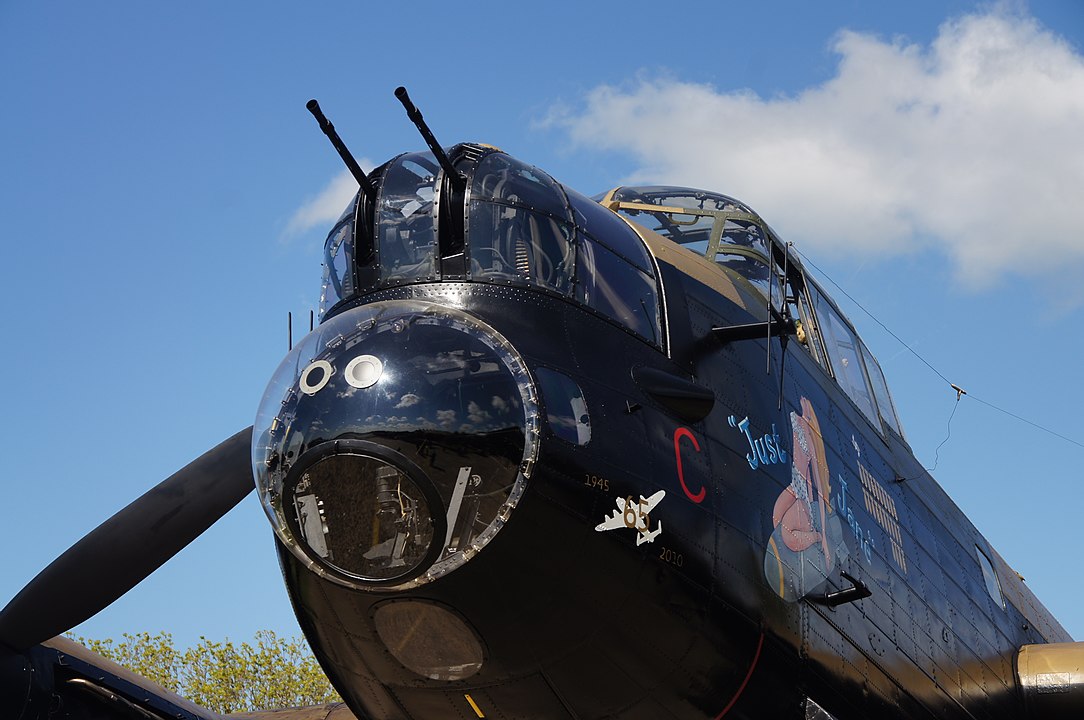

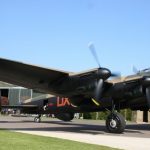
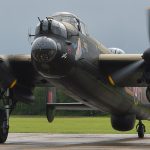
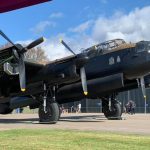
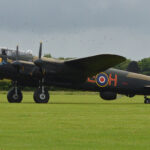
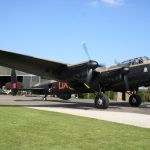
The restoration of Avro Lancaster B.VII NX611 Just Jane continues to make steady progress at the Lincolnshire Aviation Heritage Centre (LAHC), with work advancing on key structural components, undercarriage assemblies, and preparations for future wing restoration. Although much of the recent work has taken place behind the scenes, the latest update from Project Director Andrew Panton reveals significant progress toward returning the famous Lancaster to the skies. May proved to be one of the busiest months of the year for the restoration team, coinciding with the start of the museum’s public taxiing season and a series of major developments both inside and outside the workshop.
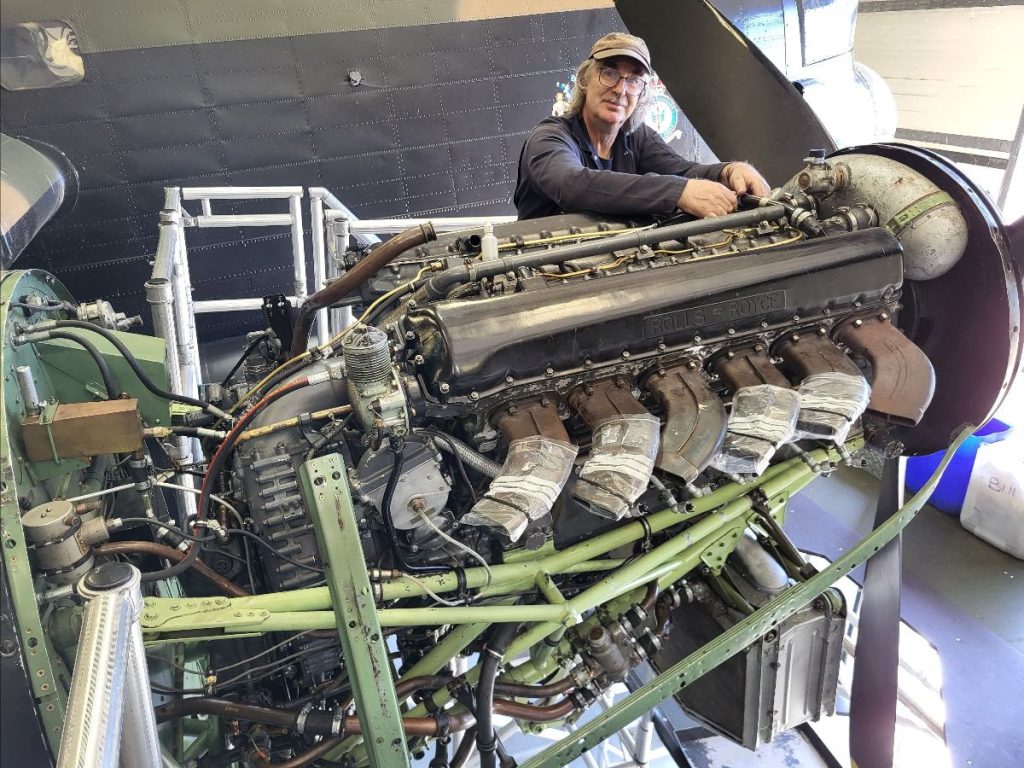
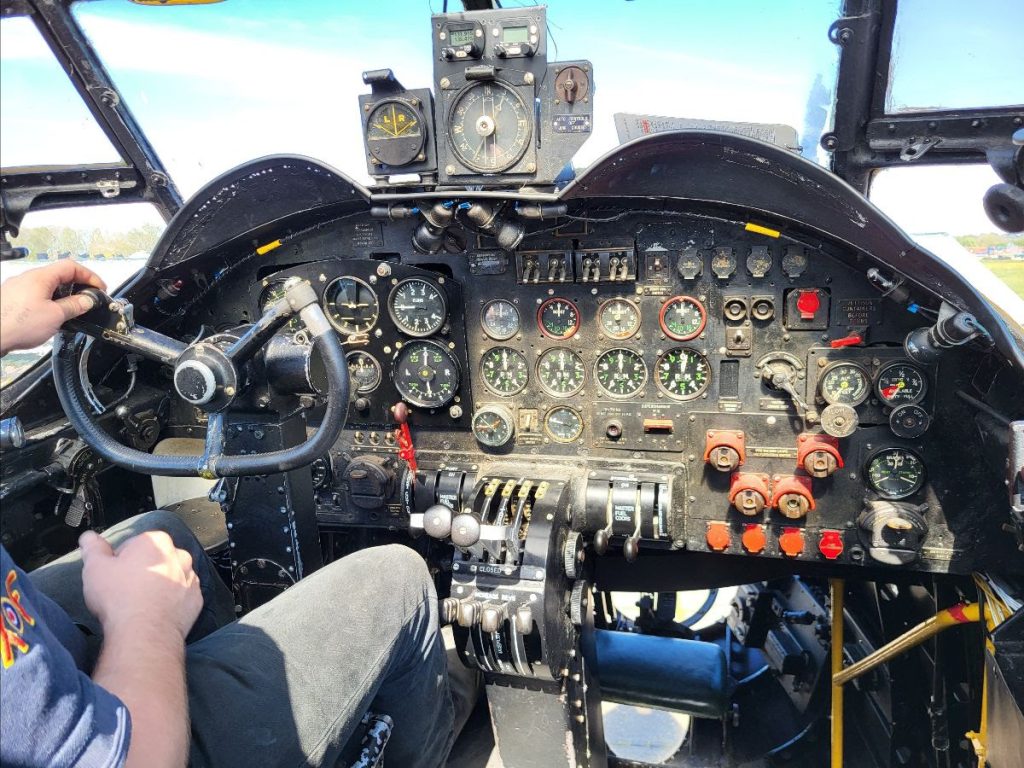
Before the first public taxi runs of the season, the restoration team welcomed engine specialist Martin to assist with final testing of NX611’s four Rolls-Royce Merlin engines. Following the completion of engine runs and reinstallation of the cowlings, the aircraft successfully passed its pre-season checks, requiring only minor electrical troubleshooting and replacement of several dry seals. After these adjustments, Just Jane returned to public taxi demonstrations and has performed reliably throughout the month, even during unusually warm spring temperatures.
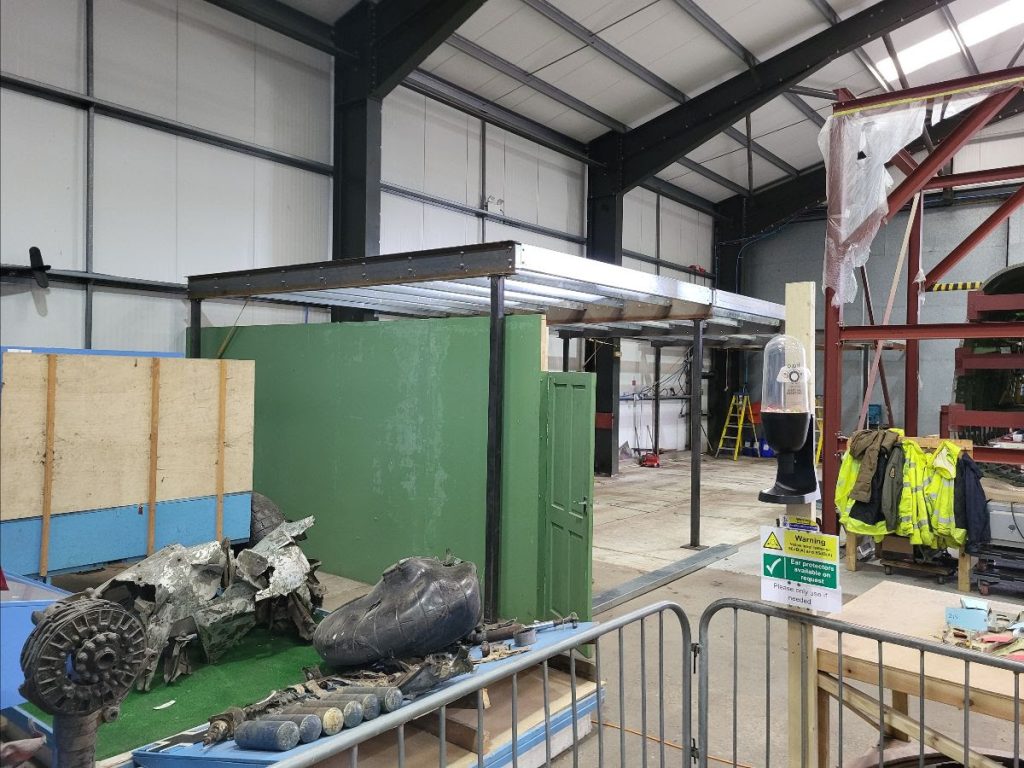
To support the growing restoration effort, the Lincolnshire Aviation Heritage Centre recently installed a second mezzanine storage platform inside its restoration hangar. The additional elevated storage space will help organize the increasing inventory of aircraft components while freeing valuable workshop floor space for ongoing restoration work. The additional capacity comes at an important time as the project continues to acquire original Lancaster components from across the United Kingdom. One of the month’s most productive efforts took place away from East Kirkby. Members of the restoration team traveled to the Gatwick Aviation Museum, where they have established a close working relationship over the past 18 months. The museum houses an extensive collection of Avro Shackleton components—many of which originated from Lancaster production or RAF surplus stocks. Because early Shackleton maritime patrol aircraft incorporated numerous Lancaster components, the team has been carefully cataloging thousands of stored parts in search of original Lancaster hardware. Approximately 30 percent of the inventory has now been inspected, with the search already uncovering numerous valuable components for the restoration. Additional announcements are expected once the cataloging project is completed.
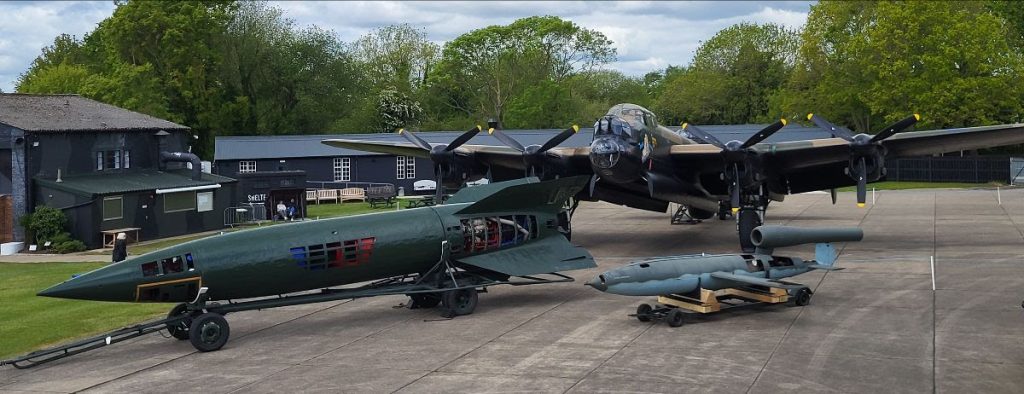
The museum also received two notable additions from the Royal Air Force Museum during May: original V-1 flying bomb and V-2 rocket artifacts. The historic weapons arrived in time for the Centre’s “Lanc, Tank and Military Machines” event and will become the centerpiece of a new exhibition scheduled to open in 2027 inside a dedicated display building.
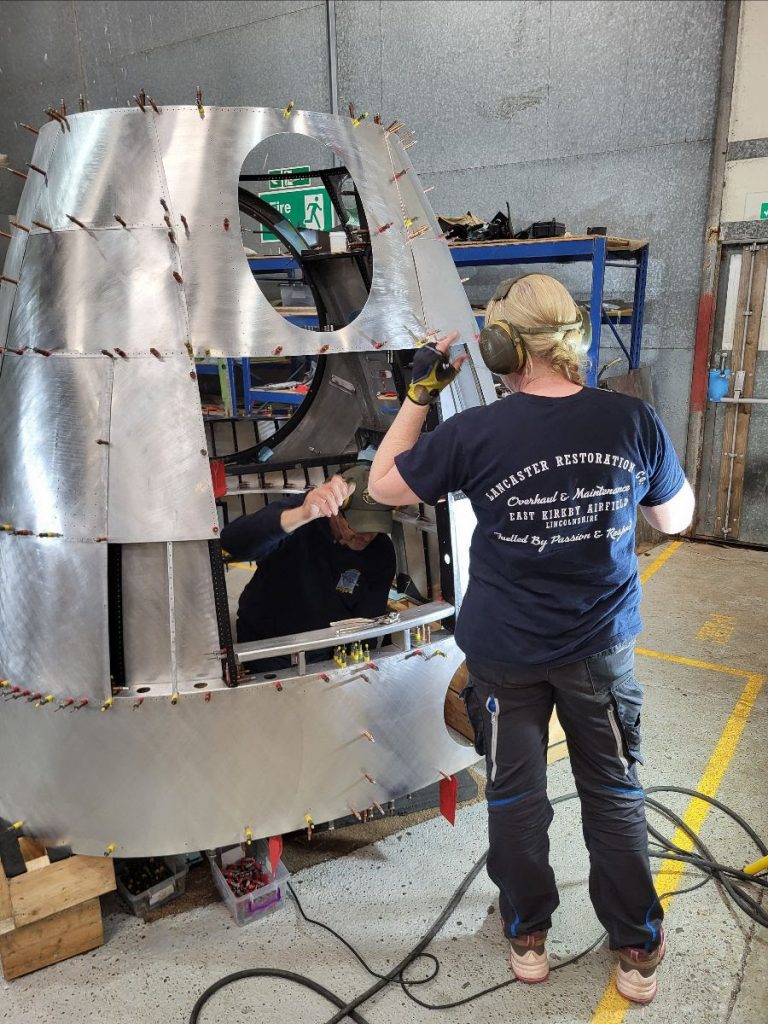
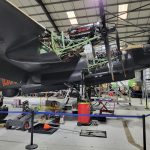
One of the most technically challenging aspects of the restoration—the manufacture of new wing spar booms—continues to move forward. Although machining has experienced some delays, preparations are underway to send newly extruded spar material, along with the original spar booms, for 3D scanning and precision machining. The completed components will eventually form the backbone of NX611’s rebuilt wing structure. The milestone also allows the restoration team to clear valuable storage space as the large spar materials leave the workshop for machining. Inside the structures bay, work continues on several major assemblies. Chris has been rebuilding the front turret mounting ring after corrosion rendered the original unusable. Using the original component as a template, a newly manufactured ring is being drilled and prepared for installation. At the same time, Chris and Jodie have been fitting new nose skins and structural formers to NX611. By temporarily pinning these assemblies into position, the team can maintain the aircraft’s precise nose profile while gradually replacing damaged internal stringers.
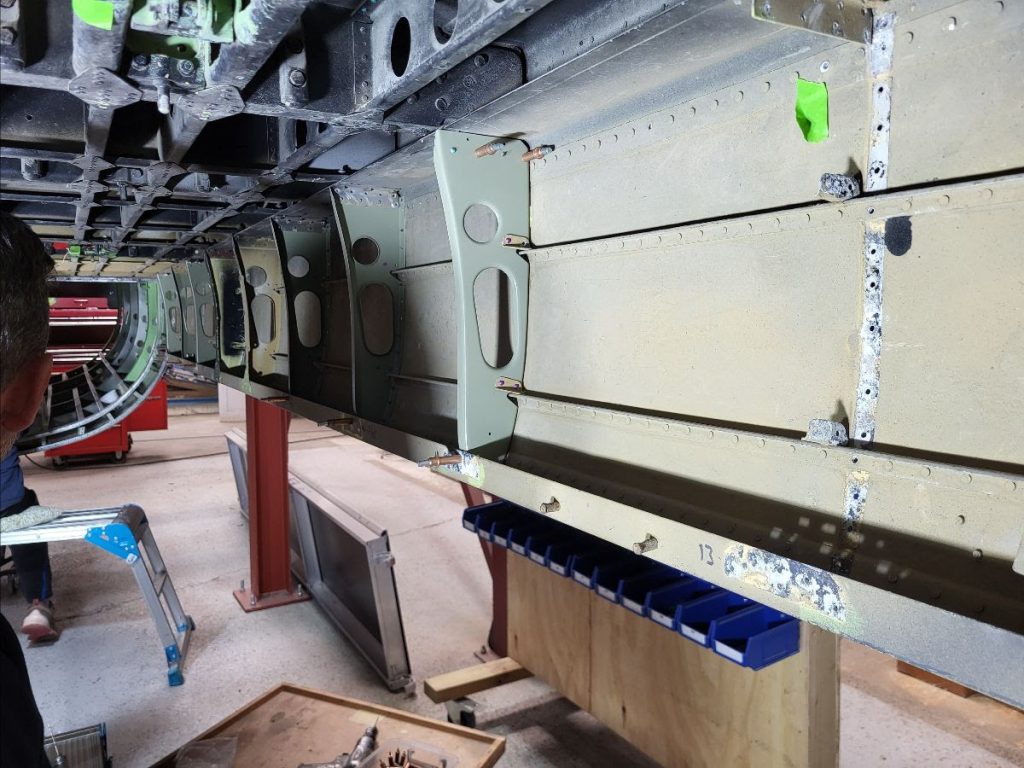
Work also continues on Lancaster NX664, whose rear-mid fuselage will play an important role in the overall restoration program. Following his return to the project, Dave M has rejoined Jodie in replacing bomb bay skirt ribs using newly manufactured components produced in-house. If current progress continues, the restored rear-mid fuselage of NX664 could be installed onto NX611 this winter. Once that transfer is complete, NX611’s original rear-mid fuselage will move into the restoration jig, allowing it to undergo its own complete airworthy restoration. Following the structural work, team member Mike will begin repairing dents and transport damage sustained when NX664 was shipped from Wallis Island back to Europe before preparing the airframe for repainting. Elsewhere, Classic Aero Machining Services in New Zealand continues manufacturing new fescalized sections for the Lancaster’s main undercarriage oleos. The new components have completed machining and are currently undergoing heat treatment before being shipped back to the United Kingdom for installation.
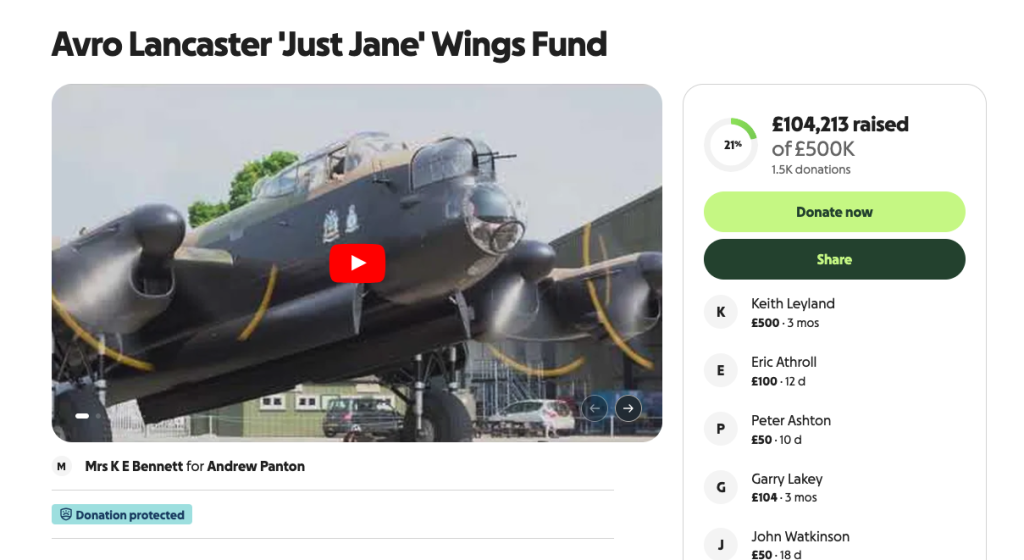
Funding remains a key element of the project. The Lincolnshire Aviation Heritage Centre’s Wings Campaign has now raised more than £103,900 toward its £500,000 goal. The funds are already helping finance production of the new spar booms, one of the most significant engineering tasks required to return Just Jane to flight. While many of the recent accomplishments may not be immediately visible to visitors, the steady progress made throughout May represents another important step toward the long-term goal of seeing NX611 fly once again.








I am building the Border Model 1/32 scale Avro Lancaster. As you will know the fuselage was manufactured in four sections which were then bolted together for completion. This is a future job you will be doing on NX611. My question is How wide was the linen strip used to cover the fuselage joints?
Best regards
Geoff Williams