

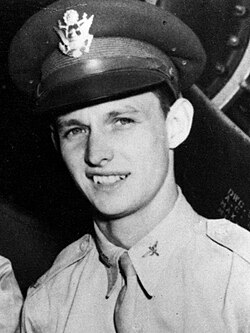
Sunday, December 7, 1941, began like any other sunny morning at Pearl Harbor. People were starting their normal daily activities. The flag was being raised, and two 2nd lieutenants, Kenneth Taylor and George Welch, were nursing hangovers as they returned to their quarters at Wheeler Field, located in central Oahu, after a night of parties, playing cards, and dancing at the Officers’ Club at Wheeler Field. They were still wearing their tuxedo pants as they settled into their bunks after their festivities ended when the chaos erupted. The young officers had just fallen asleep about 6:30 a.m., when they were jolted awake one and a half hours later at 7:55 a.m. by the sound of low-flying planes, gunfire and explosions. America was being attacked, and Wheeler Field was the first target of the Japanese. Taylor and Welch would be two of the first American pilots to enter the fight against the Japanese attackers.


The Scene is Set
As luck would have it, Taylor and Welch were assigned to Wheeler Field, which was one of the initial targets for the Japanese attacks. Unfortunately, they quickly realized takeoffs from their base would be difficult, if not impossible, due to strafing by Japanese aircraft, so they quickly contacted Haleiwa Field, a nearby auxiliary airstrip, and ordered their Curtiss P-40B Tomahawk fighters to be fueled and ready. Still in their tuxedos, they jumped into Taylor’s new Buick and drove 10 miles at speeds sometimes greater than 100 mph while Japanese aircraft dropped bombs and strafed around them, but they continued, determined to get to their aircraft to join the fight. Fortunately, they arrived to find the field intact. Without formal orders, they climbed into their planes, loaded with only .30-caliber ammunition and incomplete fuel, and took off. Only a few minutes later, after getting airborne, they flew southwest toward Barber’s Point at the southwestern tip of Oahu. Initially, they saw the unarmed group of American B-17 Flying Fortress bombers arriving from the mainland. Shortly thereafter, they arrived at Ewa Mooring Mast Field, which was being strafed by at least 12 Aichi D3A “Val” dive bombers of the second Japanese attack wave after dropping their bombs on Pearl Harbor. Although the two pilots were outnumbered six-to-one, they immediately began firing on the enemy dive bombers. Taylor shot down two dive bombers and was able to damage another (the third damaged aircraft was considered Taylor’s first probable kill). When both pilots ran out of ammunition, they headed for Wheeler Field to be rearmed with .50 cal ammunition, since Haleiwa did not carry any. As he landed around 8:40 a.m., he had to avoid friendly anti-aircraft and ground fire. Once he was on the ground, several officers told Taylor and Welch to leave the airplanes, but the two pilots were able to convince the officers to allow them to keep fighting.
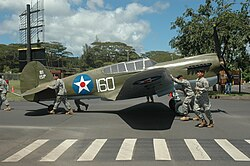
While their planes were being reloaded with the .50 cal ammunition, a flight of dive bombers began strafing Wheeler. Welch took off again (since he had landed a few minutes before Taylor and was already reloaded). The men who were loading the ammunition on Taylor’s plane left the ammunition boxes on his wing as they scattered to get away from the bombers. Taylor quickly took off, jumping over an armament dolly, and the ammunition boxes fell off of his plane’s wing. Both pilots realized that if they took off away from the incoming aircraft, they would become targets once they were airborne, so both headed directly towards the bombers at take-off. Additionally, if the low-flying bombers attempted to fire at the grounded P-40s at their current elevation, they would risk crashing. Taylor used this hindrance to his advantage and began immediately firing on the Japanese aircraft as he took off and performed a chandelle. In their first run, they spotted Japanese dive bombers and engaged, shooting down several enemy aircraft. Taylor claimed four kills, though only two were confirmed. During the fight, his plane was damaged, and he returned to Wheeler to reload. There, he was wounded by enemy fire. When a second wave of enemy bombers was spotted, ground commanders ordered them not to take off again to avoid being destroyed together. Ignoring these orders, Welch and Taylor launched a second sortie, again facing overwhelming odds.
Flying Without Orders
When they arrived at Haleiwa, they found the landing strip intact. Without delay, they climbed into their aircraft. The ground crews had only managed to load .30-caliber Browning ammunition, and the fighters weren’t fully fueled, but that didn’t stop the two pilots. Despite being advised to space the planes out to avoid being destroyed together, Welch dismissed the idea, and they both launched into the air almost simultaneously. This was done without any formal command—strictly against military procedure at the time. Once airborne, the sky revealed the full scale of the attack. Waves of Japanese bombers and fighters were targeting American installations. Taylor and Welch climbed high, scanning for enemy aircraft. They spotted a group of dive bombers heading for U.S. targets and dove into action. Though outnumbered, they pressed the attack, shooting down several planes. During the fighting, Taylor’s aircraft sustained damage, and he flew back to Wheeler Field to reload. When he landed, the destruction at the base was even more apparent.
Ignoring Commands
While the ground crews worked feverishly to rearm and patch up the most severe damage to Taylor’s aircraft, the officers on-site gave strict orders not to take off again. A second wave of Japanese bombers had been spotted, and commanders feared more losses. Taylor and Welch, however, chose to ignore the orders. As more explosions rocked the airfield, they climbed back into their cockpits and took off once more. In this second round of fighting, Taylor was already wounded from earlier gunfire. Despite this, he still pursued a group of enemy bombers, only to be hit again in the leg and arm. Meanwhile, Welch continued engaging targets. At one point, Taylor found himself being chased by an enemy aircraft. Welch, seeing this, broke formation and fired at the attacker, downing it and helping Taylor survive. Despite their injuries and limited supplies, they remained in the air as long as possible.
Returning From the Fight
Eventually, Welch spotted another enemy bomber and brought it down before returning to base. Taylor, bleeding and flying a damaged plane, was also able to land safely. By the end of the attack, Welch had four confirmed kills. Taylor was credited with two confirmed and two probable. Their aircraft were both in poor shape, but the pilots had survived and inflicted damage on the enemy, even as the larger battle overwhelmed American defenses.
Recognition and Aftermath
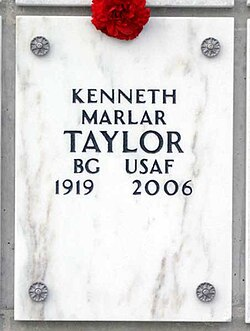
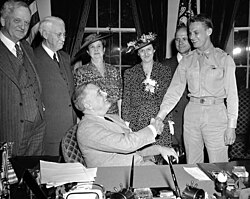
The heroic actions of both Taylor and Welch gained attention quickly. Interviews with Japanese pilots after the war confirmed that Taylor and Welch’s response may have prevented further losses at Haleiwa. However, their decision to launch without orders caused problems. While both were awarded the Distinguished Service Cross, Welch was denied the Medal of Honor, partly due to the lack of formal clearance to engage the enemy. Taylor later commanded several squadrons while stationed in the United States and elsewhere, and served for 27 years of active duty. He joined the Alaska Air National Guard until 1971 and worked in the insurance industry before retiring in 1985. His Pearl Harbor experience was portrayed in the 1970 film Tora! Tora! Tora! and the more recent film Pearl Harbor. Taylor passed away in 2006. Welch also stayed in aviation, eventually becoming a test pilot. He flew combat missions in Korea, even when not officially assigned to do so. In 1954, he died during a high-speed flight test. Both men left behind a story of quick thinking, risk, and courage during one of the darkest mornings in American history.