
In the summer of 1914, Europe went to war, but Italy did not. For almost a year, the country waited, uncertain which side it would join. Among the many young soldiers in uniform during that uneasy pause was a corporal in the Italian Army’s 2nd Field Artillery Regiment, Silvio Scaroni. He was not yet a pilot. He was an artilleryman watching World War I from a distance. When Italy finally entered the conflict in 1915, it became clear that the mountains along the Isonzo Front would make observation more important than maneuver. Aircraft were needed less for glory and more for information. Scaroni transferred to the Corpo Aeronautico Militare and learned to fly French aircraft such as Bleriot and Caudron. His first role was reconnaissance, not combat. He spent long flights photographing positions and adjusting artillery fire, the routine work that defined most early aviation.
Silvio Scaroni’s Journey to Becoming an Ace
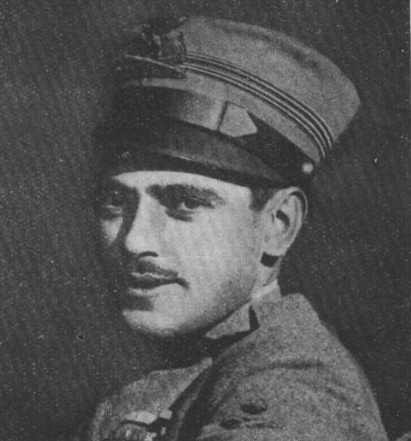
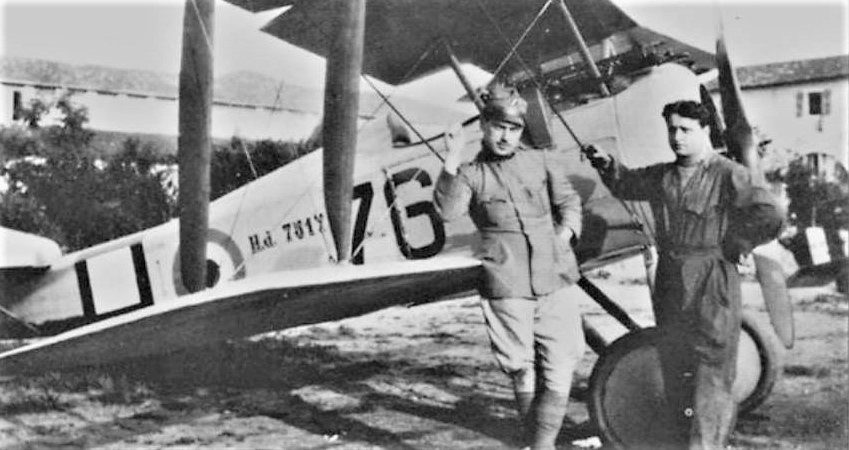
By 1917, aerial combat was not confined to mere reconnaissance missions. Fighters were now expected to deny the sky to the enemy, and Scaroni moved through several squadrons before joining a fighter unit. On 14 November 1917, flying a Nieuport 17, he achieved his first confirmed victory, and by 19 December, he was officially an ace with six victories. The Nieuports soon disappeared from his squadron, replaced by the Hanriot HD.1, a capable single-seat, single-engine French fighter, which was a more balanced aircraft for turning fights above the Alps. As Scaroni adapted to the new aircraft, his victories continued to grow steadily. On the day after Christmas 1917, enemy bombers attacked his airfield. Scaroni climbed to meet them and shot one down in flames. Another fight lasted nearly twenty minutes before the aircraft crashed. Around him, other pilots destroyed several more. By midday, the raid had collapsed. It was one of the largest air actions on that front, but for Scaroni it became simply another entry in a growing tally. He ended the year with nine victories.
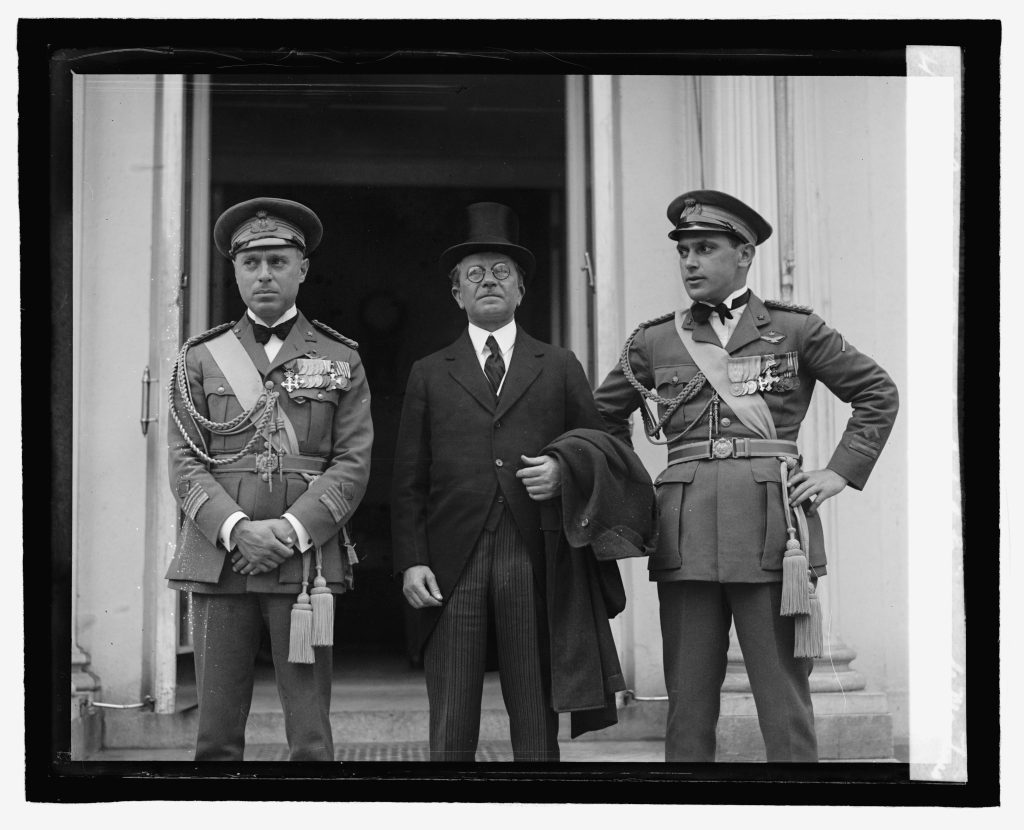
Through the first half of 1918, he continued flying daily patrols. By June, his score had risen into the twenties. Around this time, he fitted a second machine gun to his Hanriot to increase firepower. He kept flying through July, scoring repeatedly until he was wounded in combat later that month. The war ended without his return to operational flying. His final total stood at 26 victories, making him Italy’s second-highest scoring ace. Unlike many wartime pilots, Scaroni remained in aviation. He served as an air attaché in the United States and attended the Schneider Trophy races, where he reportedly solved engine problems in the Italian team’s aircraft simply by recommending local fuel and spark plugs. Later, he helped establish a flying school for the Chinese Air Force at Luoyang. During World War II, he commanded Italian air forces in Sicily.
A Hard-Working Legend
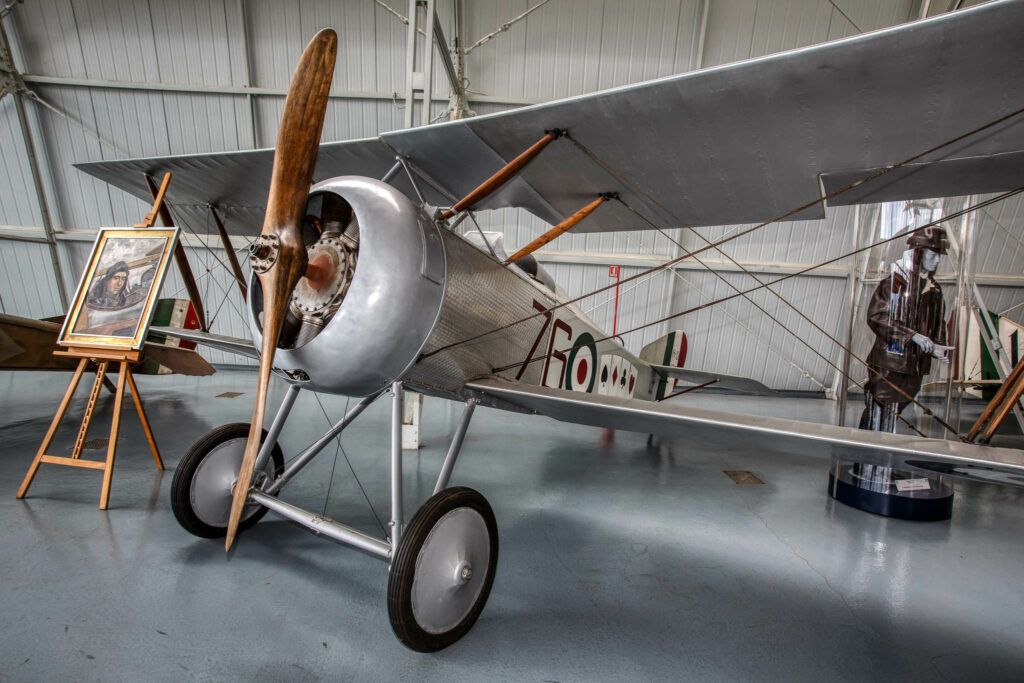
He also wrote about the war. In one of his memoirs, Scaroni wrote about the most dangerous flight he ever experienced, a night bombing mission over the Adriatic in a large three-engine Caproni. As the formation neared the Austrian coast, a fighter suddenly attacked from the dark. He remembered hearing “a rattle, like rolling thunder, above the roar of the engines,” and then a heavy blow that threw him across the forward nacelle. The aircraft went into a steep dive. Reaching the cockpit, he found the pilot dead at the controls, “his head almost severed from his body.” The rear gunner was dead as well. With one arm injured, Scaroni pushed the body aside and tried to recover the aircraft while the attacker kept firing. Two engines stopped, leaving only the rear engine running. He then attempted an emergency landing, and the aircraft struck the surface and rolled to a halt. Enemy soldiers rushed toward him. Scaroni set the aircraft on fire so it could not be captured and escaped under rifle fire. Two weeks later, he managed to reach his own lines.
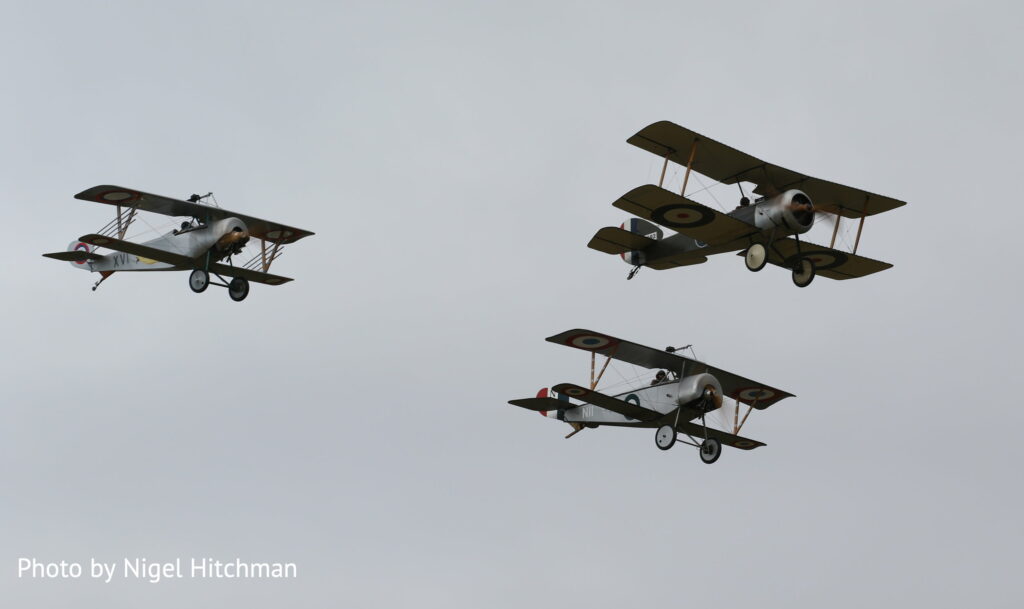
Scaroni never became a national legend in the way some aces did. His war was made up of routine patrols and gradual improvement rather than sudden brilliance. His 26 victories came from persistence. In the Aces series, Silvio Scaroni’s story illustrates the hard work and patience required to achieve such goals. Read about more flying aces HERE.