






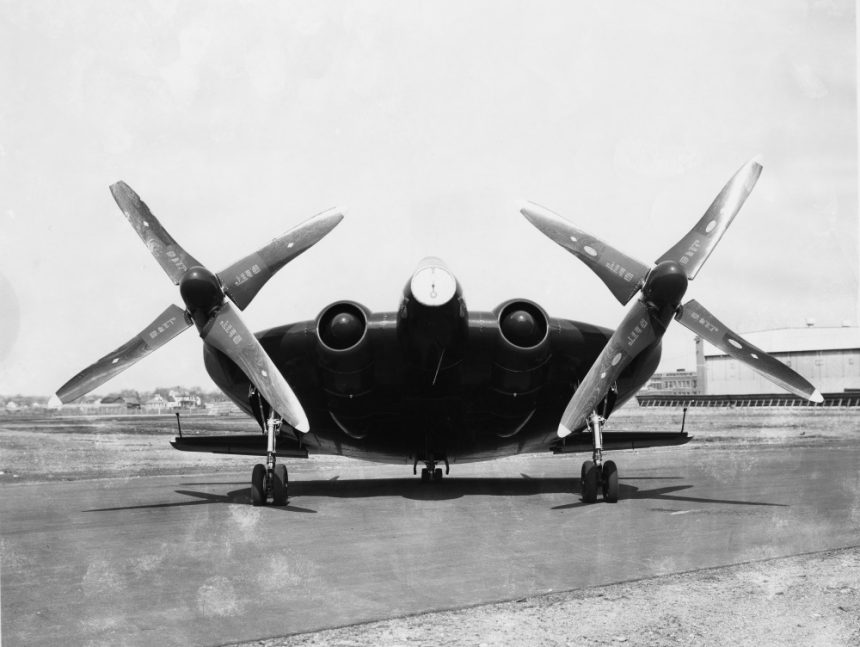


Some aircraft are remembered because of the way they flew, others because of how they fought, and a few because of their strange look. The Vought XF5U was one such strange fighter that looked like it came from another world at the time when aviation engineering was turning away from piston engines. Its story began years before World War II with a single engineer, Charles Zimmerman, who was obsessed with solving one of aviation’s most stubborn problems, drag created at the tips of conventional wings. Zimmerman believed that if this disturbed airflow could be controlled, an aircraft could lift off in extremely short distances, land at very low speeds, and still fly fast enough to keep up with front-line fighters, a combination that sounded almost impossible at the time, especially for aircraft meant to operate from short, crowded aircraft carrier decks.
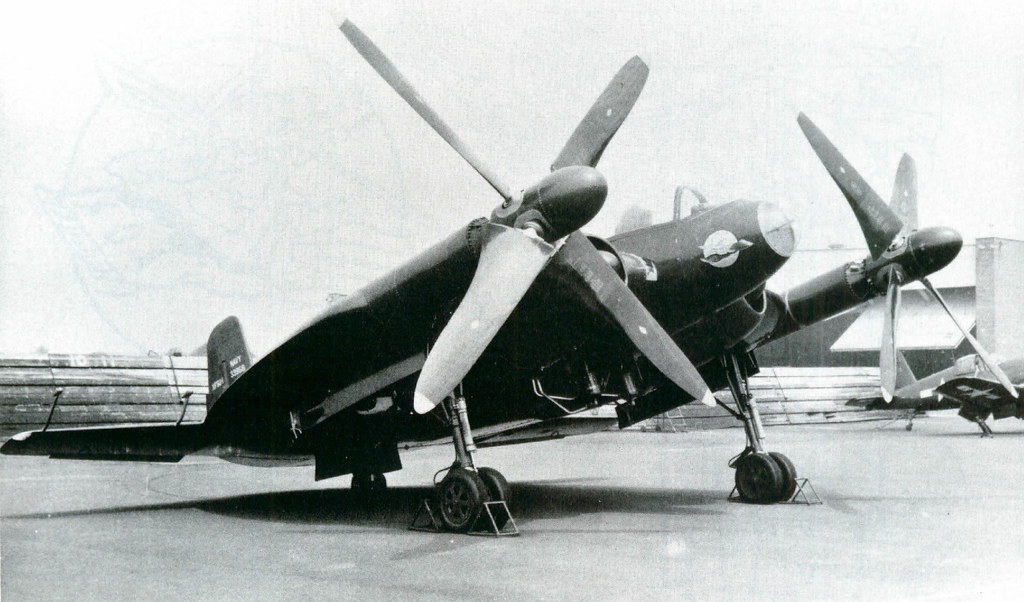
Zimmerman’s solution did not follow the traditional aircraft design approach. Instead of long wings and a narrow fuselage, he envisioned a flat, disc-shaped flying surface, with huge propellers mounted at the edges, pulling air smoothly across the entire span and canceling out the drag that caused continual trouble to normal wingtips. To keep such an unusual shape stable, the aircraft would also receive an equally unusual tail arrangement, with multiple rudders and elevators spread across the rear of the aircraft rather than a single conventional tail. On paper, the aircraft could take off from very short distances and fly fast once airborne, exactly the kind of machine the Navy wanted for aircraft carriers. For years, the idea was considered too advanced until Zimmerman joined Vought in 1937. Despite its conservative reputation, the company was willing to take a calculated risk on the design. They started small with models, then went all in on a full proof-of-concept aircraft called the V-173, a short, round machine that looked less like a fighter and more like a flying manhole cover.
The First Flight
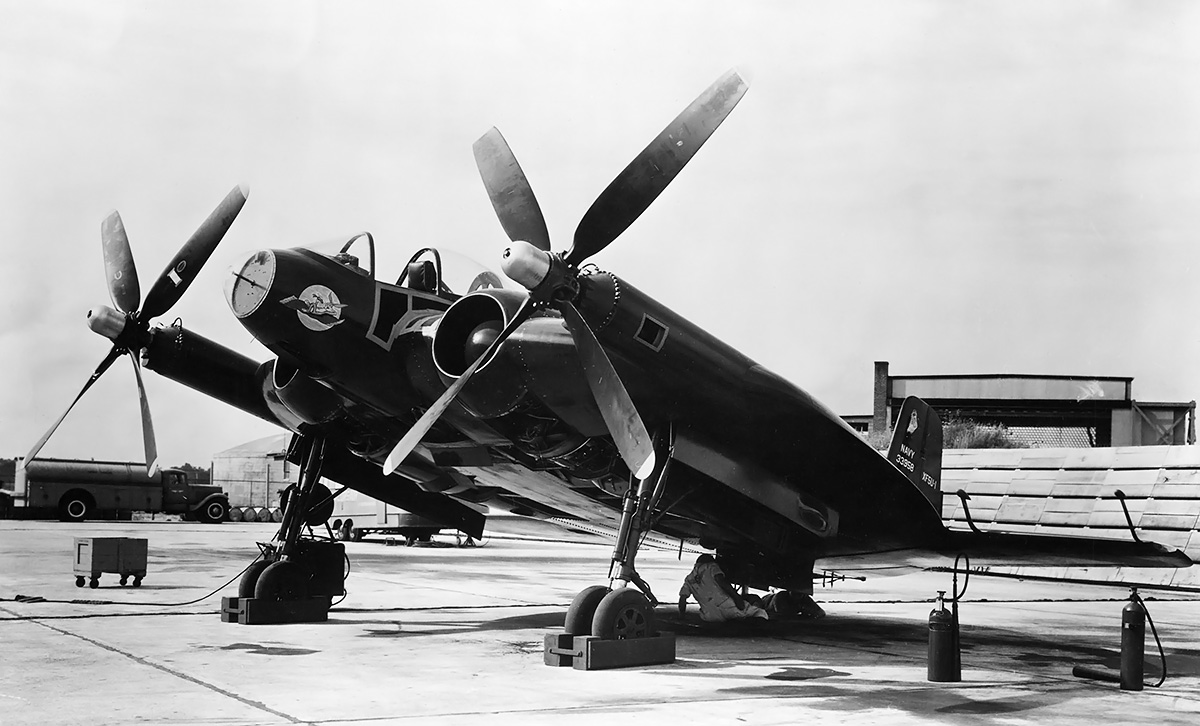
When the V-173, equipped with a circular wing 23.3 feet in diameter and a symmetrical NACA airfoil section, flew for the first time in November 1942, it surprised almost everyone as the aircraft could take off from extremely short distances, sometimes in little more than a few hundred feet. It also performed well in strong winds, though it required careful control, and had visibility quirks that pilots had to adapt to. The aircraft could almost hover and survived several forced landings, including a nose-over, with no serious damage to the aircraft or injury to the pilot. Such operations would have destroyed conventional aircraft, making the US Navy take notice. Carrier aviation was still dominated by piston engines, and the idea of a fighter that could perform takeoff and landing, even slowly, from carriers seemed worth pursuing. In 1944, the Navy approved development of a full-scale operational version, the XF5U, which would turn Zimmerman’s unusual idea into a combat-ready aircraft.
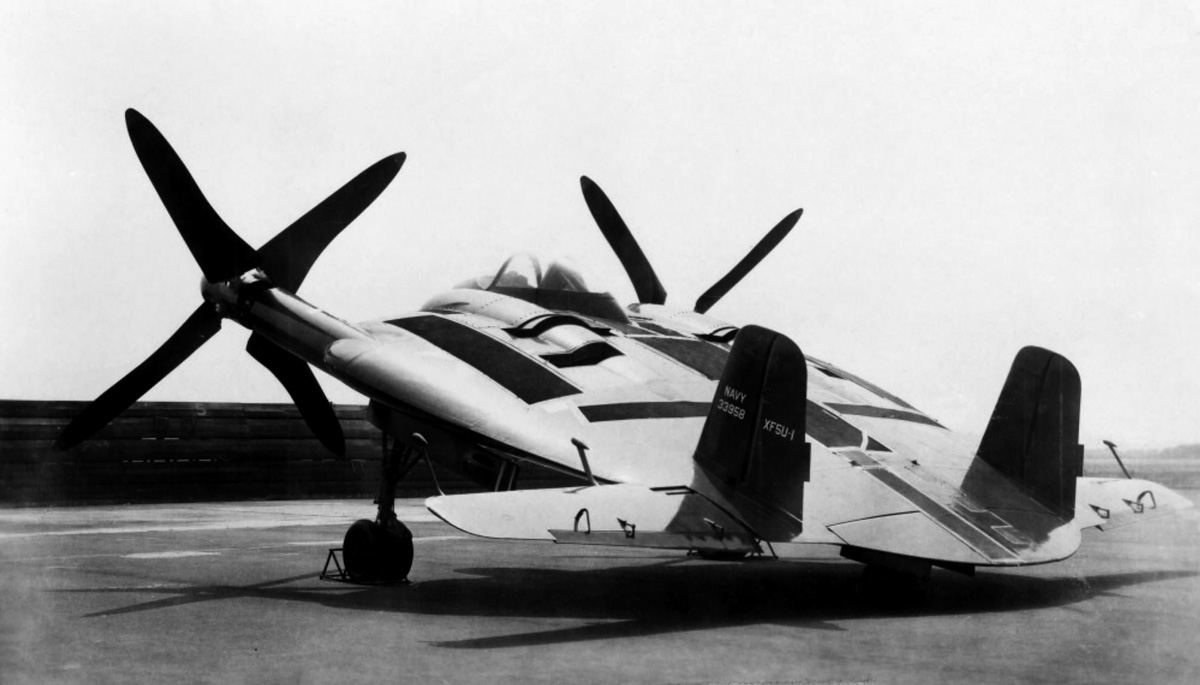
The XF5U, nicknamed “flying pancake” for its odd look, was meant to be a serious fighter. It followed the same flat, circular body design as the V-173 but was much more rugged. The aircraft used two Pratt & Whitney R-2000 air-cooled engines, mounted inside openings that looked more like jet intakes than propeller housings. Each engine produced about 1,600 horsepower, with power sent to the large four-bladed propellers through a complex system of gearboxes and shafts. The aircraft was planned to be armed with multiple machine guns or cannons, and the ability to carry bombs. It was designed to have arresting gear for smooth carrier landings. In theory, the XF5U was designed to fly very slowly, even slower than basic training aircraft, so it could take off and land in extremely short distances, and at the same time, it was meant to fly very fast, close to the speeds of the best fighter planes of its time. To achieve this, the aircraft was built to remain controllable even at steep angles where most planes would struggle, pushing propeller-driven design to its absolute limits just as jet engines were beginning to take over.
Fall of the XF5U
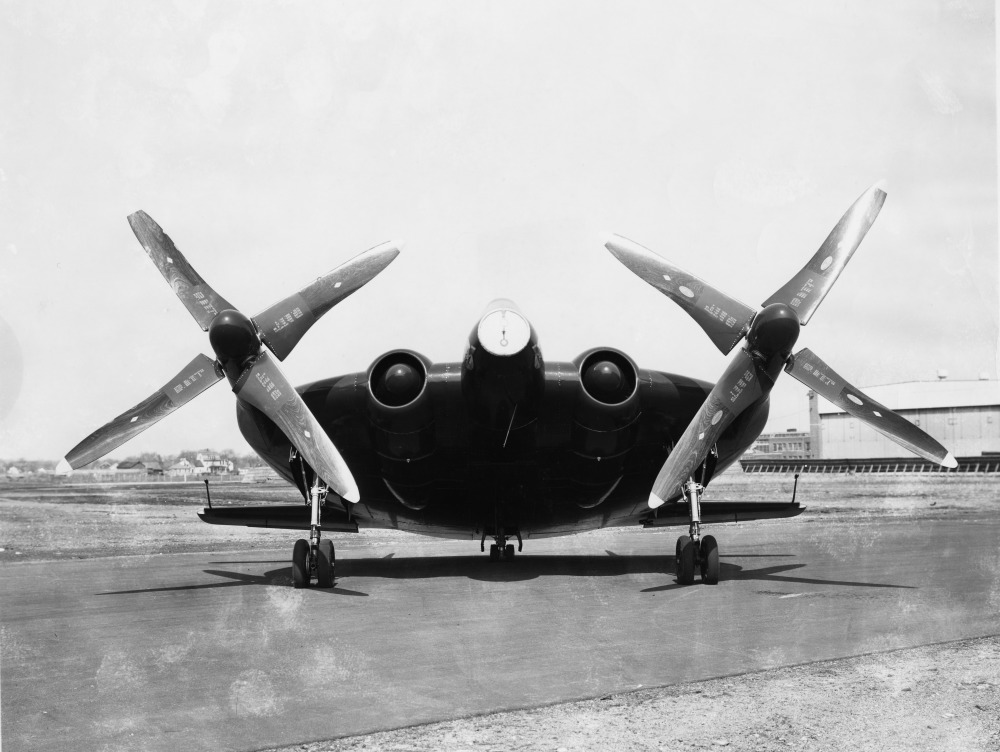
As the XF5U took shape in the mid-1940s, its greatest design concept strength, which was the propulsion system, became its greatest weakness. To accommodate such huge propellers, the aircraft required complex gearboxes that caused vibration. The wartime production, which was already struggling to meet frontline needs, failed to find a concrete solution. This led to a delay in aircraft production, especially in developing articulated propellers, and as the engineers looked for a solution, the XF5U concept became obsolete. With the end of World War II, as budget constraints hit, jet engines suddenly moved from experiments to real frontline aircraft, offering more speed and performance without all the mechanical complexity the XF5U relied on.
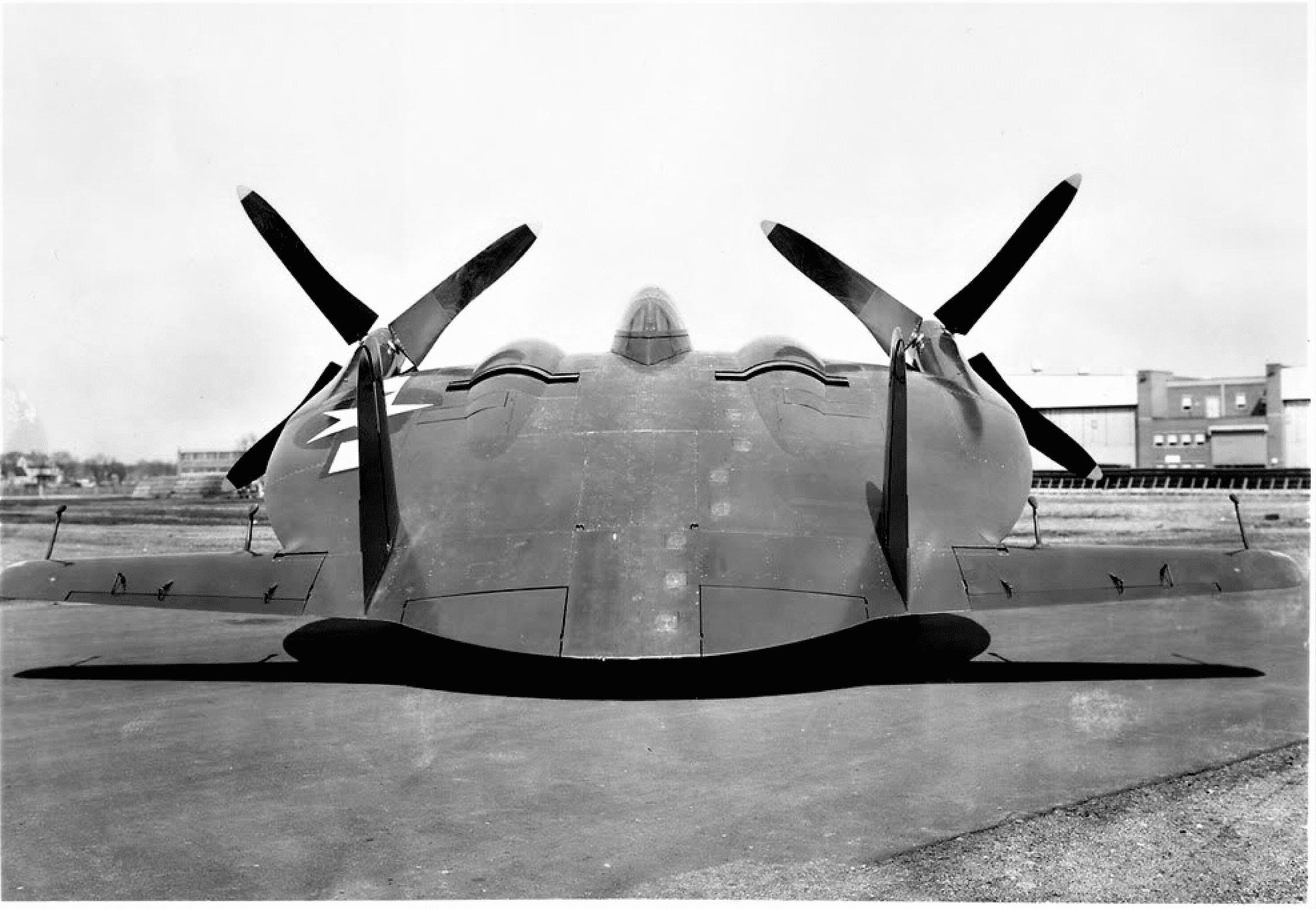
By the time the XF5U was structurally complete and ready for flight tests, the real question was no longer whether it could fly, but whether anyone still needed it. The Navy was already looking ahead to jet fighters and attack aircraft, and in that future, there was little space for a complicated piston-engine design. In March 1947, the Navy canceled the program even before the aircraft ever left the ground, and the completed prototypes were ordered to be scrapped. The flying pancake never flew, and one of the most unusual fighters ever built slipped out of history almost as quickly as it had arrived, remembered more for what it promised than for what it was allowed to prove.
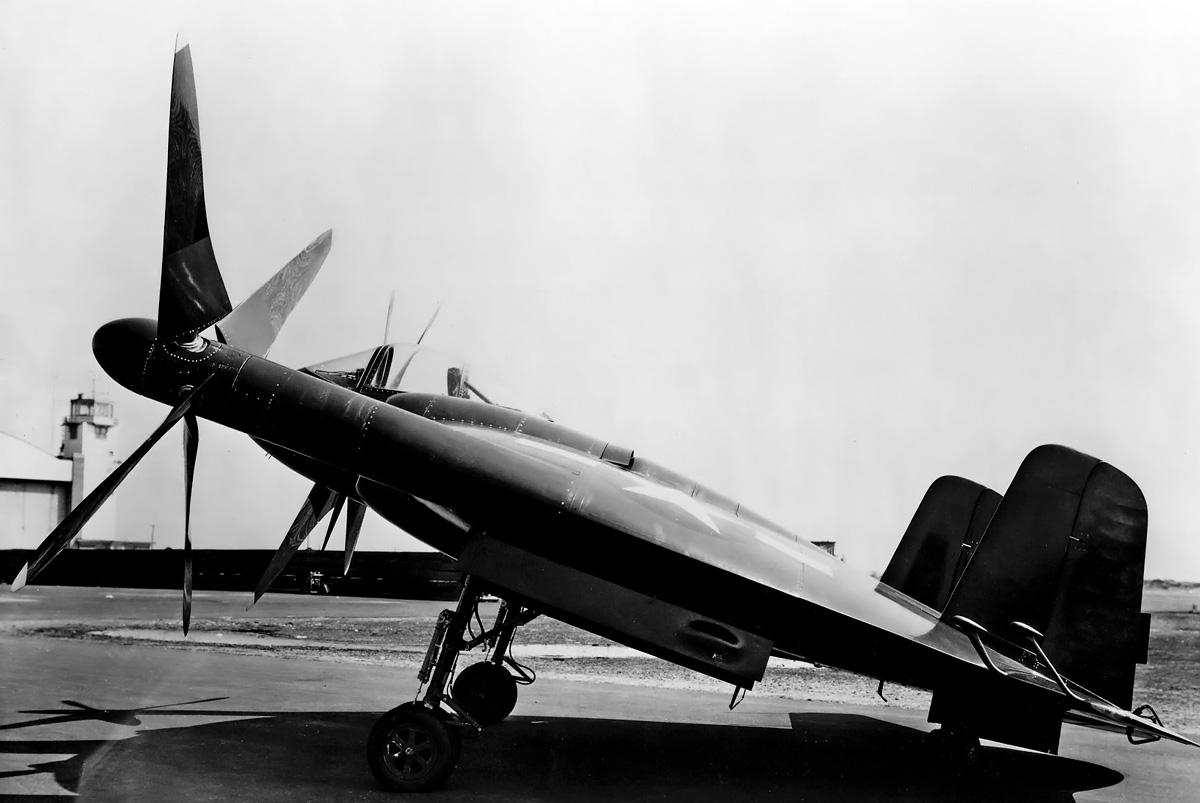
Yet the XF5U was not a failure. It proved that Zimmerman’s ideas of controlling airflow could unlock new levels of aircraft performance. The XF5U was not poorly engineered, but regular delays and the rise of jet engines ended the run for complex piston-driven experiments. Like other Grounded Dreams aircraft, the XF5U did not get a chance to fly, but its design still impresses modern engineering. Check our previous entries HERE.












At the museum of flight at Dallas Love Field, in their large collection of aircraft, space craft, and more there is a bright yellow version of the XS5U sitting on main level, roughly 50 from the original Apollo 7 space capsule. An amazing aircraft I had never expected to see in my whole life…yet there it was. Lots of other flying things of note at this easy to access museum, including a large smattering of SR-71 hardware, mockups, and even an engine.
The aircraft you described is not the XF5U-1, instead, that’s the V-173 Proof of Concept aircraft. The actual XF5U was scrapped following the program’s cancellation.
It’s too bad that the XF5U-1 never had a chance to fly, because it would’ve revolutionize d US Naval carrier aviation.