






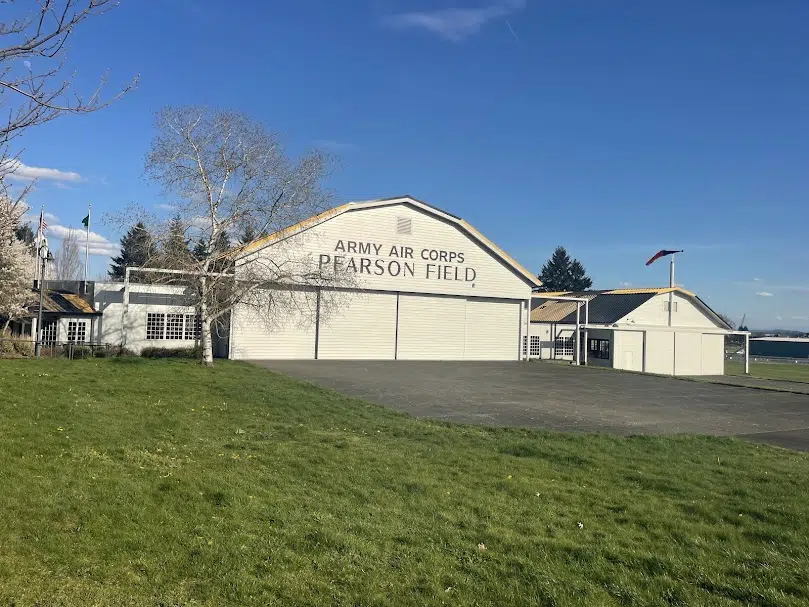

On the other side of the Columbia River from the city of Portland, Oregon, connected by the Oregon-Washington Bridge is the city of Vancouver, Washington, established in 1824 just outside the historic Fort Vancouver trading post operated by the Hudson’s Bay Company in the Oregon Country held jointly by the United States and the British Empire from 1818 to 1846, when the land that now forms Oregon and Washington was formally ceded to the United States. The site of Fort Vancouver then became the site of the United States Army’s installation in the Pacific Northwest, the Vancouver Barracks, where thousands upon thousands of military personnel would serve, and it would also be from the grounds of the Vancouver Barracks that some of the first flights of manned aircraft would be made in the U.S. Pacific Northwest, with a portion of the grounds becoming Pearson Field, one of the oldest continually active airports in the United States, and the oldest continuously operating airport in the Pacific Northwest.

Pearson Field and its story is just a small part in the history of Vancouver, Washington, from the thousands of years of Indigenous history in the region to the establishment of Fort Vancouver, a vital trading post owned by the Hudson’s Bay Company. Following the United States’ annexation of the Oregon Country for what would become the states of Oregon and Washington, Fort Vancouver was transformed into the Vancouver Barracks, one of the U.S. Army’s most vital outposts in the Pacific Northwest during the 19th century. With the turn of the 20th century and the development of aviation, the Vancouver Barracks became the setting for some of the first aerial milestones in the history of the Pacific Northwest.

Although both lighter than air and heavier than air craft had landed at the parade and polo grounds of the Vancouver Barracks as far back as 1905, and a spruce mill would build countless subassemblies for the construction of military aircraft during WWI, it would not be until 1923 that Vancouver Barracks Aerodrome was established, and this nascent airfield would be a stopover on the first aerial circumnavigation of the globe when the U.S. Army Air Service’s Douglas World Cruisers made a stopover here on March 19-20, 1924, on their way from Santa Monica, California, to San Point near Seattle, Washington to officially launch the first flight around the world, then landed back at Vancouver on September 28, 1924 before making the final stop back at Sand Point that same day.

On September 16, 1925, the airfield attached to the Vancouver Barracks would be officially dedicated as Pearson Field, named in honor of Lt. Alexander Pearson, a pioneering military aviator who after serving as a flight instructor in World War I, participated in the first transcontinental air race in 1919, making a round trip race from Roosevelt Field, Long Island, New York to Crissey Field in San Francisco, California and back, made the first aerial survey of the Grand Canyon in 1921, and set air speed records at McCook Field and Wilbur Wright Field in Dayton, Ohio in 1923 and 1924 but was tragically killed in a crash at Wilbur Wright Field on September 2, 1924 while preparing for to participate in the 1924 Pulitzer Air Races. The dedication of Pearson Field one year later was overseen by the new commander of the field, Lt. Oakley Kelly, who had famously flown alongside John MacCready in the first nonstop transcontinental flight in May 1923, and the ceremony had a schedule filled with aerial demonstrations of both military and civilian pilots flying overhead.

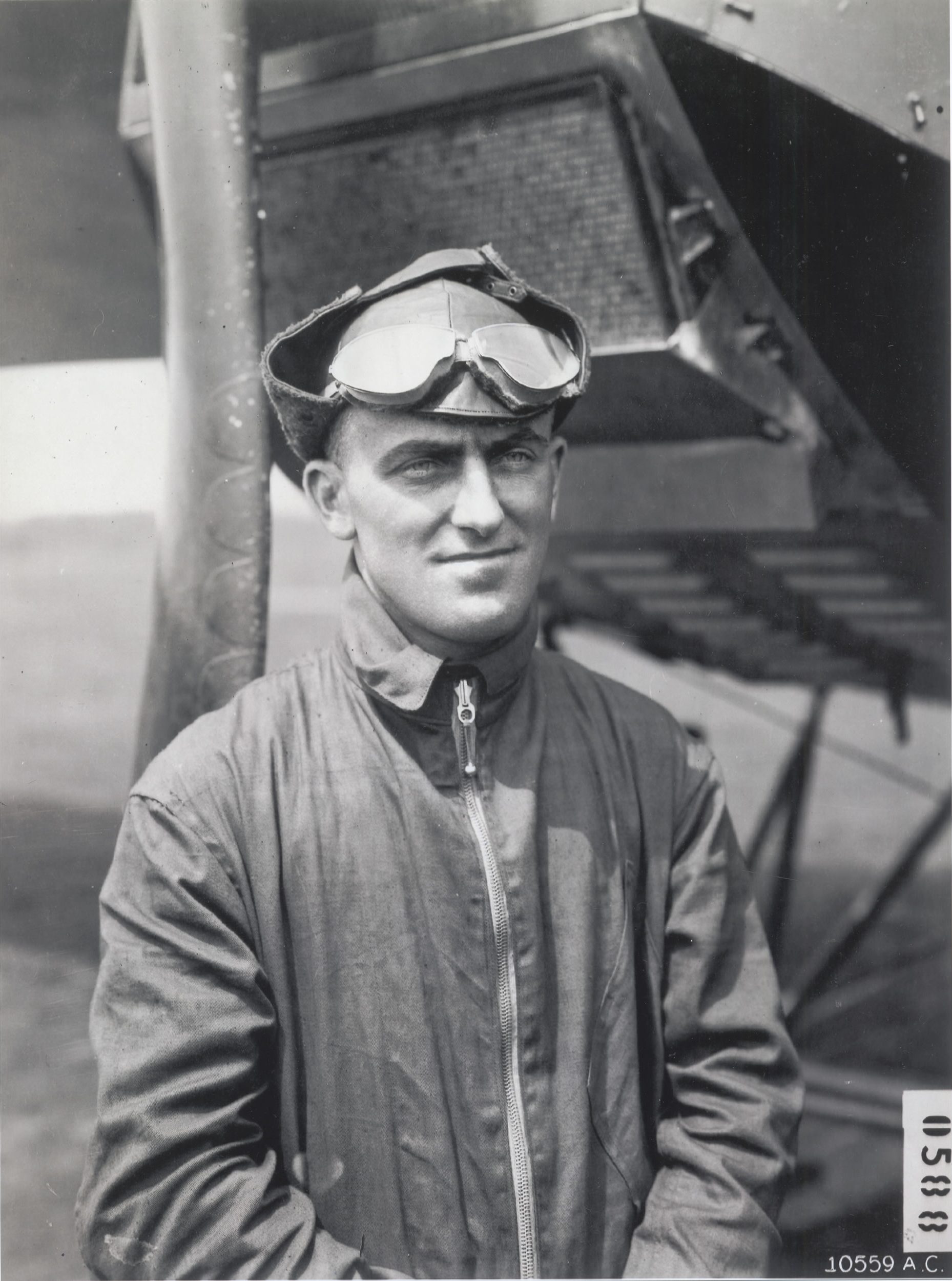
Through the late 1920s and 1930s, Pearson Field was one of the most active airfields in the Pacific Northwest, serving not only military pilots but civilian ones as well, who also kept their airplanes at Pearson Field. Among the civilian pilots at Pearson Field at that time were John “Tex” Rankin, Danny Grecco, and Leah Hing, the first Chinese-American woman to earn a pilot’s license. The airfield also hosted notable aviation figures such as Eddie Rickenbacker, Charles Lindbergh, Jimmy Doolittle, and T. Claude Ryan, founder of the Ryan Aeronautical Company that built the Ryan M-1 and M-2 mail planes that flew up and down the Pacific coast from Seattle to Los Angeles in the mid to late 1920s. The main squadron based at Pearson Field was the 321st Observation Squadron, which took part in war games with ground army units, patrolled Oregon and Washington’s forests to spot forest fires on behalf of the Forest Service, and even conducted crop dusting to prevent apple orchards from falling prey to infestation. The airfield famously became the landing site of the first transpolar flight in June 1937 when a Tupolev ANT-25 long-range aircraft flew from Moscow to Pearson Field with a crew of three (pilot Valery Chkalov, co-pilot Georgi Baidukov, and navigator Alexander Belyakov), taking 63 hours and 25 minutes.

With the Japanese attack on Pearl Harbor, the primary unit based at Pearson Field, the 321st Observation Squadron, was mobilized for operational service outside Pearson Field, and recreational flying was restricted. With the development of larger airfields in the area, namely Portland-Columbia Airport (now Portland International Airport) meant that despite the wartime activity around Portland industrial areas, Pearson Field remained a quiet military airfield during the war, and when victory came in 1945, the Army Air Force no longer had any need for Pearson Field, which was then turned over to the city government of Vancouver, Washington. Since then, Pearson Field remains an active municipal airport. Though Beechcrafts, Cessnas, and Pipers are among the most common types of aircraft housed at Pearson Field, a few warbirds, namely former trainers such as AT-6 Texans and T-28 Trojans, also call Pearson Field home, while airliners arriving and departing from Portland International Airport soar overhead. Meanwhile, the western portion of the airfield has been leased by the National Parks Service to the city of Vancouver since 2010 under the terms of a 40-year contract.
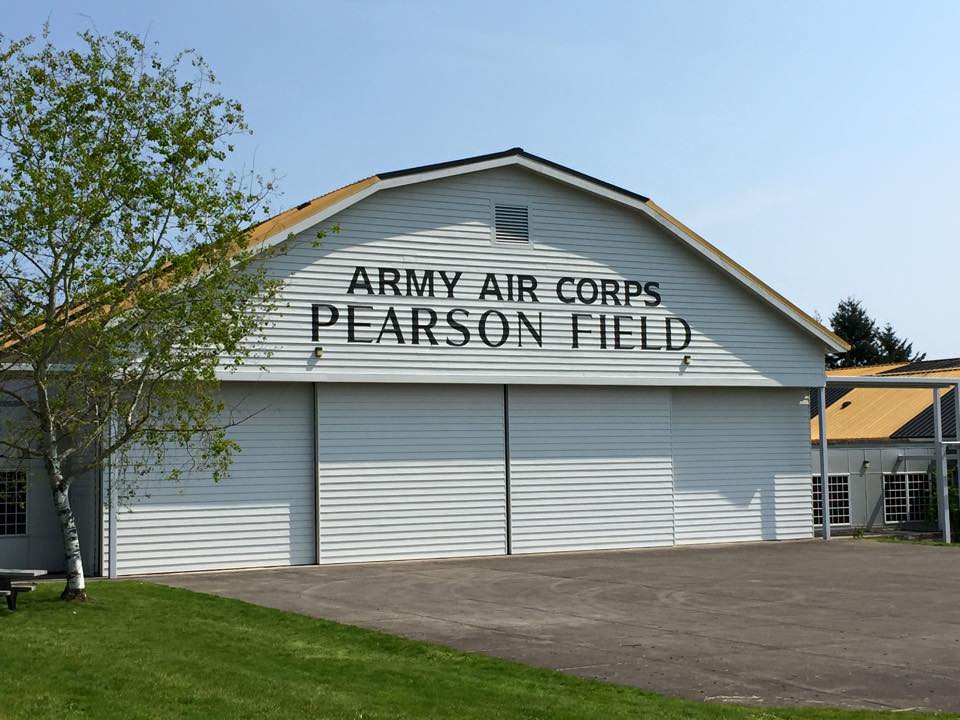
This historic site is also the home of the Pearson Air Museum. Founded in 1996, the museum is operated by the U.S. National Park Service as part of the NPS’ Fort Vancouver National Historic Site, which also preserves the legacy of the Hudson’s Bay Company trading fort and the Vancouver Barracks, used from 1849 until the last active Army units left in 2011. While the Pearson Air Museum is relatively small compared to other aviation museums, it safeguards the rich aviation history of Pearson Field and of aviation in the Pacific Northwest. It also highlights the accomplishments of local figures in the history of the development of aviation in the local region. Upon entering the museum through the gift shop and lobby, there is an interactive, handicap-accessible model depicting a de Havilland DH-4 light bomber of WWI, which also flew out of Pearson Field during the 1920s. This model was constructed by students and volunteers from Vancouver iTech Preparatory School and was made available to the public in January 2025. It is painted in the colors of the DH-4 reproduction on display inside the museum, and comes complete with a replica of an instrument panel and control column.

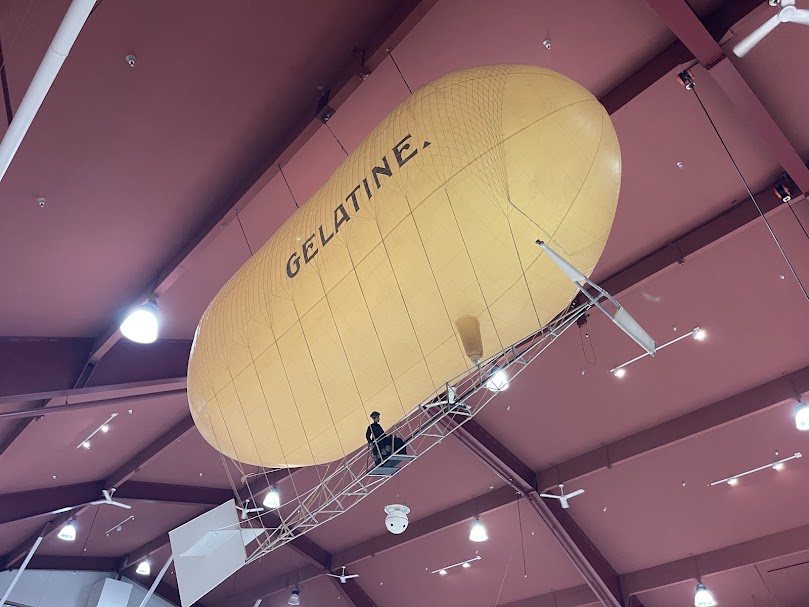
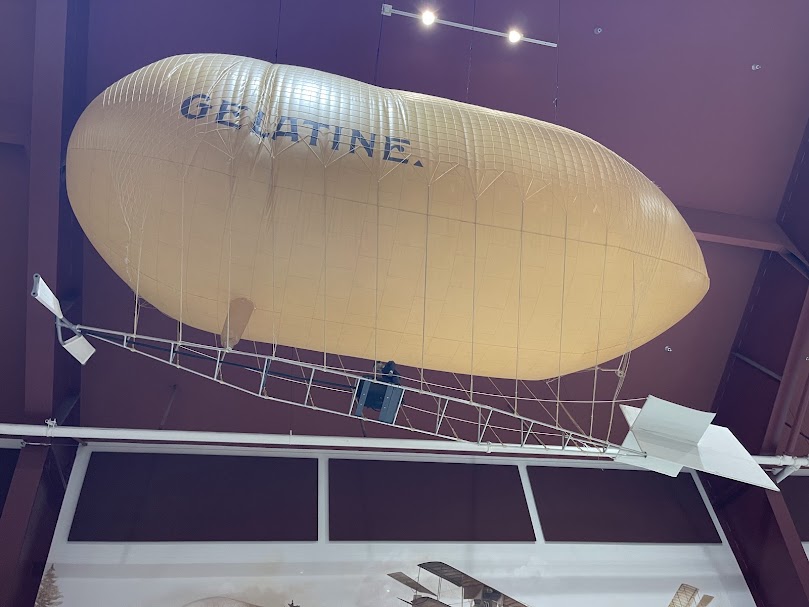
The museum is housed in a hangar built to resemble the exterior of a steel hangar built on the future museum site in 1925, but was destroyed by a fire in 1977. Like the original 1925 hangar, the museum hangar has the distinctive yellow and black checkerboard scheme painted on the roof for visual identification by pilots flying overhead. Suspended from the ceiling above the entrance from the lobby is a ⅓ scale model of the Gelatine airship, which was constructed in 1905 by balloonist Thomas Scott Baldwin and his company Baldwin’s Airships, Balloons, Aeroplanes in New York City and shipped alongside several other airships and balloons to the Lewis and Clark Centennial Exposition held at Guild’s Lake in Portland, Oregon to celebrate the 100th anniversary of the Lewis and Clark Expedition, which came down the Columbia River and sighted the Pacific Ocean on November 7, 1805. At the exposition, the airship was painted with the name Gelatine in honor of the craft’s sponsor, the Knox Gelatine Company, run by Rose and Charles Knox of New York.

The Gelatine was inflated with 12,000 cubic feet of hydrogen gas, and powered by a 5 horsepower motorcycle engine held in a wooden framework suspended under the gas bag. The framework also featured a single propeller in the front, and a rudder in the rear, with the pilot also stepping back and forth to control the pitch of the Gelatine, going back to ascend and forward to descend. During the early flight trials in Portland, however, the motor of Gelatine quit, and since it was able to be repaired in time for the airship to fly, the gas bag (envelope) of the Gelatine was reattached to the engine and framework of another of Baldwin’s airships sent to the Lewis and Clark Centennial Exposition, the City of Portland.

Gelatine/City of Portland would make 23 flights during the exposition, being flown by balloonist George C. Tomlinson and 18-year-old Lincoln Beachey of San Francisco, who had been hired alongside his brother Hillery to work on assembling and flying Baldwin’s airships. Lincoln Beachey made the first flight over Portland on August 3, 1905, but the most famous of all the Gelatine’s flights would take place on September 19, 1905, when Lincoln Beachey made the first aerial crossing of the Columbia River, taking off from the exposition at Guild’s Lake and ascending to 2,000 feet. About 40 minutes after leaving Guild’s Lake, Beachey landed his airship on the polo grounds of the Vancouver Barracks.

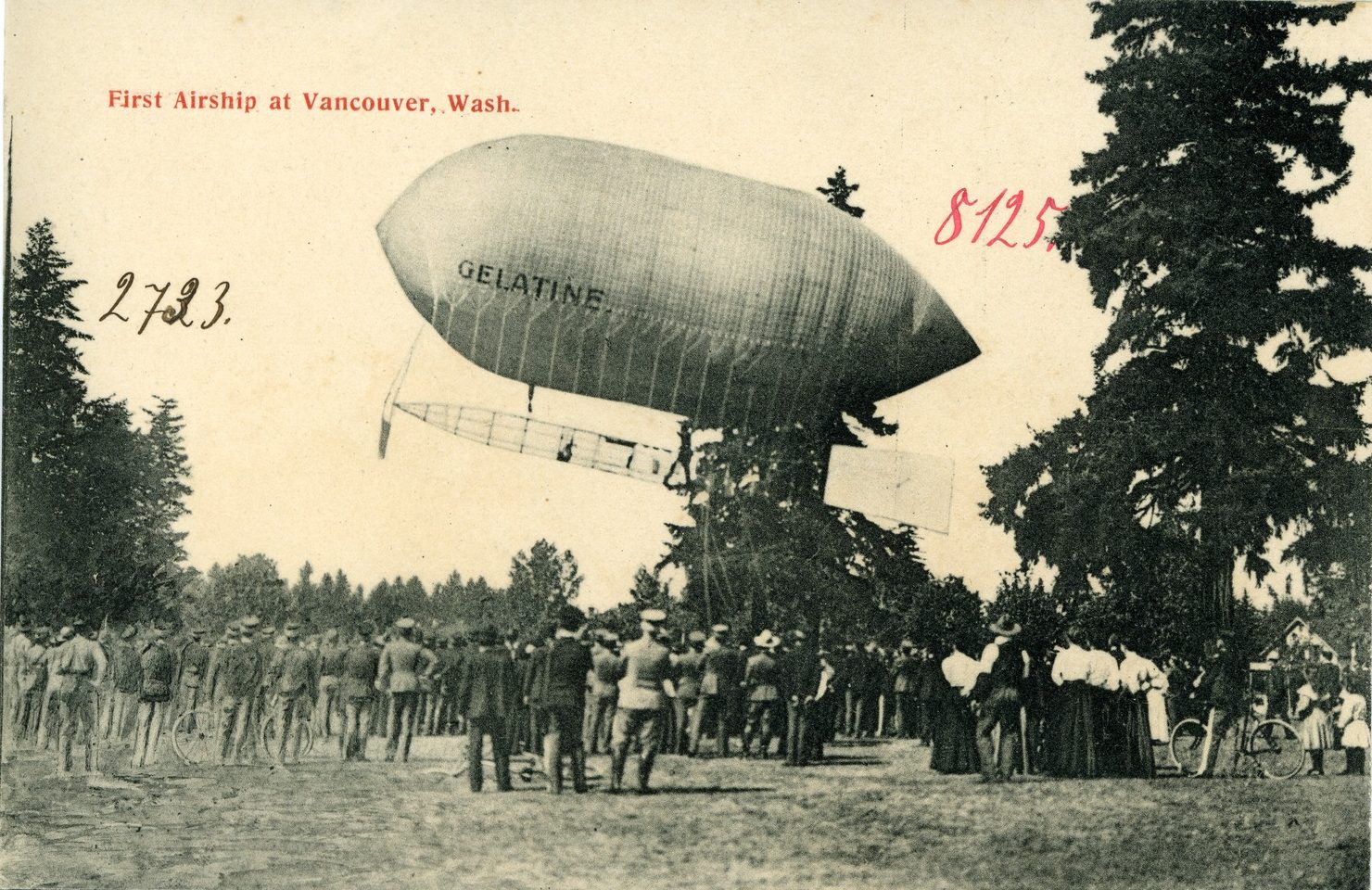
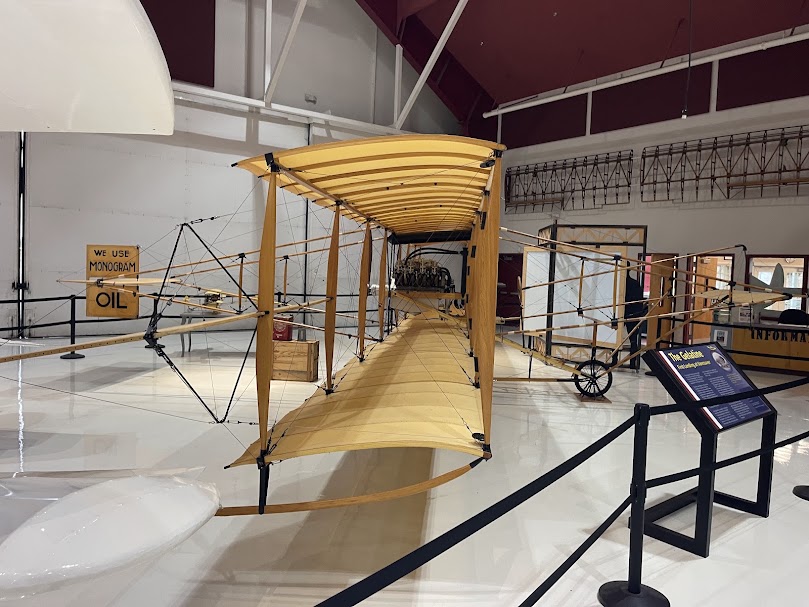
In addition to making the first landing at Vancouver Barracks and the first aerial crossing of the Columbia River, Beachey also delivered a letter of well-wishes from Theodore Hardee, assistant to the president of the exposition, to General Constant Williams, commanding officer of Vancouver Barracks. Today, the first flight across the Columbia River is commemorated by a ⅓ scale model of the Gelatine airship.
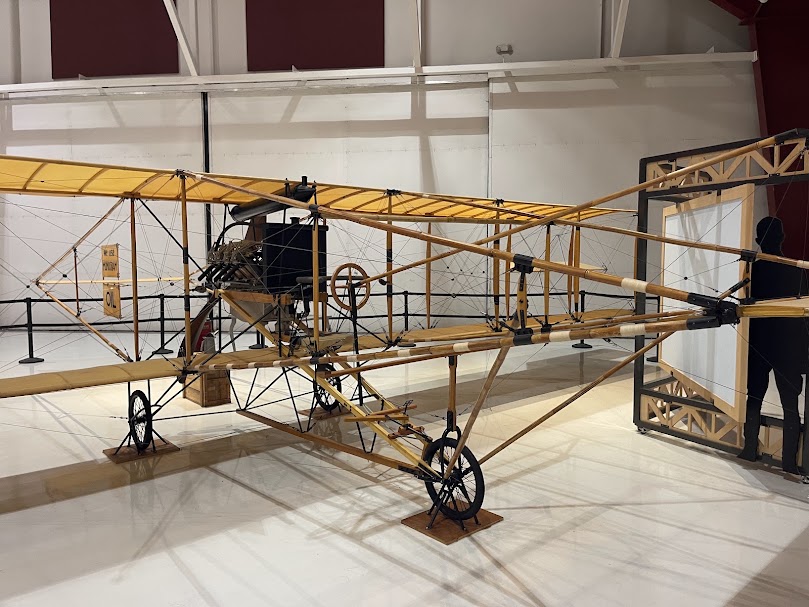
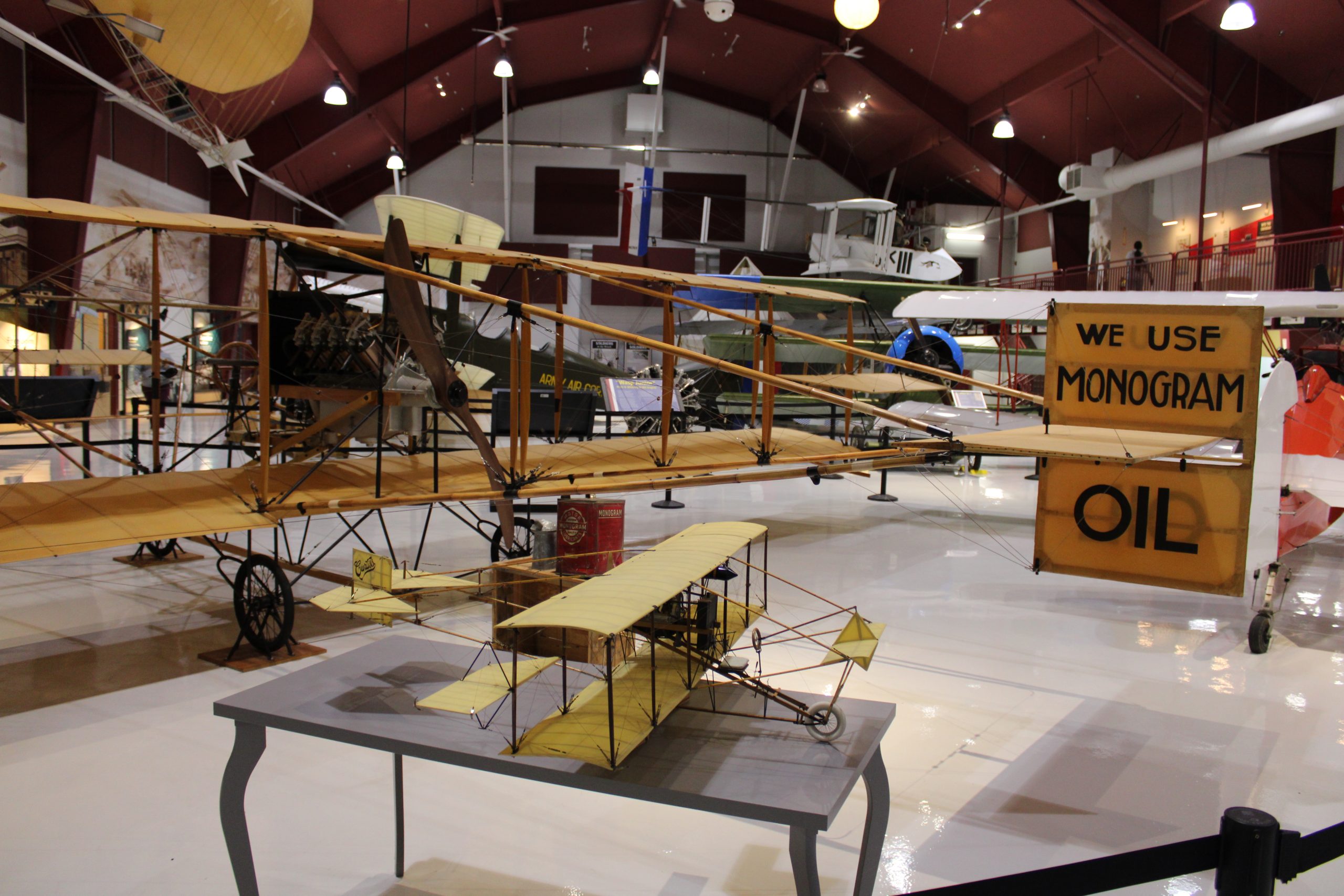
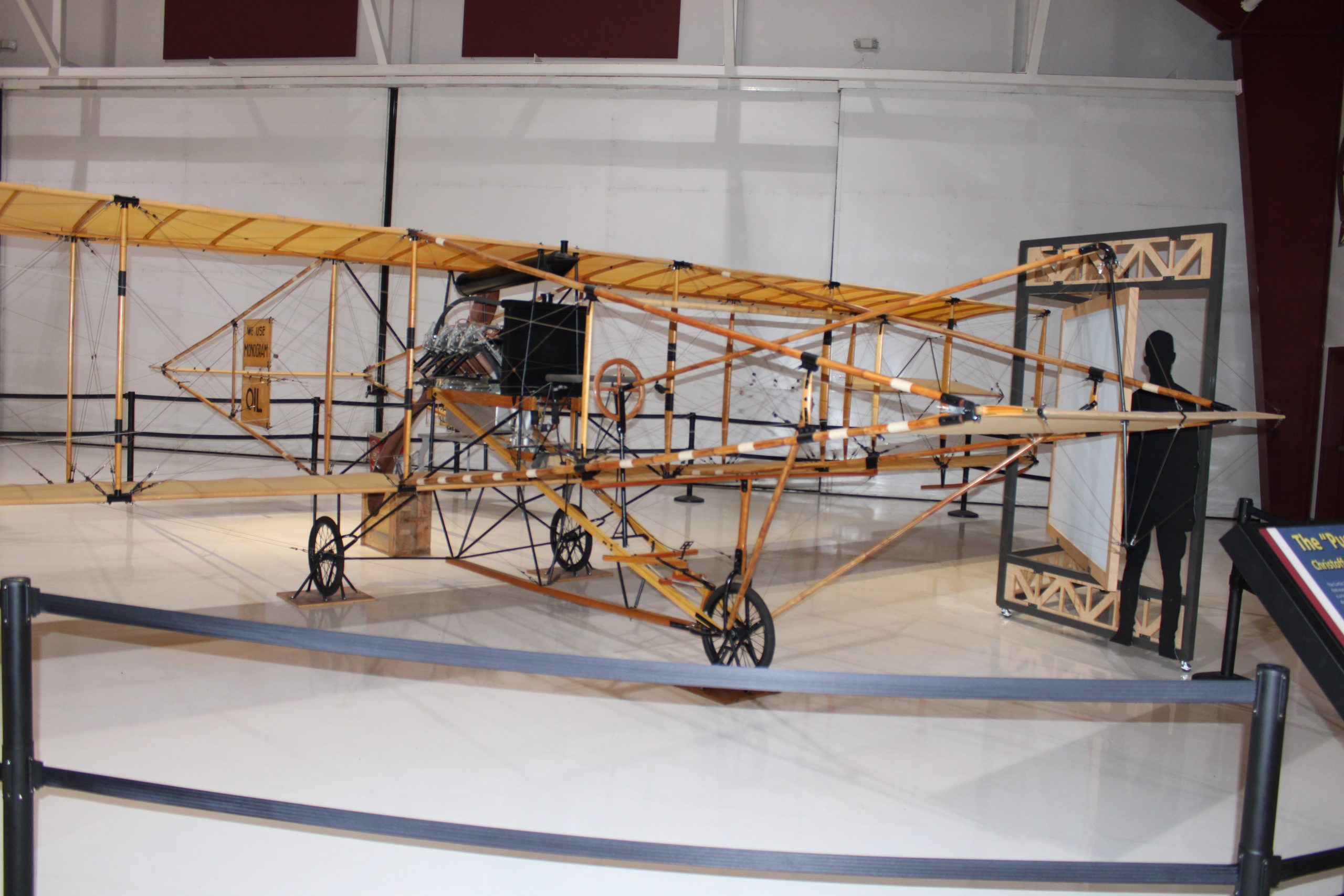
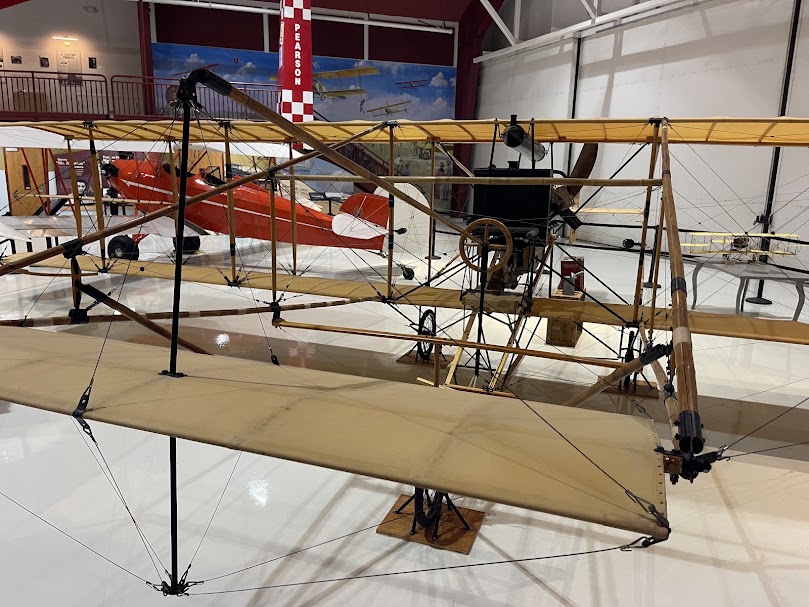
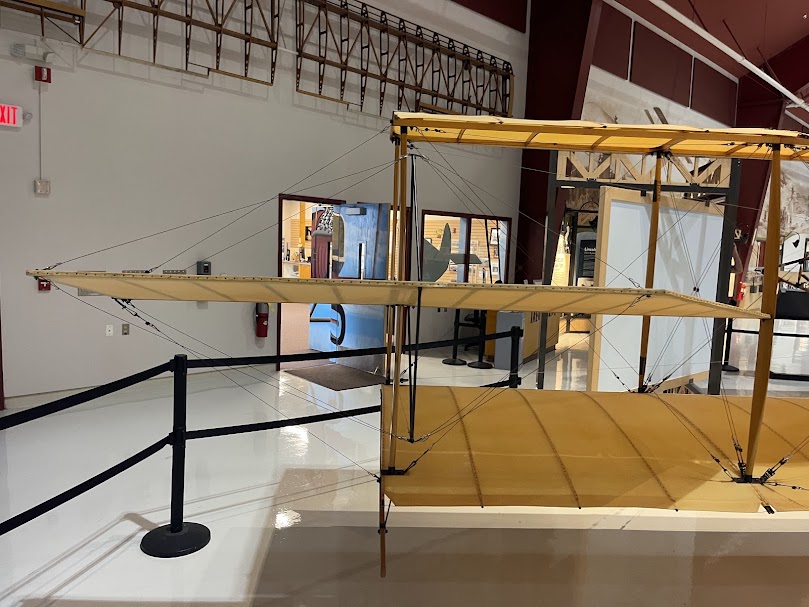
Below the model of the Gelatine airship is a reproduction of the very first airplane to have ever landed at the Vancouver Barracks, a Curtiss Pusher, equal to the Wright Flyer in terms of its overall impact on the development of American aviation before the outbreak of World War I in Europe in 1914. The Curtiss Pusher was flown by numerous exhibition pilots throughout the first half of the 1910s in America, and copied by many of these same pioneers for their own aircraft.

The Curtiss Pusher replica on display at the Pearson Air Museum is a replica of the aircraft once flown by Silas Christofferson, who in 1910, at the age of 20, partnered with Fred Bennett to form the Bennett-Christofferson Airship Company in Portland, where he also worked alongside his brother Harry. In 1911, Christofferson was authorized to use the same polo grounds at the Vancouver Barracks where Lincoln Beachey landed his airship in 1905 to take off and land his experimental airplanes, including one patterned off of Glenn Curtiss’ Pusher aircraft. However, it did come with some restrictions, as according to a 1912 article published in The Oregonian newspaper, Christofferson was only allowed to take off and land either in the early morning or after 4:00 pm to avoid spooking the Army’s mules. In addition to Christofferson, other pioneering aviators based around Portland and Vancouver, including Charles Walsh and Walter Edwards, also used the polo fields from 1911 to 1913 as part of Vancouver Barracks’ “Aviation Camp”, as it came to be known.
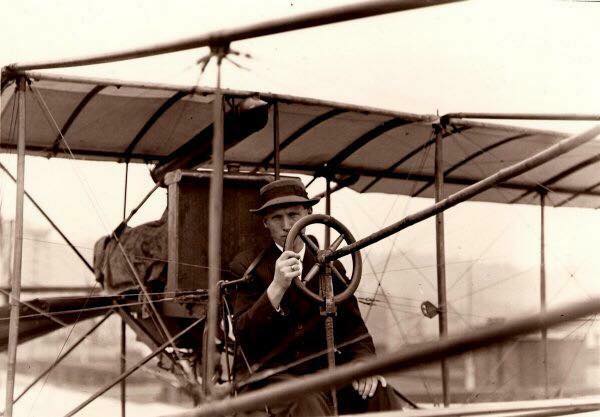
Christofferson’s most famous flight in the local area would occur on June 11, 1912. Silas Christofferson took off in his Curtiss Pusher from the roof of the then newly-opened Multnomah Hotel in Portland, Oregon. To take off from the nine-story building, a special wooden runway was built on the roof, and Christofferson’s airplane was disassembled on the ground, brought up piece by piece via the service elevators, and reassembled on the roof. With over 45,000 spectators in attendance, Christofferson cleared the roofs of the surrounding buildings and made his way to the Columbia River. 12 minutes after taking off from the Multnomah Hotel, Silas Christofferson landed at the Vancouver Barracks. After the flight, Christofferson would continue to develop new airplanes, set new records, and perform public flying demonstrations until he was killed while testing a new aircraft of his own design near Redwood City, California, on October 31, 1916.

Christofferson’s flight from the Multnomah Hotel was later reenacted 83 years later on September 16, 1995, when pilot and aircraft restorer Tom Murphy took Curtiss Pusher replica NX5704N (built in 1947) to the roof of the same building, where a similar wooden runway was built, but this time a massive crane was used to lift NX5704N onto the roof, where Murphy took off and traced Christofferson’s flight path to land at Pearson Field. This replica is now on display at the Western Antique Airplane and Automobile Museum in Hood River, Oregon, where Murphy was the Director of Restorations.
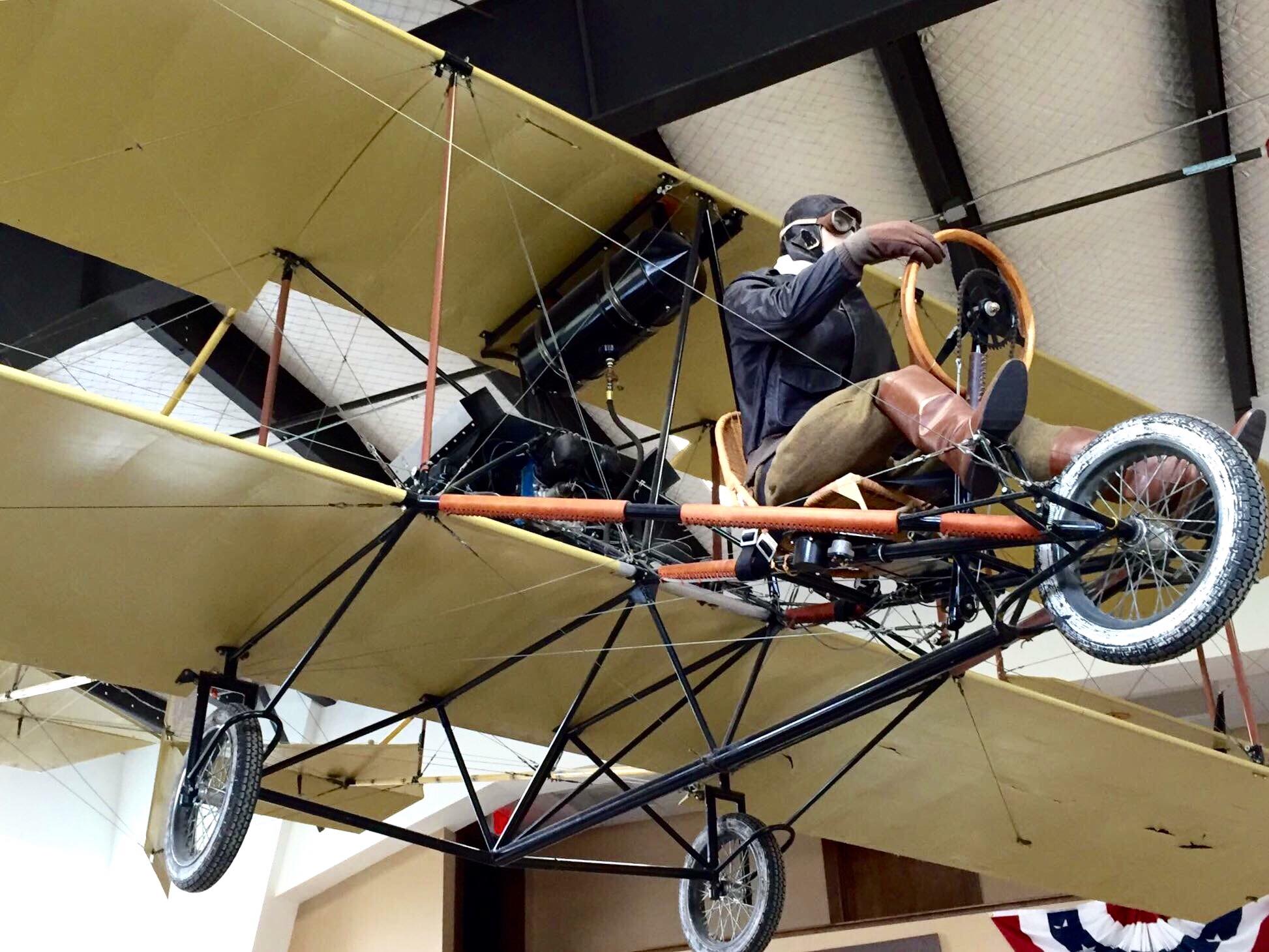
As for the replica on display at the Pearson Air Museum, it was constructed between 2016 and 2018 by National Parks Service volunteers using original plans and dimensions, as well as historical photos of Christofferson’s original Pusher. Although the replica at the Pearson Air Museum was never intended to be flown, it does contain an original 90hp Curtiss OX-5 V8 engine similar to those used in Curtiss Pushers of the 1910s, and it was made of original materials used to build Curtiss Pushers, from Sitka spruce for the wing ribs and spars, to bamboo and steel tubes for the tail booms and landing gear, and the frame is covered in doped cotton fabric. Additionally, the original Curtiss Pusher flown by Silas Christofferson from the roof of the Multnomah Hotel had an advertisement for Monogram Motor Oil painted on the rudder of the Curtiss Pusher, reading “WE USE MONOGRAM OIL”, which has been replicated on the aircraft. In addition to the full-scale replica, the Pearson Air Museum also displays a meticulously-crafted ⅙ model of a Curtiss Pusher constructed from 2015 to 2016.
During the First World War, airpower was mobilized in ways that military planners could never have foreseen in the lead-up to the war. The airplane was rapidly transformed from unarmed reconnaissance craft to agile fighter aircraft capable of speeds in excess of 120 mph and heavy bombers capable of carrying thousands of tons of bombs to drop on military and industrial targets far behind the front lines. When the United States officially joined the Allied Powers on April 6, 1917, the country’s primary air arm was the Aviation Section of the US Army’s Signal Corps, consisting of just 1,218 men and 280 aircraft, and none of these aircraft were capable of going into combat over the Western Front. The Army sought to remedy this by building 12,000 warplanes capable of going overseas to Europe, and 5,000 trainers to instruct pilots and gunners/observers.
In order to fulfill this ambitious task to help win the war, the US Army worked to secure vast tracts of forests in the Pacific Northwest, where Sitka spruce trees were plentiful, and offered a material that was both strong and lightweight, making it ideal for the production of aircraft propellers, wing spars and ribs, and longerons for fuselages. Thus, the US Army set up the Spruce Production Division (SPD) to organize the necessary laborers to fell spruce trees, bring them to special lumber mills, and handle the logistics of shipping the processed material to assembly plants for aircraft production. Labor would be provided by both soldiers and civilian loggers who would be required to join the Loyal Legion of Loggers and Lumbermen (known as the “Four L” (4L)), which was also set up to intentionally draw power away from the Industrial Workers of the World (IWW or “Wobblies”), who often went on strike for better working conditions and higher wages and were seen by the government and corporations alike as being “unpatriotic”.

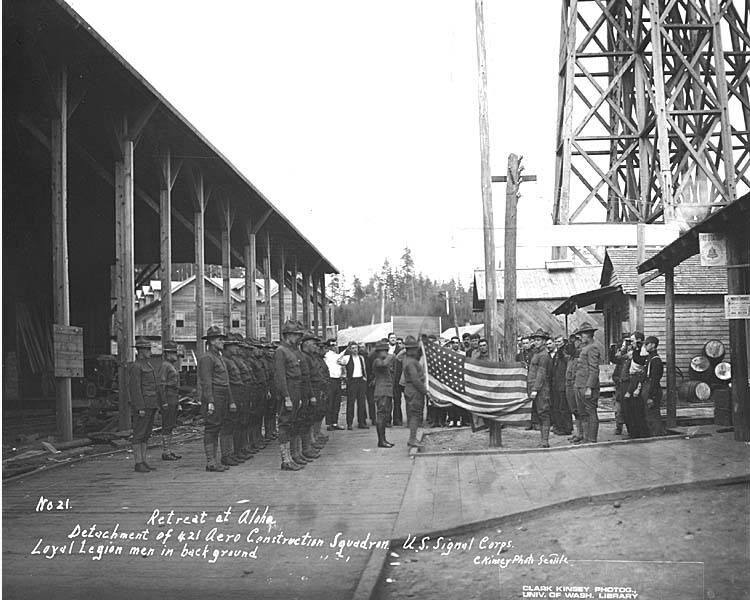
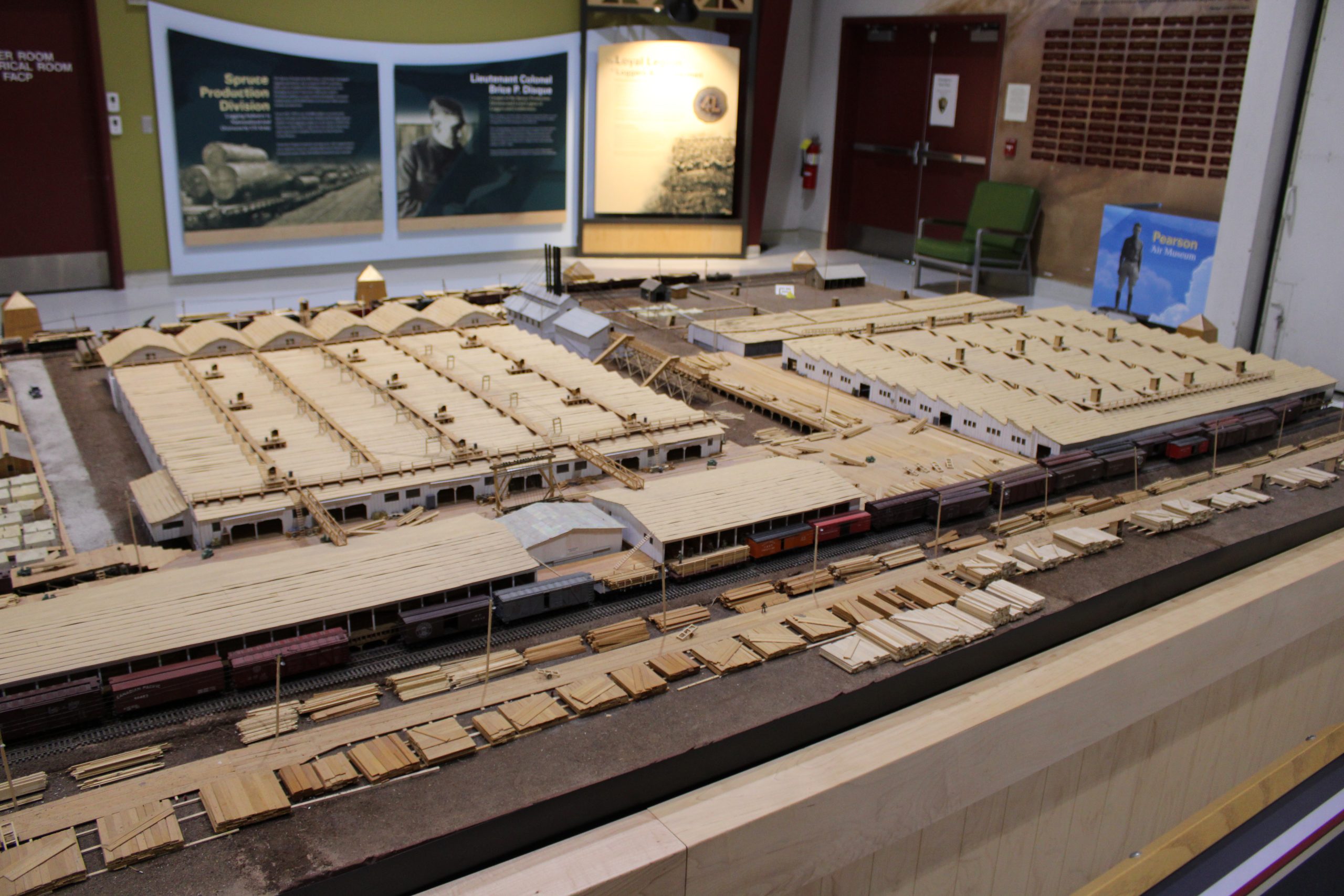
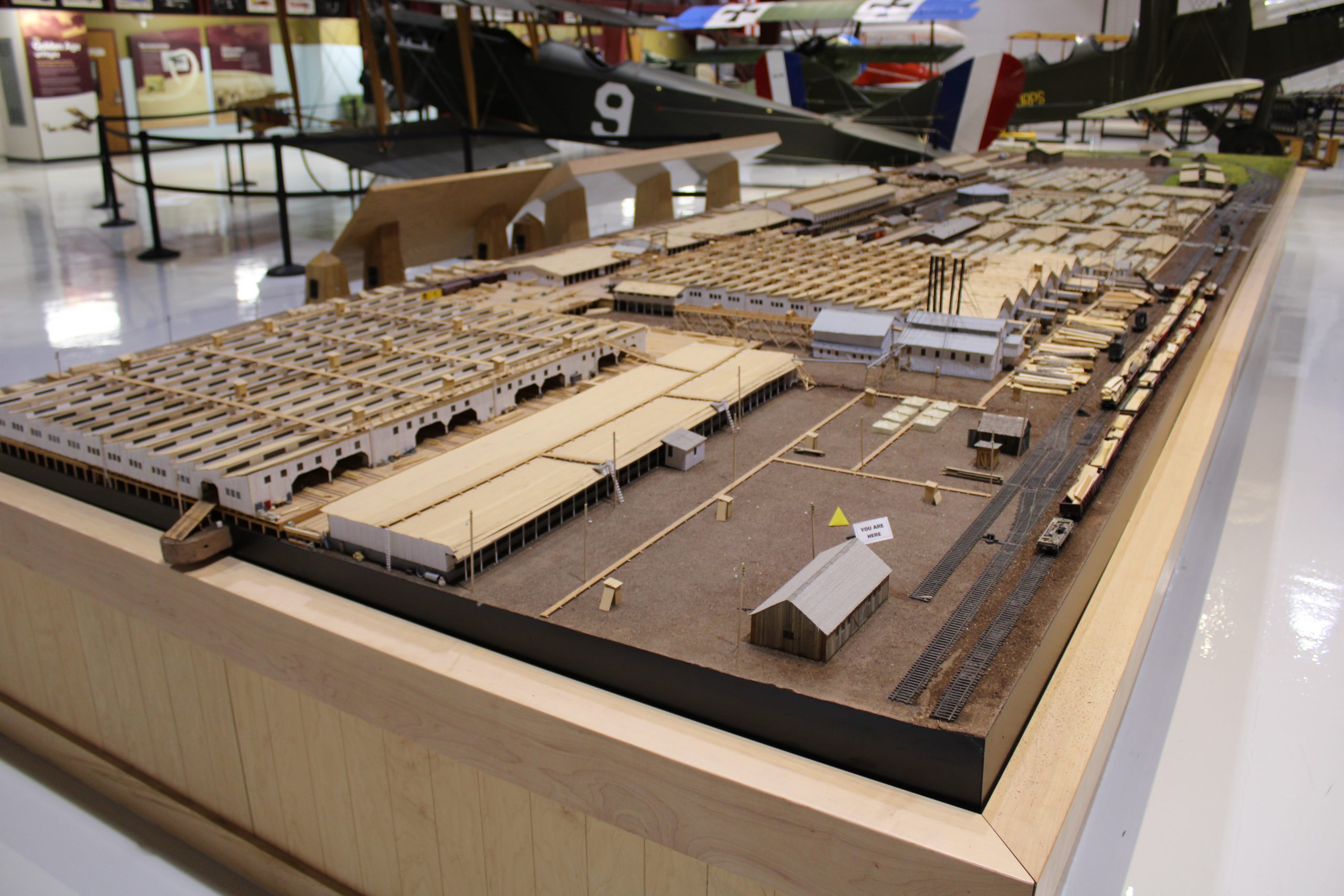
From Puget Sound to Coos Bay, soldiers and lumbermen alike cut down ancient 300 foot tall Spruce trees, whose lumber was then sent on specially made railroads to sawmills to create aircraft components. Vancouver Barracks, meanwhile, would serve as the headquarters of the Spruce Production Division, and on the site where the former Fort Vancouver trading post once stood the Vancouver Spruce Mill, a sprawling complex of sawmills to process lumber shipped by rail and barge, with over 5,000 men living in canvas tents working 24 hours a day to create components that would then be sent across the country to build airplanes for the U.S. Army Air Service, with spruce being processed in Vancouver going to the Dayton-Wright Company of Dayton, Ohio to build American copies of the British-designed de Havilland DH-4 light bomber/observation aircraft fitted with the American-designed Liberty L-12 engine, and to the Curtiss Aeroplane and Motor Company in Buffalo, New York to build Curtiss JN-4 “Jenny” trainers. Additionally, wooden components processed at the Vancouver Spruce Mill were also shipped overseas to Europe to be used in the construction of British, French, and Italian aircraft, providing the European Allies’ aircraft plants with a supply of fresh lumber without exhausting their own forests.

By the time of the armistice on November 11, 1918, the total number of Allied aircraft built with Pacific Northwest lumber included 16,952 U.S. Army training planes, 4,881 French planes, 258 British planes, and 59 Italian planes. After the war, the soldiers sent to the forests were demobilized, and the Spruce Mill at Vancouver Barracks was dismantled, with the reclaimed land being used to construct Pearson Field, while a recreation of the old Fort Vancouver was later constructed by the National Park Service following the establishment of the Fort Vancouver National Historic Site. Today, the Pearson Air Museum provides an excellent display on this largely forgotten aspect of the First World War, with a canvas tent set up in the manner of the Army tents provided to soldiers and lumbermen of the SPD and the 4L, while a detailed diorama of the Vancouver Spruce Mill illustrates the scale of the plant, and artifacts from soldiers and lumbermen provide a personal side to the stories of the Spruce Production Division and the Loyal League of Loggers and Lumbermen.

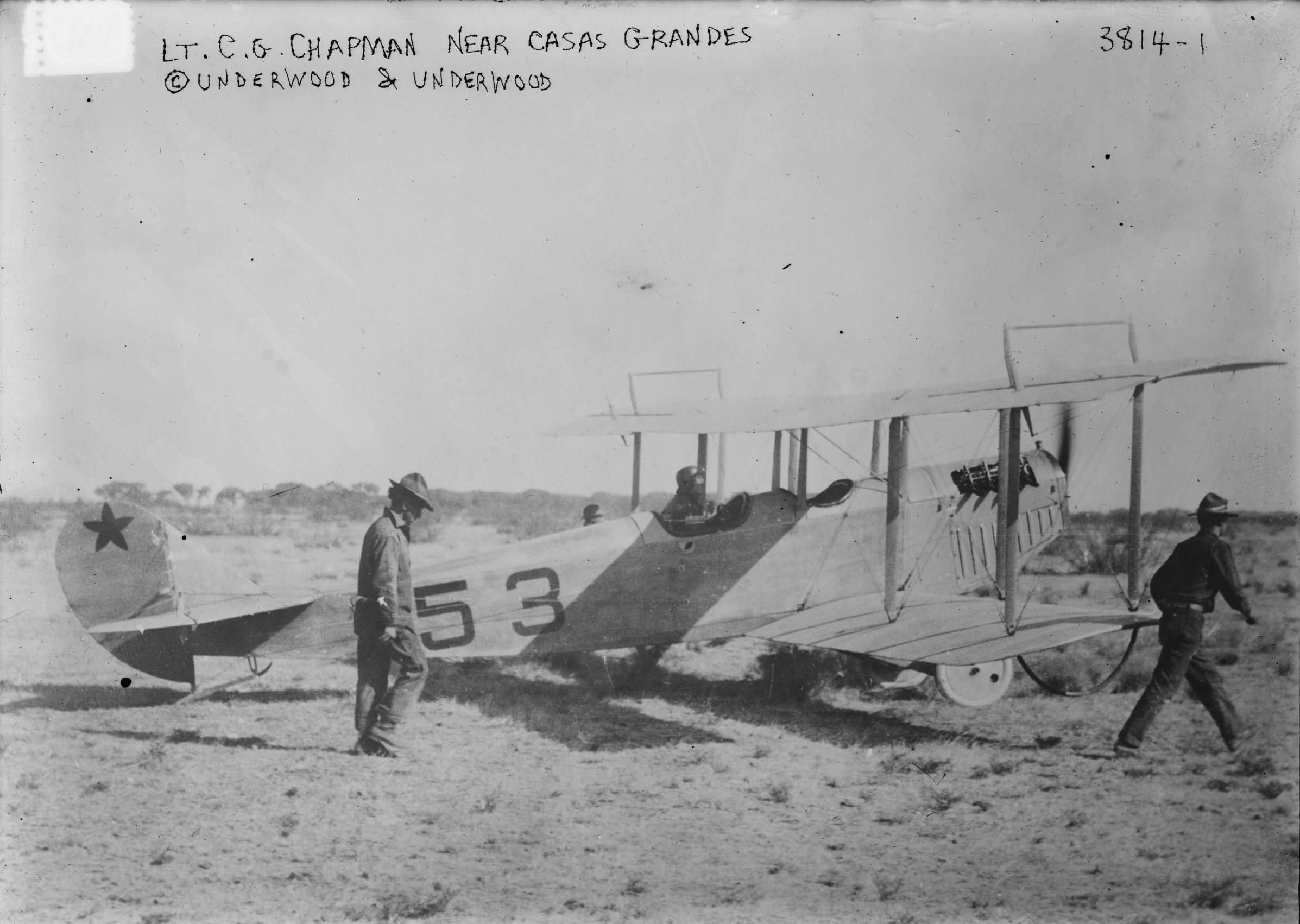
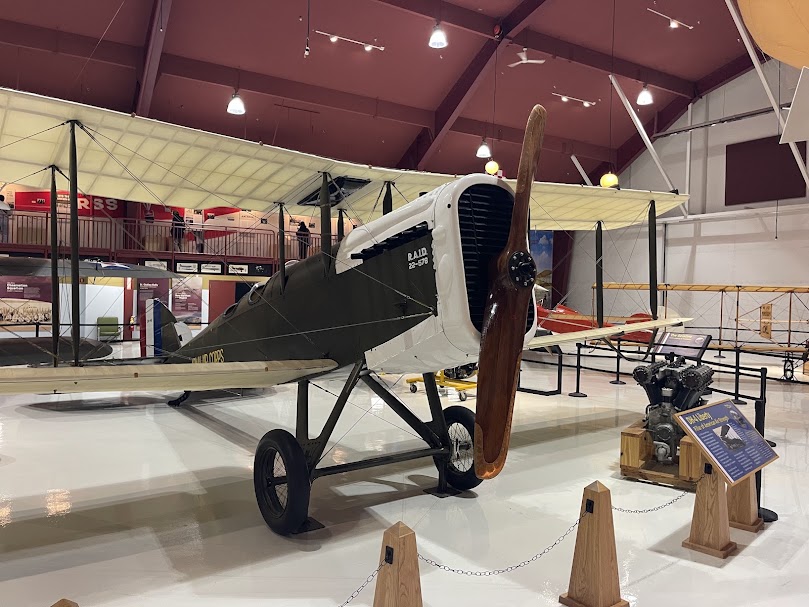
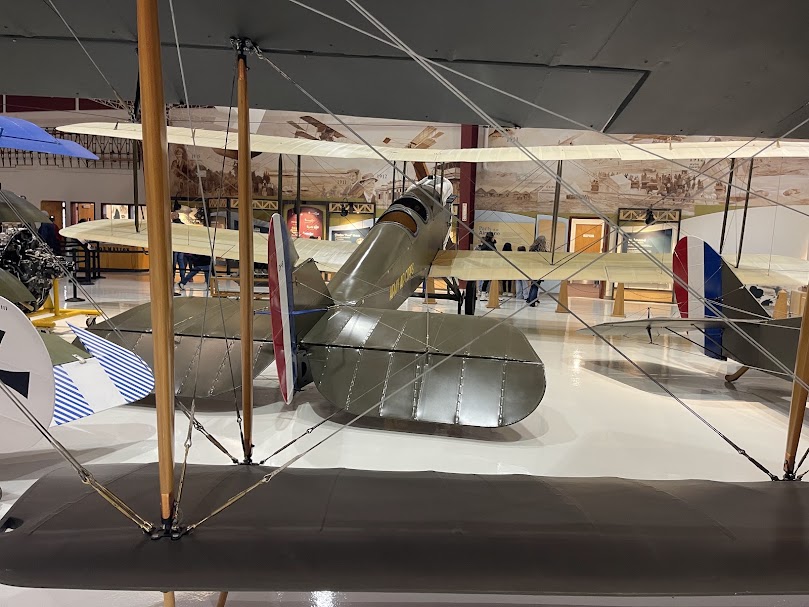
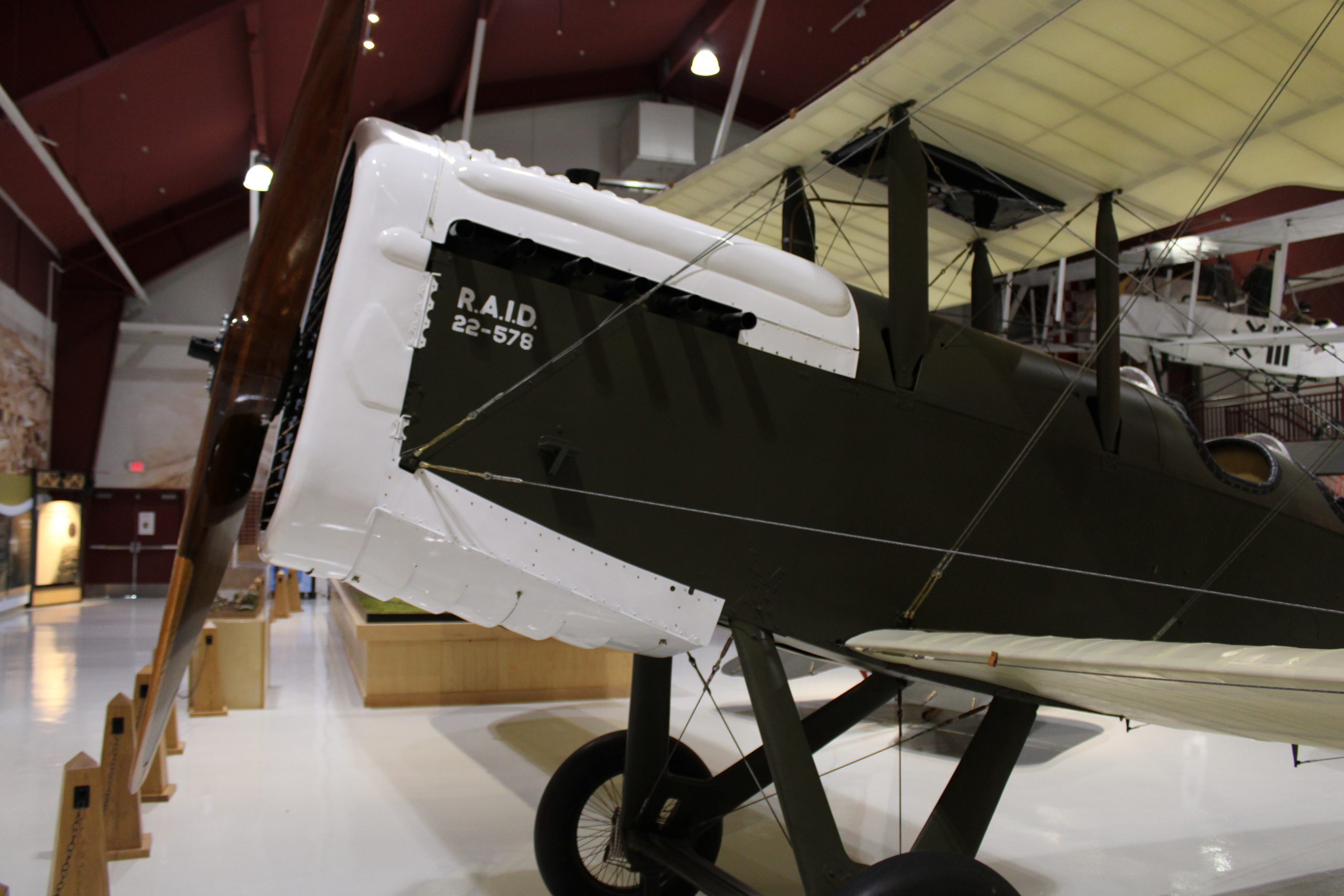
The two types of aircraft built predominantly from Sitka spruce harvested from the Pacific Northwest and processed at the Vancouver Spruce Mill, the de Havilland DH-4 (also known during WWI as the “Liberty plane”) and the Curtiss JN-4 “Jenny” also represented the most prominent aircraft types that flew from Pearson Field in the early days of the airfield’s operations, with the DH-4s and Jennys at Pearson Field being assigned to the 321st Observation Squadron, with the Jennys being used to maintain pilot proficiency until being decommissioned in 1926, and the DH-4s stayed in service at Pearson Field until 1931. Today, the Pearson Air Museum provides a home for reproductions of both a DH-4 and a Curtiss Jenny that were constructed with a mix of original components and new parts by Century Aviation at Pangborn Memorial Airport of East Wenachatee, Washington.

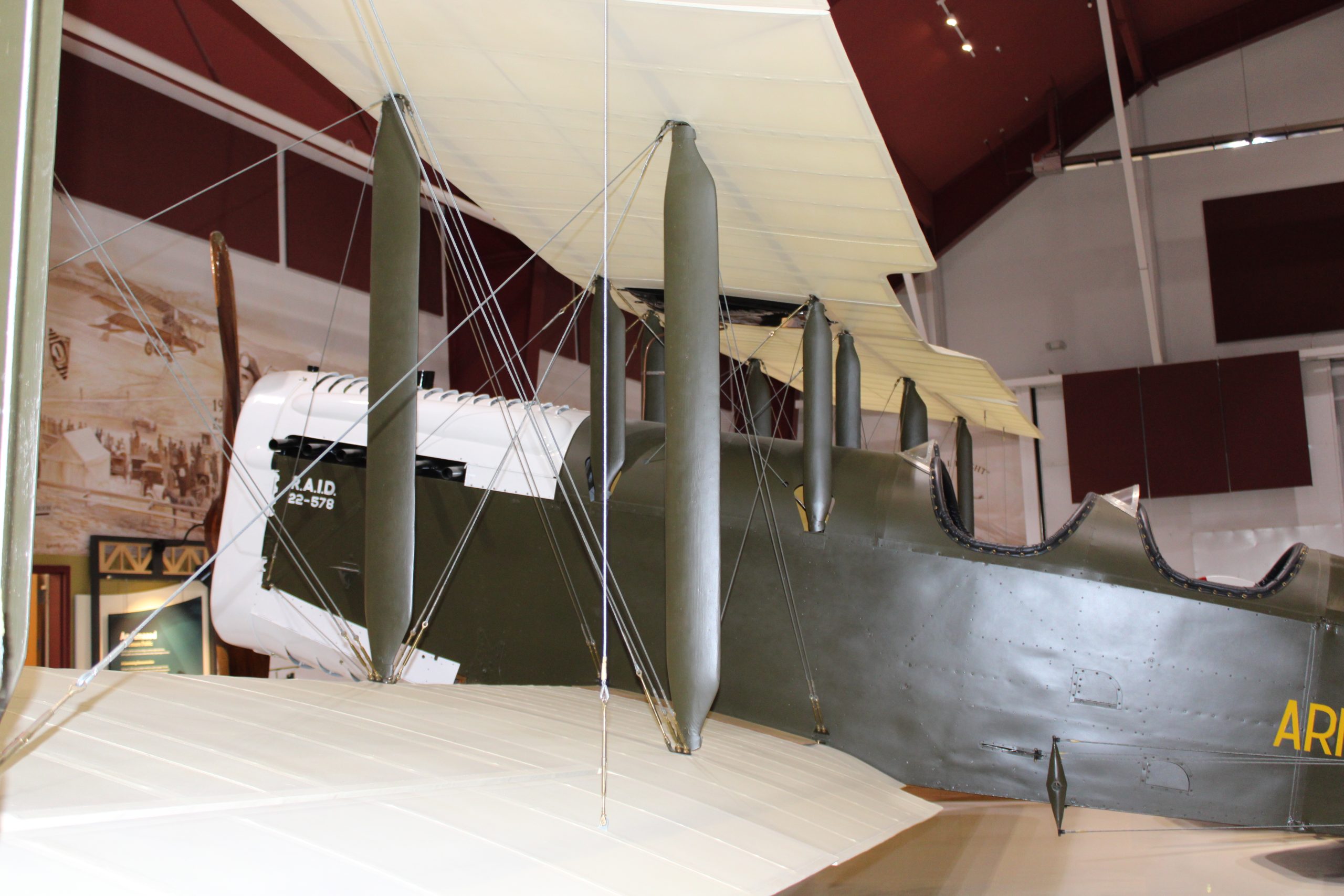
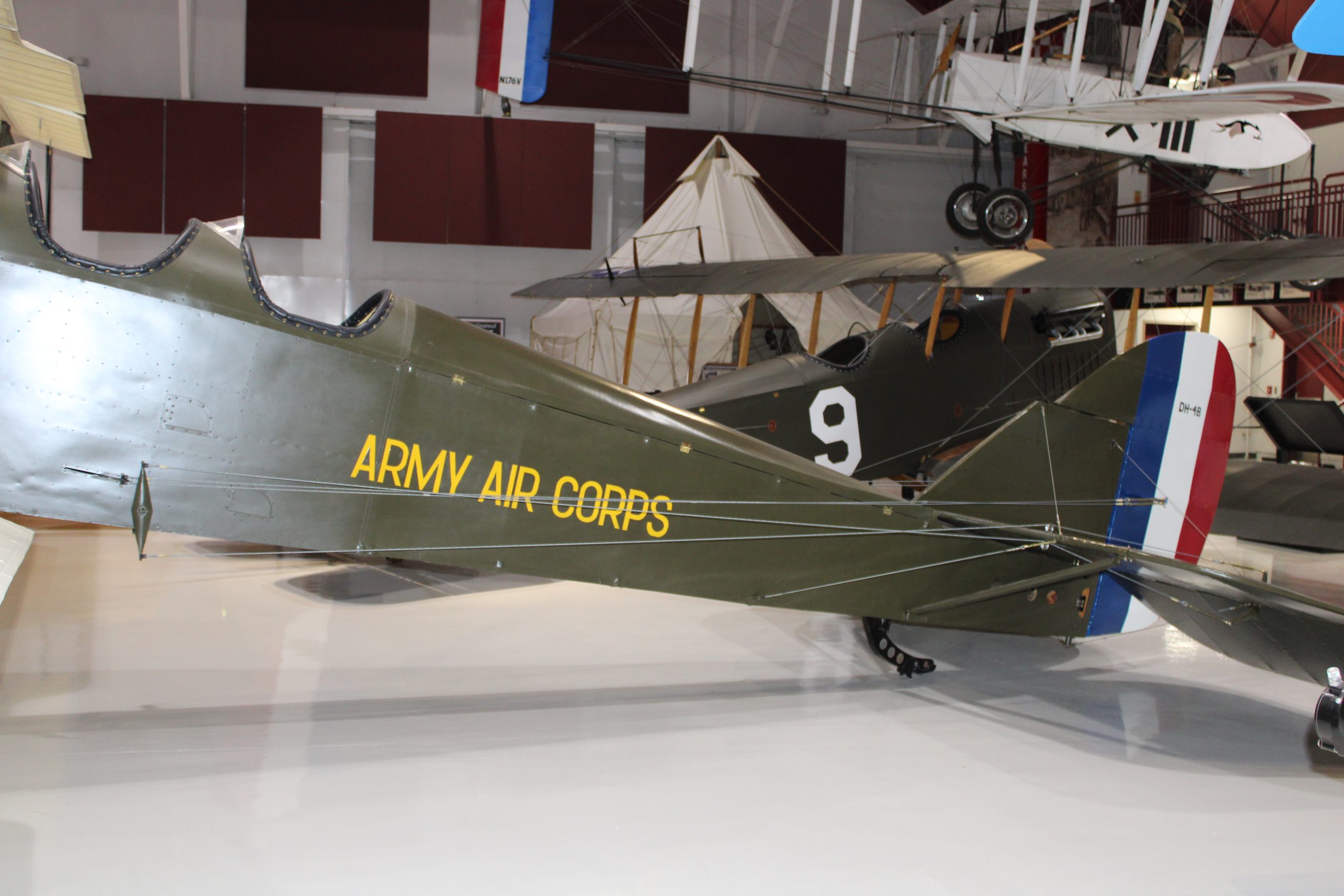
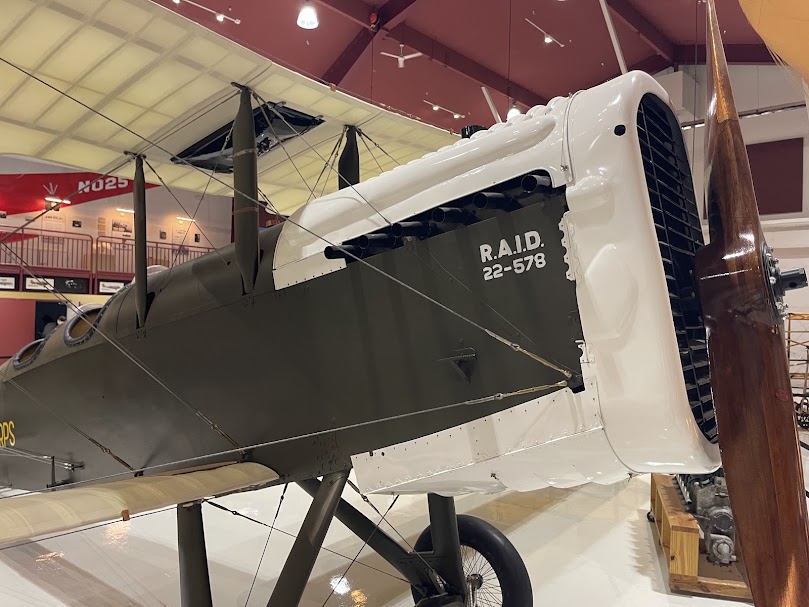
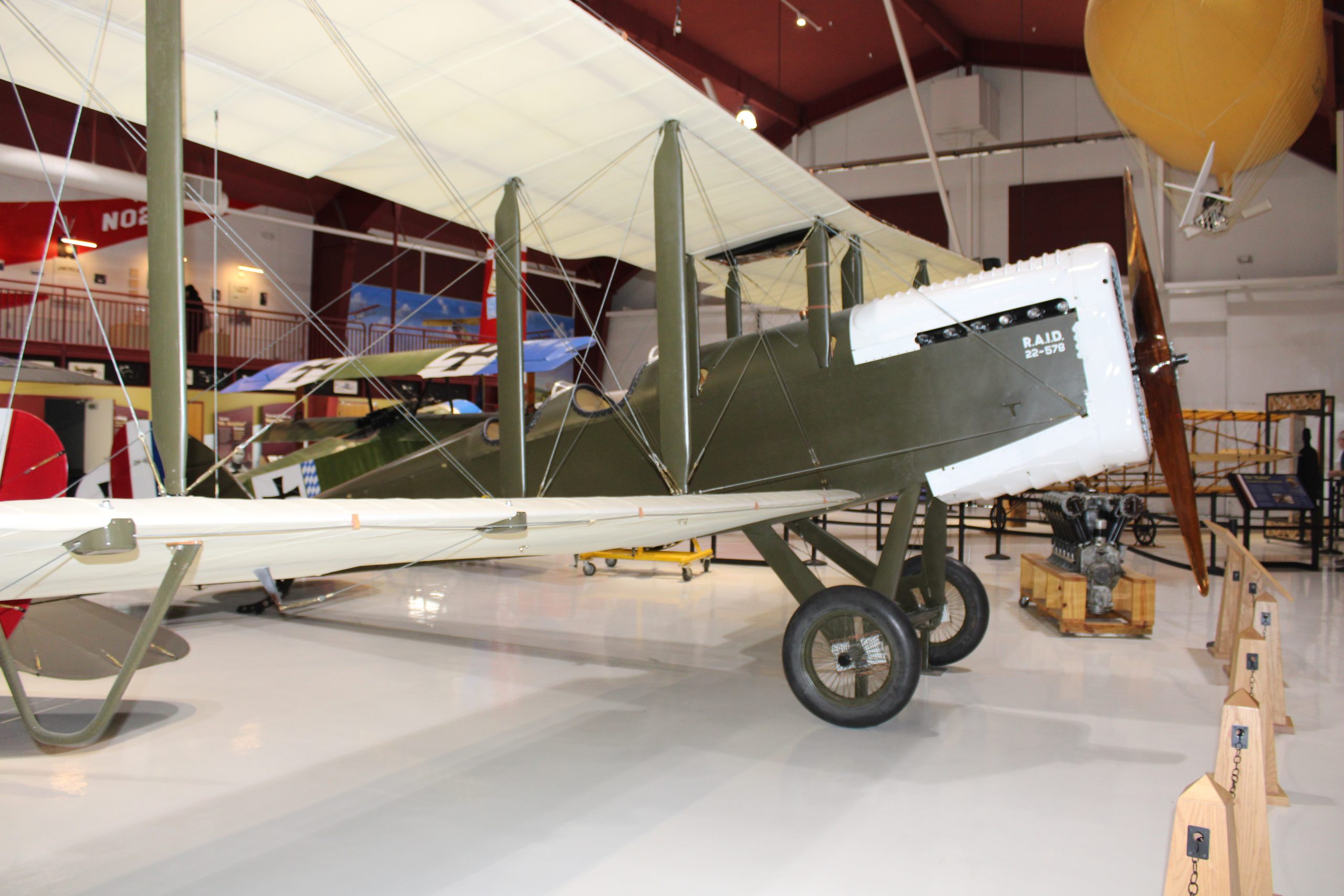
Century Aviation already had plenty of prior experience both restoring original DH-4 airframes and constructing new reproductions for clients such as the National Museum of the United States Air Force, the National Museum of the Marine Corps, The Vintage Aviator Ltd of New Zealand, and Kermit Weeks/Fantasy of Flight, and had more original components to assemble a Liberty L-12 powered DH-4B model of the type flown at Pearson Field. Work on the DH-4B for the Pearson Air Museum began in 2014. According to Century Aviation, the original components they had on hand at the start of the project were “…the forward fuselage, a set of wheels and tires, the upper wing center section and all of the wing struts.” They also acquired further original components, such as the rudder, vertical and horizontal stabilizers, and the elevators, along with the brass castings for the flight controls. Century Aviation then constructed new engine cowlings, landing gear, and the rear section of the fuselage. A Liberty L-12 engine was then sourced to be fitted into the aircraft, while a second Liberty engine would be displayed outside the aircraft for visitors to see.
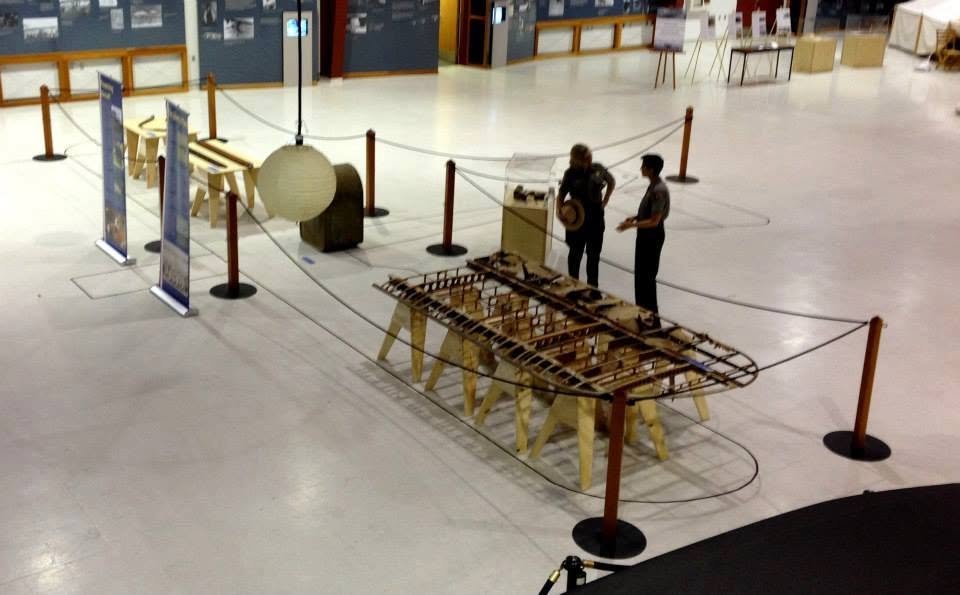
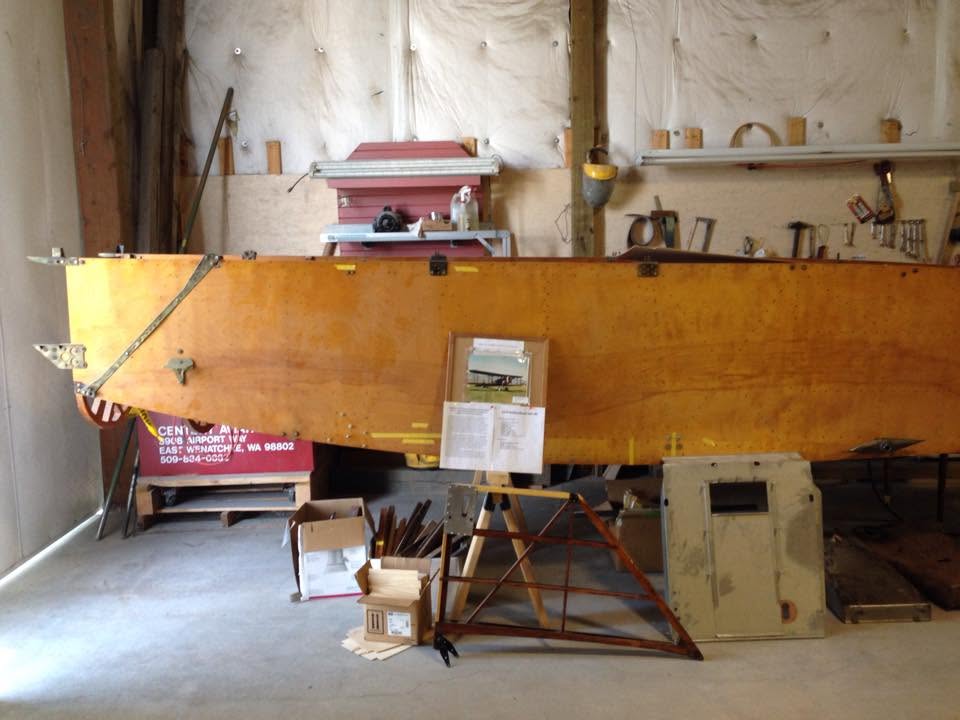
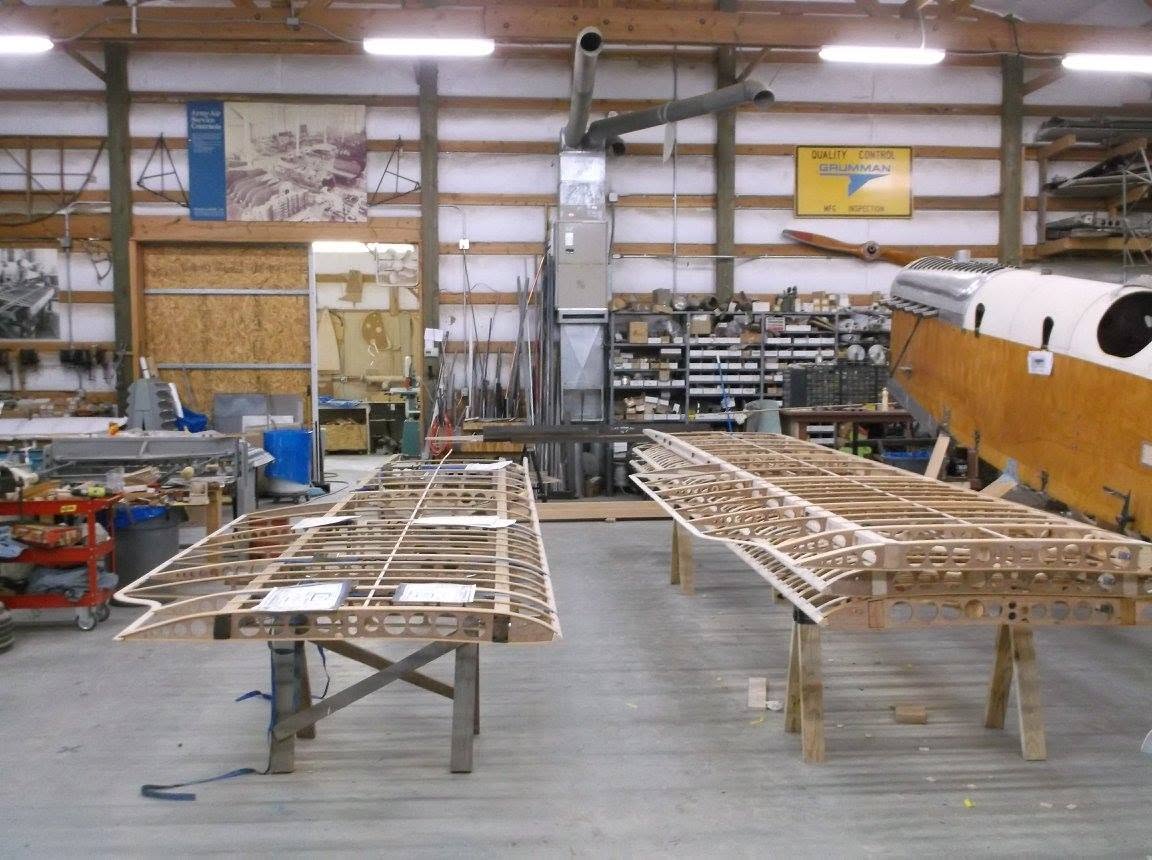
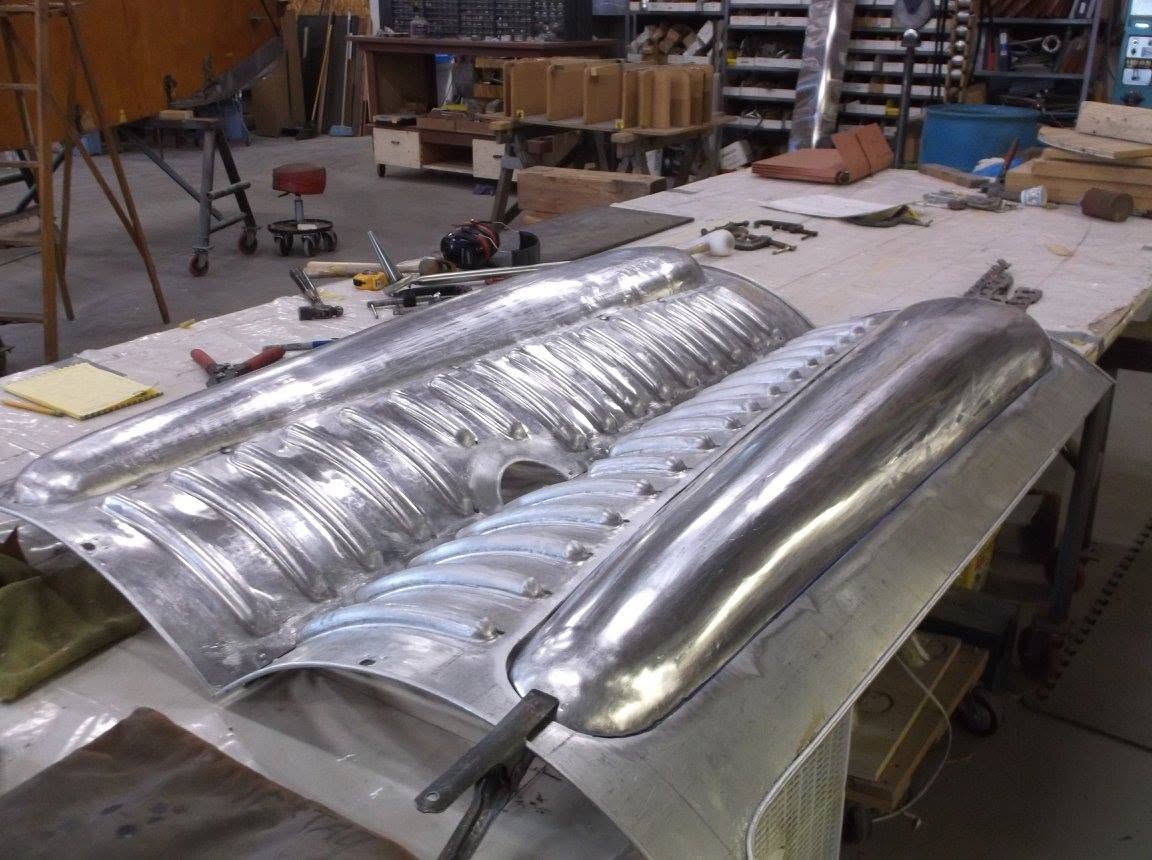
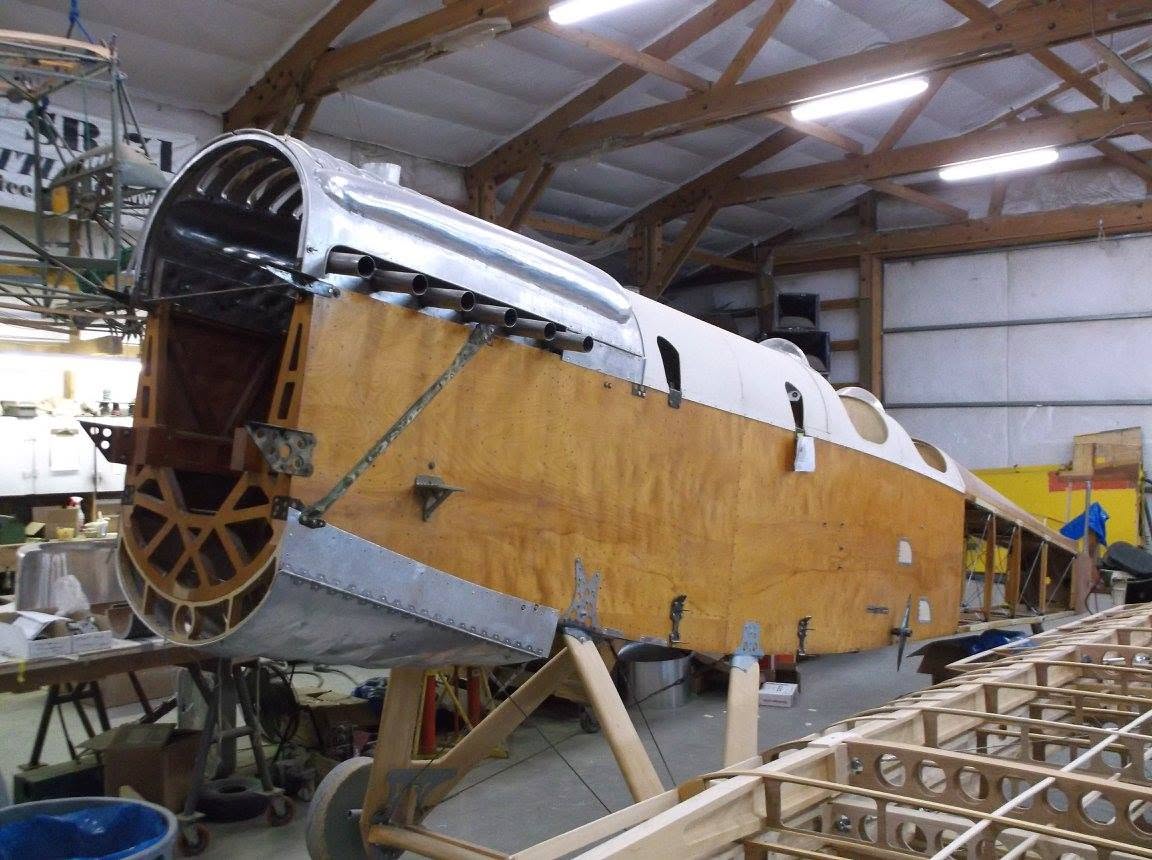
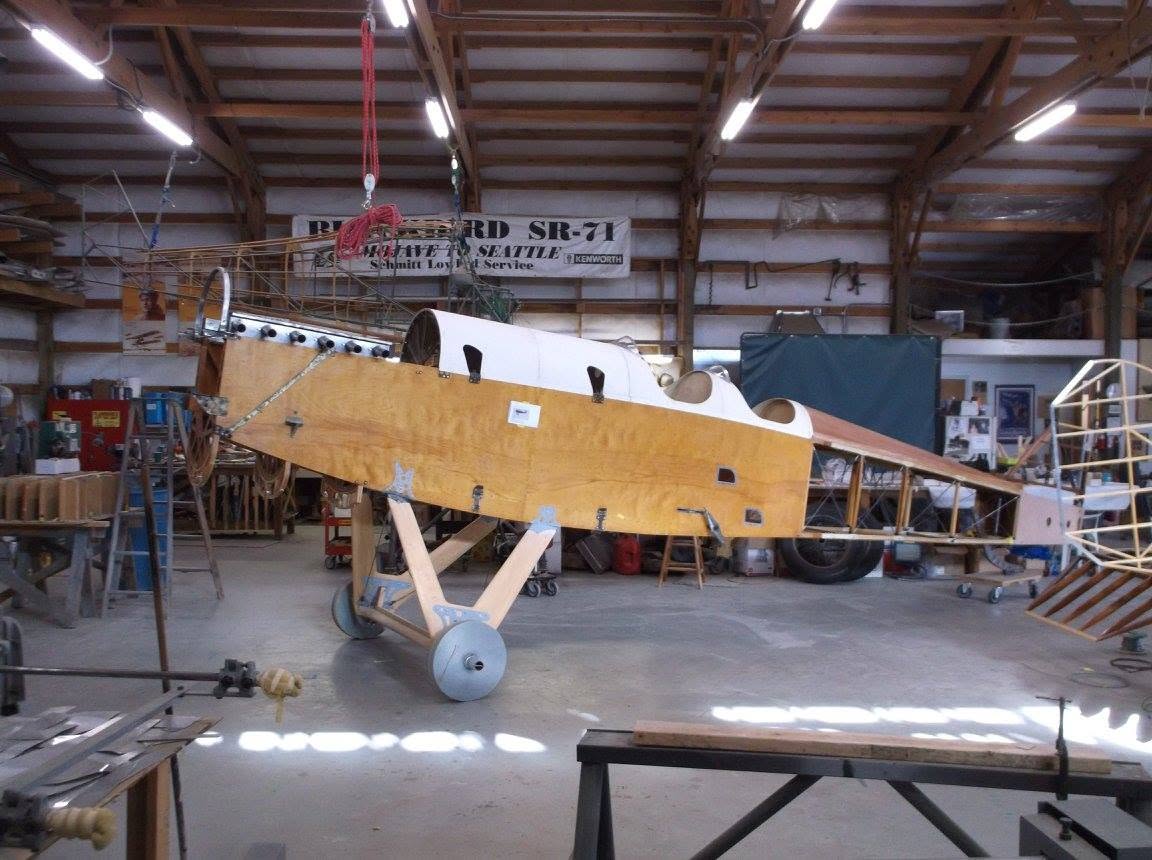
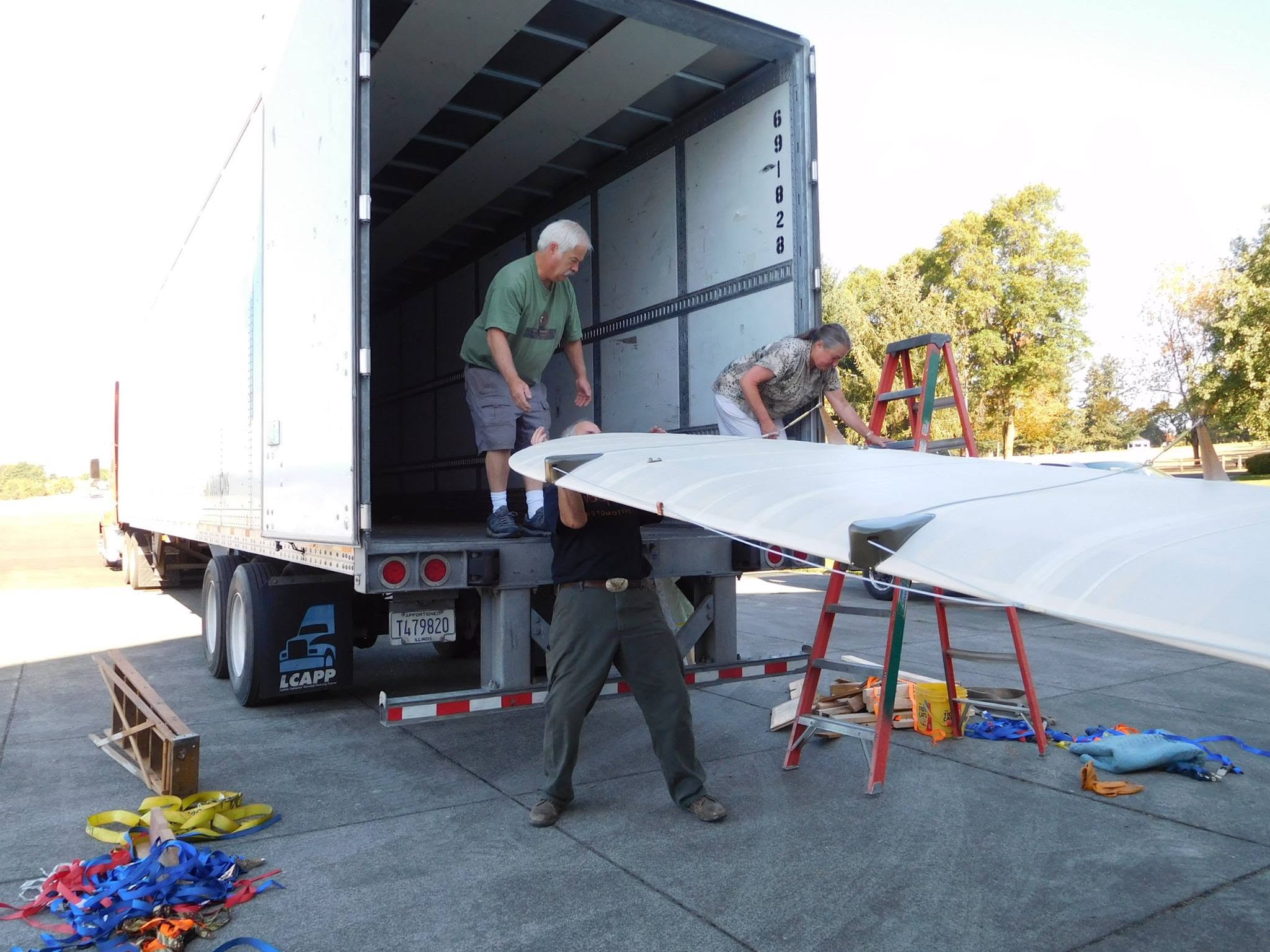
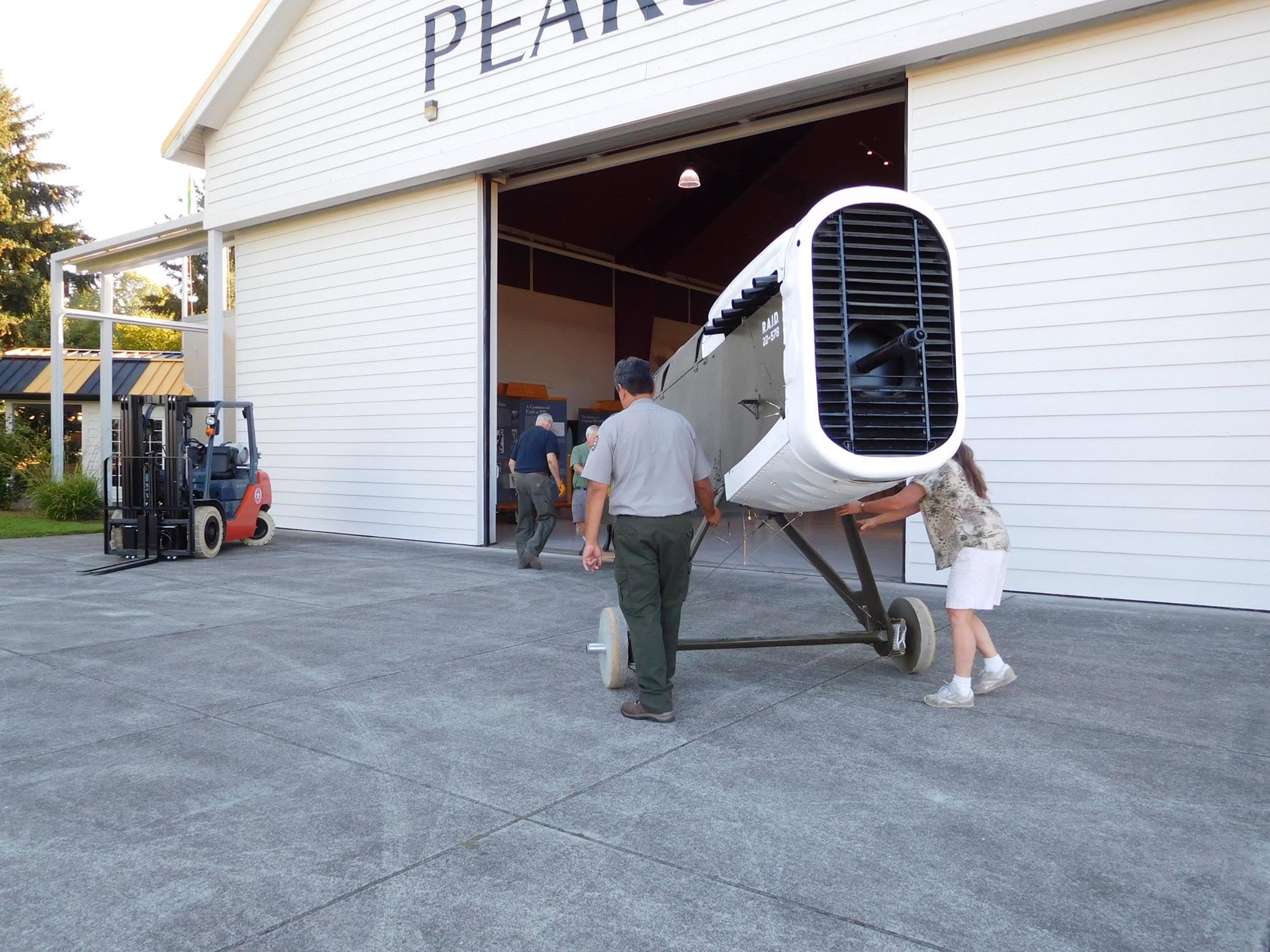
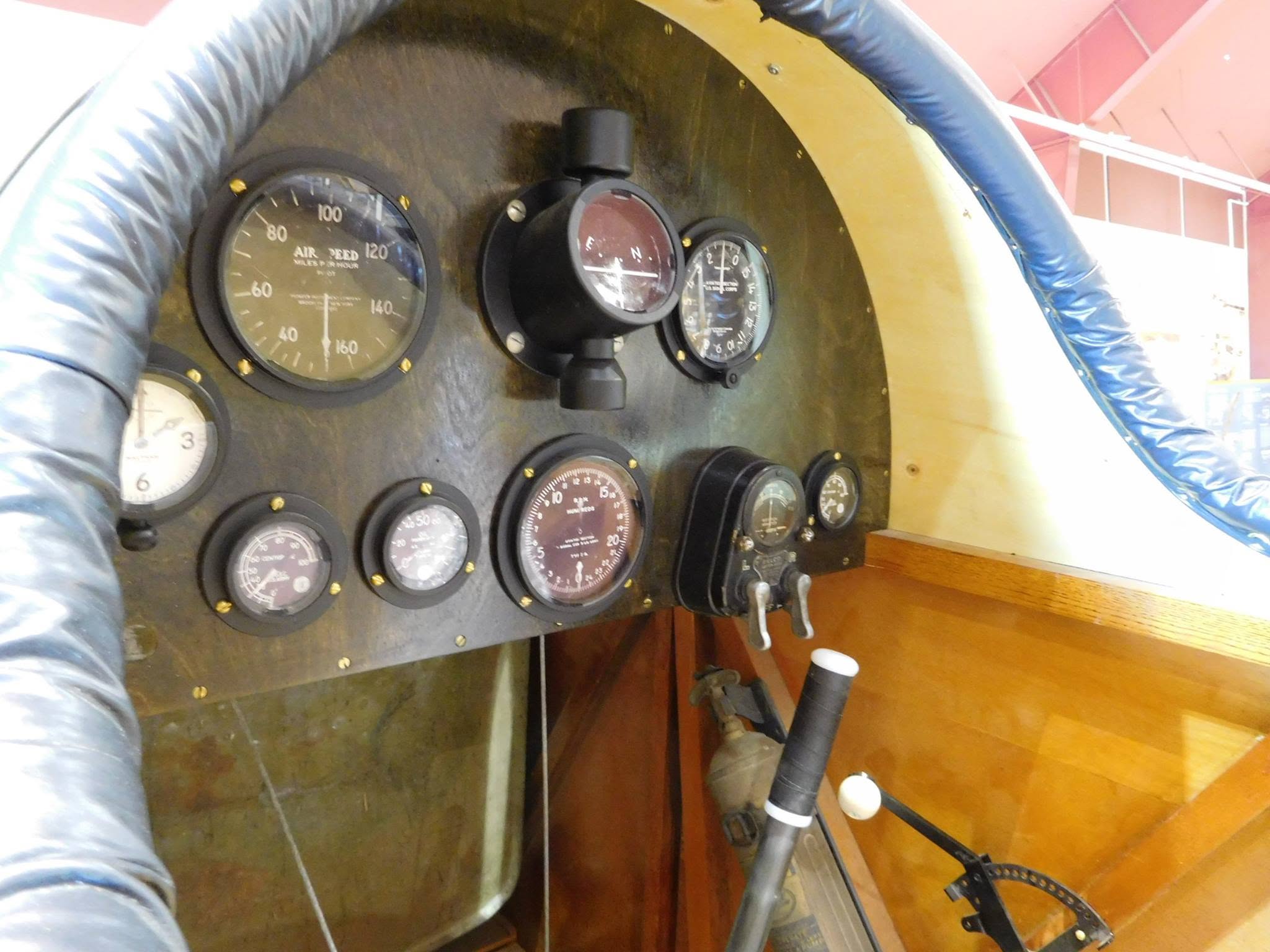


Using historical photographs as reference material, the Pearson Air Museum chose to have the DH-4B reproduction painted in the colors of the aircraft flown by the first commander of Pearson Field, Lt. Oakley Kelly, who in addition to being one of the two pilots to make the first nonstop transcontinental flight in 1923, would famously take Oregon Trail pioneer Ezra Meeker in his DH-4B for Meeker to become the first passenger on a transcontinental flight in 1924, and organized a locally-famous air race between himself in a DH-4B and T. Claude Ryan in a Ryan M-1 mail plane in 1926. The DH-4B reproduction was completed in 2016 and brought to the museum for display that same year. With the success of the DH-4B project, the museum contracted Century Aviation to make another reproduction of a WWI aircraft that served at Pearson Field, this time for a Curtiss Jenny trainer.
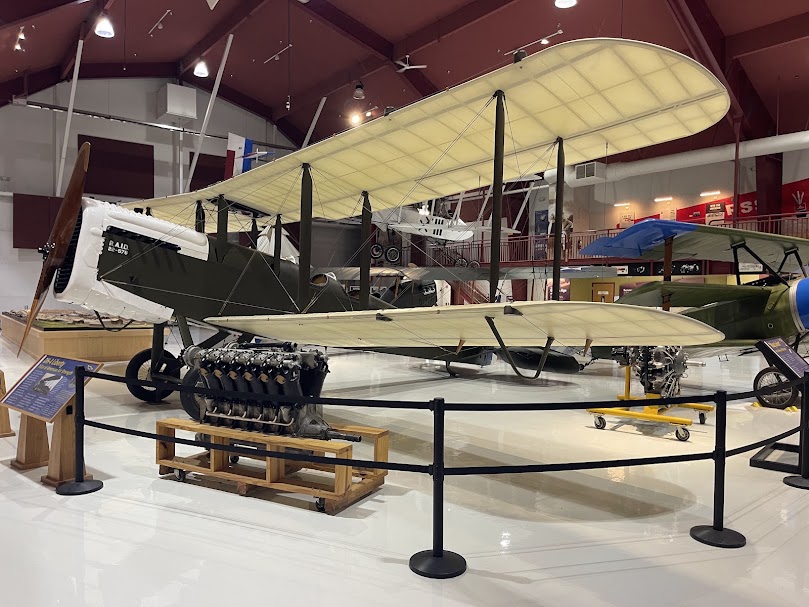

Like the DH-4B reproduction, the Jenny reproduction from Century Aviation would incorporate a mixture of original WWI parts and newly built components. Century Aviation began working on the Jenny project in 2017, assembling the fuselage first, then the tail surfaces, landing gear, flight control systems, wings, wing struts, and bracing wires. The aircraft then underwent a test assembly to check for proper alignment, and after passing the tests, the aircraft was covered with doped fabric, and on September 28, 2019, the Curtiss Jenny reproduction was placed on display alongside the DH-4B reproduction. One thing that sets the Pearson Air Museum’s Jenny apart from other aircraft (both originals and reproductions) displayed in other museums is that it has been built to depict the JNS model of the famous Curtiss Jenny.
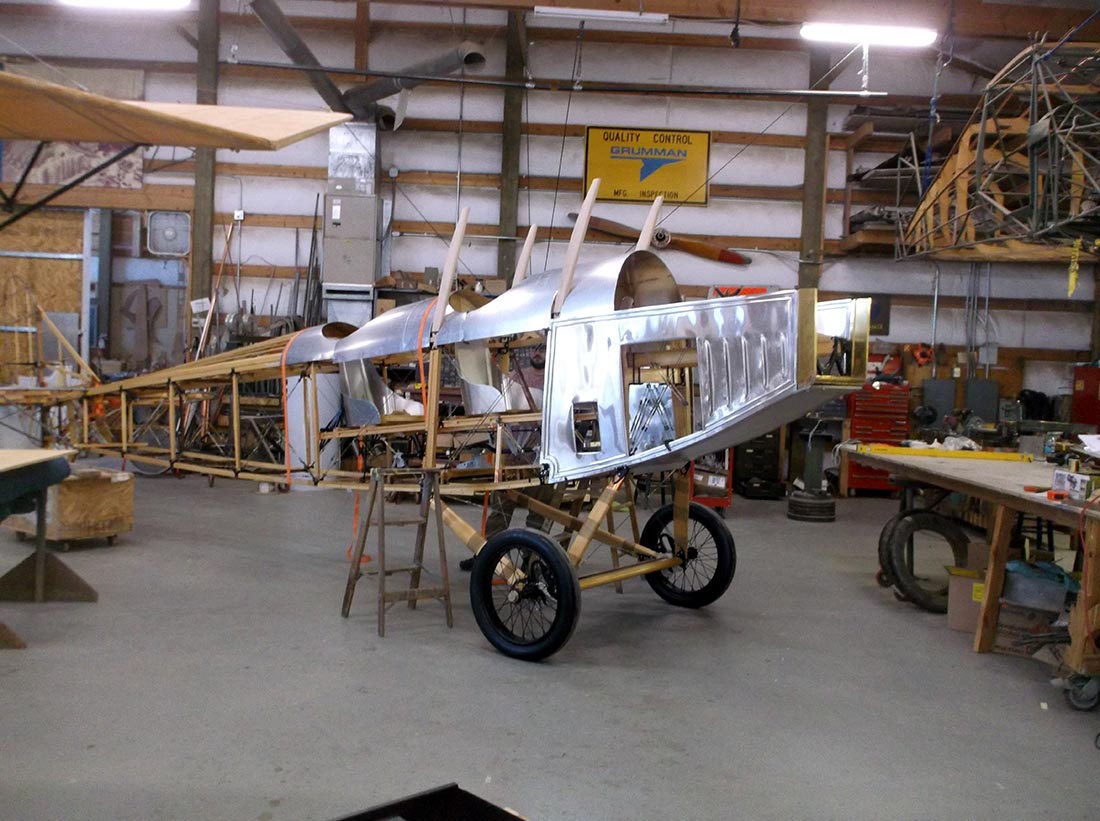
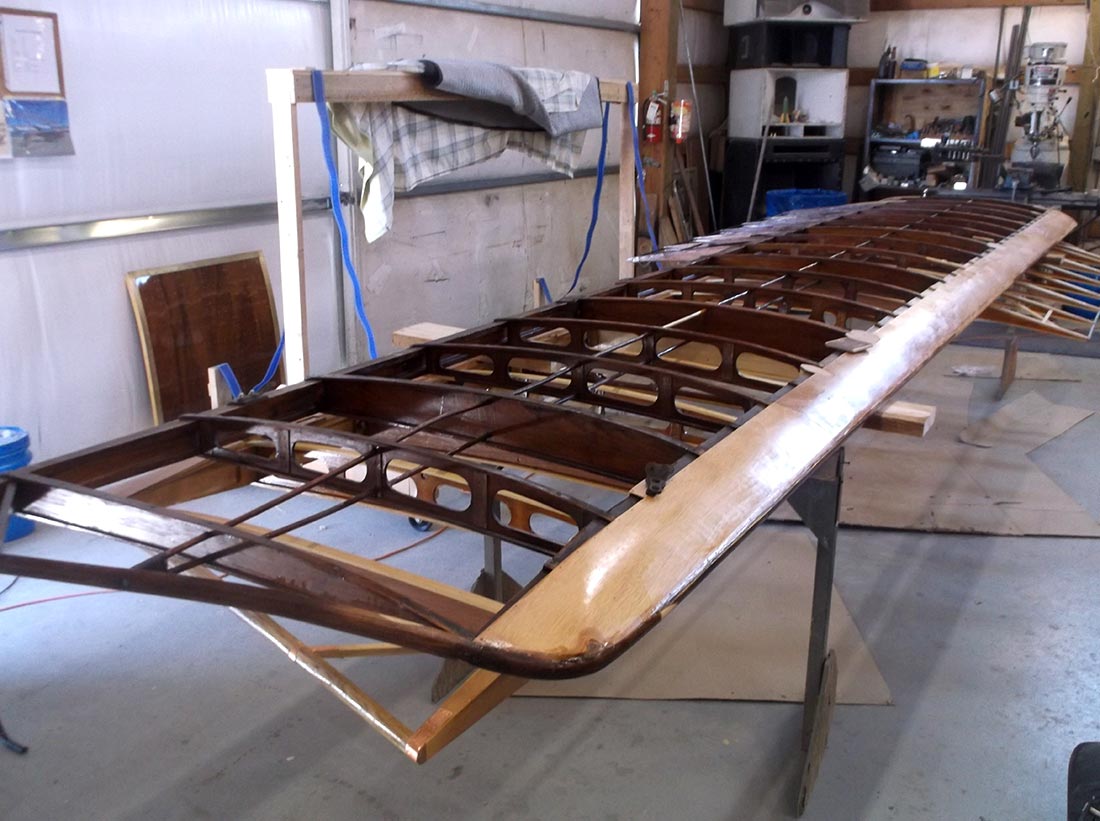
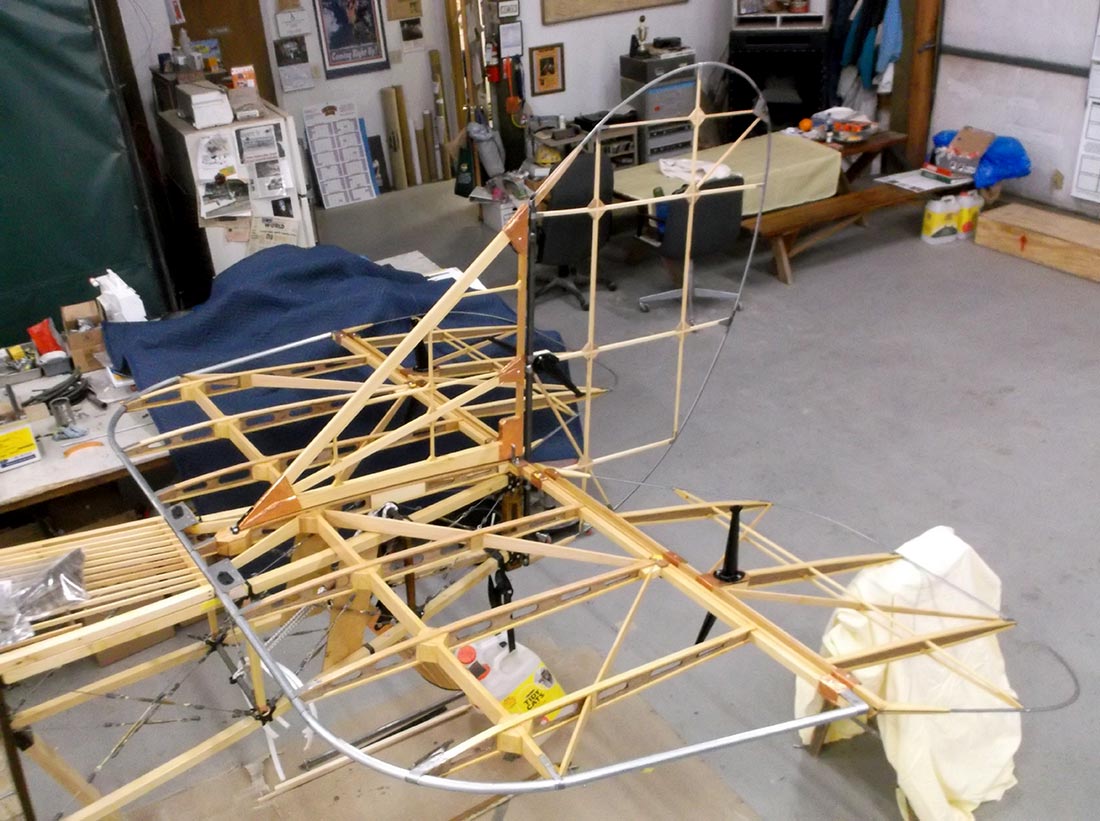
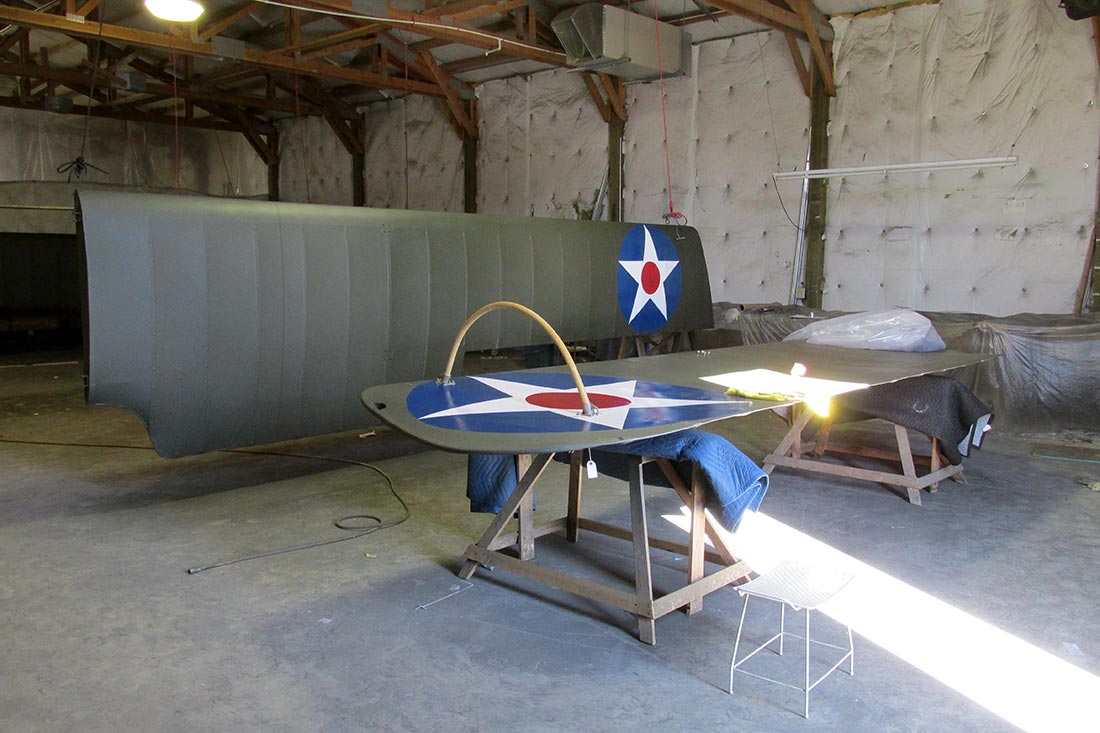
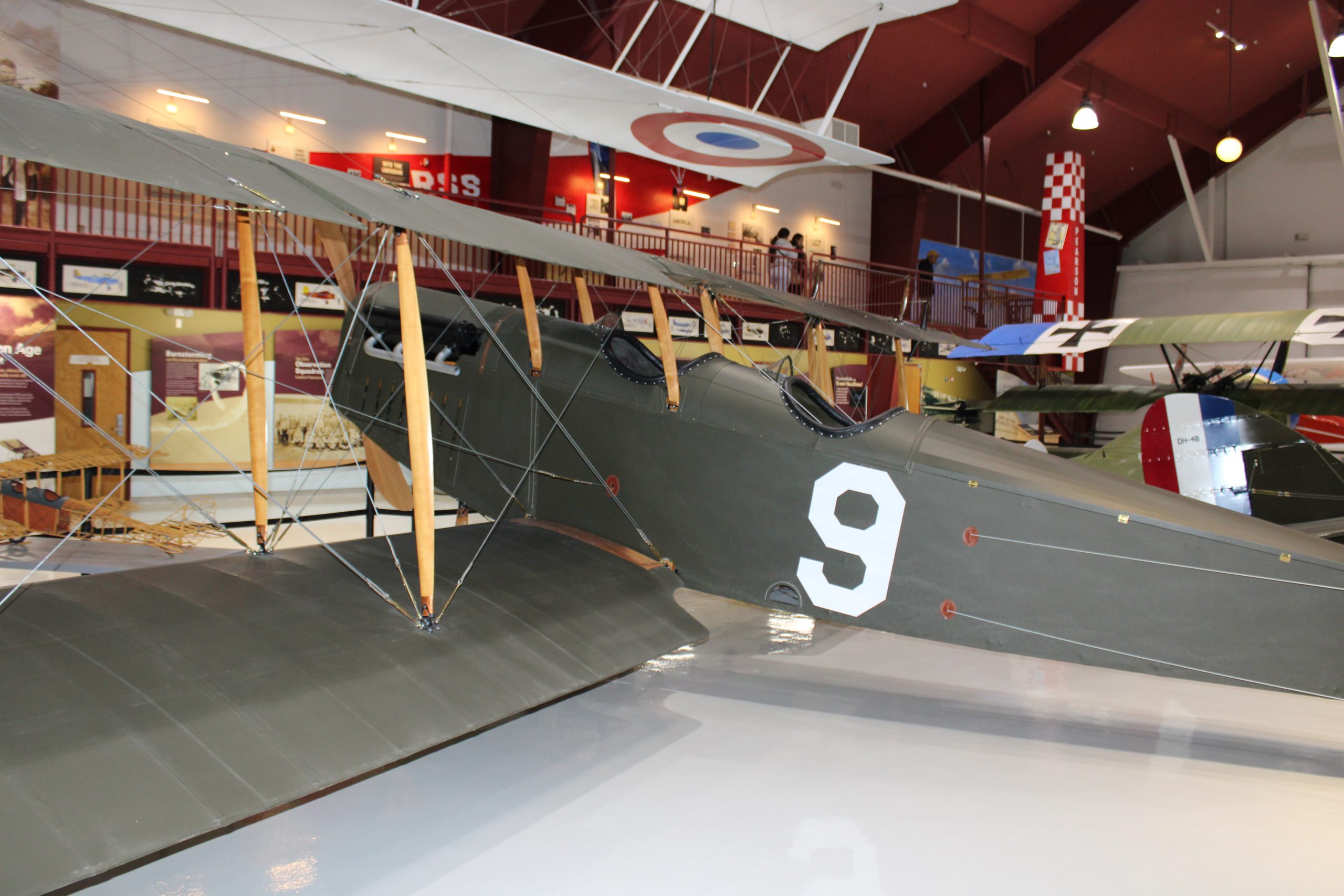
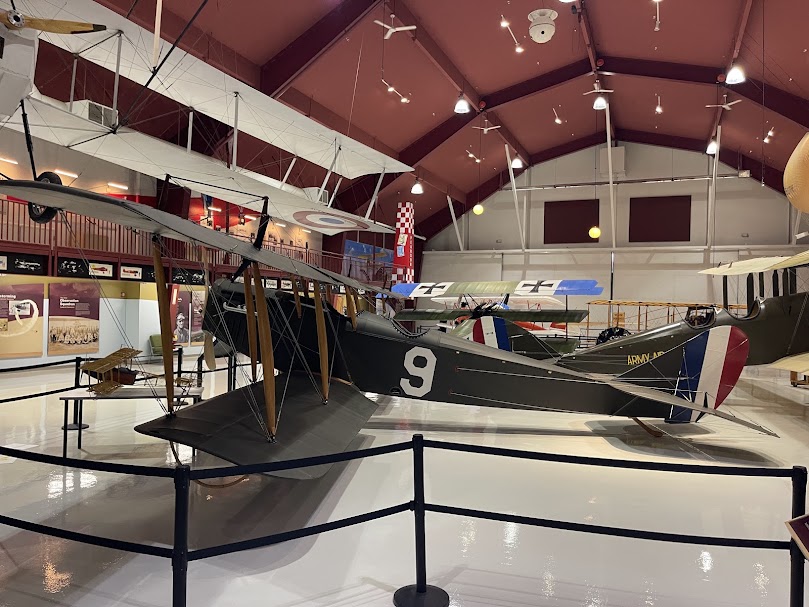
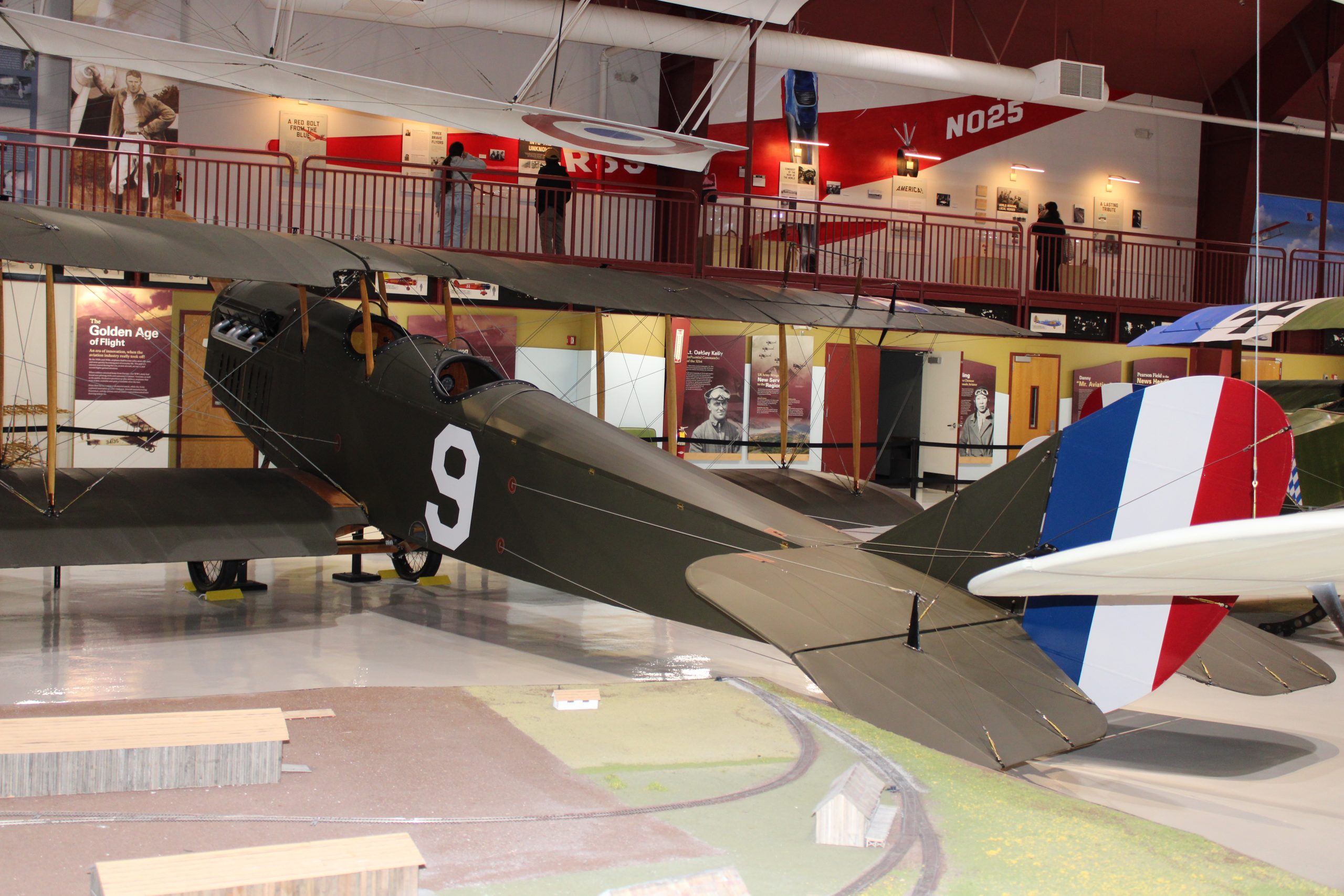
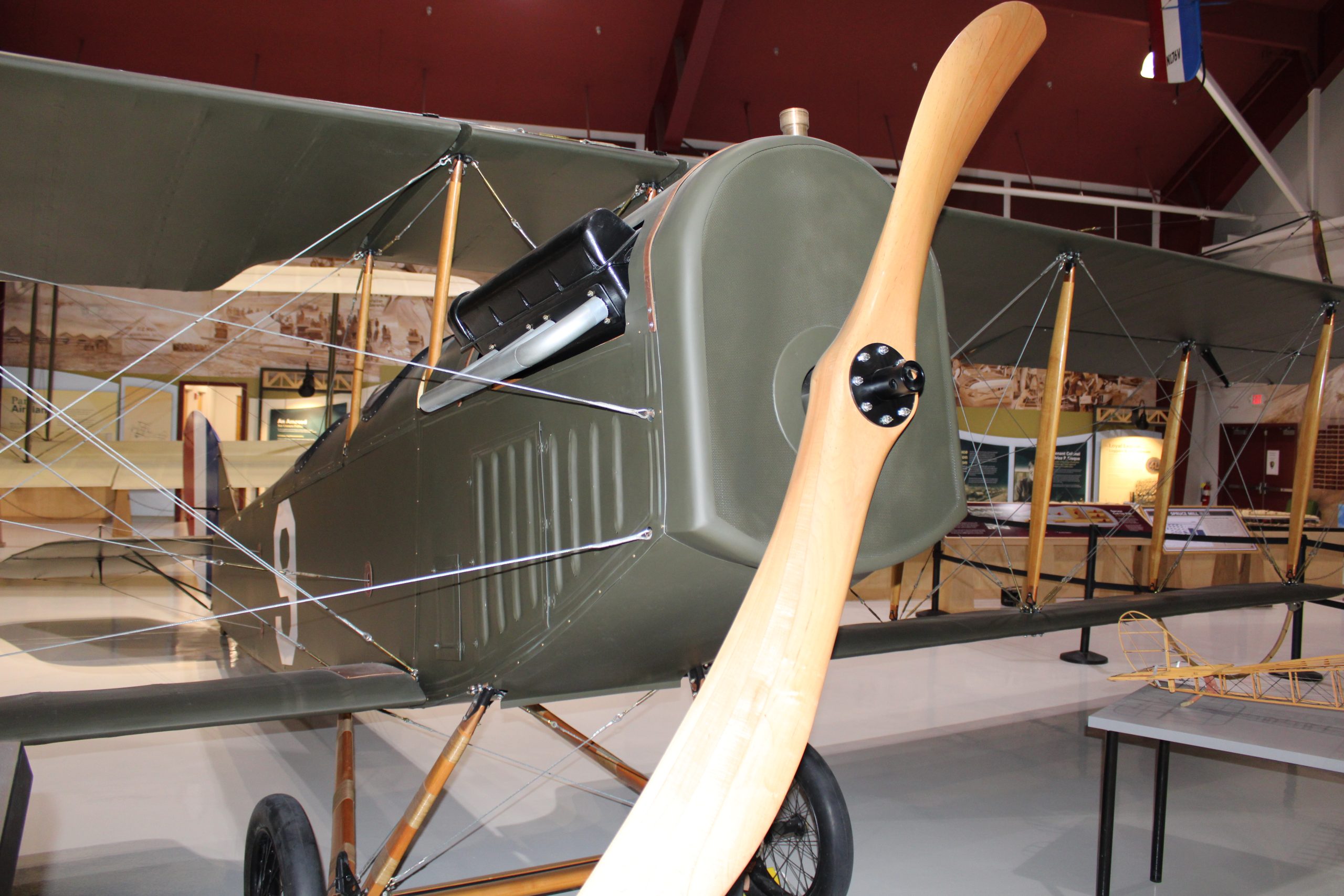
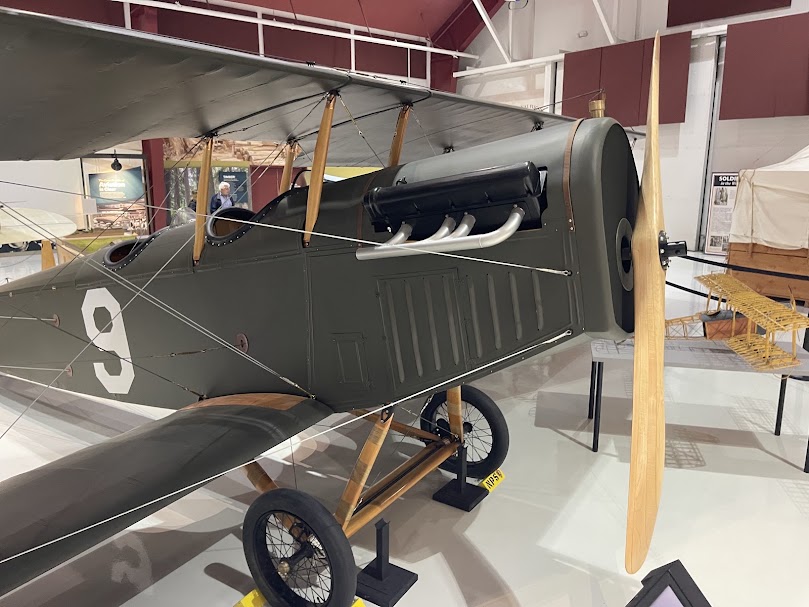
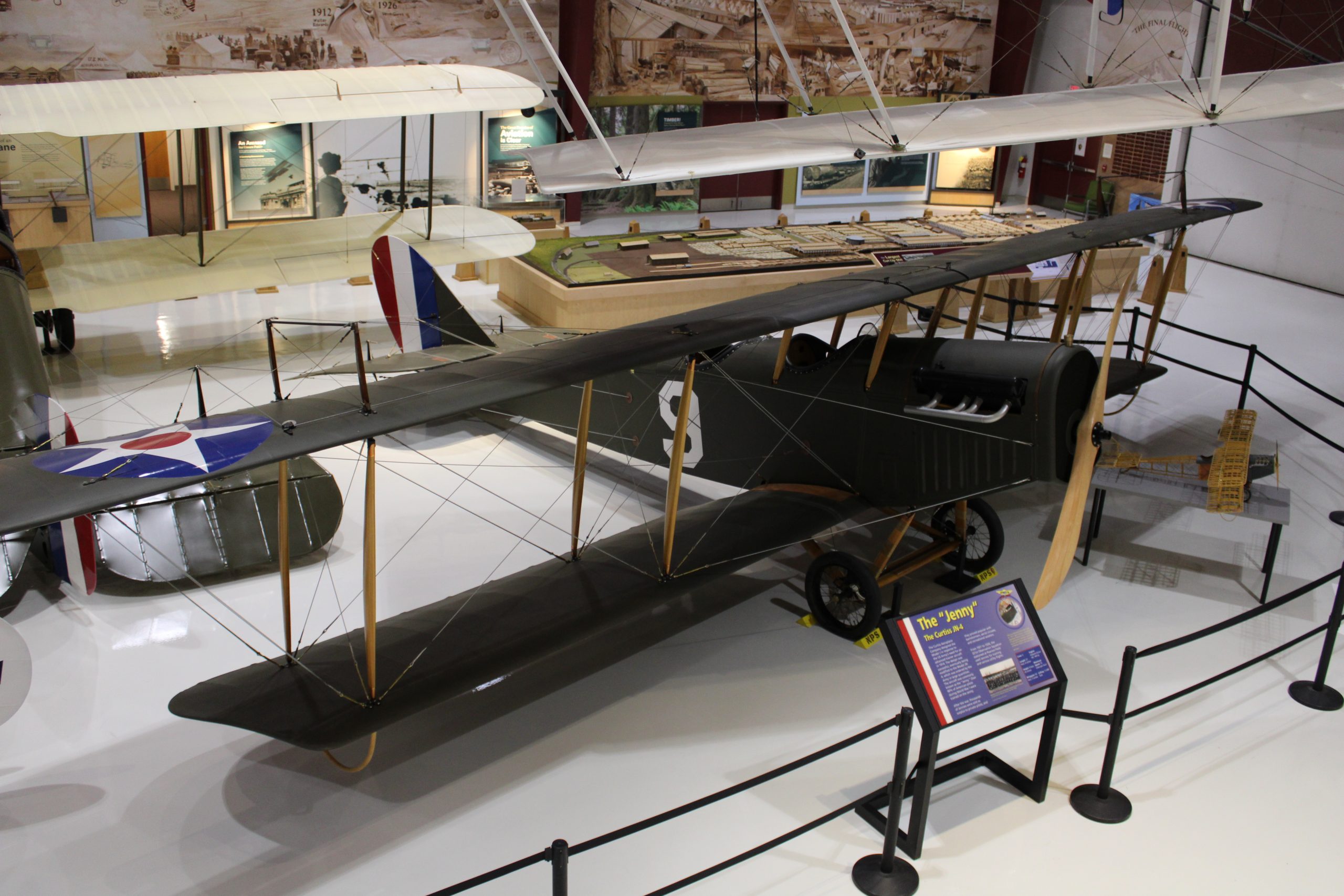
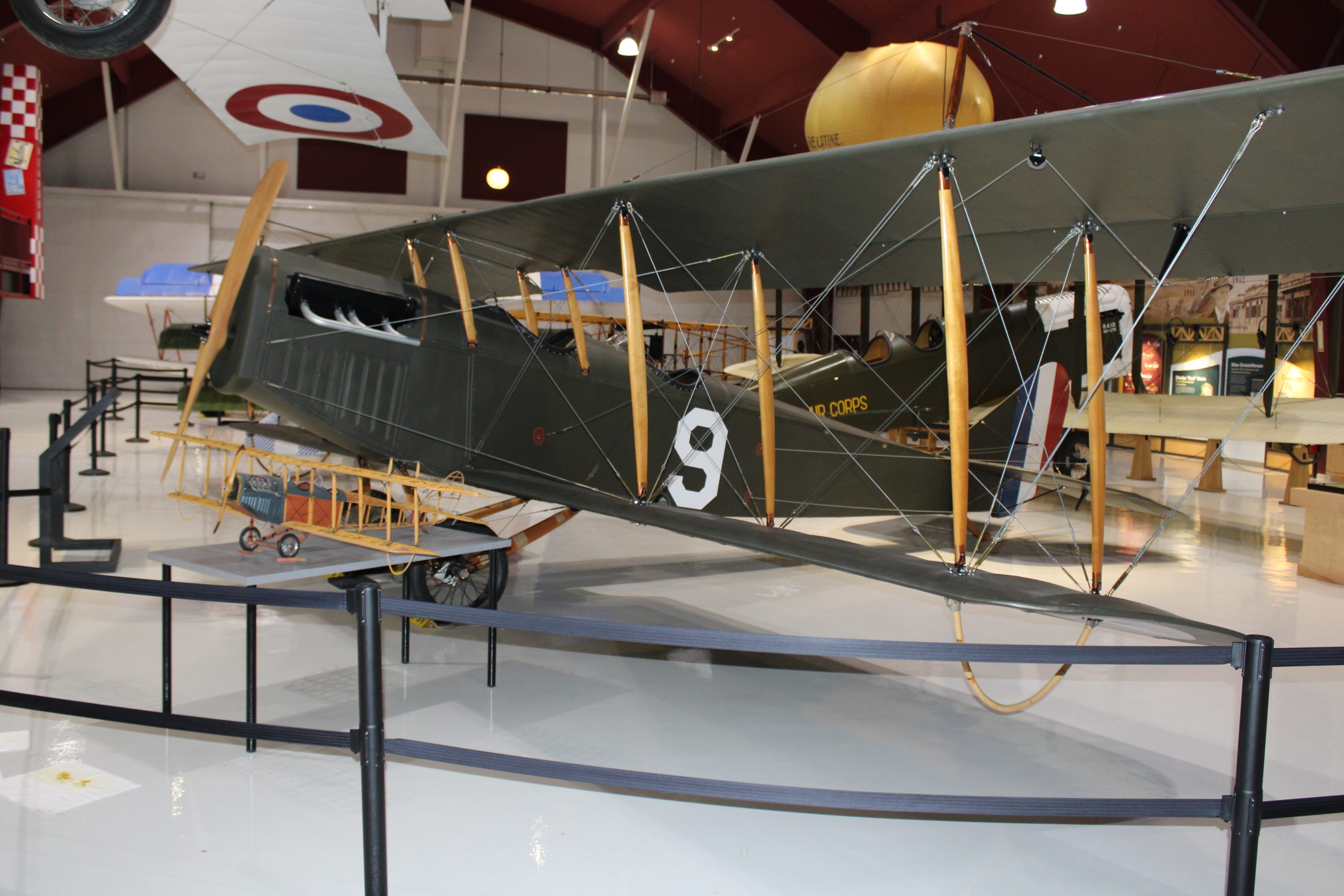
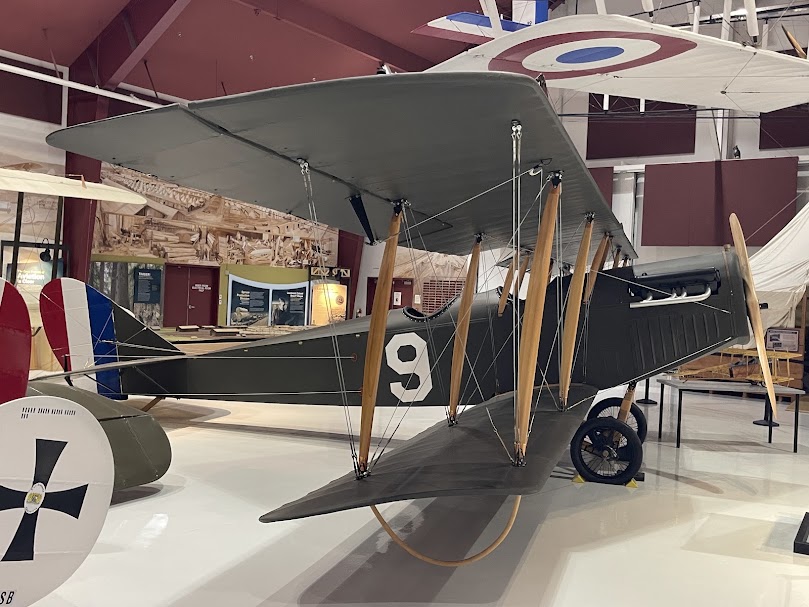
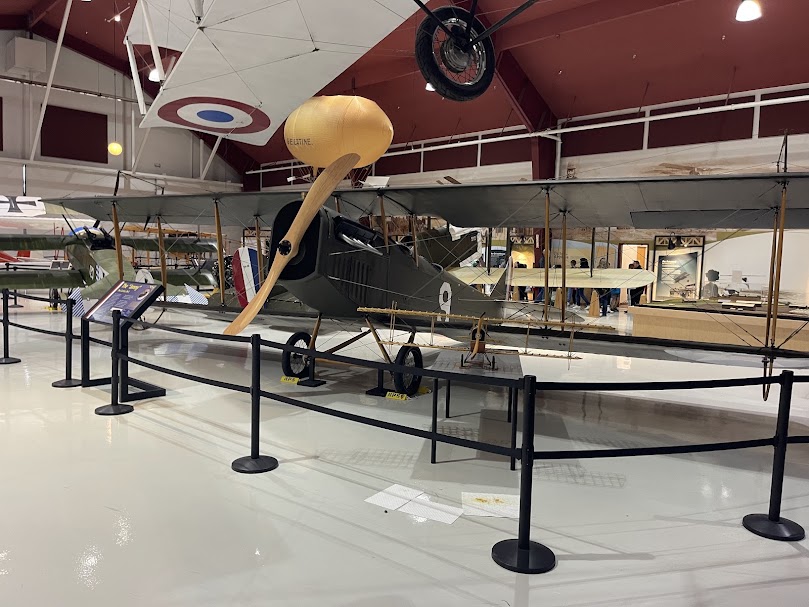
During WWI, production of the Curtiss Jenny was licensed to numerous other companies to increase the quantity of aircraft needed to train the surge of flying cadets during the war. However, these led to deviations in quality for a number of aircraft, and after WWI ended in late 1918, around 200 to 300 airframes were modernized to a standardized set of specifications by the Army Air Service. The JNS was also fitted with the more powerful Hispano-Suiza 8, developed in America as the Wright-Hisso engine. During WWI and afterward, most Curtiss Jennys were powered by the Curtiss OX-5, a 90 hp V8 engine developed in 1915. However, even during the war, the OX-5 was an underpowered engine, and despite being used on aircraft well into the 1930s, it was not the most reliable of engines, either. Thus the Wright-Hisso engine, capable of delivering between 150 to 300 hp was fitted onto many of the Jennys that remained in military service in the postwar years, and a number of this Hisso-powered JNS Jennys were sent to the 321st Observation Squadron, where they remained in use until 1926, after which the engines and other valuable items were stripped from the surplus wood and fabric airframes, which were then ignominiously piled up and set aflame in a bonfire on the base.

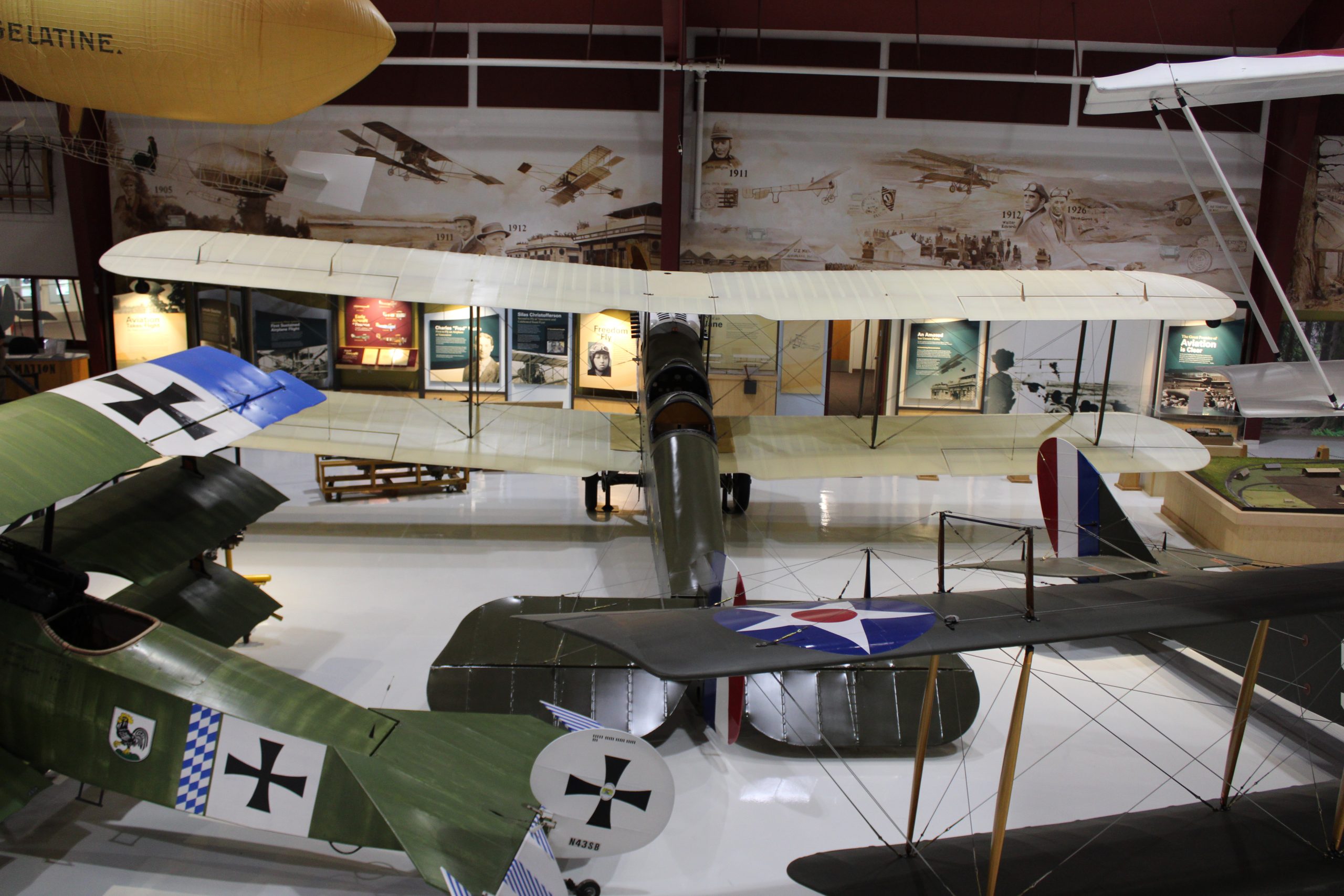
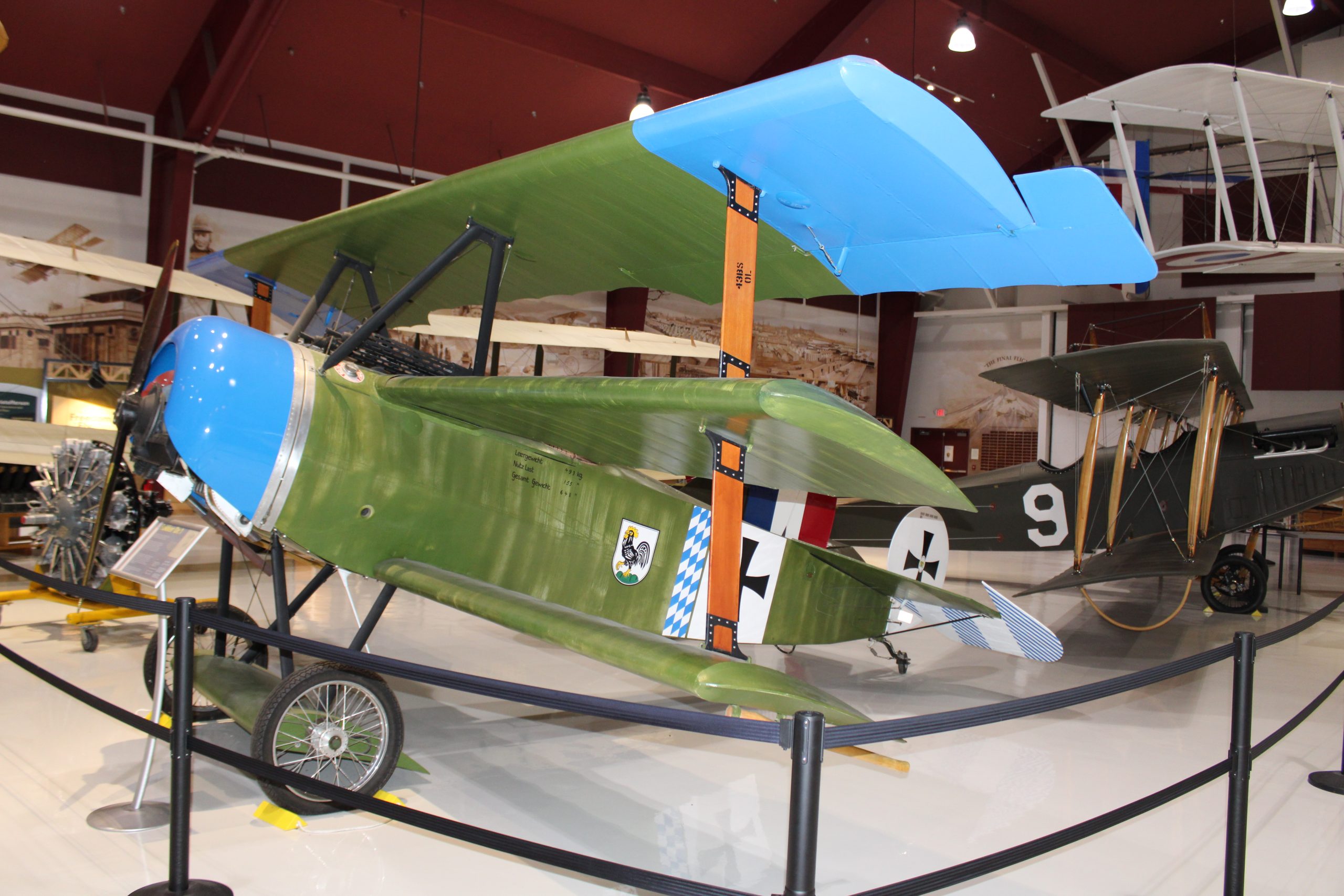
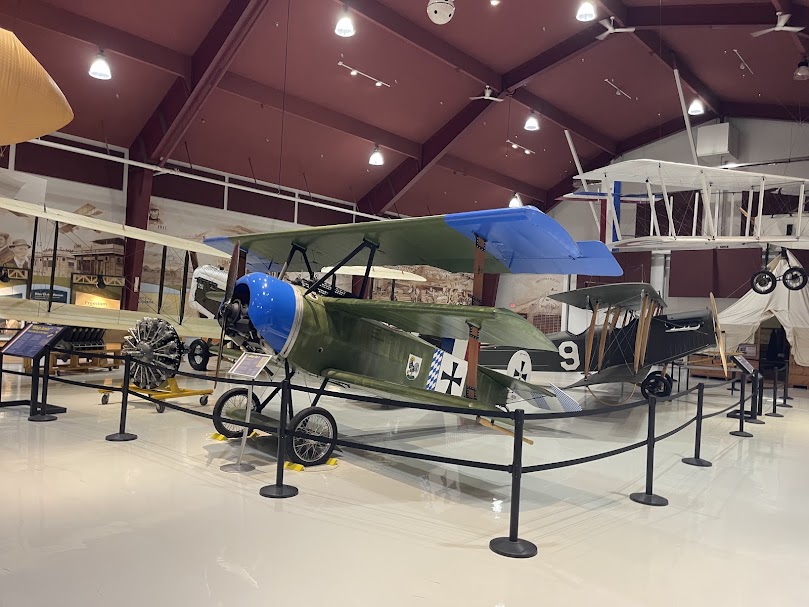
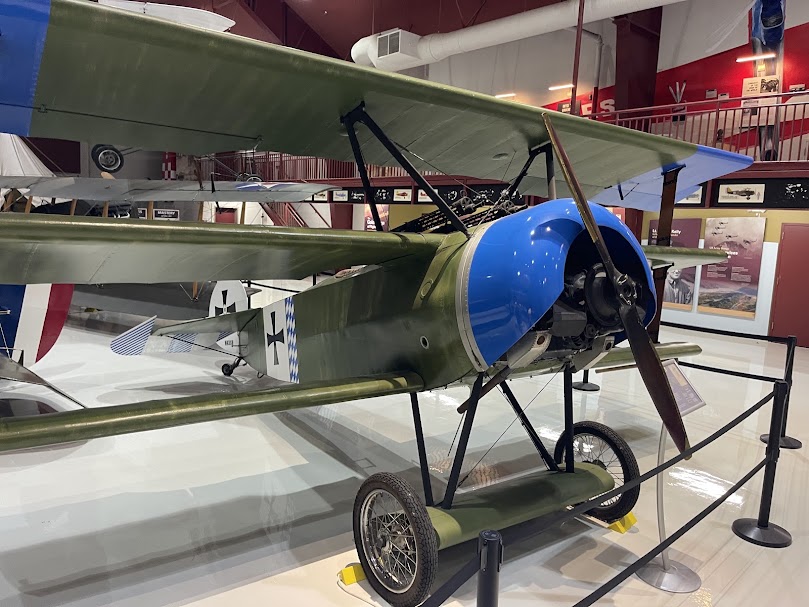
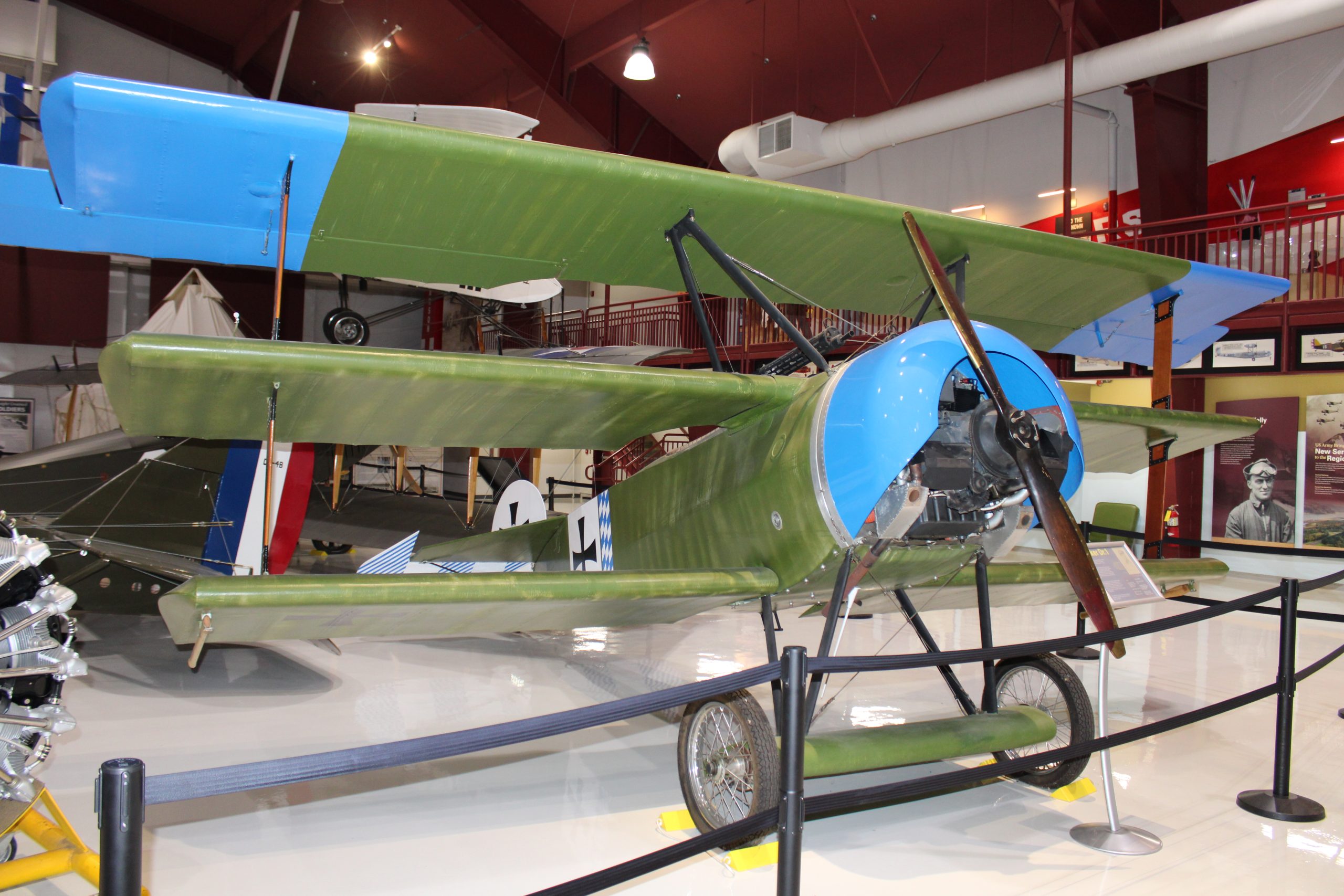
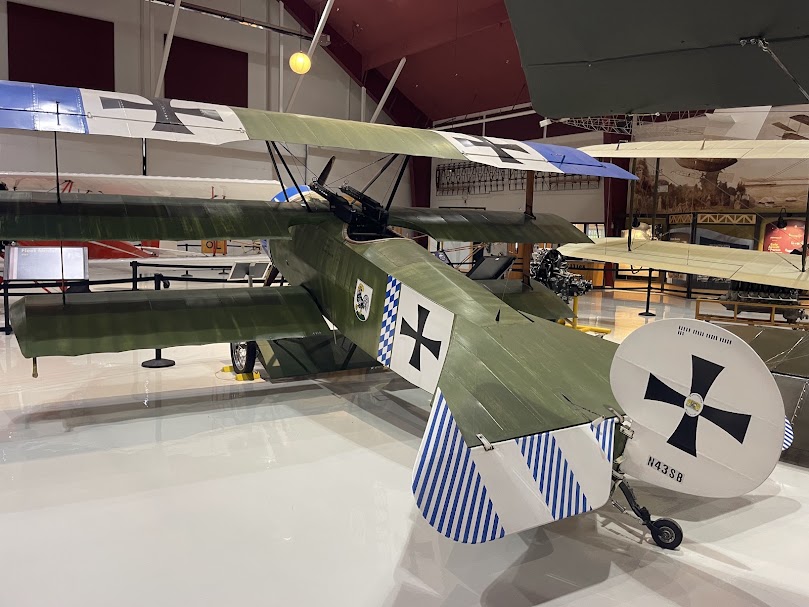
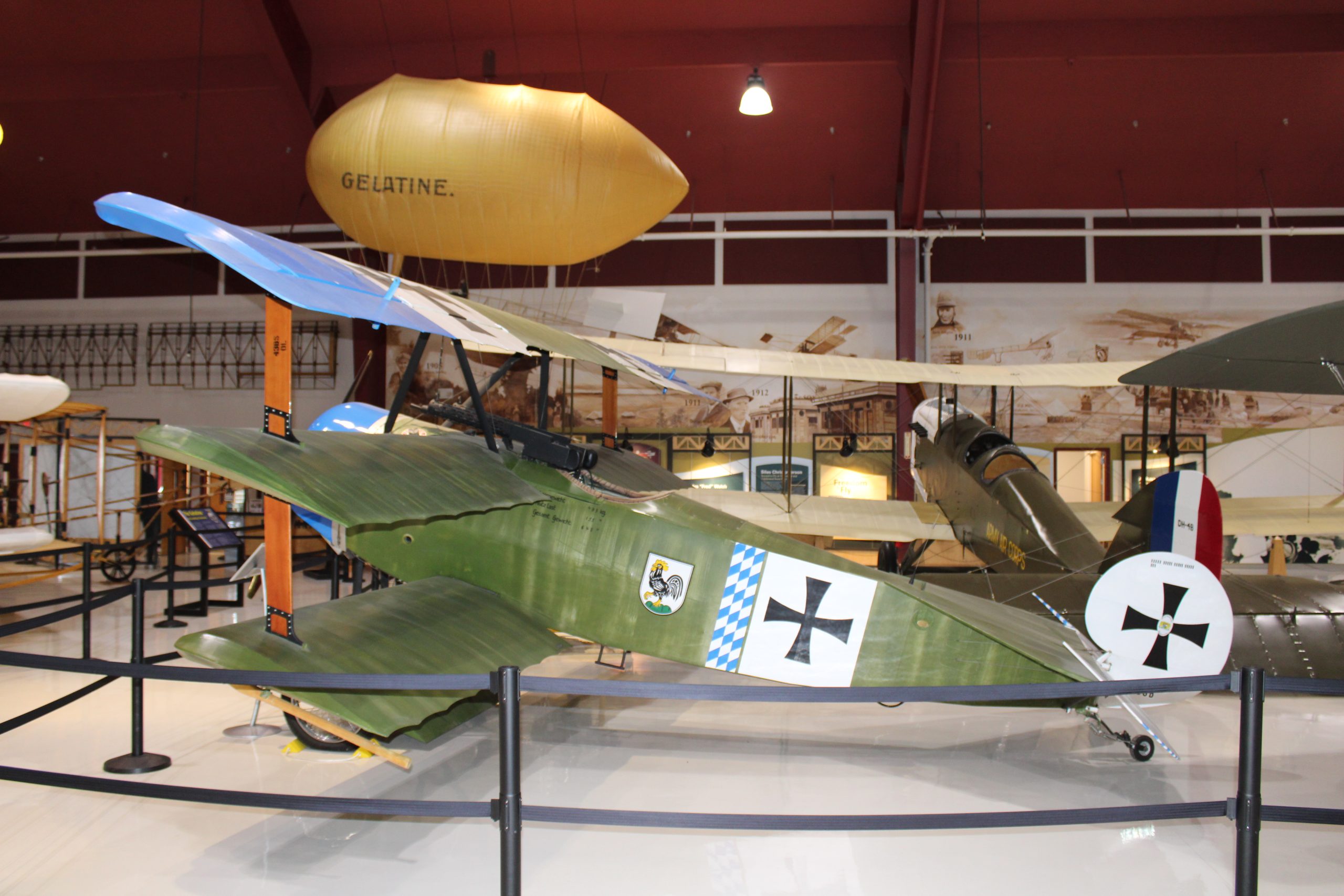
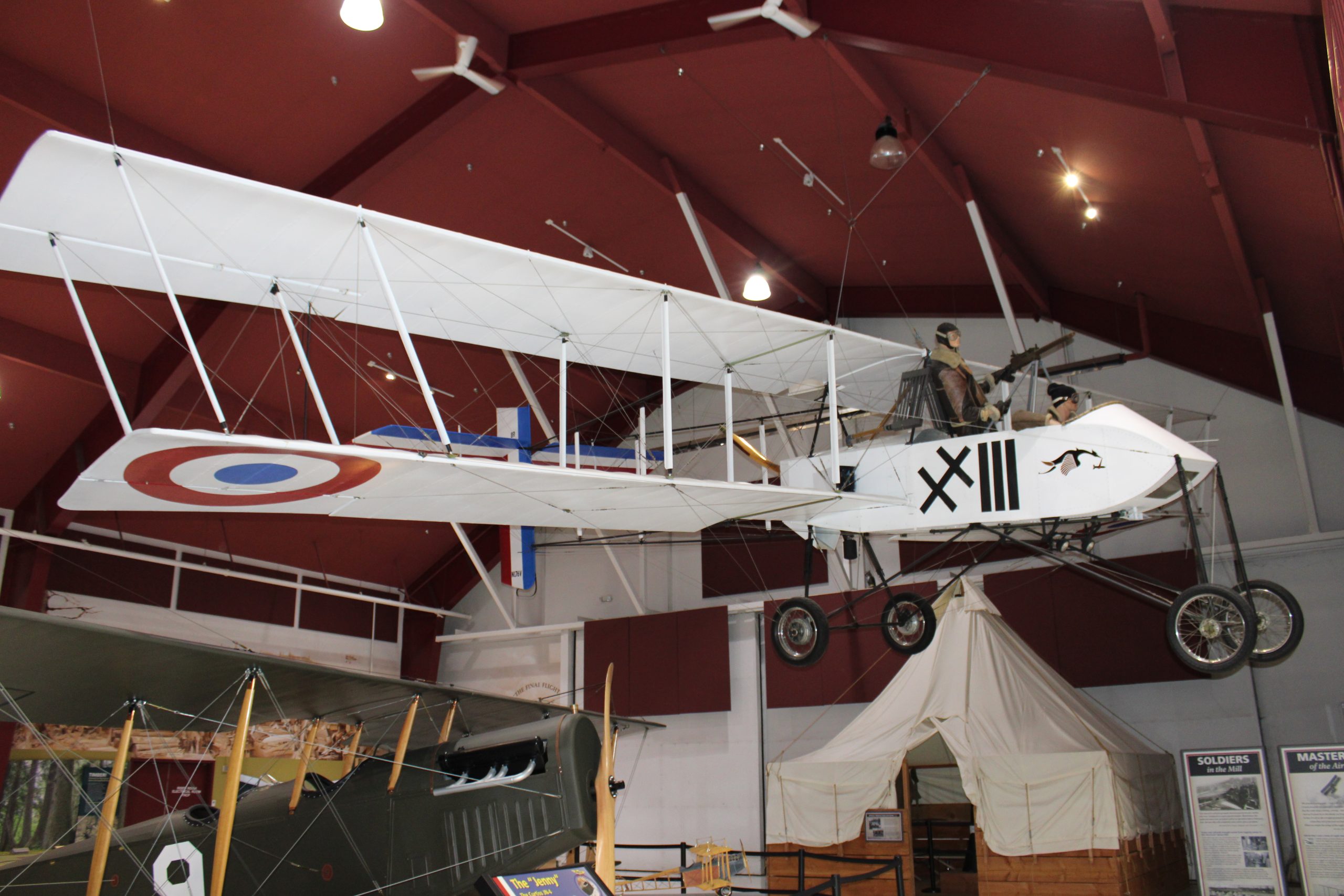
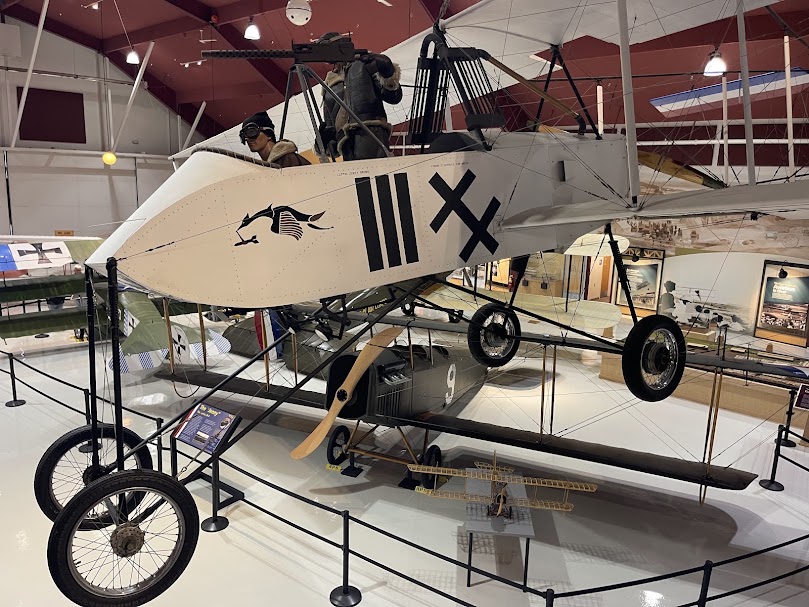
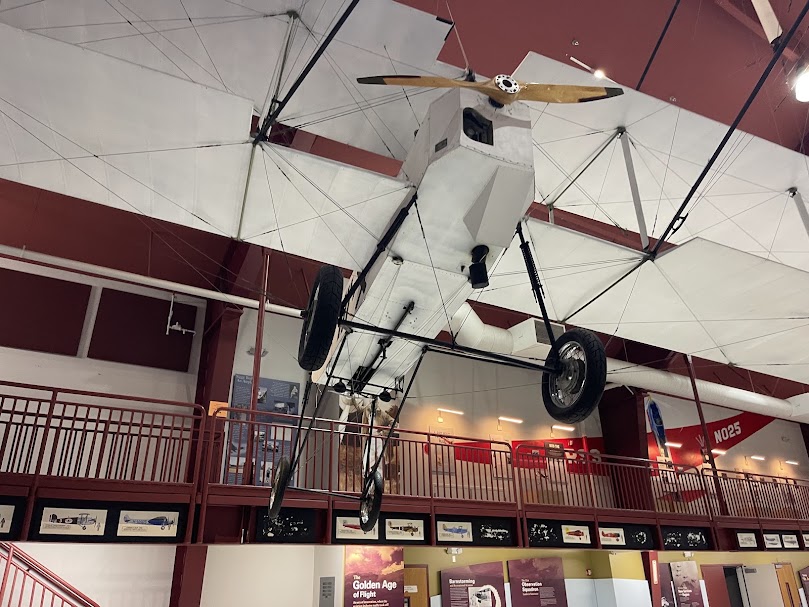
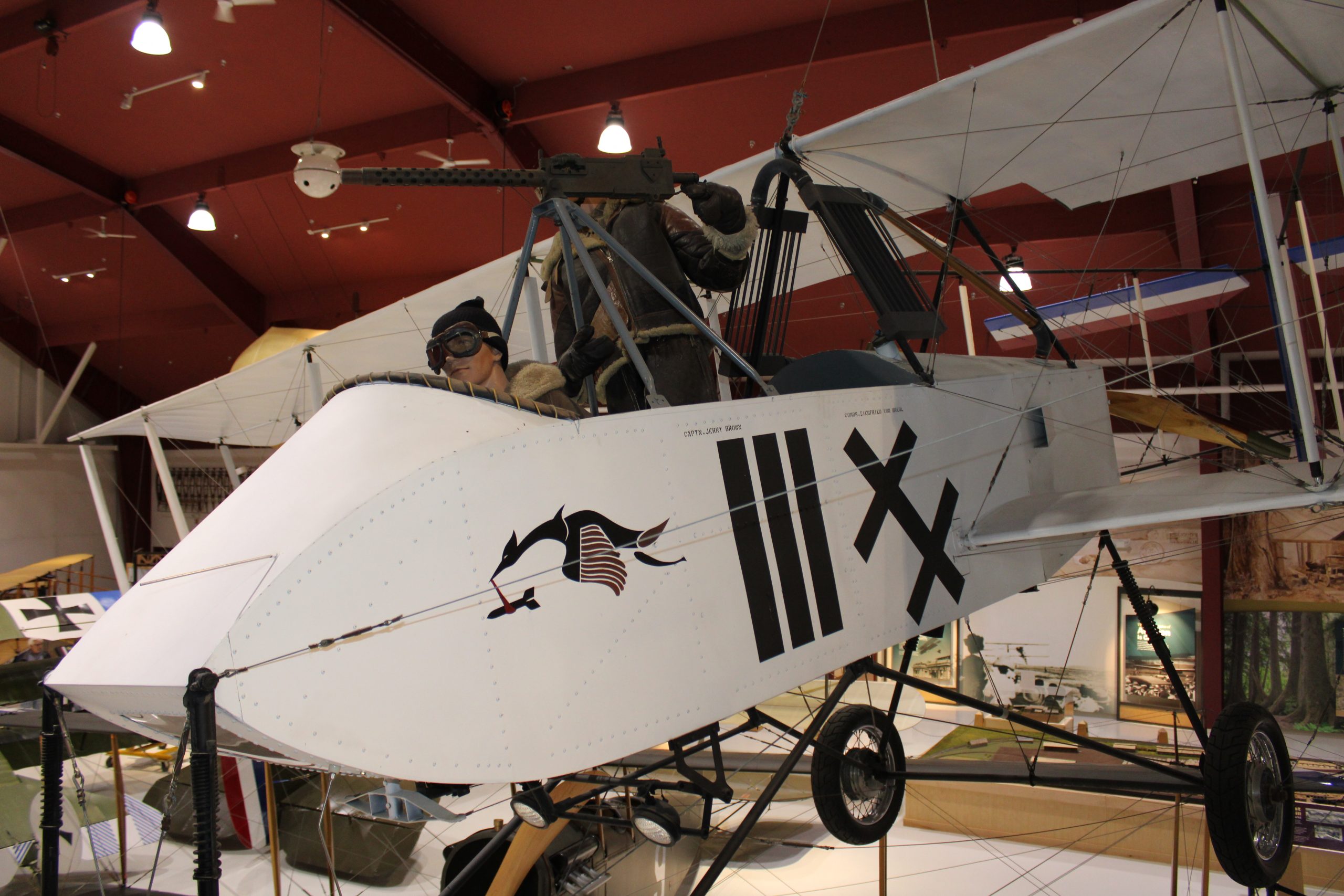
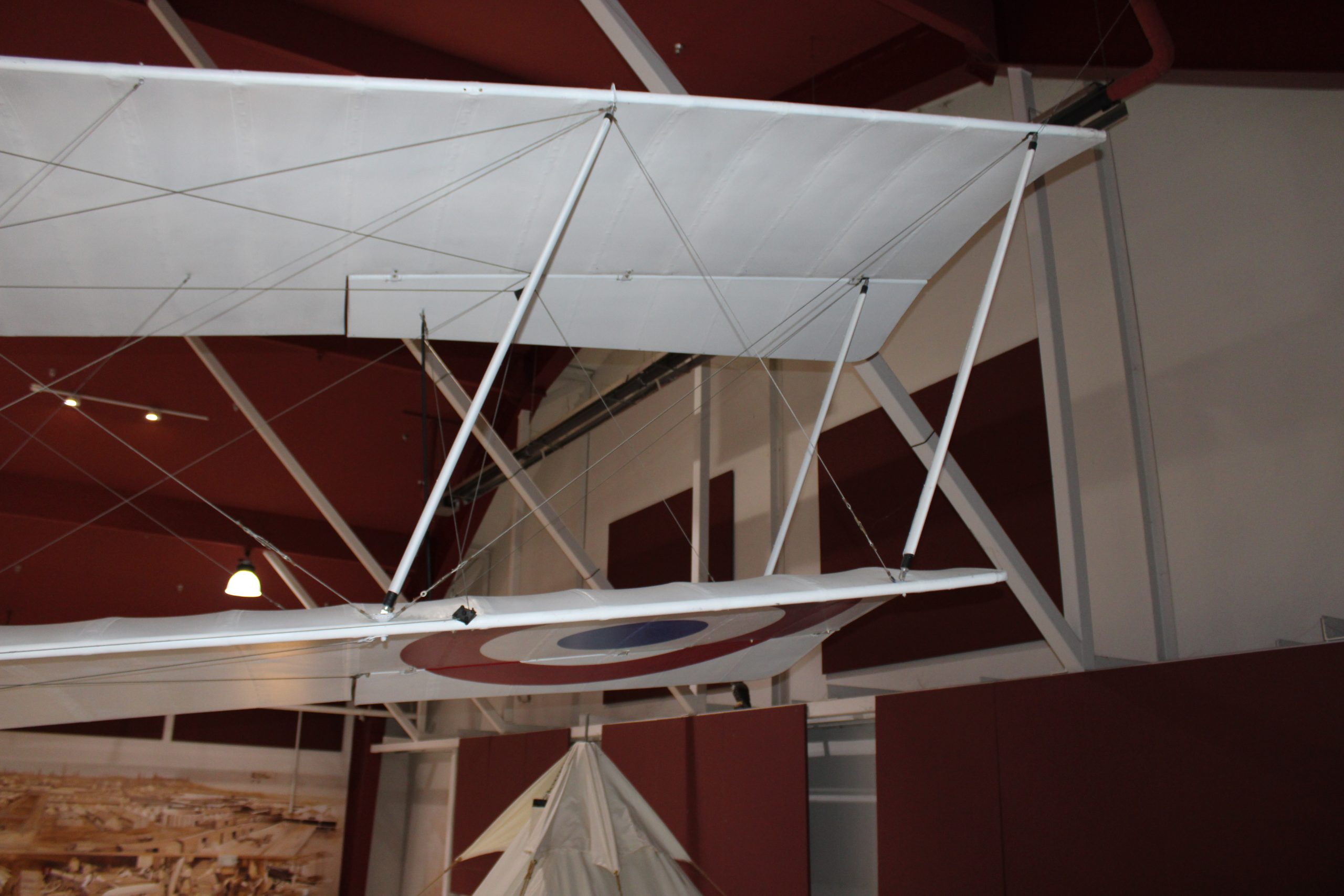
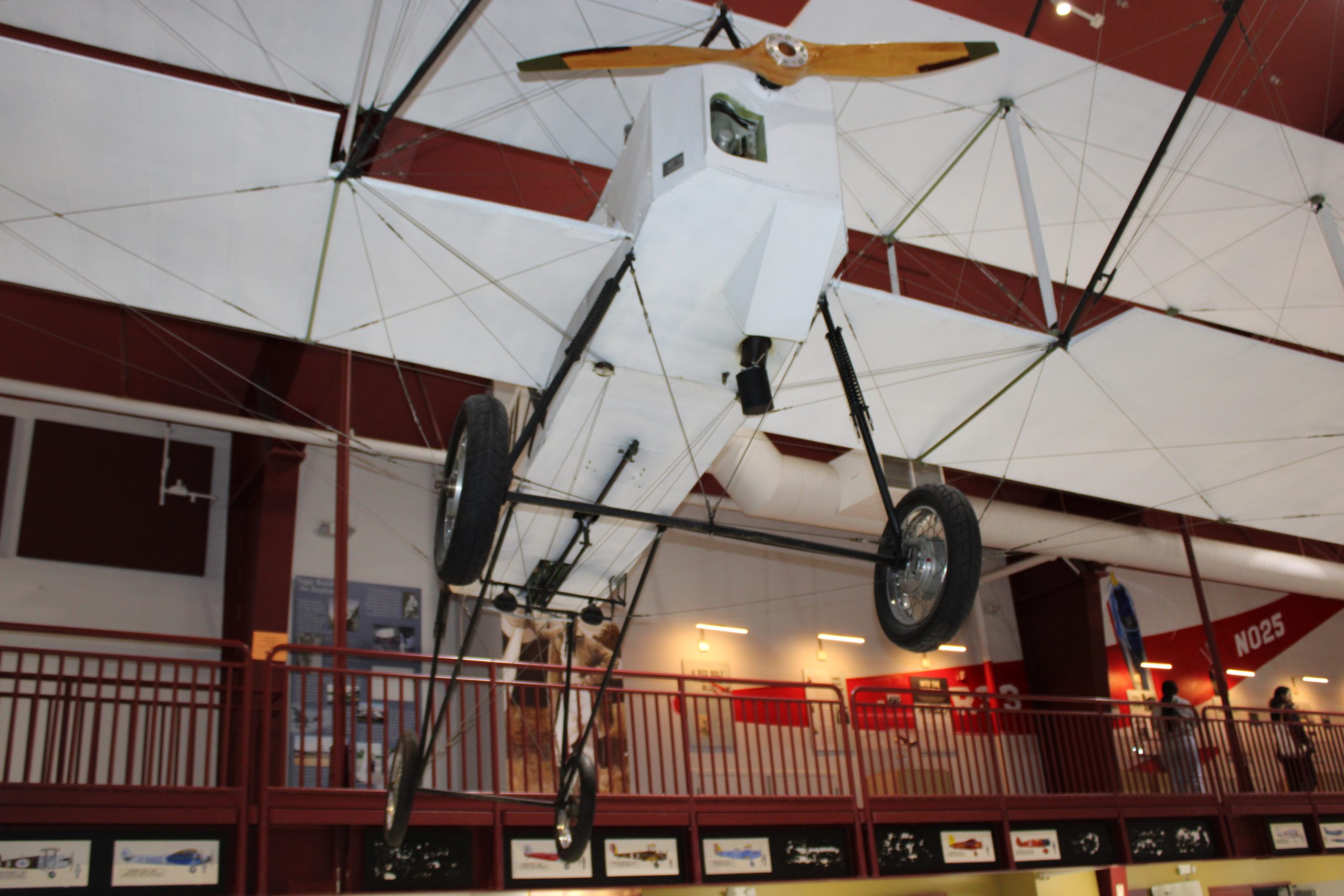
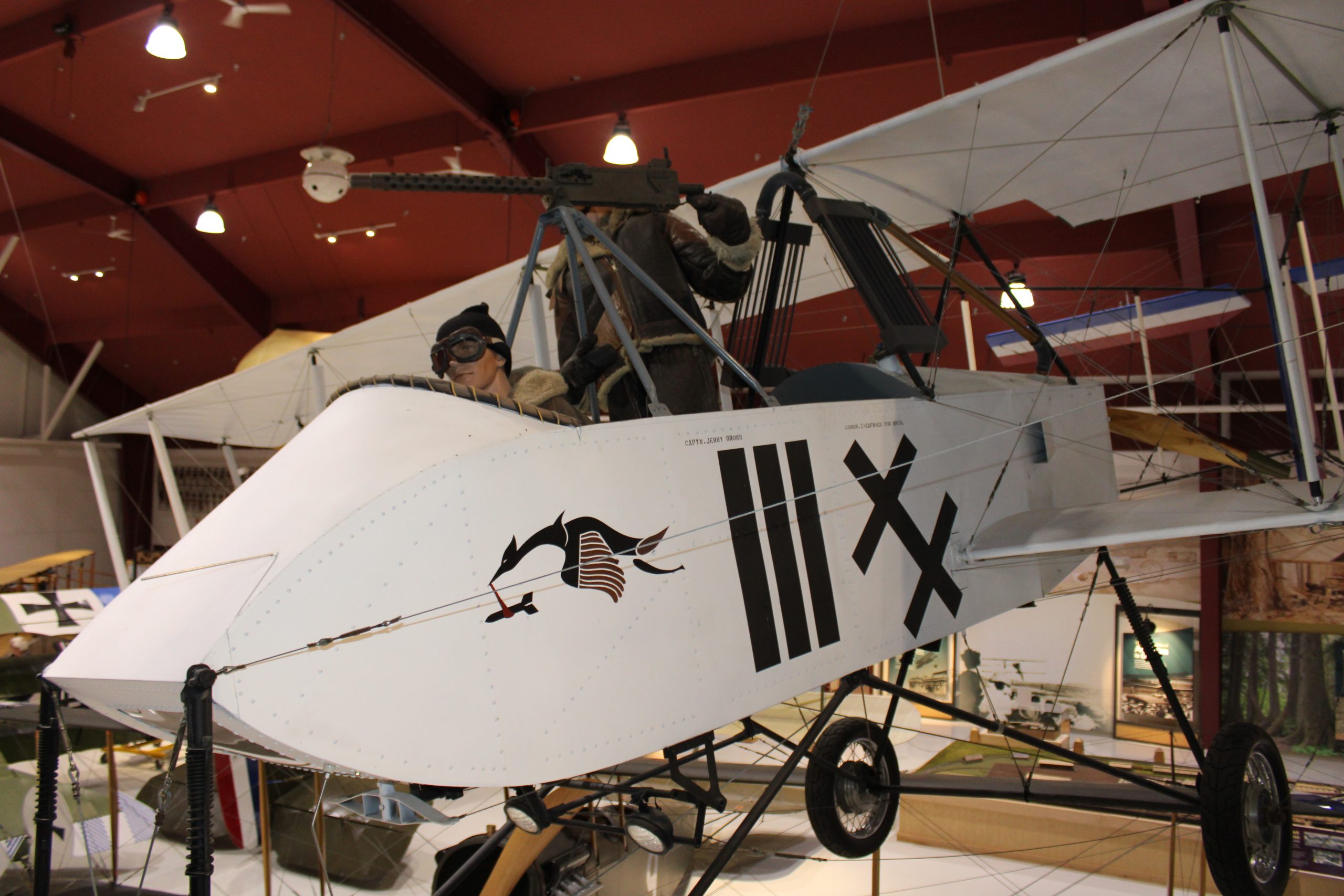
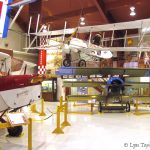
While the de Havilland DH-4B and Curtiss JNS Jenny reproductions on display at the Pearson Air Museum represent the two most prevalent aircraft types built using wood processed at the Vancouver Barracks and flown from Pearson Field during the 1920s, the Pearson Air Museum also displays homebuilt replicas of both a Fokker Dr.I triplane displayed on the floor with the Jenny and the DH-4B and a Voisin III hanging from the ceiling. Both of these replicas, fitted with postwar engines, were constructed by a man named Siegfried “Siggy” Bredl, whose story has also been preserved for future generations alongside his airplanes.

Born on May 27, 1933, in a village near Munich, Germany, Siegfried Friedrich Johann Bredl always had a knack for tinkering. At age 8, he built a homemade cannon, which he then fired into a flock of chickens, the boom scaring the townspeople. Siggy would recall this event simply saying: “I got spanked for that.” As a teenager, Bredl worked in German coal mines, which would later lead to illness later in life, but by 1955, Bredl had immigrated from Germany to Canada. Ten years later, he resettled in Portland, Oregon, where he established a successful business, Bredl Saw Service, which also afforded him the time to continue tinkering on several inventions, at one point owning a street organ cart that was later donated by his daughter to the Oregon Historical Society. To many of his friends in Portland, Siegfried was referred to as “Siggy”.

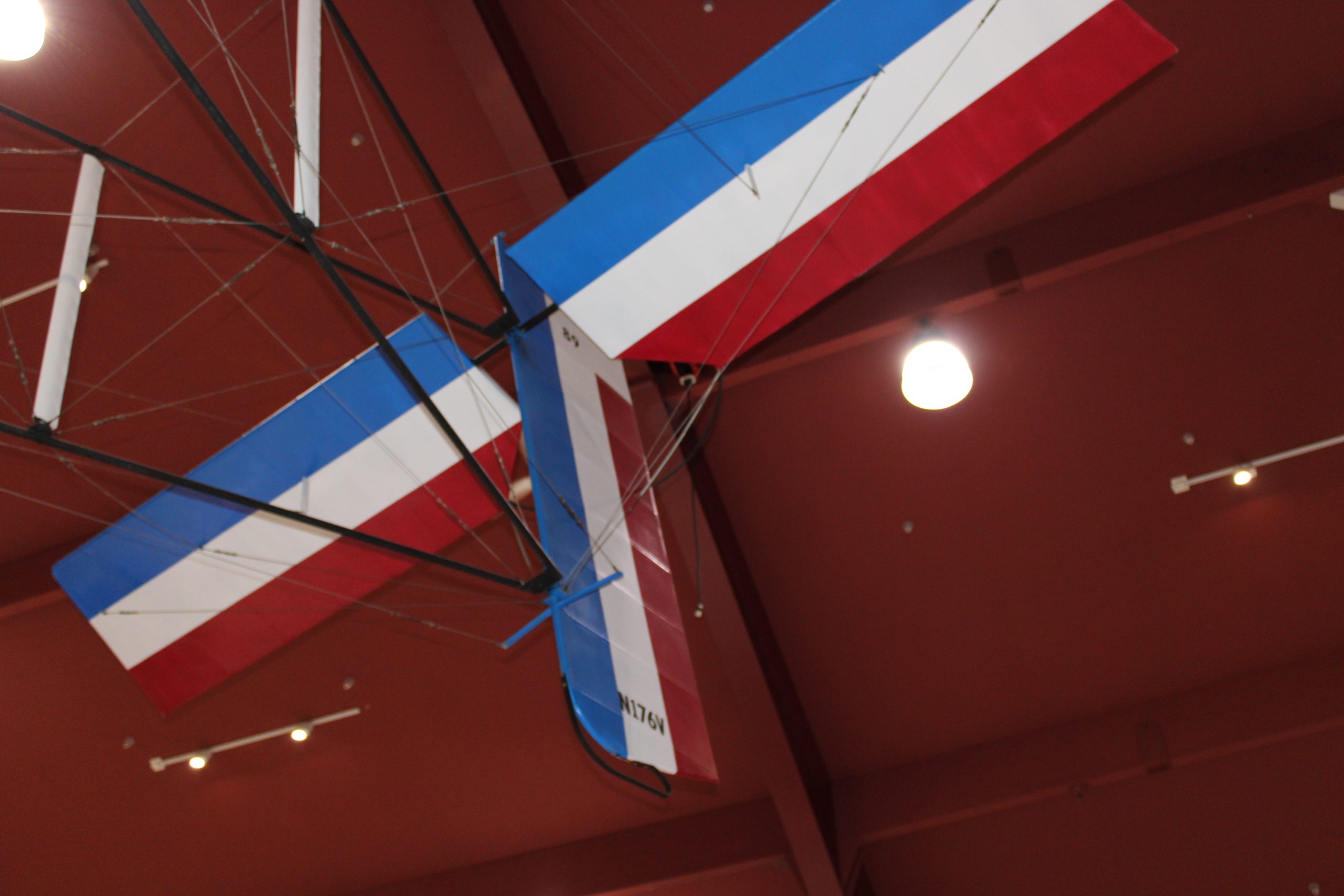
As he aged, Bredl found the emphysema he contracted in the German coal mines catching up to him, and although he knew he was living on borrowed time, he decided to build some new projects with the time he had left. In 1992, Siggy attended the Northwest Antique Airplane airshow held at the now-closed Evergreen Field in Vancouver, about 6 miles east of Pearson Field. While attending the airshow at Evergreen Field, Bredl saw a homebuilt replica of a Fokker Dr.I Dreidecker fighter. On seeing this replica WWI triplane fighter, he decided that he would build one of his own. Together with his friends Gary Schoulder and Gerry Brown (the latter of whom was a captain on McDonnell Douglas MD-11s), Siggy Bredl spent three years working on his Fokker Dr.I replica, registered as N43SB, and in 1996, the aircraft made its first flight. The aircraft is powered by a Lycoming O-320 four-cylinder horizontally opposed engine, but features non-firing replicas of a pair of IMG 08 machine guns, often known as Spandau guns. The aircraft also has the colors of the Bavarian flag (blue and white) on it to reflect Bredl’s Bavarian heritage, and the German Iron Cross roundel painted on the rudder also has the Bavarian coat of arms in the middle.
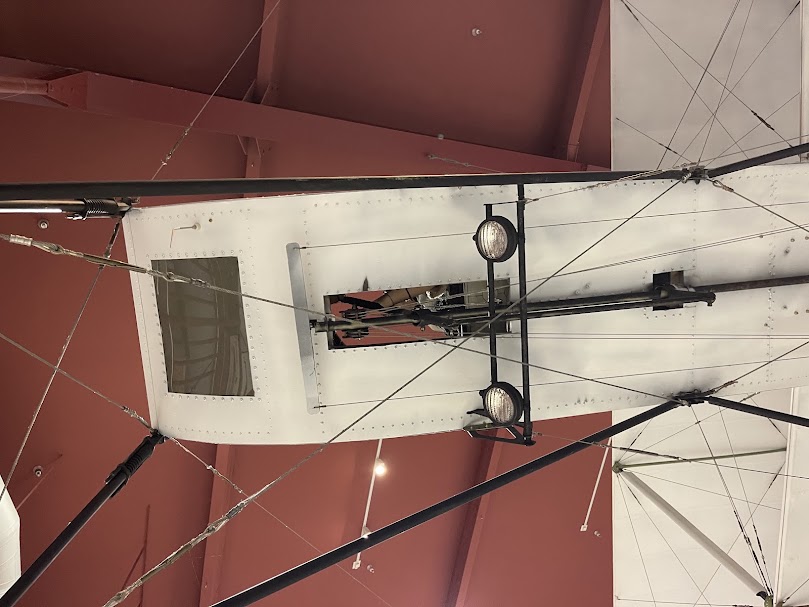
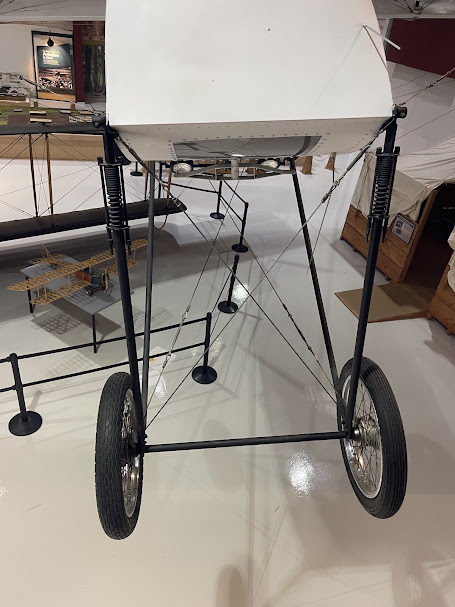
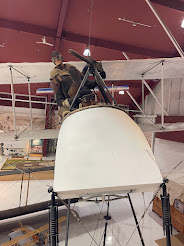
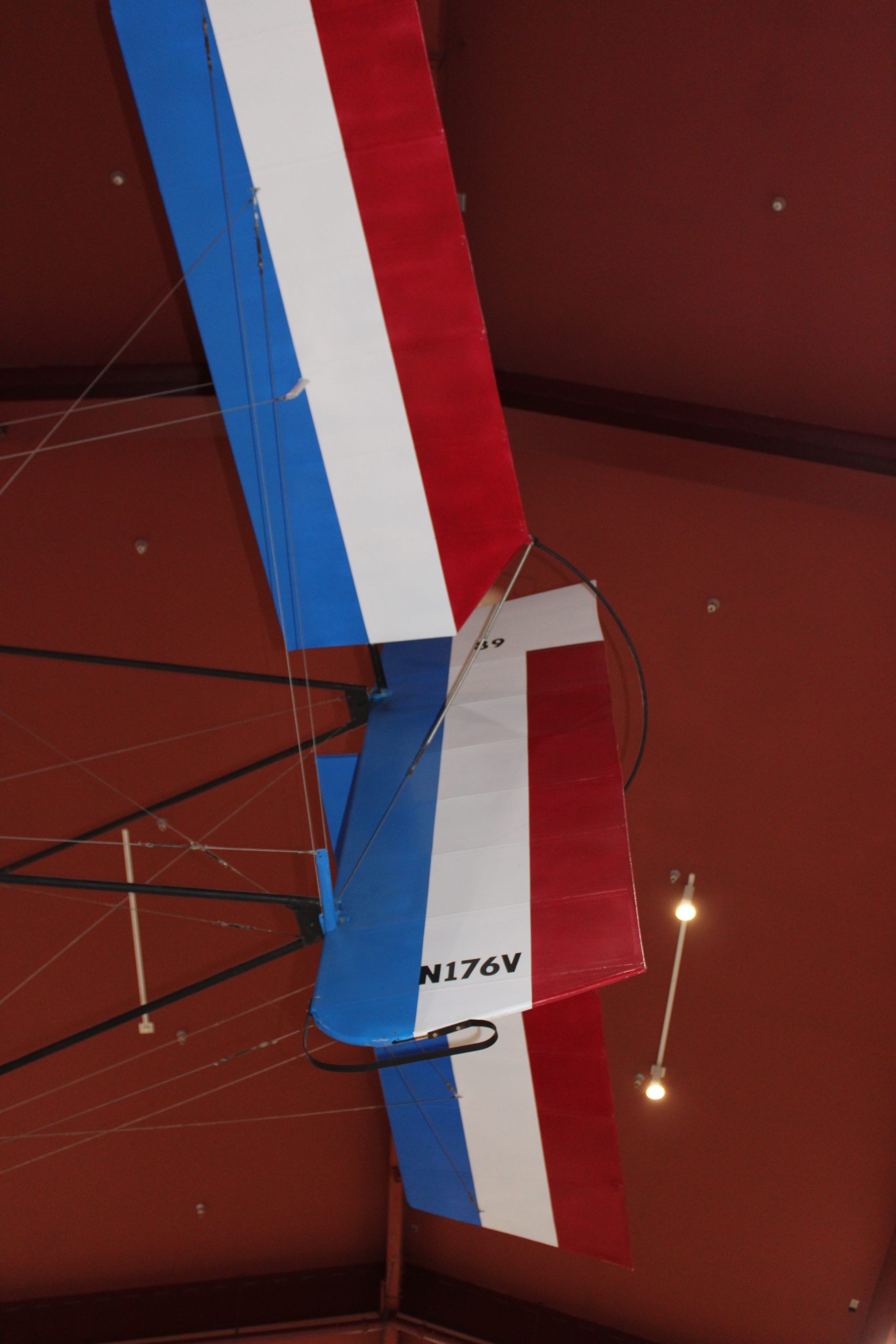
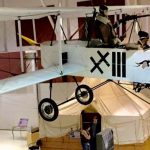
After the Dreidecker replica flew, Siggy Bredl and Gerry Brown decided to build another replica of a WWI airplane, this time deciding to replicate a Voisin III, the first dedicated bomber aircraft. After researching designs of the Voisin, construction began in 1999. Over the next three years, the two friends spent over 3,000 hours working on the aircraft, and on August 12, 2002, the Voisin III replica, N176V, made its first flight. Like the Fokker Dr.I replica, the homebuilt Voisin is powered by a Lycoming engine, which is available and reliable for many homebuilders. Less than two years after his Voisin replica flew, Siegfried Bredl died on January 29, 2004 at the age of 70. His legacy lives on at the Pearson Air Museum, which displays both his Fokker Dr.I and Voisin III replicas, with the latter being suspended from the ceiling of the museum hangar, its nose next to the guardrail of a second-story walkway that allows visitors to see the Voisin up close and to look down on the rest of the aircraft in the collection. Additionally, a display on Siggy Bredl also features some of the tools he used to build the two replica aircraft. Both of these WWI replicas, however, are not owned by the Pearson Air Museum/National Park Service but are on long-term loan from private owners.

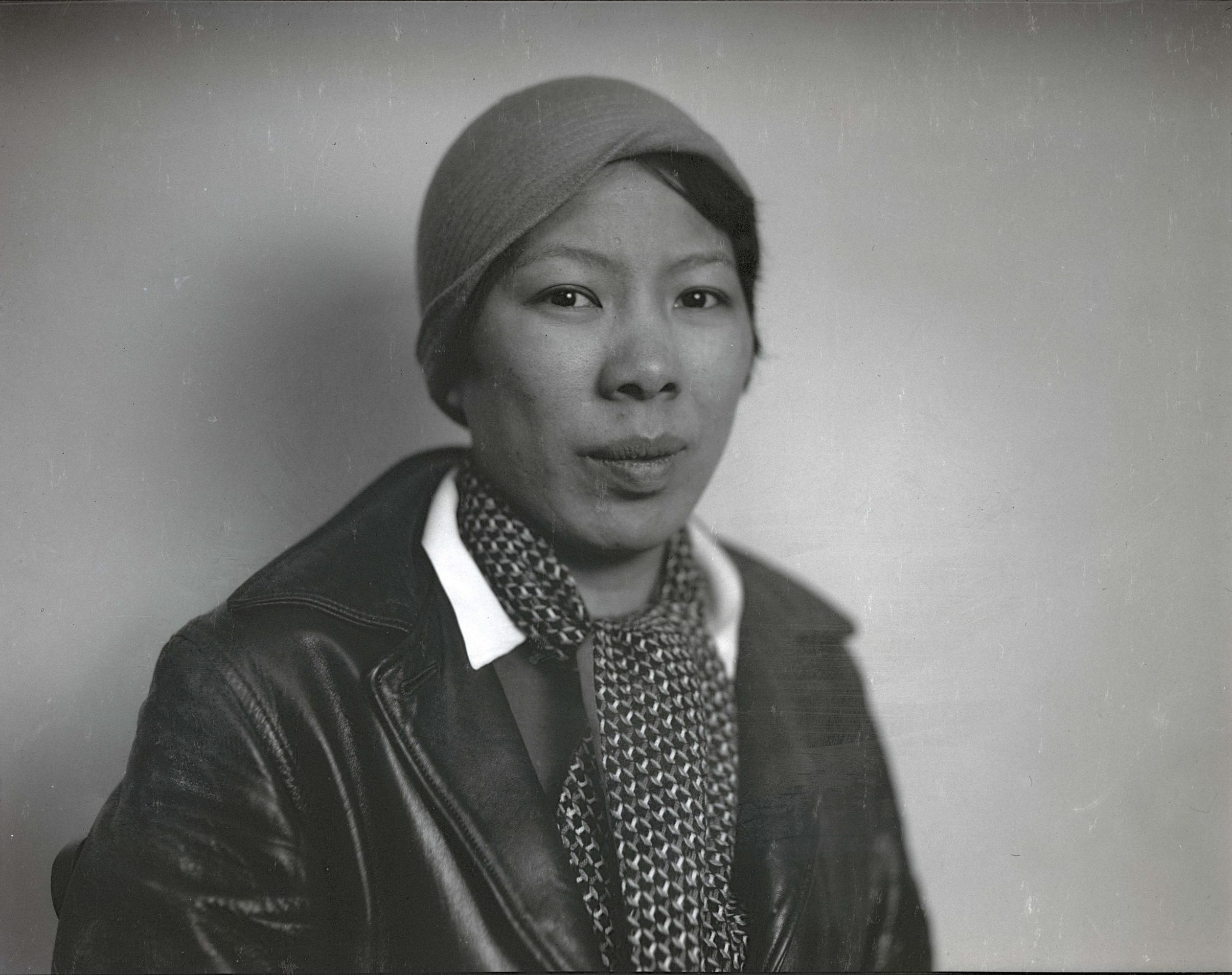
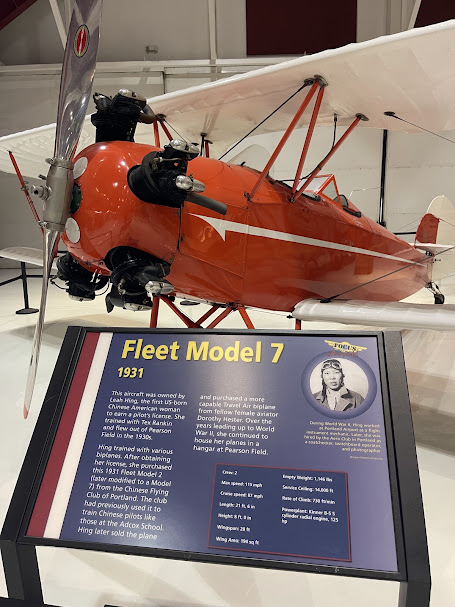
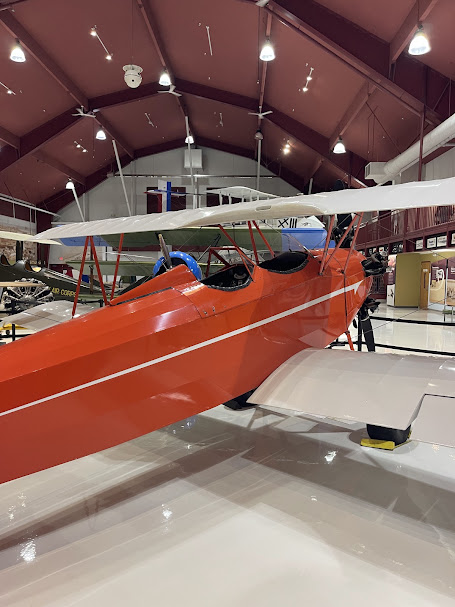
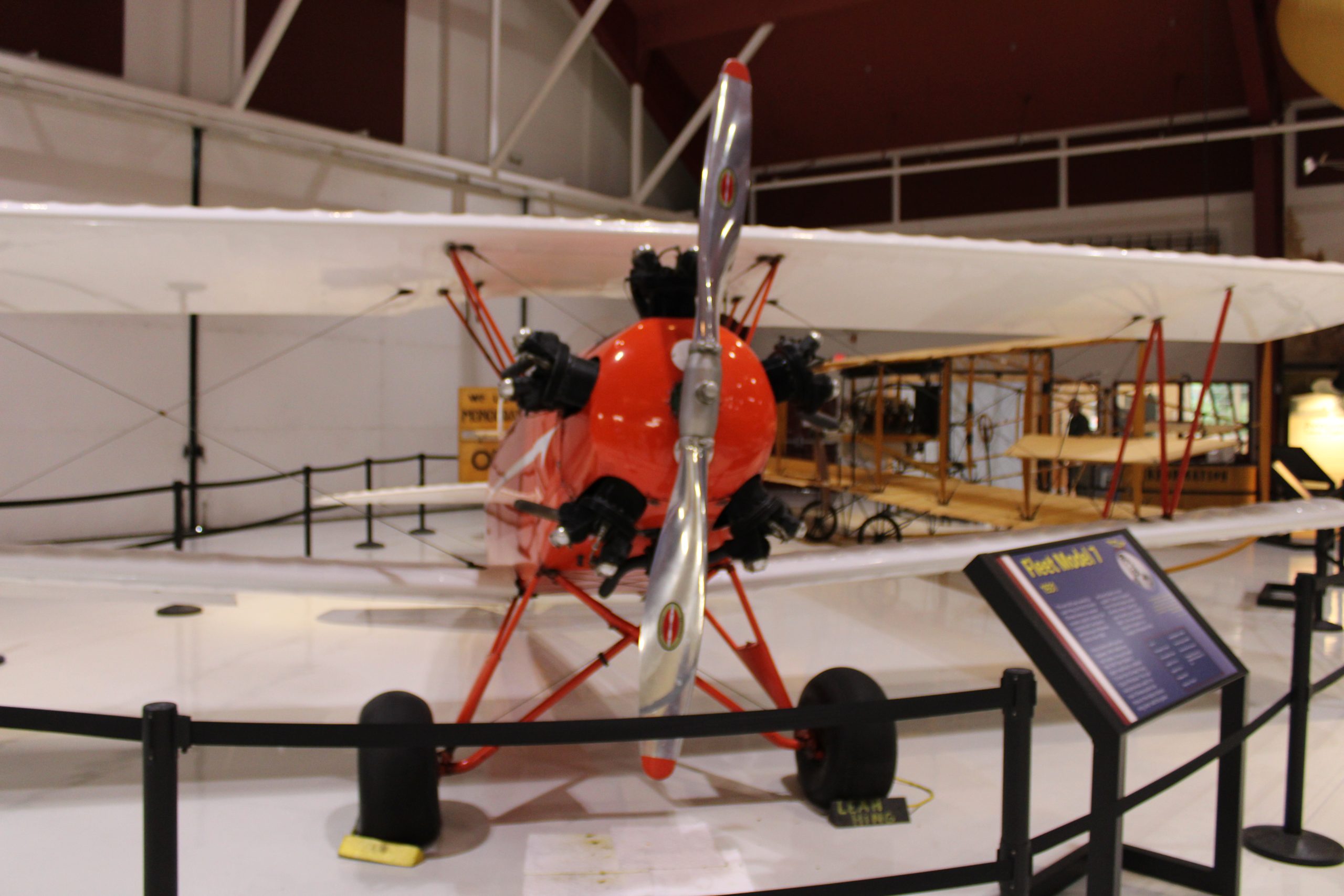
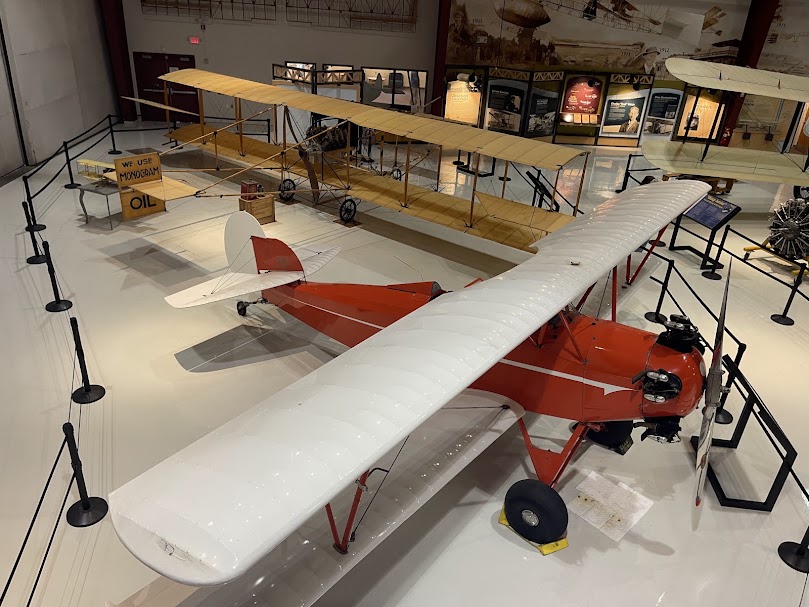
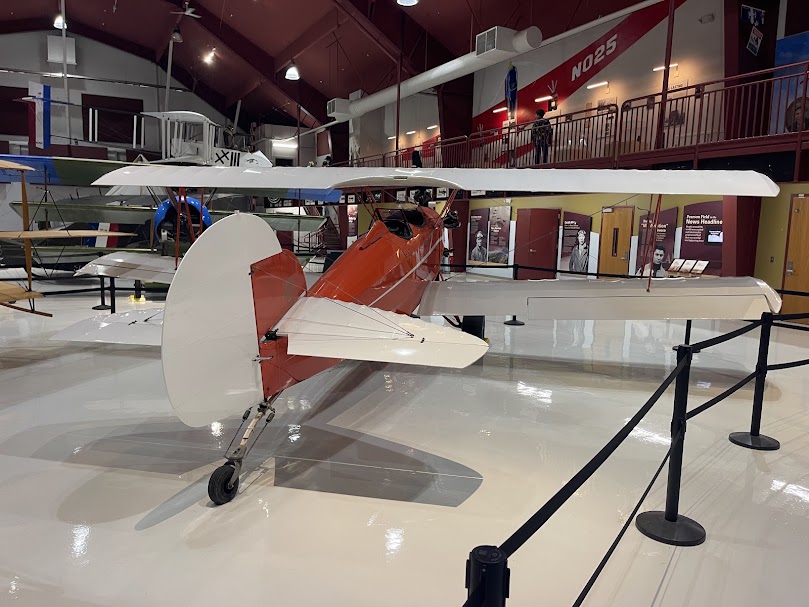
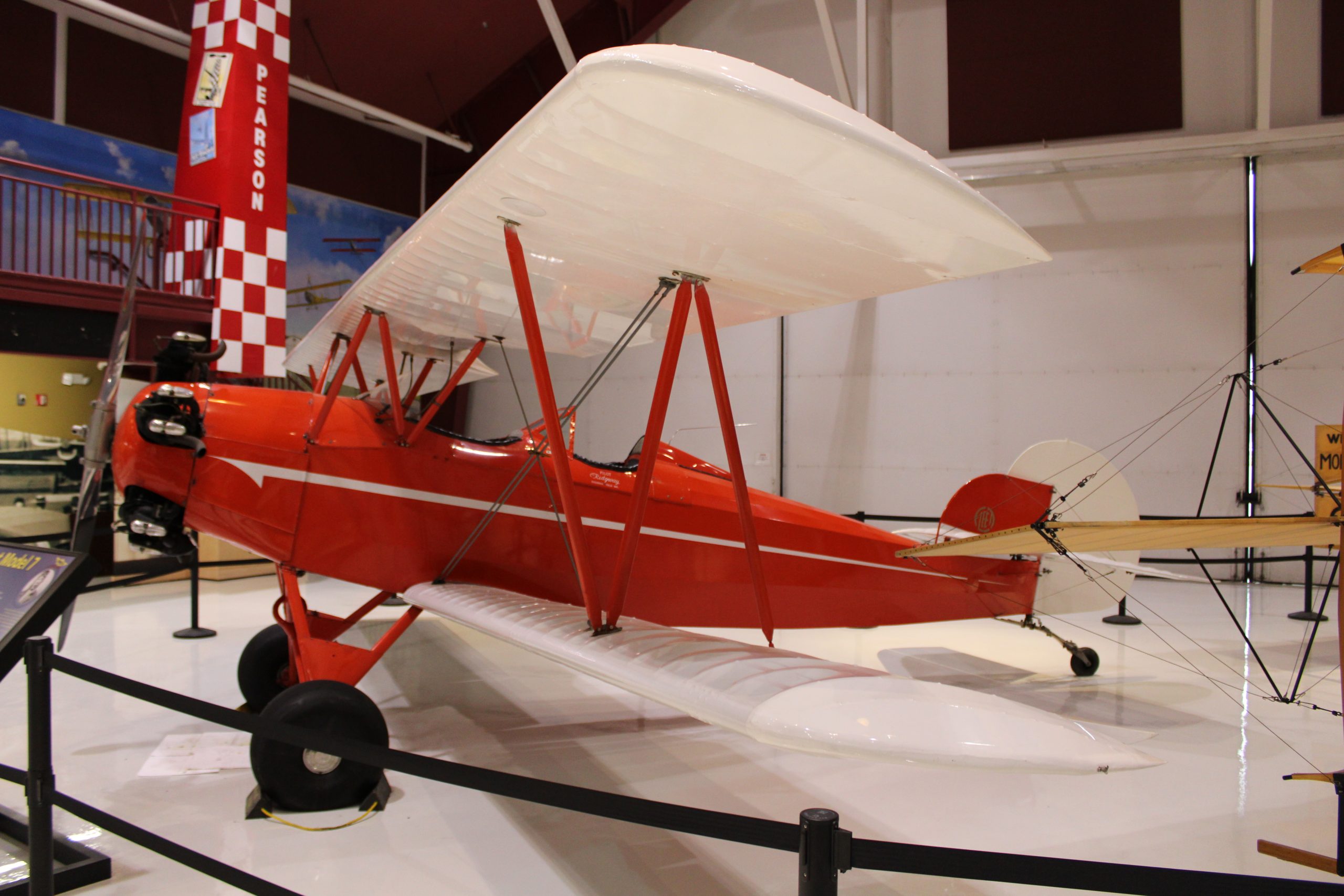
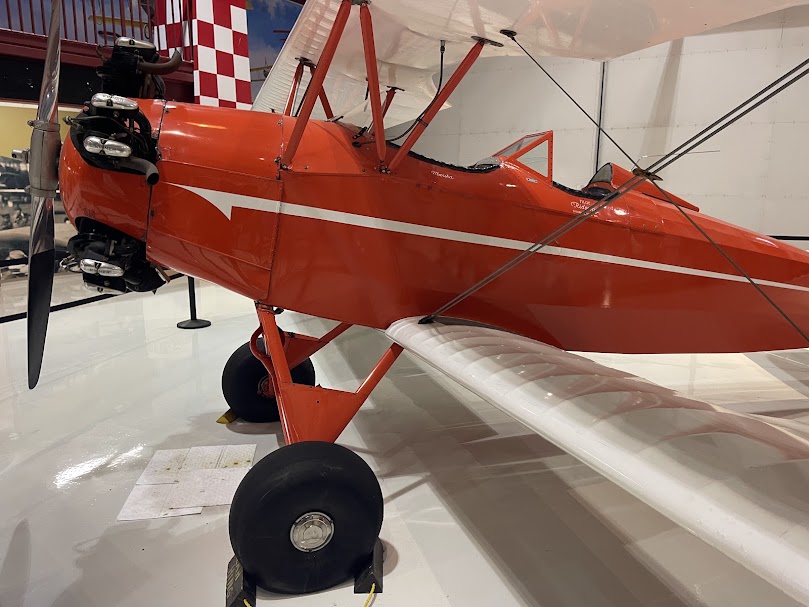
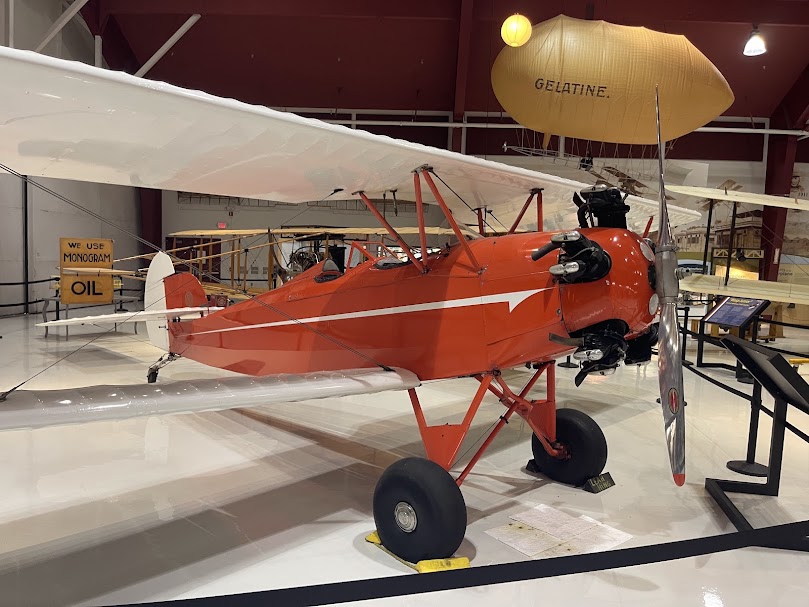
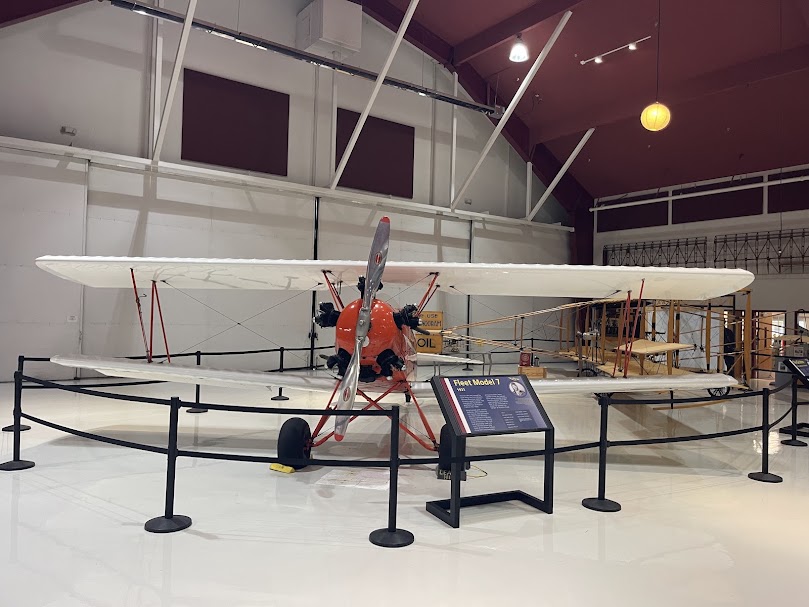
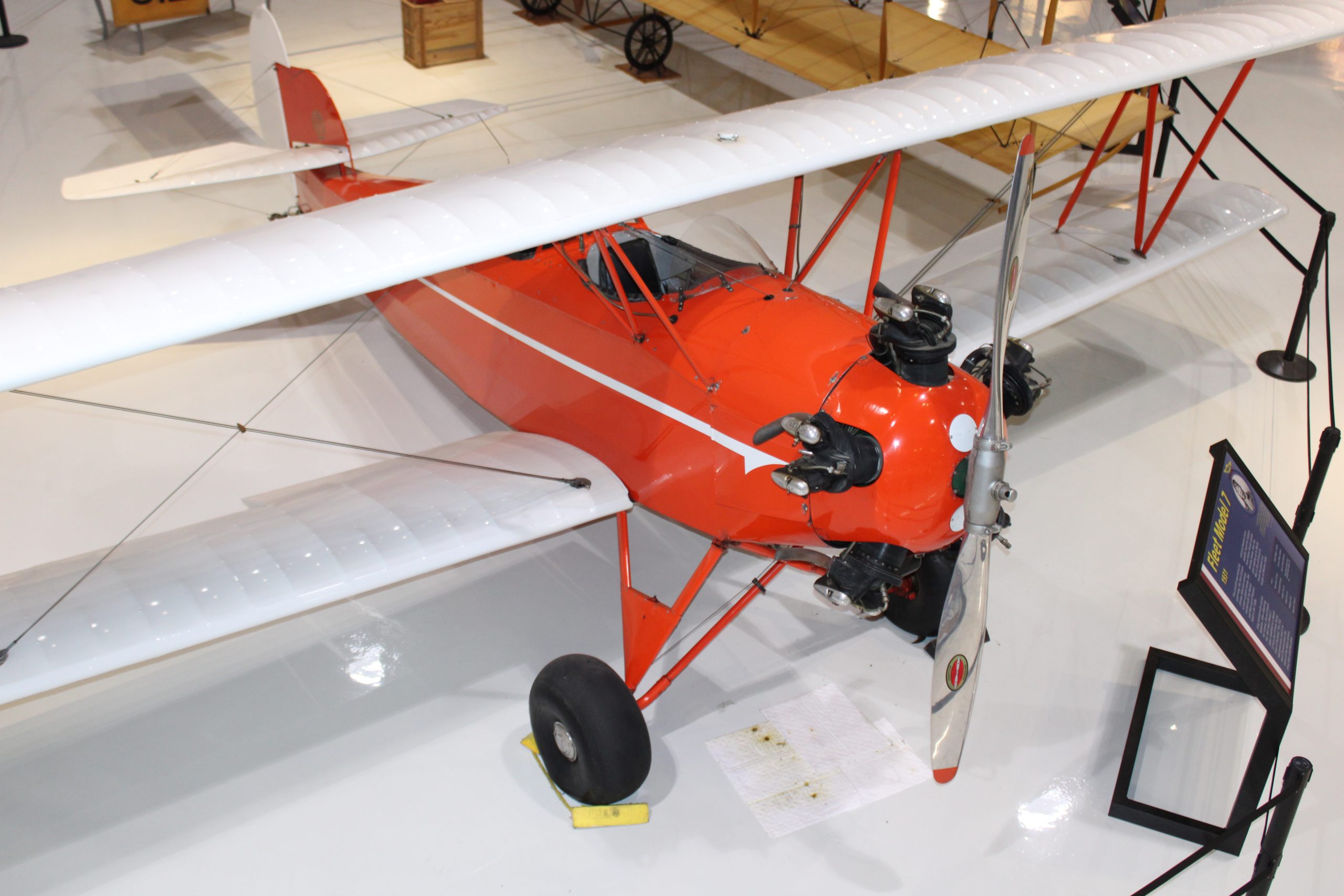
The last of the aircraft displayed inside the Pearson Air Museum is a Fleet Model 7 biplane, which is not only the oldest airplane on display at the museum by date of manufacture but it also holds a special connection to the first U.S. born-Chinese American woman to earn a pilot’s license, Leah Hing. Born in Portland, Oregon, on September 25, 1907, Leah’s parents were prime examples of the American ‘Melting Pot’. Her father, Lee Hing, was born in Oregon to Chinese immigrant parents and owned both a farm where he also grew herbs and a medicine and tea store, while her mother, Ah Sin Hing, had immigrated to America from Canton (Guangzhou), China around 1901. In 1912, her family moved to the Ladd’s Addition District of Portland, one of the few areas in the city where Chinese families could own property, but still had to face discrimination from prejudiced citizens. Hing was very active in social groups during her school years, from being a member of the Tanda Campfire Girls club to being president of the Portland Chinese Girls’ Club, team manager of the Chung Wah girls basketball team, and starting the Portland Chinese Girls’ Orchestra while still attending high school.

Leah Hing’s first taste of aviation came when she was part of a vaudeville troupe called the Honorable Wu’s. They toured the U.S. and Canada, playing the song ‘Happy Days Are Here Again’, and while on tour in Chicago, she took her first ride in an airplane, which was provided by a flight school that trained Chinese-American pilots. From that moment onwards, she decided to become a pilot, but would return home to Portland to work in her father’s tea shop, the Chinese Tea Garden. 1931 was a pivotal year for the Chinese-American community. That year, Imperial Japan invaded Manchuria and established the puppet state of Manchukuo in its place. With China in the midst of civil war between the Nationalist government of the Kuomintang, the Chinese Communist Party, and numerous warlords across China, Chinese-Americans denounced Japan’s aggression and funded charities to send relief to suffering civilians, many of whom were relatives of those living in America, while a handful of intrepid young volunteers even went so far as to travel to China to offer both military and humanitarian assistance. As part of this response, the Chinese Flying Club of Portland (CFCP) was established to train both men and women through the Adcox School of Aviation. Many of these eager young men and women hoped to go overseas and serve in the fledgling Chinese Air Force, which was in a David vs Goliath battle against the well-armed and well-trained pilots of the Japanese military. At her father’s insistence, Leah Hing would not go to China, but her friends and bandmates Hazel Ying Lee and Wong Quai Yin (Virginia Wong) traveled to China, where Wong would die in 1934 from malaria, and Hazel Ying Lee would return to the United States in 1937, and eventually became one of only two Chinese-American pilots in the Women’s Airforce Service Pilots (WASPs) during WWII.
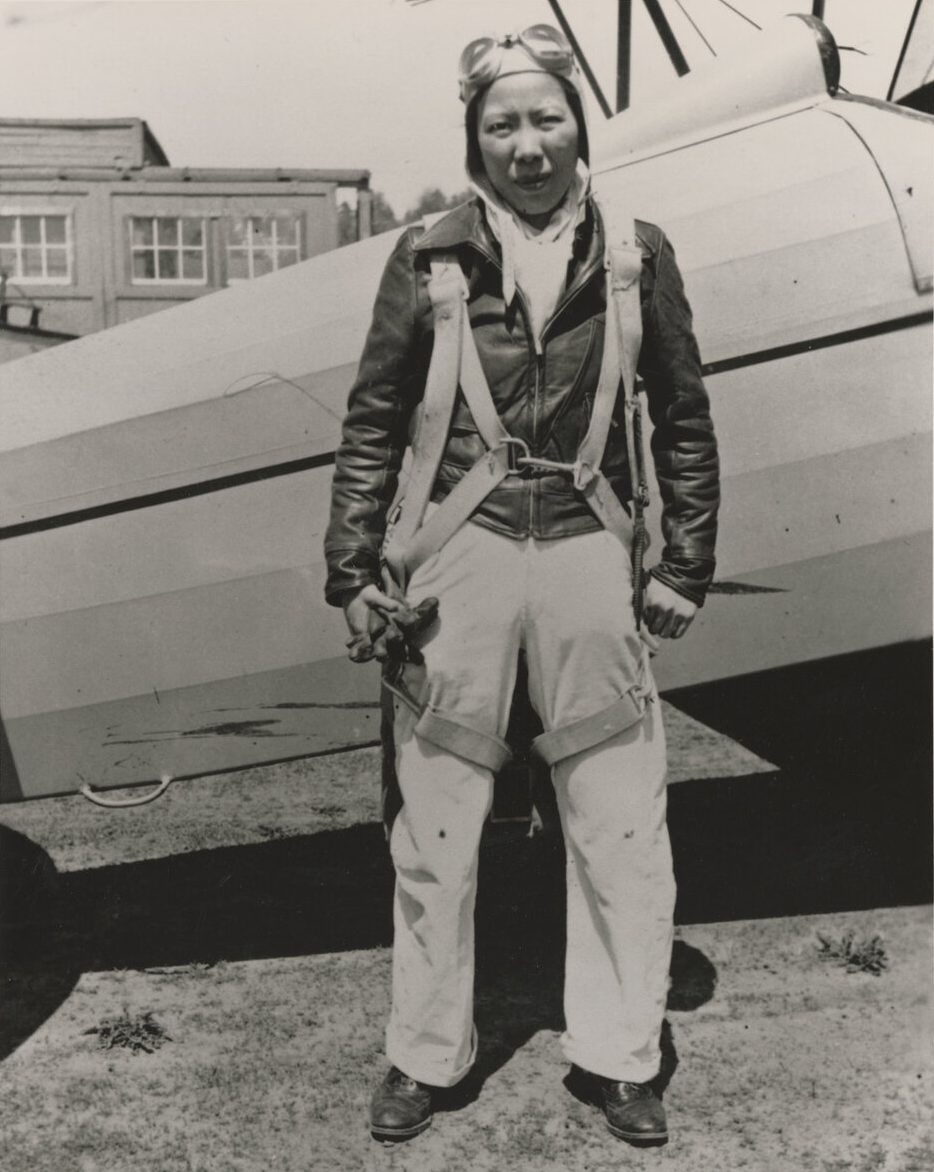
Back home, Leah Hing still sought to learn how to fly, and in March 1932, she went to the Rankin Flying School to learn from aerobatic pilot Tex Rankin. In a time when many flight instructors were men who were hesitant to teach women to fly, Rankin had already taught other women to fly before Hing arrived at his flight school, such as Dorothy Hester Stenzel, who performed aerial stunts as ‘Princess-Kick-a-Hole-in-the-Sky,’ and Mary Riddle, only the second Native American woman to learn to fly and a later prominent parachutist. When Rankin took Hing on her first lesson, Rankin was amazed to see that she was in the presence of a natural flyer, as Hing completed her flight control exercises in just ten minutes before pulling the throttle back, entering a glide slope, and landing the airplane. Although Rankin talked her through each maneuver through a speaking tube system, Rankin would state, “…she did everything right. That’s unusual the first time for anyone.” As Hing took her first steps towards becoming a pilot, Katherine Sui Fun Cheung, who had immigrated to Los Angeles, California, from Enping, China, at age 17, became the first Chinese woman to earn an international pilot’s license. Both Cheung and Hing became famous among the local press, with Hing stating her intent to go to China and serve as a flight instructor, as the Chinese Air Force barred women like her friend Hazel Ying Lee from flying in combat. Hing would also take flight training from Pat Reynolds, a reserve officer with the 321st Observation Squadron at Pearson Field, and in 1934, Leah Hing officially became the first U.S.-born Chinese-American woman to earn a pilot’s license, being issued license #2741.

On securing her pilot’s license, Hing logged more and more hours in the air until, in 1936, she purchased her own airplane. It was a 1931 Fleet Model 2 biplane, construction number375, registration number NC794V. Prior to Hing’s purchase of the aircraft, NC794V was one of the training airplanes employed by the Adcox School of Aviation to teach members of the Chinese Flying Club of Portland. The aircraft was equipped with a 100 hp Kinner K-5 five-cylinder radial engine. Later, the aircraft would be converted to the standards of a Fleet Model & when a 125 hp Kinner B-5 radial engine was installed. However, the same year Hing purchased NC794V, the aircraft was involved in a ground collision at Pearson Field when Lacey V. Murrow, Director of Highways for the state of Washington and brother of journalist Edward R. Murrow, was landing at Pearson Field when he accidentally taxied into Hing’s Fleet, which was then parked and unoccupied at the airfield. The small biplane caught fire, but the flames were extinguished. In all, this incident caused $500 in damage to Hing’s airplane, and Murrow offered to buy the airplane from her; after selling her Fleet biplane to Murrow, Hing then bought a Travel Air biplane from Dorothy Hester Stenzel.
Hing was involved in at least one more incident one year later, in 1937, when her plane flipped over while landing in Seattle, but she was unharmed despite the damage to her plane. In 1939, Hing joined the Ninety-Nines, the world’s largest and oldest continually operating organization for women pilots, and in 1941, she became the secretary-treasurer for the Ninety-Nines’ Northwest chapter. During WWII, Hing enlisted in the Civil Air Patrol and flew reconnaissance missions. Additionally, she also worked to repair navigational instrument equipment in military aircraft kept at Portland Army Air Base. Although China was an ally against the Japanese during WWII, many Chinese-Americans were viewed with suspicion, as prejudiced white Americans often confused them with Japanese-Americans, who were being sent to internment camps. Hing and many other Chinese-Americans would take the precaution of wearing buttons on their shirts to label them as Chinese, with Hing recalling years later that “we were very proud, and we didn’t want to get mixed up with the Japanese.”
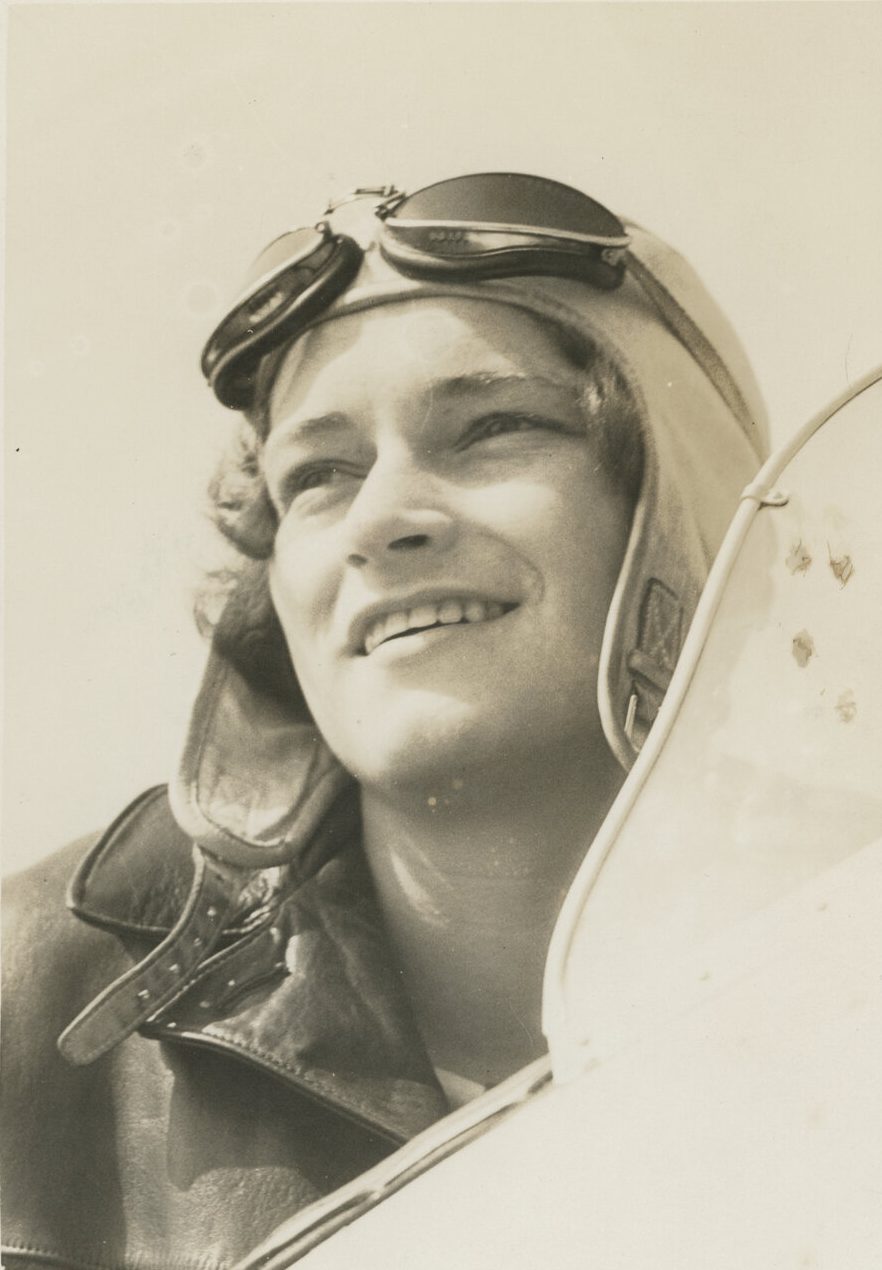
After the war, Hing’s pilot’s license expired in 1947. When she tried to become a member of the Portland Aero Club, she was turned down due to being Chinese, but was able to get a job with the club as a “hat check girl”, becoming a receptionist, photographer, and switchboard operator. In the meantime, Hing would live together with her former bandmate and lifelong partner Lillian Lang, and the pair traveled extensively. Hing herself would remain an active member of Portland’s Chinese community, from coaching girls’ basketball to raising money for elderly residents, and helping Chinese immigrants pass their U.S. citizenship exams. Yet unbeknownst to Leah Hing, her old Fleet biplane, now flying as a Fleet Model 7 while retaining its original registration number, had remained in the Pacific Northwest, being passed from owner to owner until it was purchased by local pilot Talbot V. Ridgeway in 1990. Upon combing through the records that came with the aircraft, he discovered Hing’s connection to the aircraft, and so during the 1990 Antique Fly In at the now-closed Evergreen Field, 83-year-old Leah Hing was able to not only see her old Fleet biplane, but take a flight in the same aircraft she had flown more than 50 years earlier. (Photo of Hing in the cockpit of Fleet Model 7 N794V can be seen HERE)


Leah Hing died peacefully at home on July 21, 2001, at the age of 93, surrounded by family and friends. Her Fleet Model 7 biplane was maintained in airworthy condition at Pearson Field and was placed on loan to the Pearson Air Museum along with other vintage aircraft owned by local pilots but in 2022, N794V was donated to the Pearson Air Museum through The Historic Trust foundation, alongside a Curtiss OX-5 engine (HERE). Fleet Model 7 N794V is now one of the four aircraft in the museum’s permanent collection, and stands as a monument both to the determination of Leah Hing as the first Chinese-American woman to earn a pilot’s license but also to the courage of the young Chinese-American men and women who would go on to serve as military and civilian pilots, and forge a new path for others to follow.
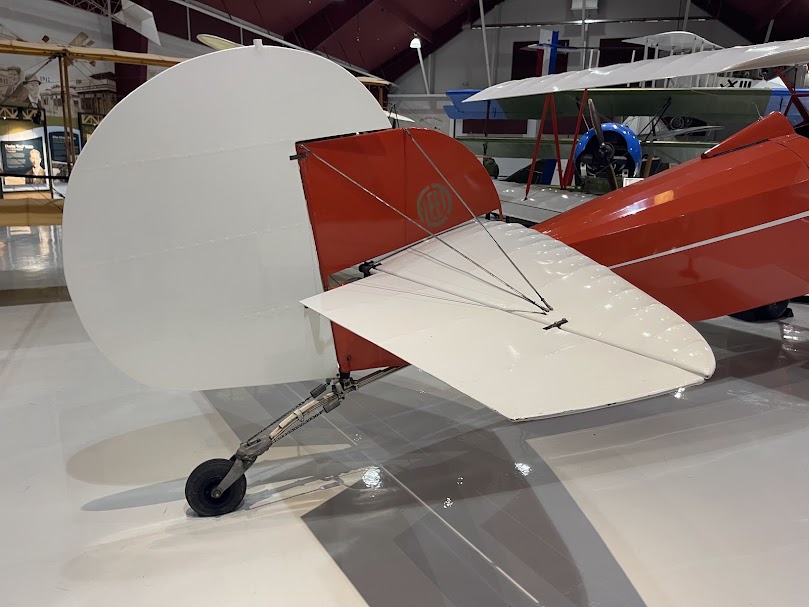

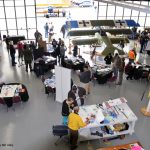
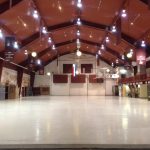
Besides the airplanes on display in the main hangar, the Pearson Air Museum also has a second hangar (known as the Historic Hangar) that was originally built by the U.S. Army Air Service in 1921, and moved to its present-day location in 1924. This wooden beam hangar has housed numerous kinds of airplanes for more than 100 years, and after the establishment of the Pearson Air Museum, it was used to house aircraft that were on loan from owners primarily based at Pearson Field. However, the Historic Hangar is primarily used as an events venue, hosting everything from weddings and memorial services to parties and banquets. Walking outside the Pearson Air Museum, there is the former headquarters building for the 321st Observation Squadron, which has been repainted to how it looked when Pearson Field was an active military airfield.

Standing between the headquarters building and the museum sits a large stone and mortar monument that commemorates the most famous flight to land on the grounds of Pearson Field, the trans-Polar flight of the Tupolev ANT-25. Developed specifically for long range flights by a design team of the Central Aerohydrodynamic Institute (TsAGI) led by Pavel Sukhoi and supervised by Andrei Tupolev, the ANT-25 was a massive aircraft, with a wingspan of 34 m (111 ft 7 in), a length of 13.4 m (44 ft 0 in), a range of 7,200 km (4,500 mi) a crew of three and was powered by a single Mikulin M-34 V-12 engine of 560 kW (750 hp). Although these flights were a boon for Soviet propaganda efforts as a symbol of Soviet engineering prowess, these flights also served a scientific purpose in terms of demonstrating the feasibility of future long-range flights across the Arctic and the North Pole.


Two ANT-25 aircraft would be built (the RD-1, URSS-NO25 and the RD-2, URSS-NO25-1), and following the type’s maiden flight on June 22, 1933, the ANT-25 began setting both endurance and distance records, from a 75 hour round trip between Moscow–Ryazan–Tula–Dnepropetrovsk–Kharkov between September 10–12, 1934 to a 56 hour nonstop flight on July 20–22, 1936 across the Soviet Union from Moscow to Udd Island in the Sea of Okhotsk with waypoints over Franz Josef Land, Severnaya Zemlya, and Petropavlovsk-Kamchatsky. The island was later renamed in honor of the pilot of this flight, Valery Pavlovich Chkalov, who would lead the next major flight for the ANT-25 RD-1, which was emblazoned with the name “Stalin’s Route” on its fuselage.

The year prior, on August 3, 1935, another crew had attempted to fly the ANT-25 nonstop from Moscow to San Francisco via the North Pole but when oil began leaking into the cockpit, the crew led by Sigismund Levanevsky was forced to land at an airfield near Krechevitsy, Novgorod Oblast. This incident caused Levanevsky to denounce Tupolev, but once Valery Chkalov made the flight to Udd Island (later renamed Chkalov Island), alongside copilot Georgy Filippovich Baidukov (who was part of Levanevsky’s 1935 crew) and navigator Alexander Vasilievich Belyakov, confidence was restored in the Moscow – San Francisco flight, and a new plan was formulated to accomplish the flight.
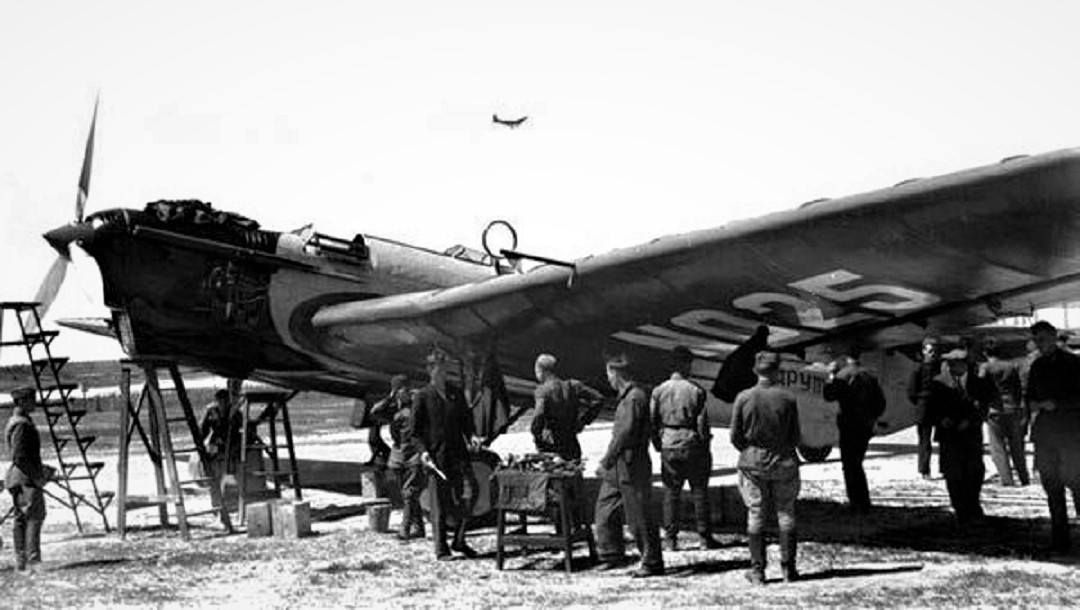
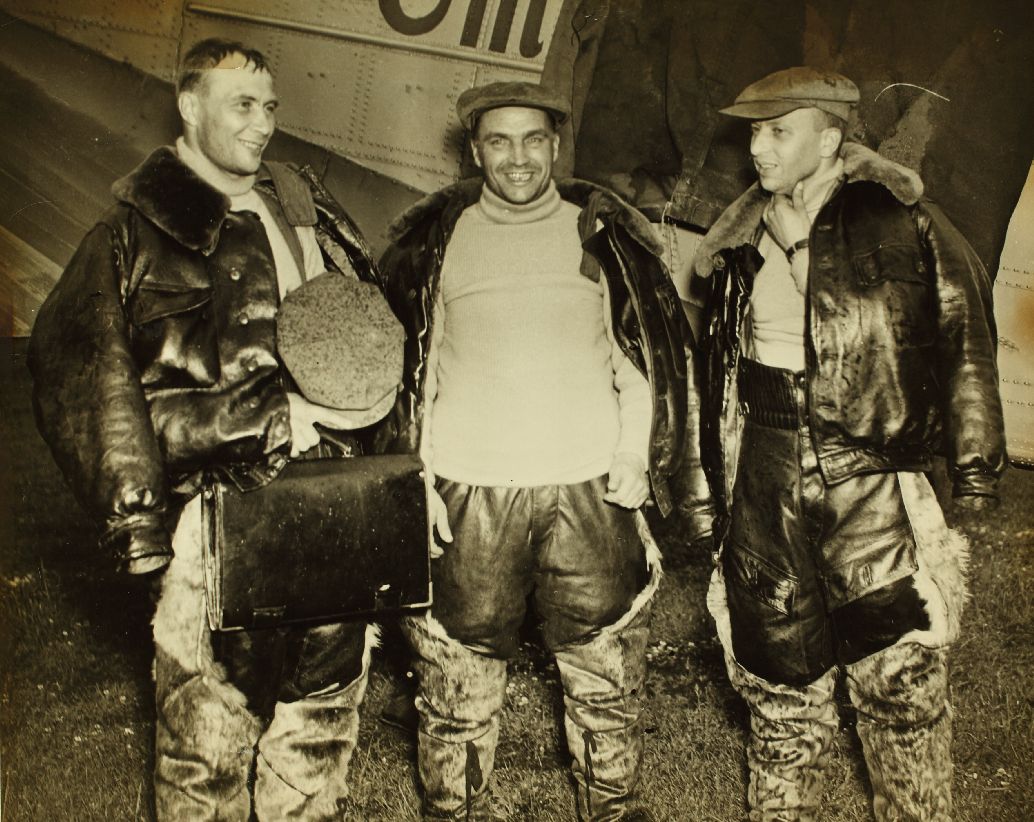
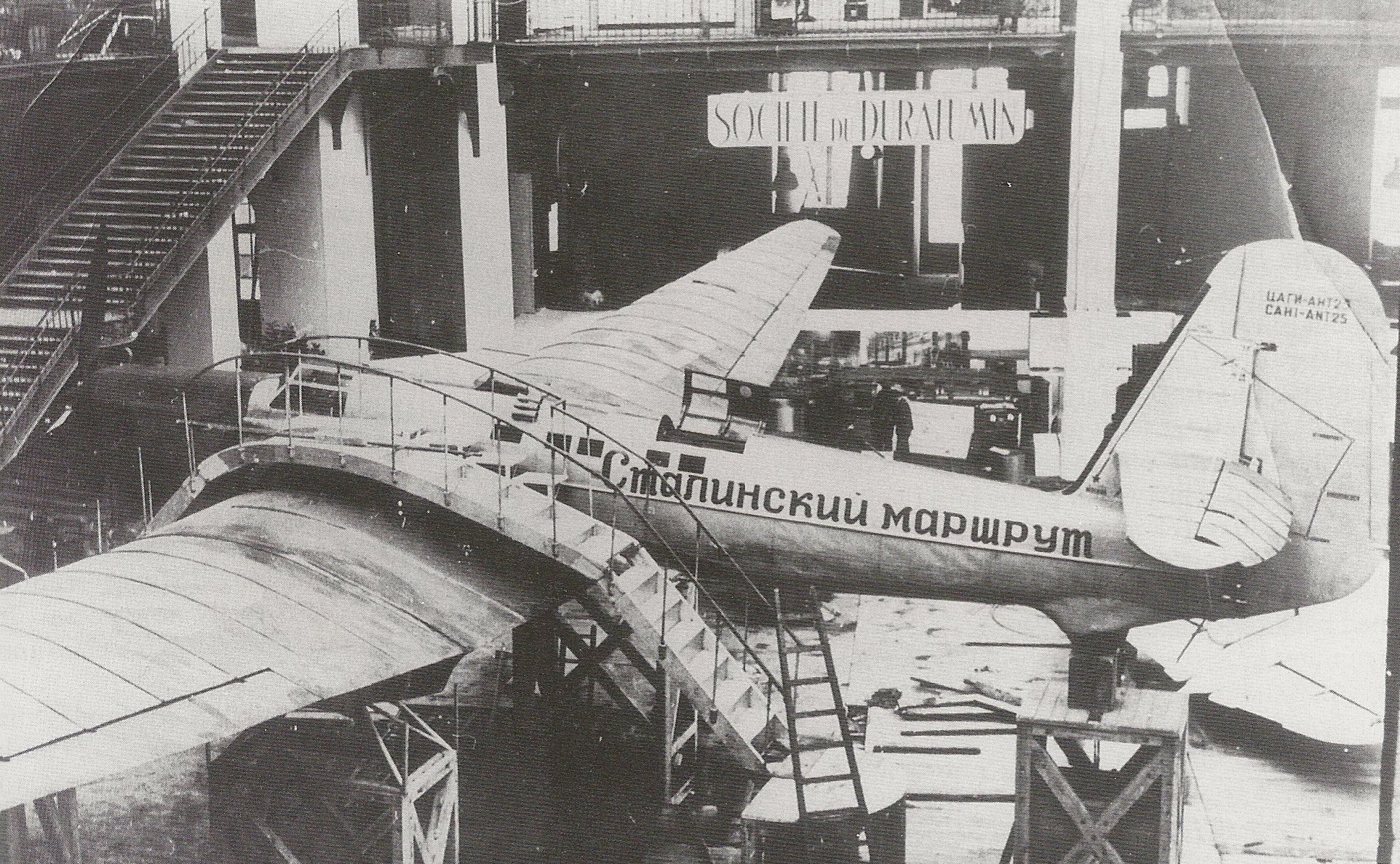
On June 18, 1937, the ANT-25 URSS-NO25 “Stalin’s Route” took off from a specially-made sloped runway at Shchelkovo airfield (now Chkalovsky air base), 31 kilometers northeast of Moscow. The route of Chkalov, Baidukov, and Belayakov would take them to the North Pole before flying south over Canada’s Northwest Territories, then turning to the Pacific Northwest coast. After flying along the coast, they would then turn inland once again before turning to land in San Francisco. Aboard the ANT-25 were barographs to record the aircraft’s course and prove the aircraft made no intermediate stops between Moscow and San Francisco, and these were sealed to prevent any tampering by the crew. Another element of the aircraft that was sealed before the flight took off was the fuel tank filler caps to prevent any kind of aerial refueling as well, since this method of refueling had been employed in previous record-setting flights by different nations. Chkalov and Baidukov would take shifts during the flight, where one would fly the aircraft while the other rested, but since Belayakov was the sole navigator and radio operator onboard, he would be on alert throughout the flight for when his input was needed.

The crew of the ANT-25 would ascend gradually into the air, but as they flew over the Arctic Ocean, the weather deteriorated to blind flying conditions. Fortunately, Buidukov was highly experienced in instrument flying, and the crew was also able to communicate their progress and challenges with Soviet and American radio stations in the Arctic, with Belayakov making continuous adjustments to their course.

After crossing over Canada and entering the airspace of the continental United States, Belayakov would check his maps of the U.S. West Coast to help orient the crew. By the time they had been in the air for 60 continuous hours, they recognized the city of Seattle below them. Soon, it would be a matter of a few hours before they would arrive over San Francisco and turn to land on the eastern side of San Francisco Bay at Oakland Airport, where Soviet ambassador to the U.S. Alexander Troyanovsky was waiting. Meanwhile, the ANT-25 passed over the Portland lighthouse and was cruising through central Oregon before Chkalov and Baidukov realized they were running low on fuel over Eugene and would not have enough fuel to make it to San Francisco. Checking their maps, they decided to turn back for Portland. When they returned over Portland, they saw the city’s main airport at the time, Swan Island Airport, below them, with cheering crowds waving American flags eager to witness the landing of the Soviet giant. However, Chkalov remembered how in 1927, when Charles Lindbergh made his flight across the Atlantic and landed in Paris, his airplane was damaged by souvenir hunters, and fearing the same fate would befall the ANT-25, Chkalov ordered the crew to fly across the Columbia River and look for a landing field on the Washington side. There they spotted Pearson Field from the air, and made a quick judgment based on the length of the grass airstrip, which they estimated to be a third of the desired length for a landing, but by now they were committed to Pearson Field, so with guidance from Chkalov, Baidukov banked towards the small airfield, the ANT-25’s massive wings nearly touching the tops of the fir trees on the approach.
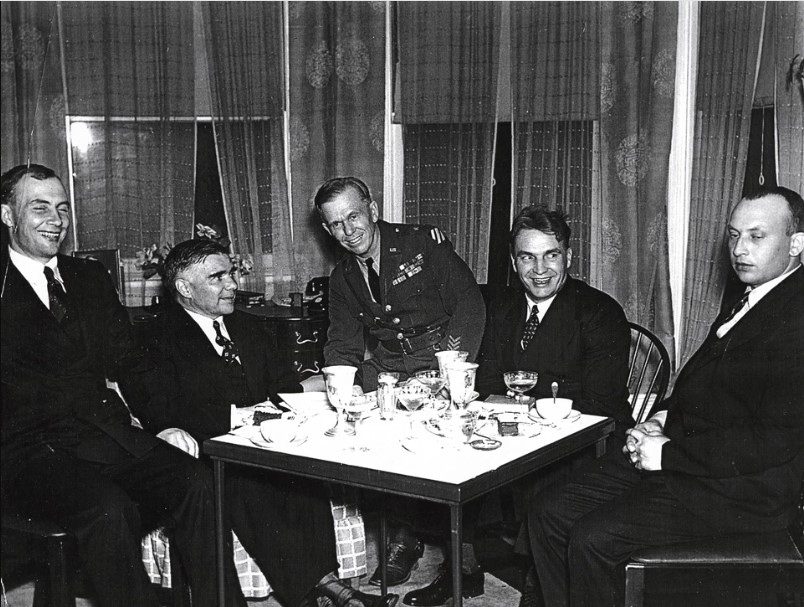
Chkalov shouted to Baidukov, “Land at the very edge!” The long-winged ANT-25 then touched gently onto the damp grass of Pearson Field. In order to save weight, the aircraft’s brakes had been removed, but fortunately the large flaps on the trailing edges of the wings helped slow the ANT-25 down, and the massive aircraft came to a stop just 200 meters from the edge of the airfield. It was June 20, 1937, 63 hours and 25 minutes after taking off from Shchelkovo Airfield near Moscow. Baidukov and Belayakov were too exhausted to say anything after landing, and Chkalov quietly muttered, “We’ve landed. We’re on the ground … This is America…” Meanwhile, Baidukov opened the cockpit window to take in the air, while Belayakov packed up his pencils, triangles, and compasses, telling his comrades, “You fellows can do what you like, but I’m climbing out!” In his house on Officers’ Row at Vancouver Barracks, the commander of Vancouver Barracks and Pearson Field, General George C. Marshall, later Chief of Staff of the US Army during WWII, received an excited phone call from a mechanic, R.F. Spender, who shouted, “It’s that plane, Sir! That big Russian plane! It’s landed here!” General Marshall immediately called for his driver, and within a few minutes Marshall’s car barreled straight across the Parade Grounds and golf course to get to the ANT-25 at Pearson Field. At the same time, a young ROTC student named George Kozmetsky was roused from his sleep by the guards and brought to Pearson Field since he was fluent in Russian and would be made the field’s interpreter.

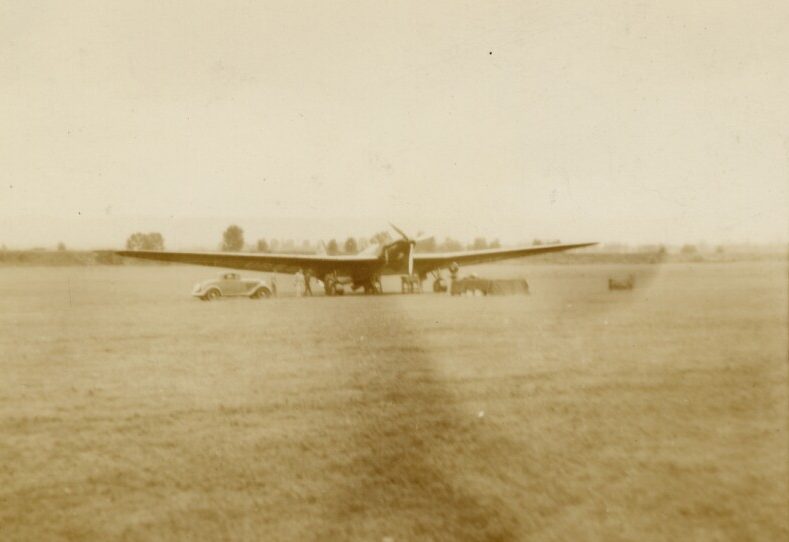
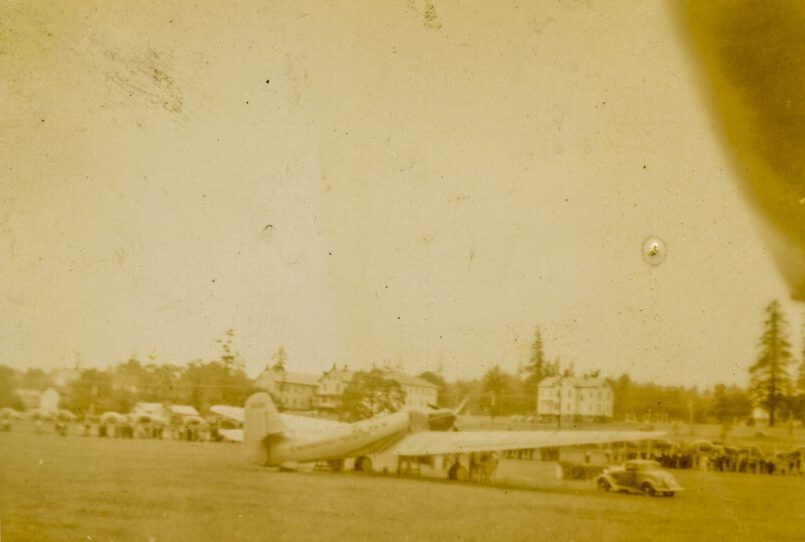
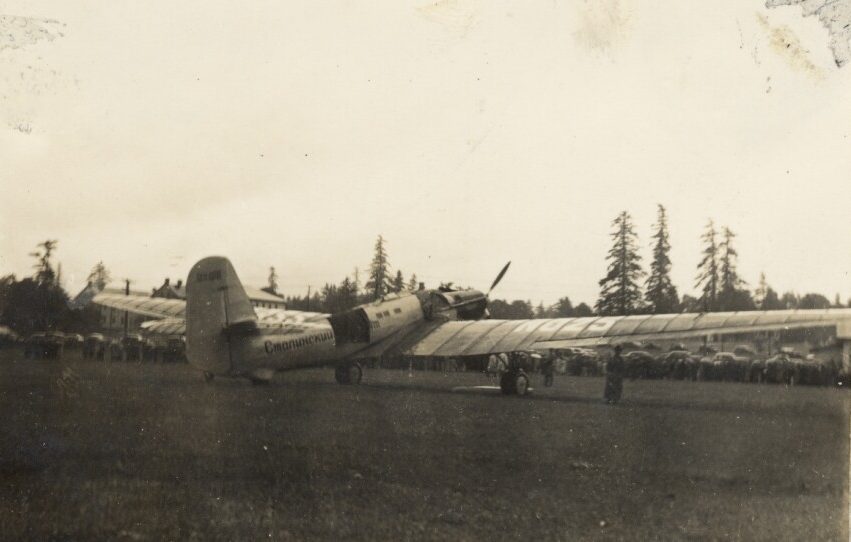
Valery Chkalov, meanwhile, had emerged from the aircraft and was speaking to a growing crowd of onlookers when General Marshall arrived. Upon being told who Marshall was, Chkalov banged on the side of the fuselage and called out “Sasha! Baiduk! General Marshall is here, come meet him.” Inside the ANT-25, Baidukov asked Belayakov, “I don’t understand, is he a general or a marshal?” Belayakov replied, “I can’t say. I don’t know if the Americans have marshals, but they certainly have generals! Time to go.”

General Marshall ordered his men to secure the Tupolev ANT-25 and prevent the crowds from gathering too close to the aircraft, while bringing the exhausted Soviet airmen to his house to rest before meeting the press and officially unsealing the barograph. The three Soviet airmen were treated to a hero’s welcome throughout America, and Ambassador Troyanovsky accompanied them to Washington, D.C., where they had dinner at the White House with President Franklin D. Roosevelt, whose administration had been the first to recognize the legitimacy of the Soviet Union in 1933. Chkalov, Baidukov, and Belayakov then boarded the French liner SS Normandie to France before returning to the Soviet Union. Following the flight, a group of community leaders from the city of Vancouver, including the Chamber of Commerce and the Clark County Sun newspaper, wrote a formal letter to Joseph Stalin asking to establish official ties between the Soviet Union and the city of Vancouver. Stalin never replied to this letter, but it was rediscovered in declassified state archives 56 years later in 1994.
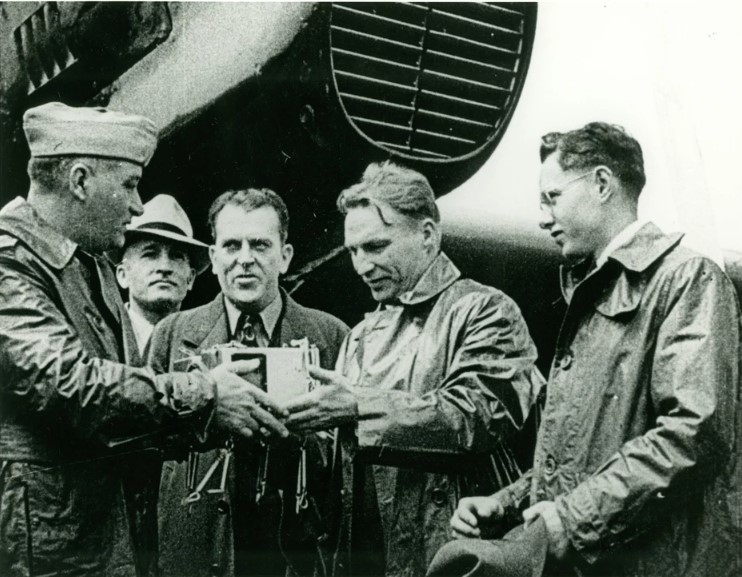
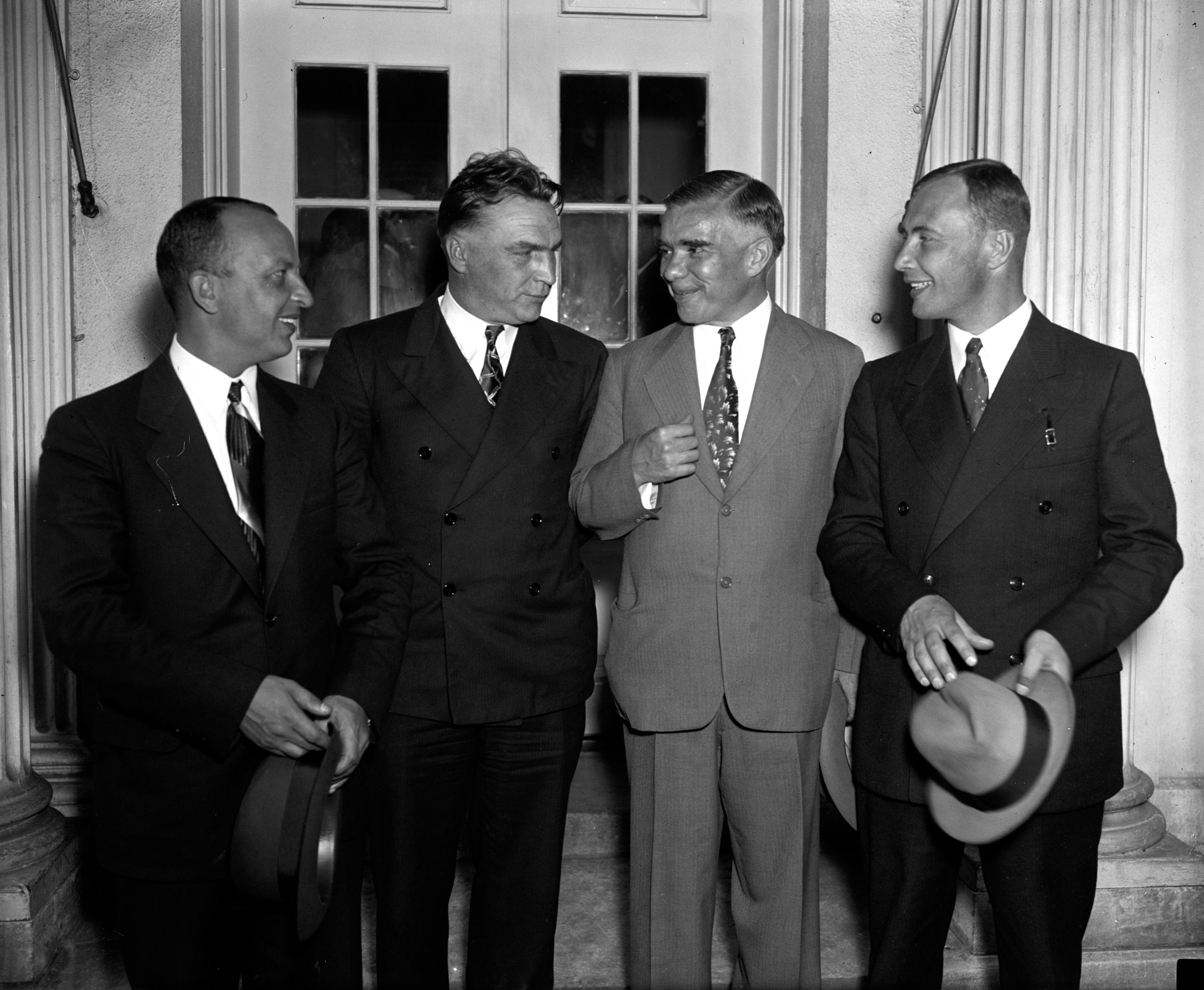
After the ANT-25 URSS-NO25 was brought by ship across the Atlantic (possibly in the cargo hold of Normandie), the aircraft was shipped from Le Havre to Leningrad aboard the Soviet cargo ship Cooperatzia. One month after the Chkalov Transpolar flight, the second ANT-25, URSS-NO25-1, made another transpolar flight from Shchelkovo Airfield to America; this time it was flown by Mikhail Gromov, Andrei Yumashev, and Sergei Danilin, taking off on July 12, 1937, with the intention of landing in San Diego, California. However, fog prevented their landing in San Diego, and after the alternate landing field of March Field in Riverside, California, was also shrouded in fog, the crew landed in a cow pasture near the town of San Jacinto, California, on July 14, 1937, after 62 hours and 17 minutes in the air. The latter flight also reached the original goal of the Chkalov flight by breaking the world records for distance in a straight line (10,148 km) and a world record for distance in a broken line (11,500 km), as the Fédération Aéronautique Internationale (FAI) did not recognize the claims of Chkalov’s crew.

Yet although widely celebrated in their time, larger events between the United States and Soviet Union during WWII and the Cold War would see both of the Soviet Trans-polar flights being largely forgotten, while Valery Chkalov was killed during a test flight for the prototype Polikarpov I-180 fighter on December 15, 1938, and Andrei Tupolev himself was imprisoned on trumped-up charges during The Great Purge before later being exonerated and allowed to resume his work designing new military and commercial aircraft for the Soviet Union. In 1974, a pair of Soviet sailors on leave from their ship went to Vancouver, Washington and asked to see the monument to Chkalov and his crew’s flight to Pearson Field. On being told no such monument existed, the response prompted the local community to raise funds to build such a memorial, which was officially dedicated at Pearson Field on June 20, 1975, 38 years after the famous flight. At the dedication ceremony were copilot Colonel-General of Aviation Georgy Baidukov and navigator Lt. General Aleksandr Belyakov, while the late Valery Chkalov was represented by his son Igor and daughters Valeria and Olga. During his speech at the dedication ceremony, Baidukov remarked “We brought friendship on the wings of that plane.”

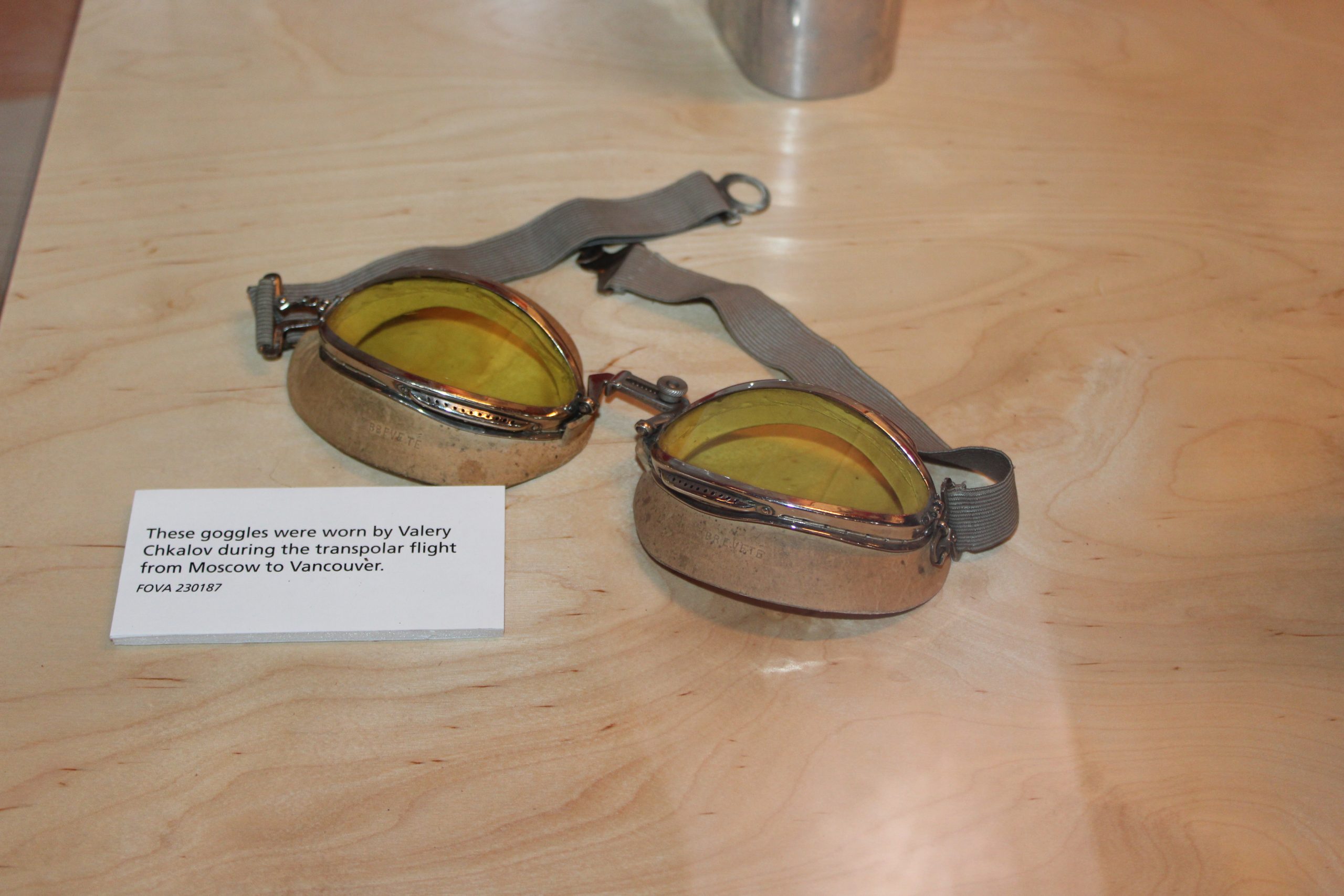
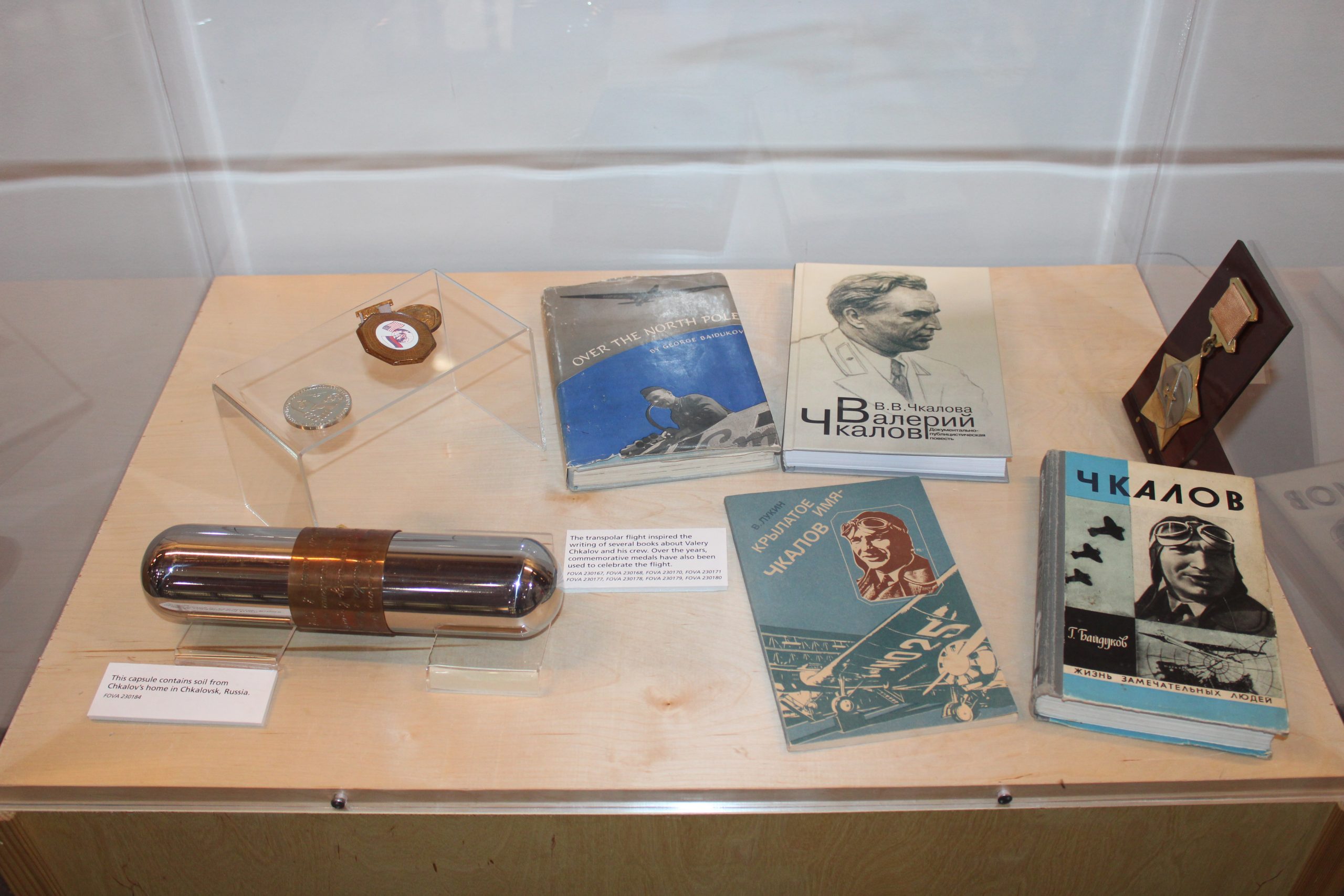
For the 50th anniversary of the flight in 1987, family members of the Chkalov crew revisited Pearson Field, and members of the Chkalov Cultural Exchange Committee and other citizens of Vancouver, Washington visited Moscow. Around the same time, the Tupolev Design Bureau built an exact replica of the ANT-25 flown from Moscow to Vancouver for permanent display at the Central Air Force Museum in Monino, just east of Moscow. Another full-scale replica of the ANT-25, meanwhile, resides at the V. P. Chkalov Memorial Museum in Chkalovsk, Novgorod Oblast. Today, the Chkalov Trans-polar Monument still stands, with several plaques on both its north and south sides, featuring a depiction of the ANT-25 with its Cyrillic designation AHT-25, and both a plaque of the original Russian transcript of the press releases of the flight made by Pravda and Izvestia on June 21, 1937, and an English-language of these press releases. Inside the museum’s hangar is a display on the history of the flight, with artifacts from the flight, such as Chkalov’s flight goggles, a capsule containing soil from Chkalov’s home in what is now Chkalovsk, Russia, a copy of Baidukov’s book Over the North Pole, and commemorative medals for the flight and its subsequent anniversaries.

All in all, the Pearson Air Museum is certainly a great collection to visit should you find yourself in the Portland-Vancouver area. Though it may not have as many airplanes as other museums in either Oregon or Washington, it still contains a rich collection of the local history of one of America’s oldest continuously operating airports, interactive exhibits for visitors of all ages, boasts free admission to the public, and is in walking distance to other parts of the wider Fort Vancouver National Historic Site, from the recreated Fort Vancouver trading post where living historians dressed in 19th century clothing demonstrate skills such as blacksmithing, cooking, woodworking, and trading, to the military history of the Vancouver Barracks. You can even stick around to do some plane spotting not only of the small aircraft taking off and landing at Pearson Field, but also of the large airliners that fly in and out of nearby Portland International Airport as well. For more information, visit the Pearson Air Museum’s website HERE.






A Very Interesting article, and an interesting Museum!