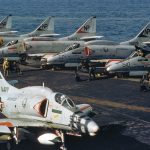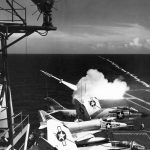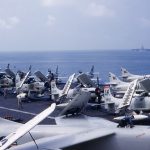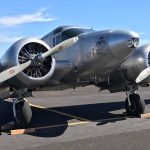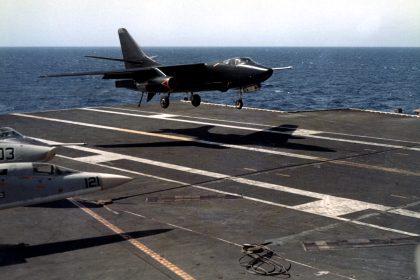
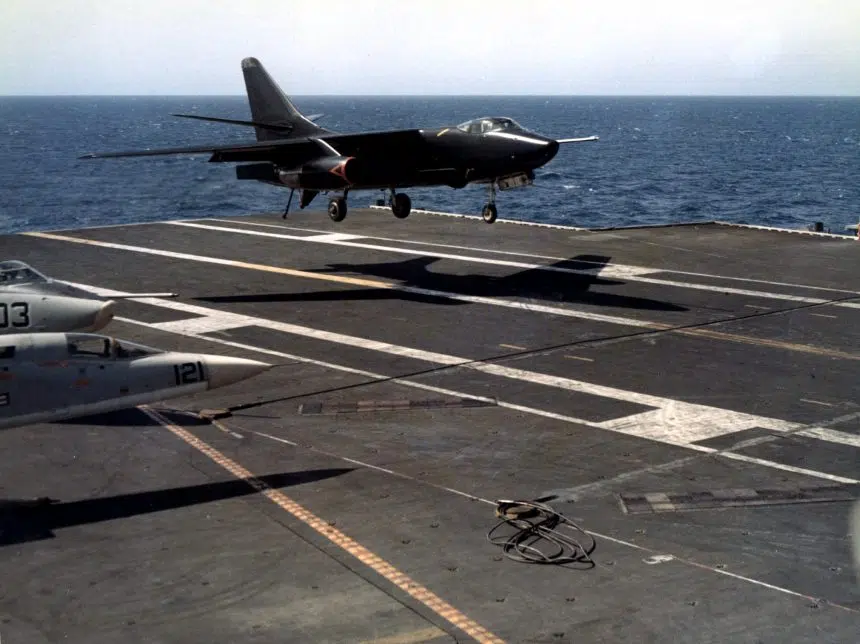

Heavy Photographic Squadron 61 (VAP-61), nicknamed World Recorders, was a US Navy squadron that focused on photographic reconnaissance. The squadron started as Patrol Squadron 61 (VP-61) on January 20, 1951. It changed its name to Photographic Squadron 61 (VJ-61) on March 5, 1952, and then to Heavy Photographic Squadron 61 (VAP-61) in April 1956. On July 1, 1959, it was renamed Heavy Photographic Squadron VCP-61. The squadron returned to the VAP-61 name on July 1, 1961. Heavy Photographic Squadron 61 started at NAS Miramar in California, flying the PB4Y-1P/P4Y-1P Liberator. Shortly after it was formed, the squadron began specialized photographic work. In March 1951, a team was sent to photograph the Mississippi Delta and nearby coastline. Two months later, another team went to Alaska to assist with mapping for the US Army Map Service. During the 1950s, the missions and aircraft of the squadron changed. In September 1952, it received the AJ-2P Savage and moved its base to NAS Agana in June 1956. In August 1959, the Heavy Photographic Squadron 61 transitioned to the jet age with the arrival of the F8U-1P Crusader. In September 1959, VAP-61 got the A3D-2P, later called the RA-3B Skywarrior. The aircraft was much larger and expanded the squadron’s photographic reconnaissance capabilities.

Heavy Photographic Squadron 61 faced its toughest challenges during the Vietnam War. Starting in May 1964, VAP-61 teams flew from aircraft carriers in the South China Sea. It flew photo-reconnaissance missions over Laos and South Vietnam in support of tanker team operations. The squadron’s carrier teams provided important intelligence to US forces as air operations increased in Southeast Asia. In August 1964, during the Gulf of Tonkin Incident, VAP-61 aircraft on carriers provided photographic support from August 2 to 5. In 1965, the squadron continued to operate from carriers in the South China Sea. It supported missions known as Yankee Team, Operation Rolling Thunder, and Operation Market Time. The squadron’s RA-3B aircraft flew long-range missions to photograph targets, evaluate them, monitor enemy activity, and support ongoing air operations. The squadron faced heavy losses during its missions. On June 13, 1966, a Heavy Photographic Squadron 61 RA-3B plane, operating from the USS Hancock, was shot down while conducting a nighttime photographic reconnaissance mission over Hà Tĩnh Province in North Vietnam. All three crew members died, and their remains were not immediately recovered. To improve its nighttime reconnaissance, the squadron developed new capabilities. On August 7, 1966, Heavy Photographic Squadron 61 carried out its first night combat infrared reconnaissance mission over North Vietnam. It used infrared equipment to find and disrupt truck convoys operating at night.

The squadron’s RA-3B, flying from the USS Oriskany, was hit by gunfire on January 1, 1968, while on a nighttime photo mission over North Vietnam. All three crew members on board were lost and presumed dead. On August 20, 1968, an RA-3B aircraft carrying passengers on a flight to Bangkok lost control at about 25,000 feet. Three passengers jumped from the aircraft; however, only two parachutes were seen, and two men were rescued. The pilot regained control of the plane at around 10,000 feet and safely returned it to Da Nang Air Base. One passenger, Photographer 2nd Class Charles Lindbloom from VAP-62, died, and his remains were not found. VAP-61 continued its reconnaissance duties during the later years of the Vietnam War. Its aircraft provided commanders with photos and infrared images from some of Southeast Asia’s most heavily defended areas. The squadron’s carrier detachments helped the Navy maintain a steady reconnaissance capability alongside combat operations. After 68 months of service, Heavy Photographic Squadron 61 ended its participation in Yankee Team operations on January 31, 1970. By that time, reconnaissance technology and naval aviation were changing, with new aircraft and sensors taking over specialized intelligence missions. Heavy Photographic Squadron 61 remained part of the Navy’s photographic reconnaissance structure until it was officially disbanded on July 1, 1971.