






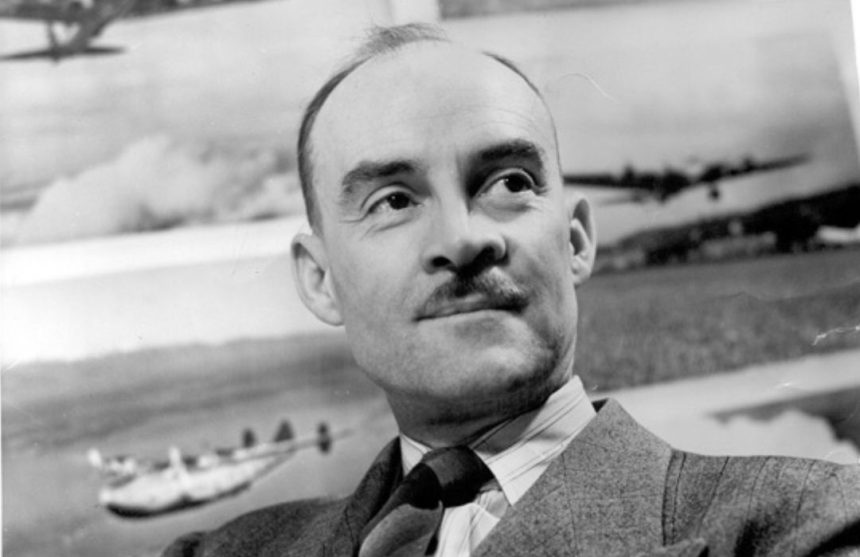

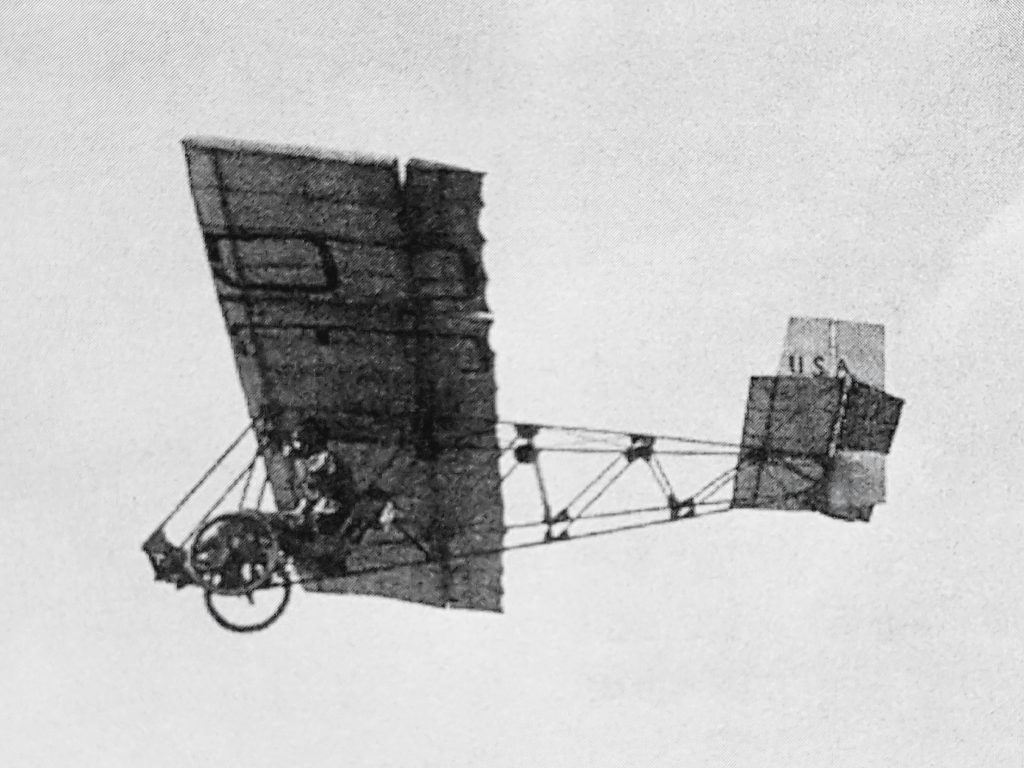
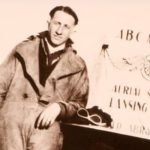
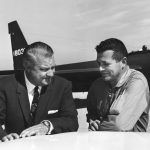
The rise of aviation is possible not only because of scientists or engineers, but also because of test pilots, the ones who fly a particular aircraft for the first time and then countless times in trials. That’s a risky job because flying an aircraft that hasn’t been proven yet may end in failure. But there were and are pioneers who risked their lives to test aircraft, and one of those pioneers was Edmund Allen. During the first half of the 20th century, he flew for almost every major American aircraft company and conducted the first flights of some of the most famous planes in history. Born on January 4, 1896, in Chicago, Allen joined the US Army Signal Corps as a lieutenant when the United States entered WWI. He started as an instructor pilot but was later sent to a British flight test center in England to learn flight testing skills. Before the war ended, he returned to the US Army’s flight test center at McCook Field in Ohio to use his flight experience and what he learned abroad. After the war, Edmund Allen became the first test pilot for the National Advisory Committee for Aeronautics (NACA) at Langley Field in Virginia. He then studied aeronautical engineering for two years at the Massachusetts Institute of Technology. In 1922, Edmund Allen designed and built the Allen AES-1 and Allen AES-2 gliders in New York with E.P. Warner and Otto C. Koppen. From 1923 to 1925, he worked as a freelance test pilot and later became a civilian test pilot at McCook Field.
From July 1925 to mid-1927, Edmund Allen flew de Havilland DH-4s as an airmail pilot for the Post Office Department. He navigated the challenging Rocky Mountain routes between Cheyenne and Salt Lake City, often in tough conditions. On September 1, 1927, after the Post Office stopped flying mail, Allen joined Boeing Air Transport. He flew Boeing 40As on their new route from Chicago to San Francisco. Over the next five years, he focused increasingly on test flying, particularly for Boeing Airplane Company. In 1929, Edmund Allen trained with several pilots, including Melvin N. Gough and William H. McAvoy, in stability and control research. Allen, as a freelance test pilot, flew different aircraft from famous manufacturers like Boeing, Douglas, and Northrop. He piloted the Boeing Model 83, Northrop Alpha, Boeing Monomail, Northrop Beta, Northrop Gamma, Stearman 80, Douglas DC-2, North American NA-16, Sikorsky S-43, Spartan Executive, Sikorsky XPBS-1, Boeing XB-15, Boeing 314 Clipper, and Boeing 307 Stratoliner. Additionally, Edmund Allen test-flew the Douglas DC-1 and the Consolidated XPB2Y-1. In April 1939, Boeing appointed Allen as the head of the Research Division. He was responsible for all flight testing, aerodynamics, and wind tunnel research. In this role, he conducted the first flights of the Boeing Stearman X-100, Boeing XPBB Sea Ranger, Boeing B-17B through B-17F, and Boeing XB-29 Superfortress. Even though he worked at Boeing, the Army Air Forces selected Allen for the first flight of the Lockheed C-69 Constellation on January 9, 1943. Edmund Allen also flew the first flight of the Curtiss-Wright CW-20 on March 26, 1940.
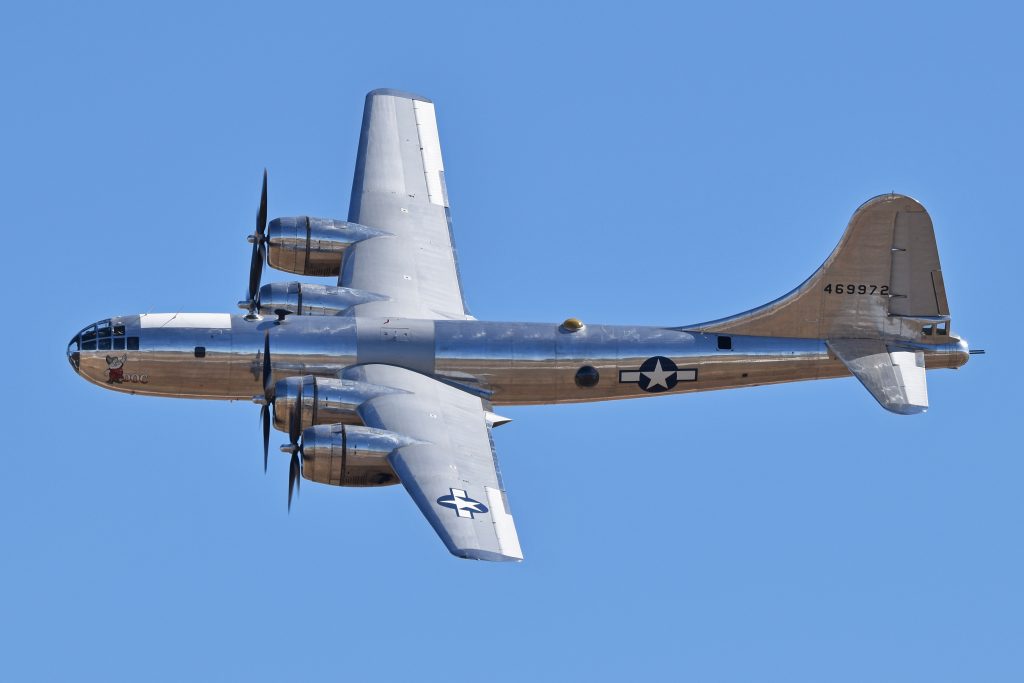
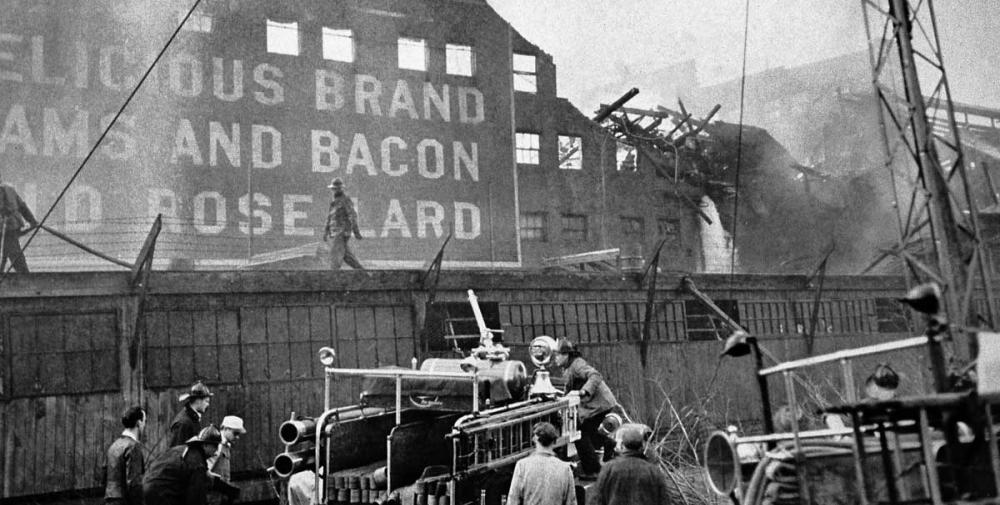
In 1940, Lockheed built a wind tunnel that matched the size and speed of the University of Washington’s wind tunnel. Boeing recognized the need for its own wind tunnel and decided to mimic Lockheed’s design. Theodore von Kármán stepped in and suggested that Boeing’s wind tunnel be designed for speeds near the speed of sound. Edmund Allen supported this idea and got approval to build the wind tunnel, even though it was estimated to cost $1 million. Building the Boeing Transonic Wind Tunnel allowed Boeing to create important designs like the B-47 Stratojet and the 367-80. As the United States joined WWII, Boeing received a contract to build the B-29 Superfortress, one of the most advanced airplanes of the war. On September 21, 1942, Edmund Allen flew the first XB-29 on its test flight and served as the program’s chief pilot. The second prototype flew for the first time on December 30, but this flight had to end early due to a serious engine fire. On February 18, 1943, the second prototype experienced another engine fire. Two crew members jumped out of the plane as it approached Boeing Field, narrowly missing downtown Seattle skyscrapers. However, their parachutes did not open in time, and they died. The aircraft crashed into the Frye Packing Plant just before the runway. In this accident, Edmund Allen, eight other crew members, and 19 workers at the meat-processing factory were killed. While fighting the fire at the packing plant, a city fireman was overcome by smoke and died, bringing the total number of deaths to 29. As one of the Pioneers of Aeronautical Engineering, Edmund Allen was a real lover of flying and helped US aviation reach where it is today by maturing almost all of the early aircraft. Read more such articles HERE.
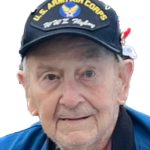






After my Dad, George F. Ellenberger, graduated from highschool in 1938, landed a job at the Boeing Aircraft Company. He had a pretty cool job of assembling and testing machine-guns that were then mounted on the planes the company built. He would build the guns, test them on the ground, and then fire them in the air during test flights.
On the morning of February 18, 1943, Dad was preparing to go up on a test flight with the famous Eddie Allen. Just before he was about to board the plane, an engineer who had never been on a test flight before decided he was going to use his authority as a flight engineer to bump Dad off the plane. “Yes sir. Whatever you say.”
It took a while for Dad to get back to the staging shack where crew assembled for work assignments. He walked in and everyone just stared at him like they’d seen a ghost or someone returning from the dead. Dad didn’t know about the crash and his buddy’s thought he’d gotten on the doomed flight.
The rest is history.