






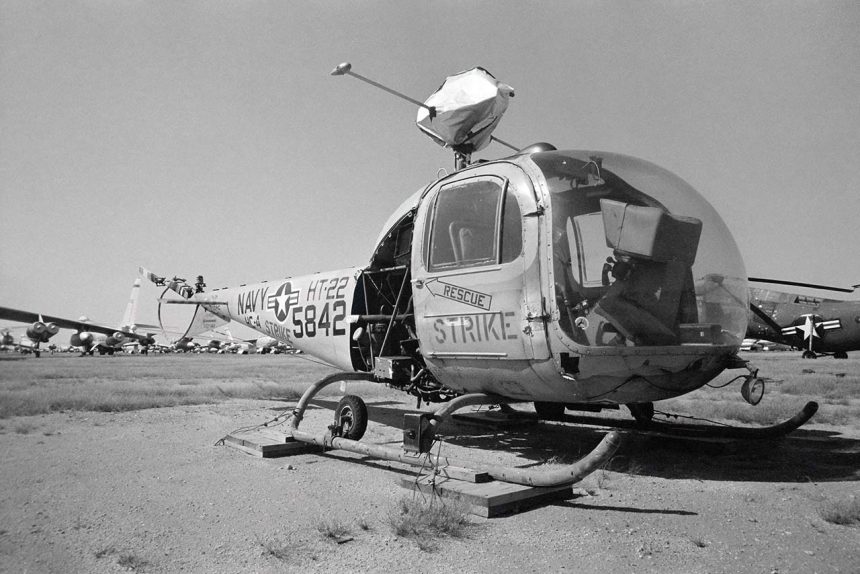

As we continue the Boneyard Files series, which showcases some of the retired aircraft resting at Davis-Monthan Air Force Base in Tucson, Arizona, in the late 1960s, today’s story features the Bell HTL-7 through the lens of Neil Aird’s “Monthan Memories” photos. The Bell 47 was a light single-rotor, single-engine utility helicopter manufactured by Bell Helicopter. It was based on the third prototype of the Bell 30, which was the company’s first helicopter designed by Arthur M. Young. The Bell 47 was the first helicopter in the world to be certified for civilian use on March 8, 1946. The first delivery to a civilian customer took place on December 31, 1946, to Helicopter Air Transport.
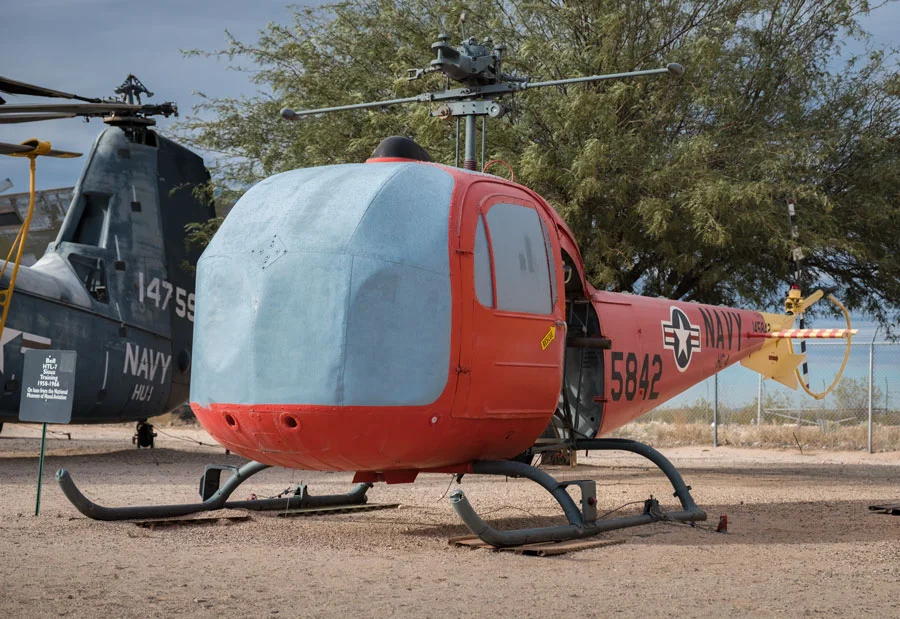
The military showed strong interest in this aircraft, and the first military models flew in December 1946. All branches of the US military and many foreign countries used the Model 47. The Bell HTL-7 was the Navy’s training version of the Model 47J. The first HTL-7s were delivered in 1958, and a total of eighteen were built. In 1962, they received a new designation as TH-13N. With a crew of two, the Bell HTL-7 was 43.4 feet long, 9.4 feet high, and had a main rotor diameter of 37.2 feet. Its loaded weight was 2,800 pounds. The Bell HTL-7 was powered by a Lycoming O-435-6 engine producing 240 horsepower. The maximum speed of the helicopter was 105 mph, the service ceiling was 13,000 feet, and the range was 210 miles. The US Navy and Coast Guard used a total of eight Bell HTL-series helicopters. The HTL helicopter, used in different roles, played an important role during the Korean War. Equipped with two covered litters on skids, Marine Corps HTLs helped save many lives by evacuating wounded soldiers to aid stations. Helicopters from all services airlifted almost 40,000 injured personnel. An example of the pilots’ dedication happened on April 23, 1951, when a sudden offensive required all HTLs of Marine Observation Squadron (VMO) 6 to act quickly. They evacuated fifty critically wounded Marines from the battlefield, and one pilot flew continuously for 9.7 hours.
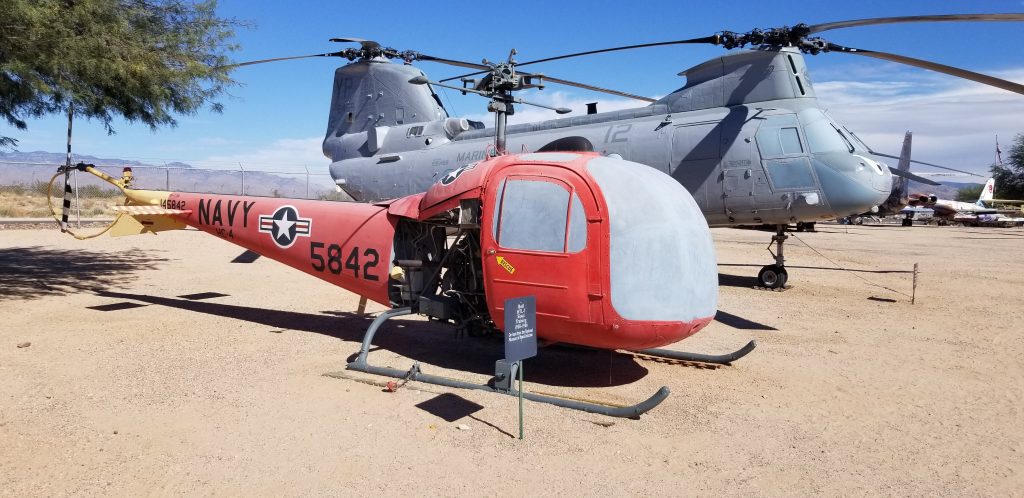
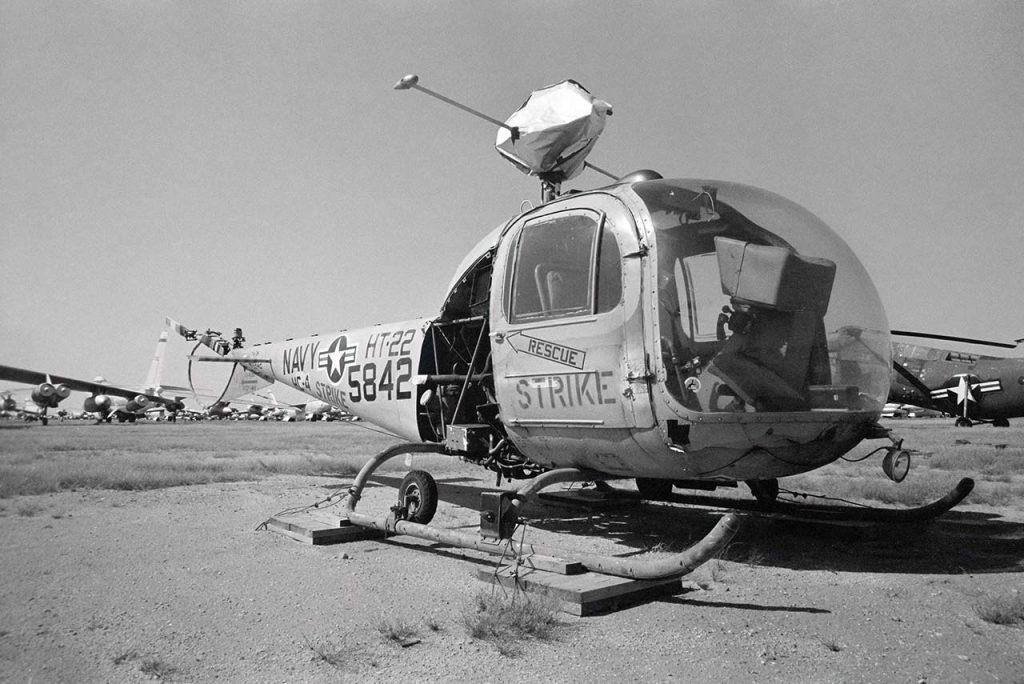
The HTLs served not only in battles but also operated from ships that supported the Navy and Coast Guard in the Arctic and Antarctic regions. Until the 1960s, these helicopters were used at Naval Auxiliary Air Station (NAAS) Ellyson Field in Florida for training purposes. In addition, some Apollo astronauts trained on them to become familiar with the helicopter’s autorotation sink rate. The training was believed to be useful for simulating the Lunar Module’s landing on the Moon. President Dwight D. Eisenhower briefly used the HTL helicopter for short trips. He chose it to travel between Washington, D.C., and places like Camp David, the presidential retreat in Maryland, as well as his summer home in Rhode Island. In August 1962, the Navy loaned two float-equipped Bell HTL-7 aircraft to the Coast Guard. One of these helicopters was assigned to cutters. They served with the Coast Guard until October 1968, and two months later, both were stored at the Military Aircraft Storage and Disposal Center in Davis-Monthan Air Force Base, Arizona. The US Navy also retired the Bell HTL-7s by mid-1960s, after which they were sent to Davis-Monthan Air Force Base, known as “The Boneyard.” Read more Boneyard Files Articles HERE.







I rode in an open cockpit, belt driven copter once at a county fair. That’s all.
The HTL-7 had never been used a Presidential Support Helicopter. The only military version of the Model-47 that flew as a Presidential Support Helicopter, was the H/VH-13J flown by the USAF. The US Navy DOES NOT have the Presidential Helicopter Transport mission, at all, instead, the USMC has that mission, through HMX-1.Please, go back and recheck your information.
John, you have been wrong quit often lately… https://www.usni.org/magazines/naval-history-magazine/2014/june/historic-aircraft-little-birds