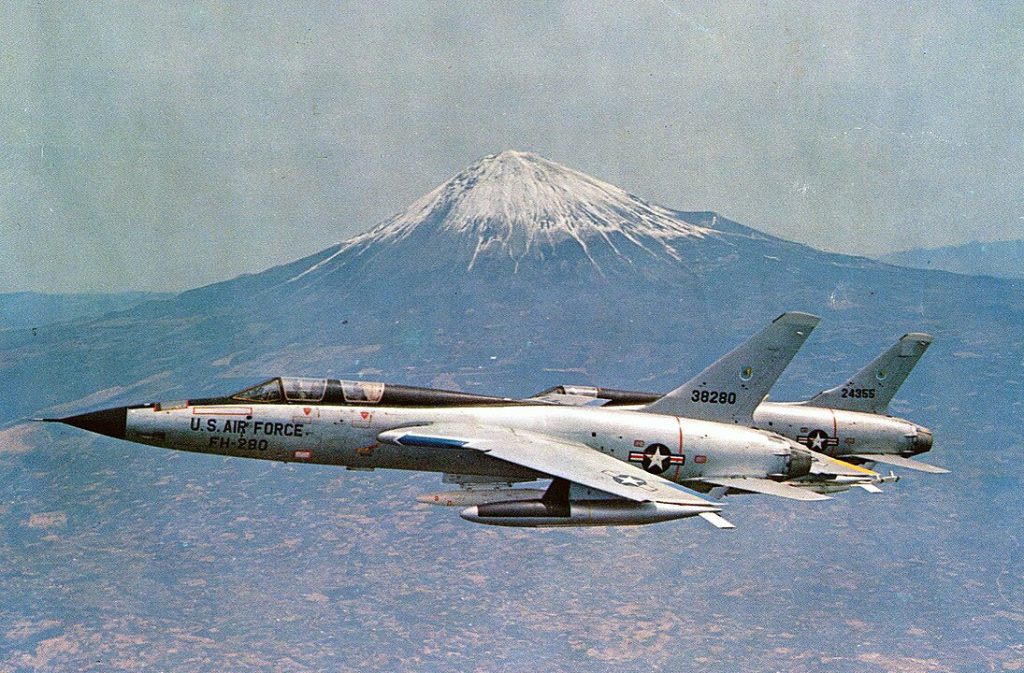

By the late 1950s, the problem facing military aviation was no longer how to break the sound barrier. That had already been done. The real question was whether an operational aircraft could fly fast, low, and far while carrying a meaningful weapon load, and still remain controllable in dense air close to the ground. Speed at altitude was an achievement. Speed near the terrain was a requirement. The Republic F-105 Thunderchief was built for that requirement. It was not intended to be a nimble dogfighter. It was designed as a large single-seat strike aircraft that could carry a nuclear weapon deep into defended territory at supersonic speed and return without escort. Everything about its shape reflected that mission, including its fuel capacity, internal weapons bay, and a fuselage built around one of the most powerful engines available at the time.
Before the Thunderchief ever flew, researchers had already discovered that many early jet aircraft slowed near the speed of sound. The engines were strong enough, but the air resisted them, and drag rose heavily as shock waves formed along the fuselage and wing roots. At NASA’s Langley Research Center, aerodynamicist Richard Whitcomb solved this problem. Instead of treating wings and fuselage as separate parts, he considered the aircraft as a continuous volume moving through the air. If the cross-section changed too suddenly, drag increased. If the change remained smooth, the drag rise diminished. The practical result was the “area rule.” Aircraft gained a familiar, narrow waist near the wing, or, in some cases, a bulged aft fuselage, producing what pilots later called the “coke-bottle” shape. The F-105 Thunderchief adopted this approach, and its complex intake geometry prevented narrowing at the wing root, so designers added volume behind the wing to smooth airflow.
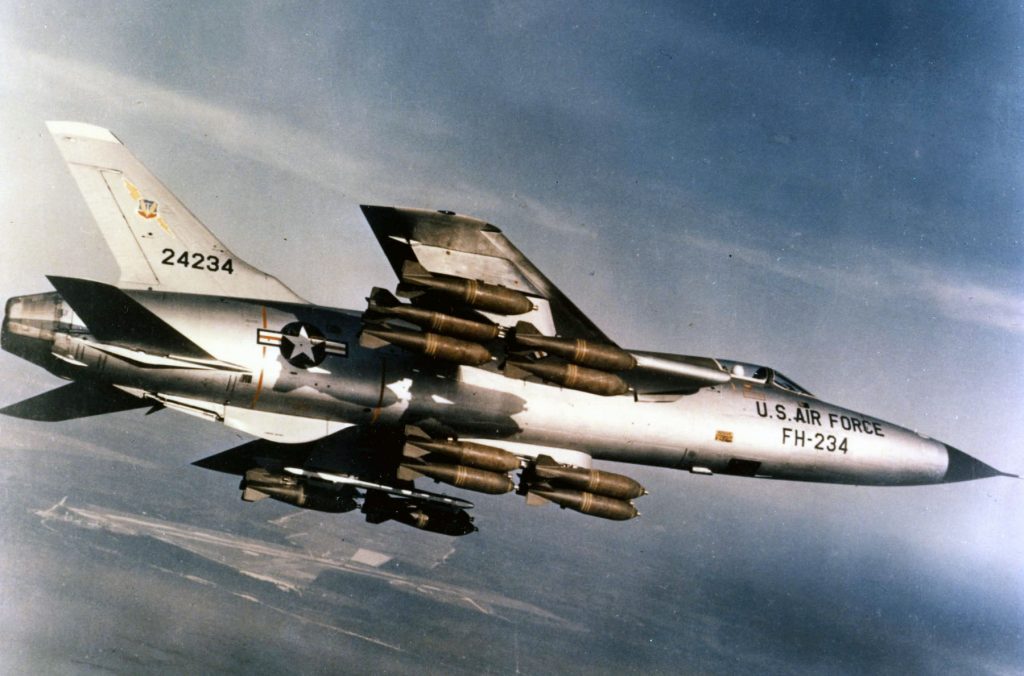
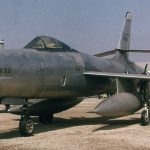
The Republic F-105 Thunderchief became the first supersonic tactical fighter-bomber developed from scratch. The early F-105B variant introduced the Pratt & Whitney J75 engine and refined the intake shape to manage shock waves. Only seventy-five were built, but they established the handling characteristics of the type. The wing was highly swept and incorporated low-speed ailerons and high-speed spoilers for lateral control, and a droop-snoot leading edge. Later versions evolved toward operational service. In subsequent variants, the aircraft was fitted with mono-pulse and Doppler radar for night or bad weather operations. The original weapons bay, designed for nuclear stores, was sealed and fitted with additional fuel tanks to boost range. Bombs were carried on multiple weapons racks on the centerline of the fuselage and on wing pylons. The aircraft was also fitted with a retractable in-flight refueling probe.
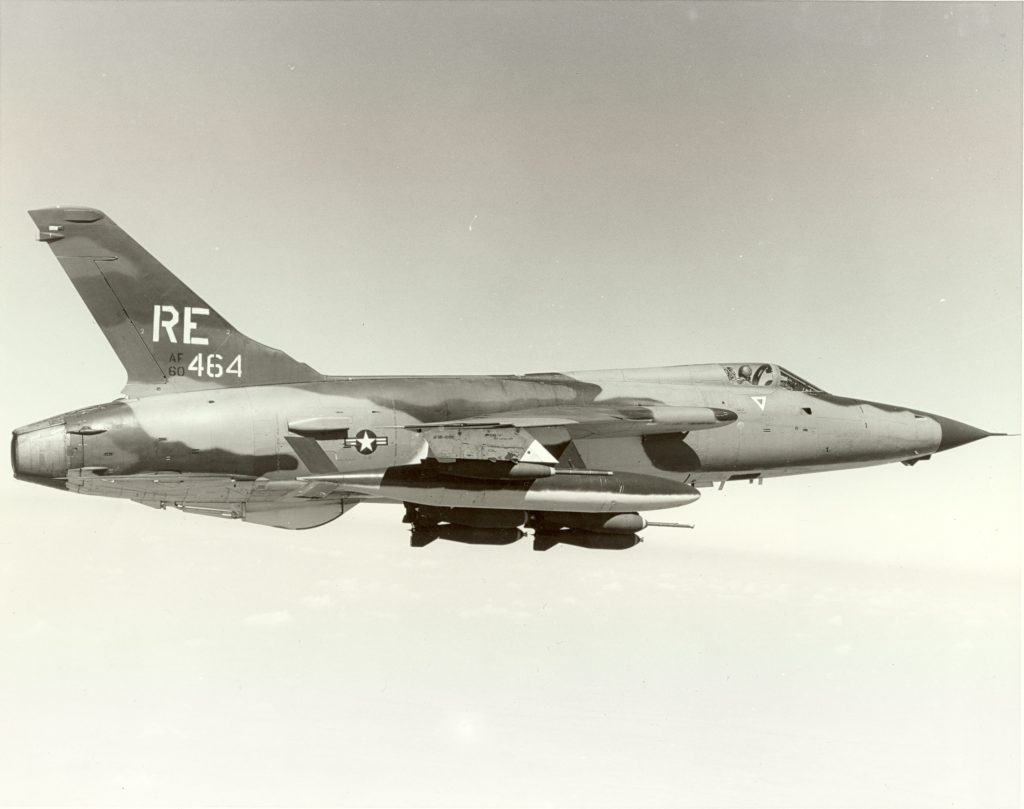
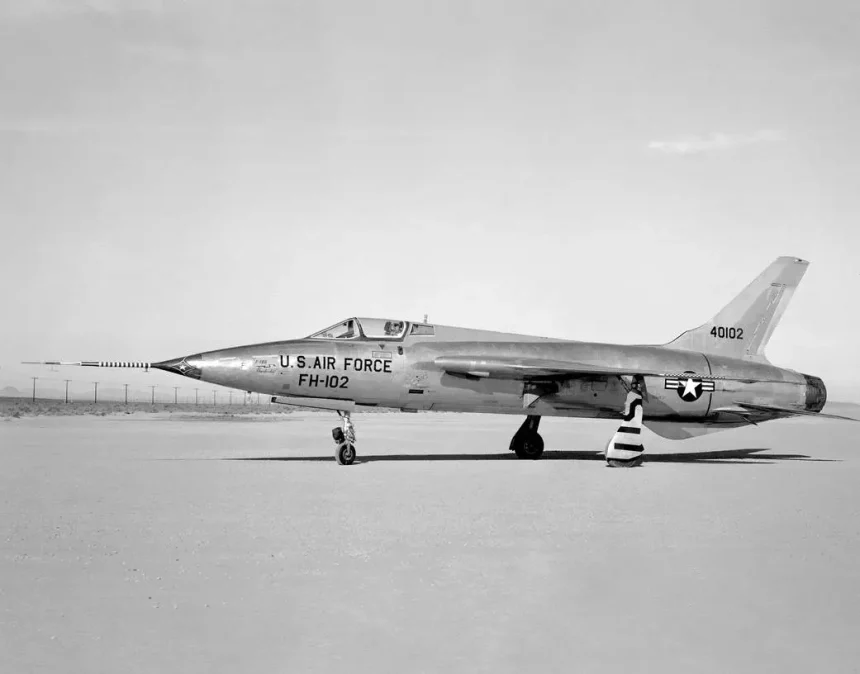
In October 1959, one F-105B arrived at the High-Speed Flight Station at Edwards Air Force Base. It stayed only three months and flew just three flights, as the purpose was not a full research program. The pilots needed familiarity with a new type that represented the next generation of high-speed operational aircraft. But those flights mattered from a research perspective. The Century Series fighters were pushing into a flight regime where stability, control response, and pilot workload changed rapidly with speed and altitude. The Thunderchief was large, heavy, and designed for high dynamic pressure at low altitude. Understanding how it behaved helped researchers compare theoretical expectations with what a service pilot would actually experience. The aircraft operated over Rogers Dry Lake, where its handling and aerodynamic characteristics could be observed without operational constraints.
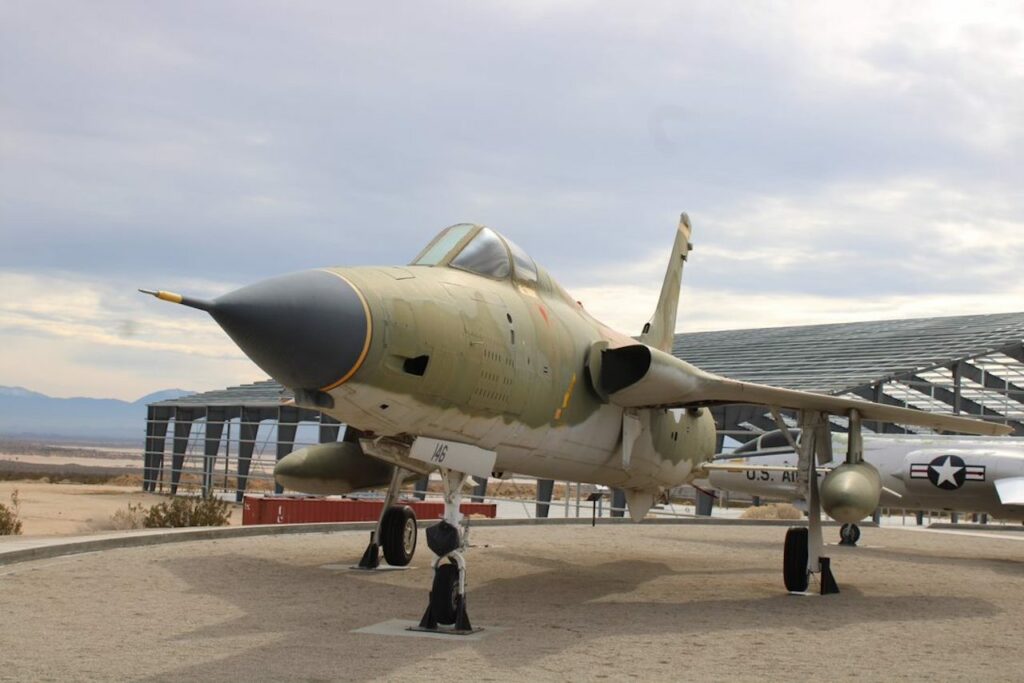
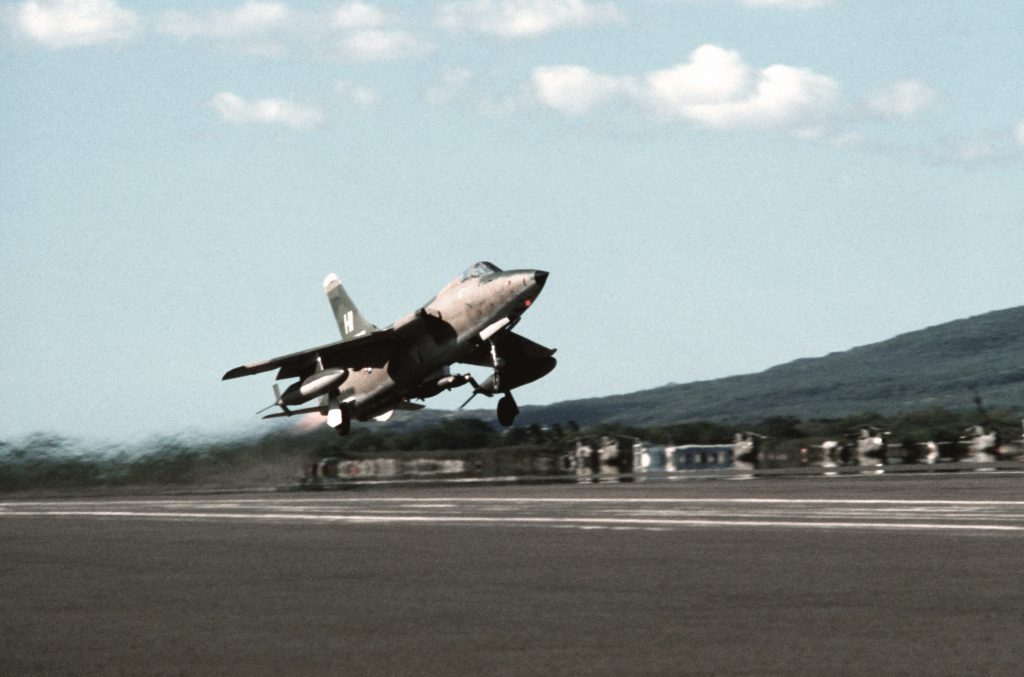
The Thunderchief entered service in 1958 and was later heavily used in Southeast Asia. Its design fit the demands placed on it as missions often required sustained low-altitude flight through dense air defenses, exactly the environment the aircraft had been built to survive. The airplane’s nickname, “Thud,” reflected its size more than its performance. It was one of the fastest aircraft at low altitude in its time. The same aerodynamic shaping that solved transonic drag also allowed practical supersonic flight while carrying substantial ordnance. The Thunderchief appeared at Edwards only briefly, but it helped NASA pilots familiarize themselves with the characteristics of the aircraft. The earlier experimental programs proved that supersonic flight was possible, and the F-105 research flights ensured that the people flying it understood how a very fast airplane behaved when brought down to the altitude where war was actually fought. The F-105 did not introduce a new scientific principle, but it confirmed that a principle could carry weight, fuel, and a pilot across long distances at supersonic speed close to the ground. Check out our previous Flight Test Files articles HERE.