






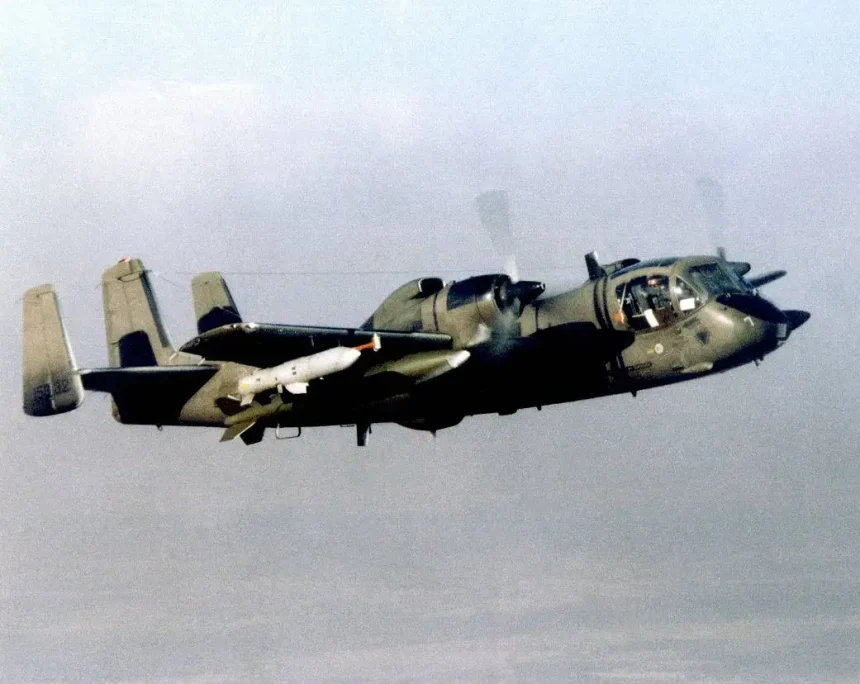

In the early 1980s, a rugged Army surveillance aircraft found itself serving a very different purpose. Instead of scanning jungles or border zones, one Grumman OV-1C Mohawk was helping engineers understand when an airplane is about to stall, and how best to warn a pilot before it happens. The aircraft, serial number 67-15932, was used in a joint program between NASA and the US Army Aviation Engineering Flight Activity. The goal was to design an automated stall-speed warning system that did not just warn the pilot, but showed in real time how close the airplane was to the edge of lift. NASA engineers built a system that calculated both airspeed and actual stall speed continuously during flight. Instead of relying on a fixed number painted on a dial, the system watched the airplane itself. It monitored dynamic pressure, horizontal and vertical accelerations, pressure altitude, elevator and flap positions, engine torque, and fuel flow. From these inputs, it computed stall speed as it changed with weight, configuration, and maneuvering.
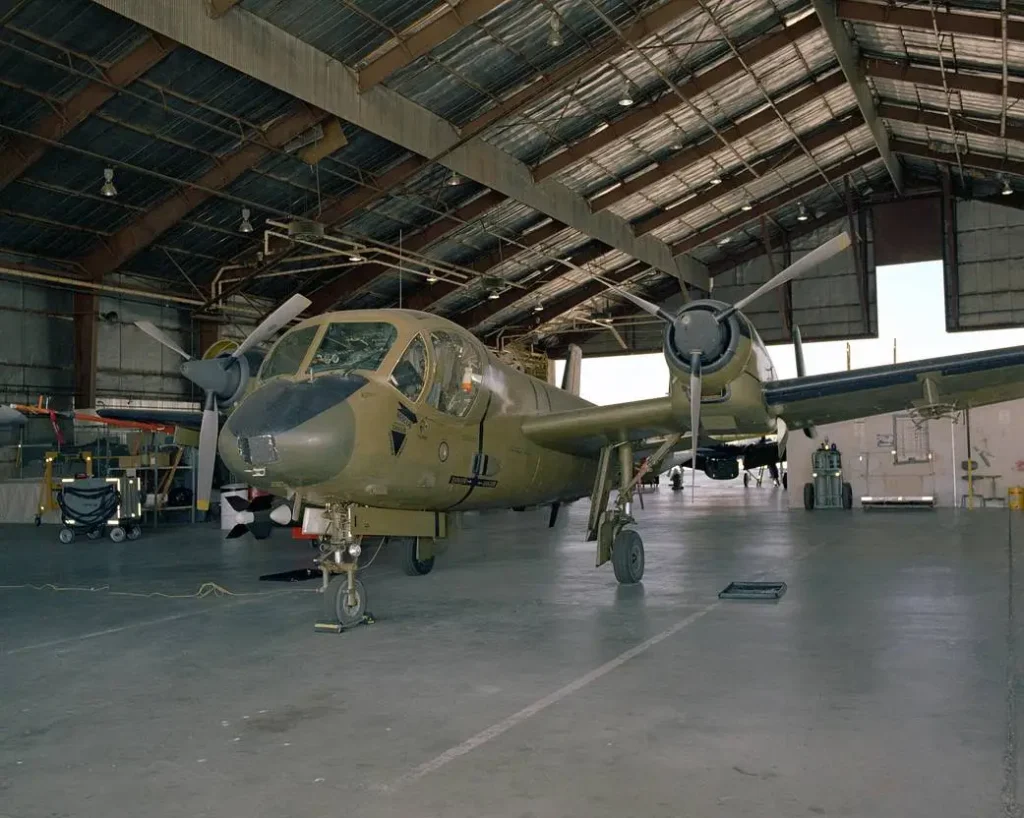
The result was presented in a way pilots could immediately understand. On a conventional airspeed indicator, a moving cursor showed where the current stall speed lay relative to actual airspeed. As the margin narrowed, a voice warning sounded through a synthesizer. It did not shout, but simply told the pilot how close the airplane was to the limit. Once installed in the Mohawk, the testing moved quickly. Less than 20 hours of flight were needed to determine stall-speed coefficients. Army pilots flew the airplane from their own facility, not from NASA Dryden. After those coefficients were calculated, they were entered into the system’s software. Another 10 hours of evaluation flights followed. In a matter of weeks, a working, flight-tested system had been proven.
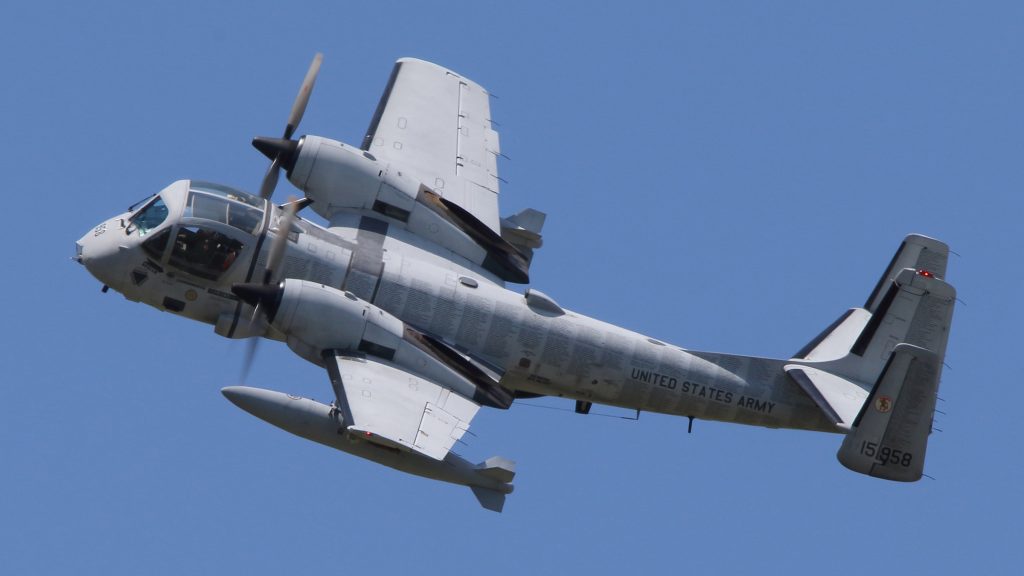
The Grumman OV-1 Mohawk was unusual from the beginning. After the US Army Air Forces separated in 1947, fixed-wing aircraft largely became an Air Force responsibility. The Mohawk was the exception. It was the only fixed-wing airplane specifically developed and built for the United States Army. The first prototype, designated YAO-1, flew on April 14, 1959. Production began later that year. A total of 380 Mohawks were built between 1957 and 1969. Of those, 133 were OV-1C variants, the “C” standing for the infrared-equipped reconnaissance model. The Mohawk was powered by two Lycoming T53-L-7 turboprop engines, each rated at 1,150 equivalent shaft horsepower. The twin engines gave it reliability and the ability to operate from short, rough fields. With the right conditions, it could clear a 50-foot obstacle in roughly 1,000 feet of runway. That meant dirt strips near forward units, not paved bases far to the rear.
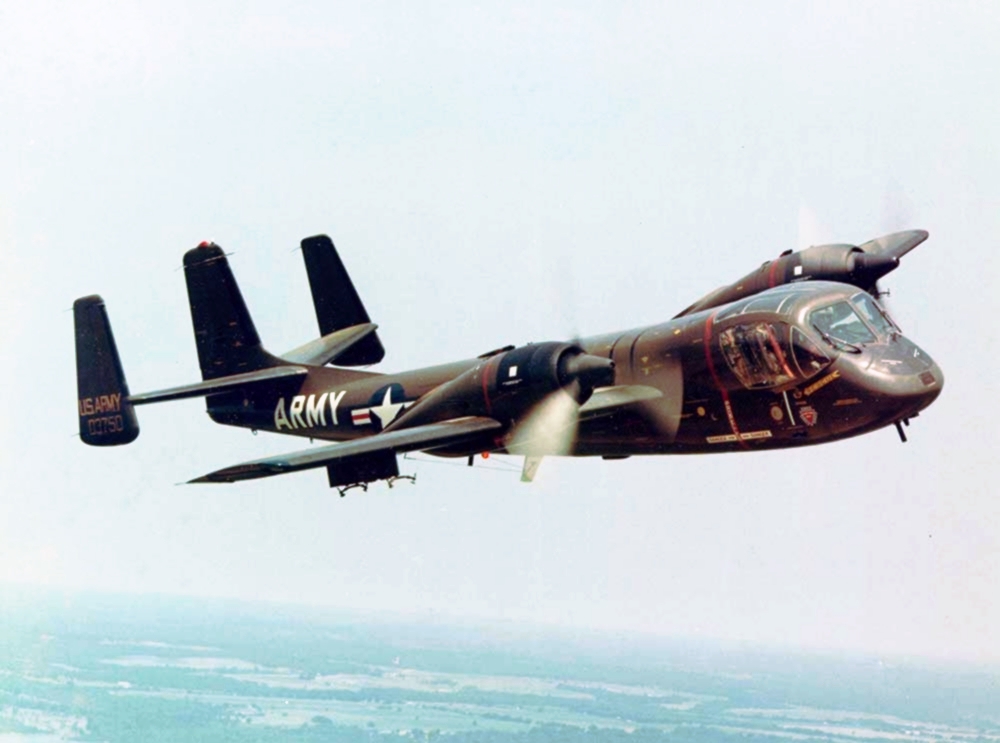
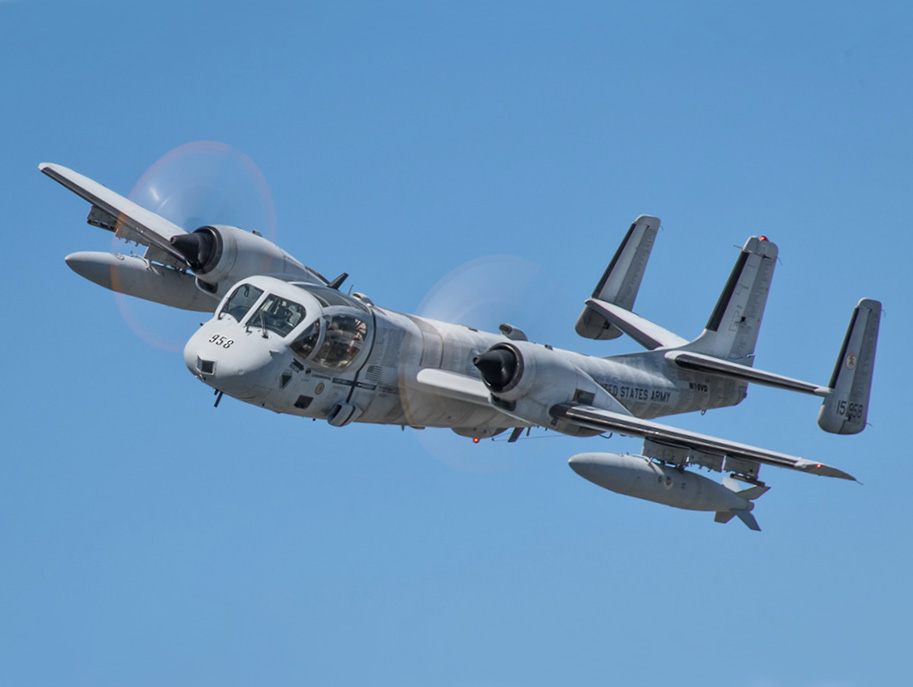
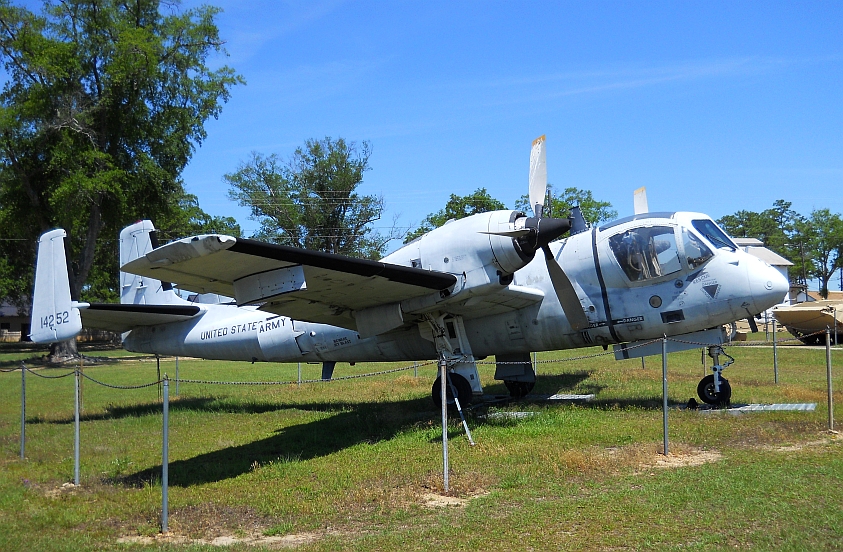
It was not a fast airplane by jet standards, with a maximum speed of about 308 miles per hour at 5,000 feet. But speed was never its main strength. Its strength was vision. The Mohawk was designed to fly low and close to ground forces. Its large bubble canopy and protruding side windows gave the two-person crew clear visibility in almost every direction, including directly beneath the aircraft. For artillery spotting and battlefield coordination, that mattered. The OV-1C went further. In the nose was a panoramic camera capable of scanning 180 degrees from horizon to horizon. In the belly was an infrared scanner that detected heat signatures. Fires, recently run engines, even the brief flash from a rifle discharge, could appear as a distinct thermal mark.
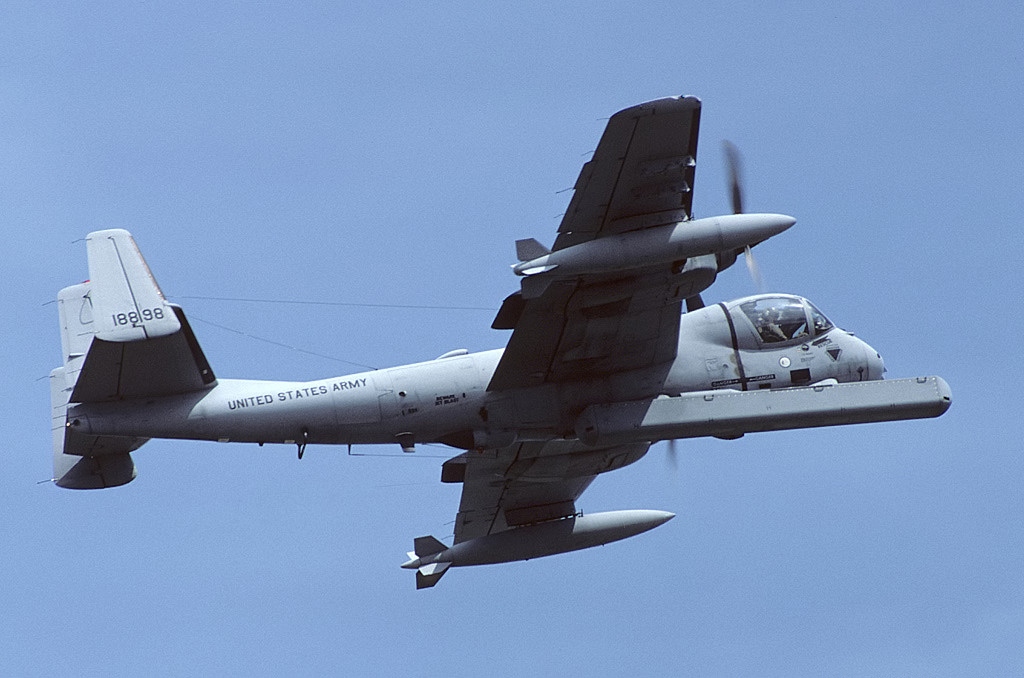
The sensors fed imagery to cockpit displays and recorded it on film for analysis on the ground. Long before digital full-motion video became routine, the Mohawk was already a multi-sensor surveillance platform. It combined human eyesight with infrared detection and photographic recording in one compact airframe. The aircraft served in Vietnam, in Europe, along the Korean Demilitarized Zone (DMZ), and later during Desert Shield and Desert Storm. In Korea, monitored activity along the DMZ until satellite systems became dominant. By the time NASA and the Army selected the OV-1C for stall-warning research, it had years of experience on the battlefield. It was the kind of aircraft where stall margin awareness could mean the difference between a safe recovery and a loss at low altitude.
The joint program did not turn the Mohawk into a research showpiece. It remained a working military airplane. But for a short period in the early 1980s, it carried a system that could become the next step in cockpit awareness. Instead of relying only on training and instinct, pilots were given real-time information about the relationship between lift and speed. The program demonstrated that stall speed could be computed dynamically, and contributed to a shift toward smarter cockpit systems in the 1980s. The Mohawk continued flying with the Army until September 1996. Many airframes went to museums or National Guard units before retirement. The OV-1C Mohawk was not sleek, and it was not supersonic, but it watched battlefields, and it helped engineers refine how an airplane warns its pilot that lift is running out. In that sense, the Mohawk’s legacy was not just in what it could see outside the cockpit, but in what it could reveal about the air flowing over its own wings. Read our previous Flight Test Files articles HERE.








Serial was 68-15932 not Fy67