

By the late 1950s, the Soviet Union already had a fighter that seemed suited to its time. The MiG-21 was small, very fast, and simple enough to build in large numbers, which mattered more than comfort or long range. In 1959, the aircraft passed trials, and factories prepared to mass-produce it. But even as production began, engineers at the Mikoyan bureau were already thinking about the future because the MiG-21 was becoming an old design. Fighters were pushing toward Mach 2, and at those speeds, a pilot’s eyes mattered less than radar. The MiG-21’s nose intake, once a clever solution, filled the exact space needed for a larger radar and more powerful electrical systems. At even higher speeds, the long intake duct also heated the fuselage unnecessarily. So the designers chose a solution that felt unusual for a MiG at the time. They moved the air intake away from the nose.
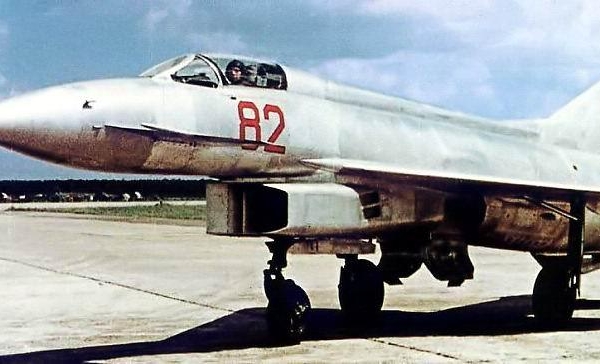
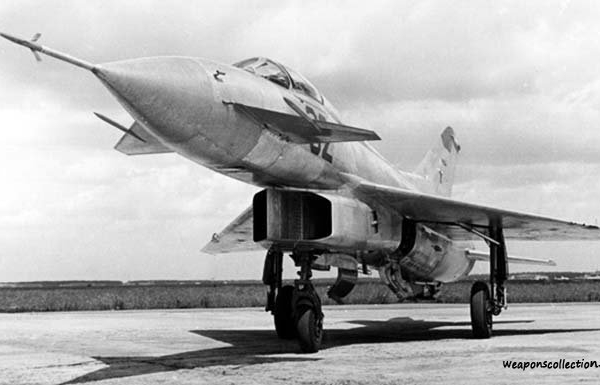
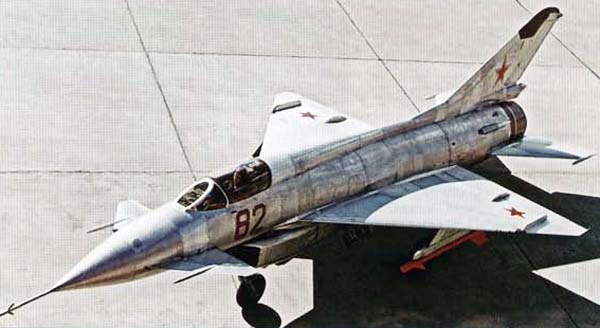
In early 1960, a new aircraft began to appear under the internal designation Ye-8. At first, it was described as an improved MiG-21, and for a short time, it even carried the future name MiG-23, but as the design developed, it could not meet the family resemblance criteria. The air intake moved under the cockpit, leaving the nose free for a larger radar, and small foreplanes appeared ahead of the wings to help the aircraft turn at high speed. The goal was to develop a light front-line fighter able to fight day or night, in any weather, against targets ahead or behind, at Mach 2 speeds. But the design was unusual, as earlier Soviet fighters valued stability because they were easier to aim. However, at supersonic speed, too much stability limited maneuvering. By reducing it, lift at around Mach 1.5-2.0 could nearly double, and the aircraft could pull higher g-loads, about twice that of a MiG-21.
Powerful Engine of Ye-8
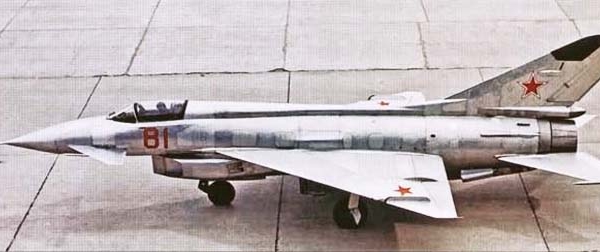
The new airframe required more thrust than the existing Tumansky R-11 engine powering the MiG-21, but the size needed to remain the same to convert Ye-8 into a mass fighter. Engineers therefore evolved the design into the R-21F-300, extracting performance through incremental increases in airflow, compression ratio, and temperature rather than size. On paper, it achieved an afterburning thrust beyond 7,000 kgf (15430 lbf), and the thrust-to-weight ratio approached unity. By early 1962, the first prototype was rolled out by test pilot Georgy Mosolov. The aircraft flew for the first time on April 17, 1962. The Ye-8 performed well at an altitude of 33,000 feet in its first flight. For a moment, the concept looked successful, but soon it started to fall apart.
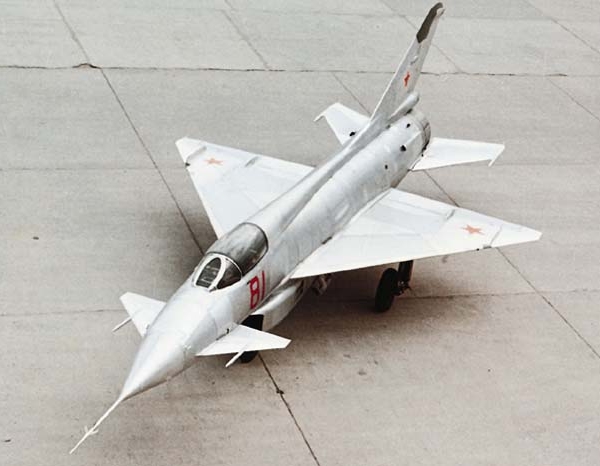
Because the intake control system was still experimental, Mosolov had to move the inlet wedge himself according to a planned schedule while also flying an aircraft he was only beginning to understand. On the fifth flight, the engine surged and quit, and he restarted it in the air. It happened in the coming test flights as well. As the aircraft surged, the engine stopped, and Mosolov had to restart, each time with a sharp temperature rise that forced him to cut the fuel immediately to keep the turbine from burning out. Engineers then tried to help by reshaping the inlet, adding straightening vanes, and refining the control settings. The aircraft kept flying and, despite the problems, it accelerated well, handled acceptably, and turned better than the MiG-21. However, by the 25th flight, the heat had discolored the engine bay, and the only way out was to enlarge the turbine nozzle, which reduced thrust but allowed testing to continue. Then, on September 11, 1962, during another high-speed run around Mach 1.7 to 2, the compressor disk broke apart in flight.
The Compressor Issue
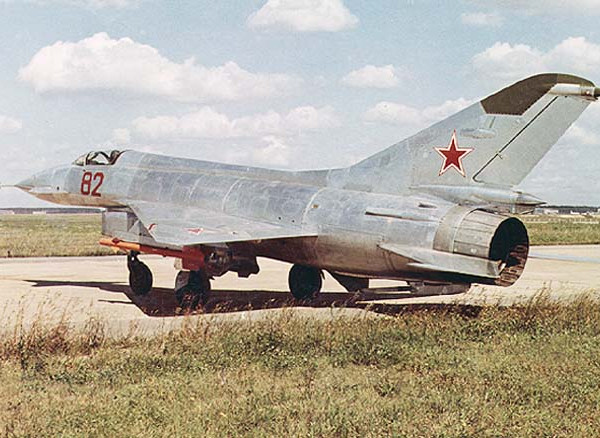
Pieces of the compressor cut through the engine casing, passed into the fuselage, and ripped part of the wing apart. Both hydraulic systems failed at once, and the aircraft began falling out of control. Mosolov stayed with it, waiting for the speed to drop below the canopy’s safe ejection limit while the airplane rolled and pitched. Only then did he leave the cockpit. He survived, badly injured, and after months in hospital, his flying career was over. The second prototype had flown for only a short time, and after the accident, the program stopped. Officially, the reason was reliability, even though the performance itself had looked promising. The design bureau moved on, and the MiG-23 name was later given to a completely different aircraft with variable-geometry wings. Still, much of the Ye-8 did not disappear. The large radar nose, the idea of a ventral intake, the parachute arrangement, parts of the weapons system layout, and even internal fuel concepts all appeared later in improved MiG-21s and in the production MiG-23.
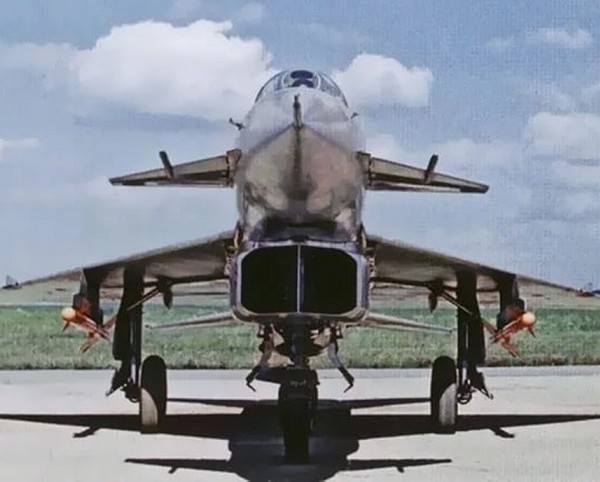
In engineering language, the Ye-8 failed because the engine demanded a level of compressor reliability that the technology of the moment could not provide. In a historical sense, it failed because it tried to push a familiar fighter design into a new generation all at once. It neither became an updated MiG-21 nor qualified to be a MiG-23. The airplane flew only for a short period, but the purpose of the work was still met. It showed that combat would depend more on radar and missiles than on eyesight, that maneuverability at high speed sometimes required giving up traditional stability, and that air-intake design would become one of the biggest problems of supersonic fighters. Future aircraft went on to utilize those ideas, but nobody remembered Ye-8. Like many other aircraft in the Grounded Dreams series, the Ye-8 never entered service, yet it helped shift fighter design away from nose-intake limitations and shaped the next decades of aviation engineering. Check out more Grounded Dreams articles HERE.