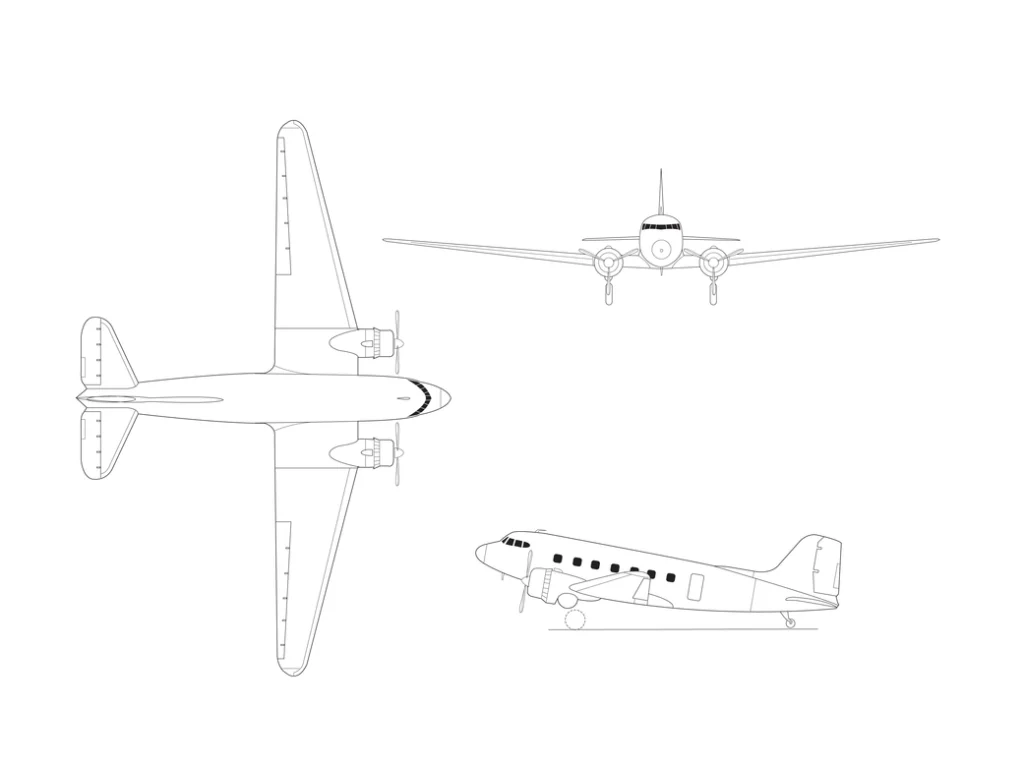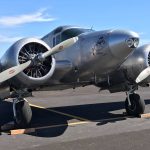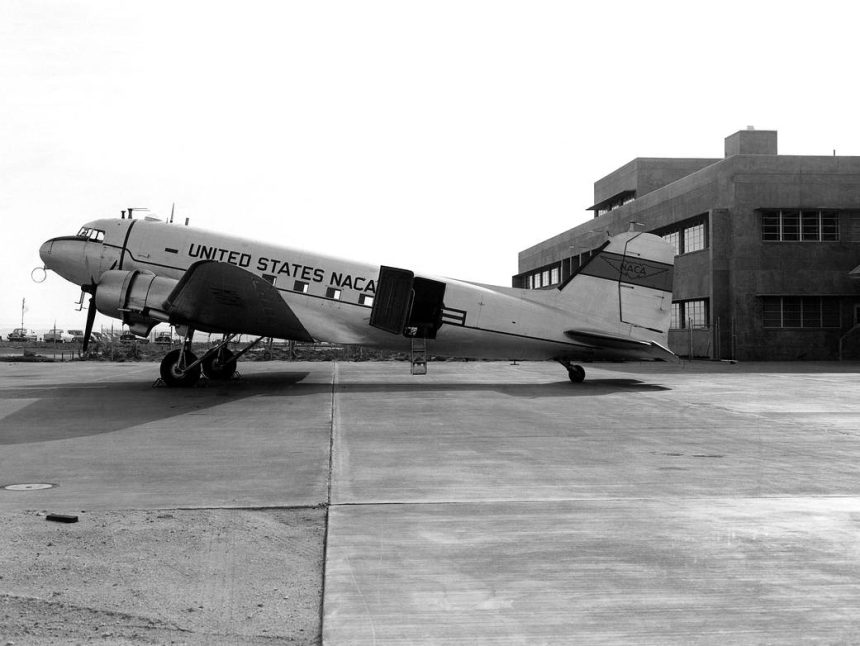

In the 1940s, the US needed an aircraft capable of transporting troops, cargo, and wounded personnel. The solution was the R4D Skytrain, based on the Douglas Aircraft Company’s DC-3 civilian airliner. Designated the R4D by the US Navy, the aircraft was called the C-47 by the US Army and US Air Force, and the DC-3 by its builder, Douglas Aircraft. The aircraft was more popularly called “Gooney Bird” by everyone. With a crew of three, the aircraft could carry a payload of 6,000 pounds. It used two Pratt & Whitney R-1830-90C, each producing 1,200 horsepower. The aircraft was 63.9 feet long, 17 feet high, with a wingspan of 95.6 feet. Its empty weight was 18,135 pounds, and the loaded weight was 26,000 pounds. The aircraft’s maximum speed was 224 mph at 10,000 feet, with a cruise speed of 160 mph. Its range was 1,600 miles, and its service ceiling was 26,400 feet. More than 10,000 R4D/C-47s were built for the US military during World War II, and the aircraft was used in nearly every mission since its first flight in December 1941. First used in Operation Husky, then in Operation Avalanche, the R4D/C-47s were termed the heroes of Operation Overlord, also known as the D-Day invasion, when more than 1,000 R4D/C-47s transported 23,000 paratroopers along the Normandy coast. Later operated in Operation Dragoon and Operation Varsity in World War II, the aircraft was used beyond World War II as well in Berlin Airlift, the Korean War, and even the Southeast Asian War. In January 1947, as part of Operation Highjump, the US Navy used jet-assisted takeoff (JATO) and skis on six R4D aircraft to take off from the USS Philippine Sea aircraft carrier. The US Navy installed JATO bottles (solid rocket motors) in the aircraft’s fuselage to provide extra thrust for short-run carrier takeoffs. It was the first time R4Ds flew from an aircraft carrier, which continued flying for the next several days to photograph the coastline, exteriors, and interiors of Antarctica. The ultimate mission was to take off from an aircraft carrier and land in Antarctica for exploration.
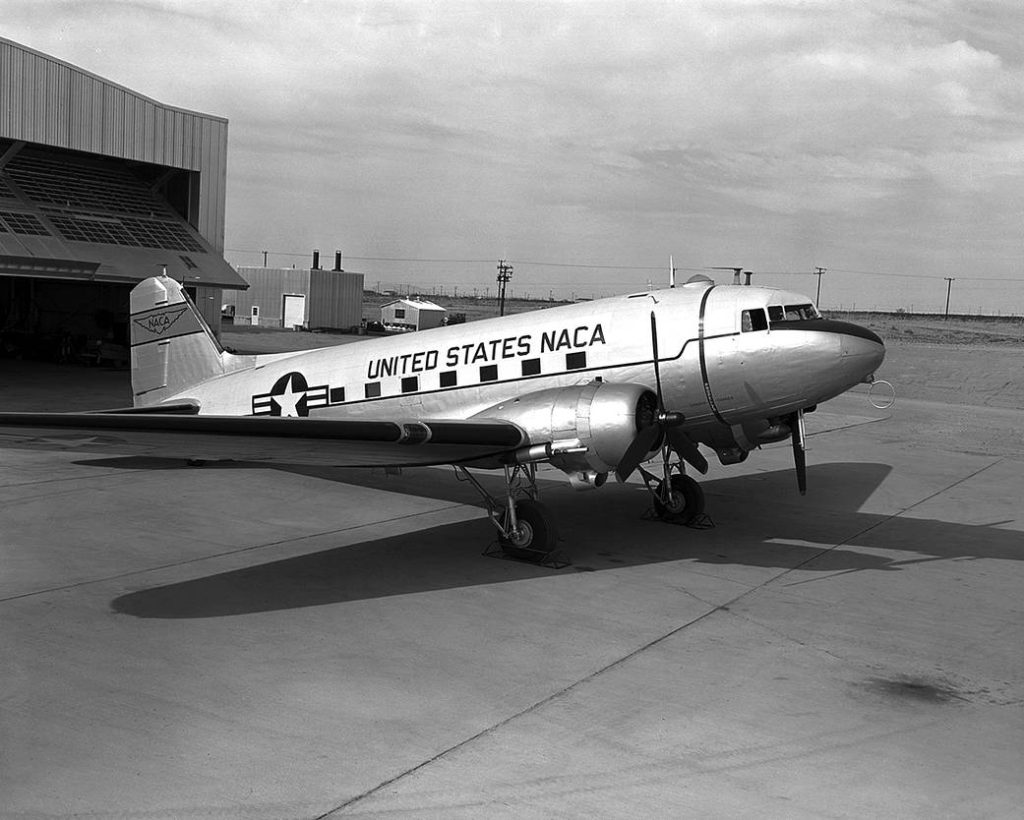
In the mid-1950s, a US Navy R4D Skytrain, named Que Sera Sera, made history when it landed at the South Pole on October 31, 1956, as part of Operation Deep Freeze. It was the first American landing on the pole and the first humans since Captain Robert F. Scott of the Royal Navy reached it in 1912. A lesser-known role of the R4D Skytrain aircraft was its time with NACA (now NASA). The R4D served at NASA for more than three decades from 1952 to 1984. The first R4D Skytrain arrived at the NACA High-Speed Flight Research Station (later called the Dryden Flight Research Center) from 1952 to 1956 and was part of at least one cross-country flight to the Langley Research Center in Hampton, Virginia. The second R4D, in service from 1956 to 1979, made many flights to the Ames Research Center in Mountain View, California, and other NASA locations before being retired and sold to Mississippi for state police use. The third R4D aircraft proved less reliable, resulting in maintenance issues. After an unplanned desert landing during a military exercise, it was sent to the Lewis Research Center in Cleveland, Ohio (now the Glenn Research Center). For 32 years, three R4D Skytrain planes shuttled personnel and equipment between NACA/NASA Centers and test sites across the country. Another goal of the aircraft was to land on “dry” lakebeds to check if their surfaces were hard enough for emergency landings of the X-15. The R4D was also used for the first “air tow” of the M2-F1, a lifting body made of mahogany plywood. The R4D towed the M2-F1 about 100 times before the M2-F1 was retired for more advanced lifting bodies that were dropped from the NASA B-52 “Mothership.” The R4D Skytrain also worked as a research aircraft. It helped with early studies on wing-tip-vortex flow visualization and checked out the NASA Uplink Control System.
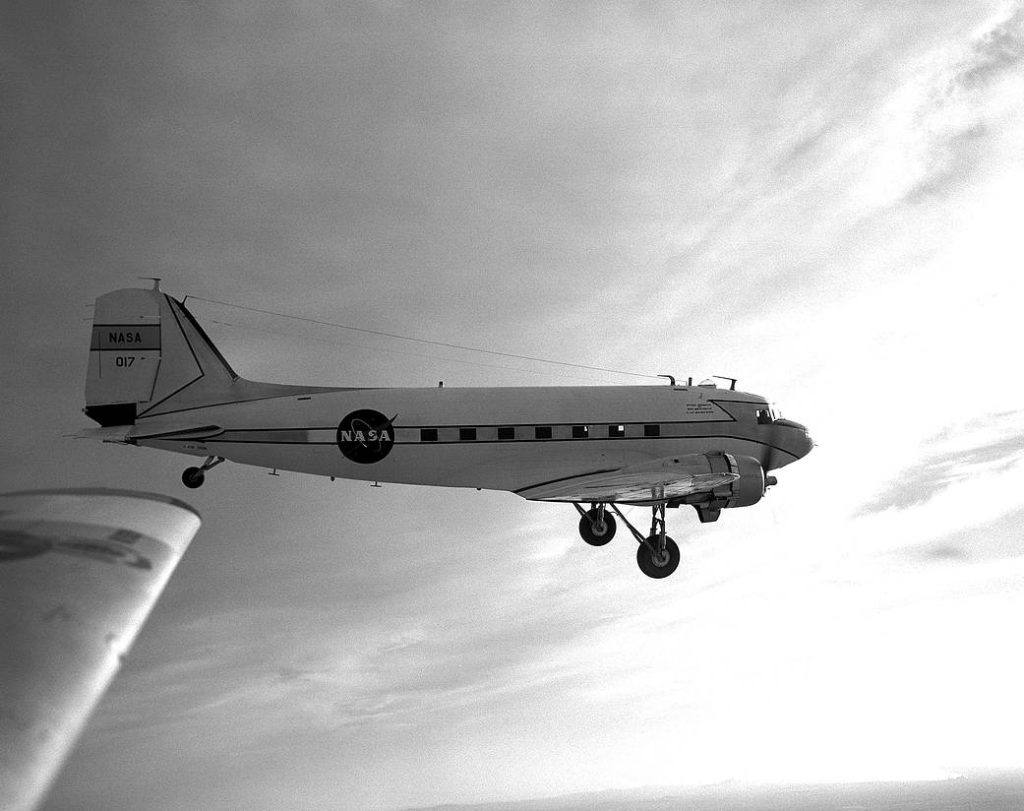
In 1962, the US Department of Defense changed how it named military aircraft. From then on, all R4D planes were called C-47s, and the R4D at NASA’s Flight Research Center, which was renamed the Dryden Flight Research Center in 1976, was also designated a C-47. Overall, the C-47, or R4D Skytrain, was part of the US military during its most crucial years. The aircraft was also part of NASA’s research that defined the future of aviation, including transonic and supersonic aerodynamics, high-speed wing and airfoil design, boundary-layer theory and drag reduction, jet and rocket propulsion research, sonic boom and wave reduction, among others. In the Flight Test Files series, the C-47, or R4D Skytrain, stands out as an aircraft that served nearly everyone, whenever needed. Read more Flight Test Files articles HERE.