






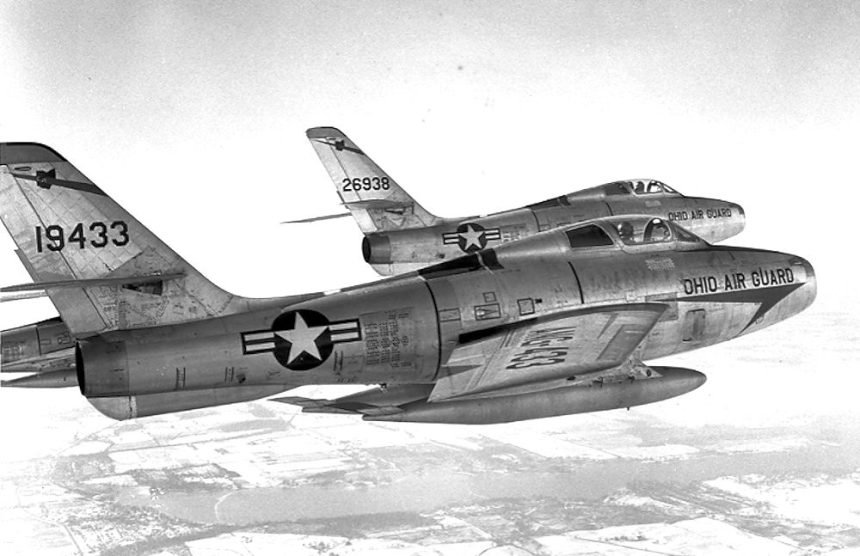

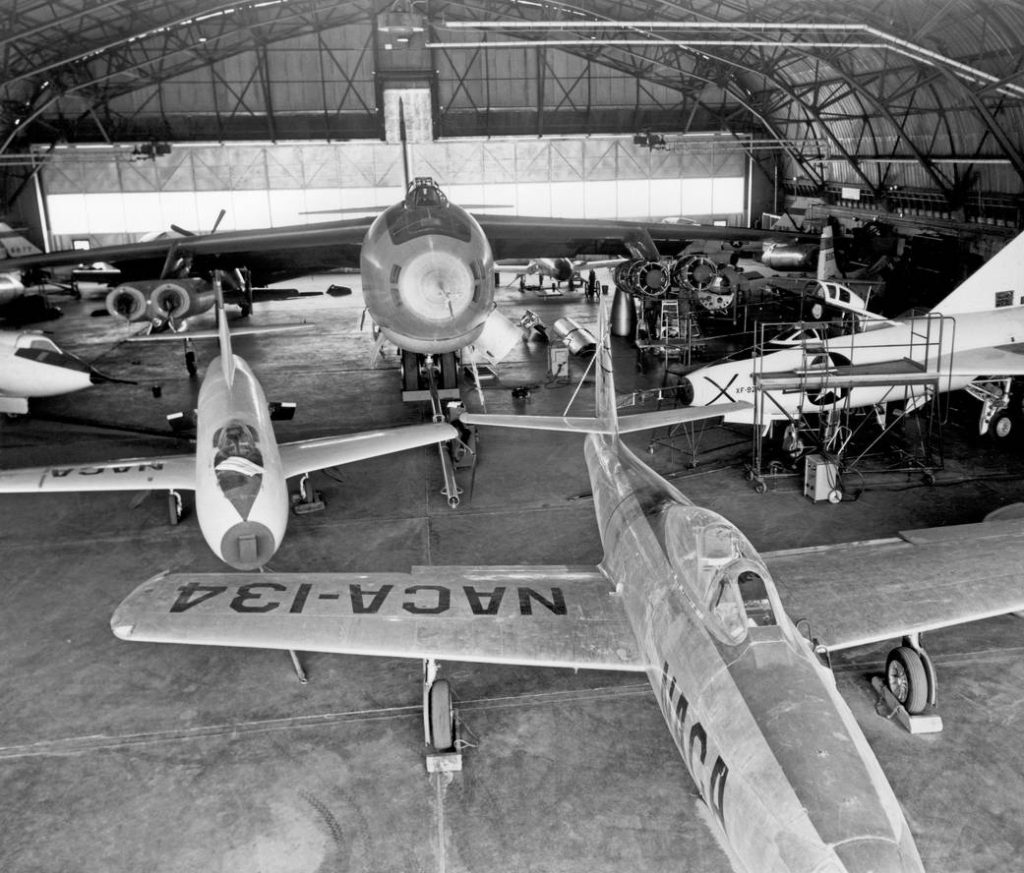
In the 1940s, Republic Aviation Corporation developed a subsonic straight-wing fighter-bomber, designated P-84 Thunderjet, which was the last of its kind to see operational service. The aircraft was also used to develop flight refueling techniques. Later, as the aviation world moved towards jet engines, some of these aircraft were fitted with Allison J35A-15 engines, redesignated as the F-84A Thunderjet. The first flight of this modified aircraft took place in 1946, and it had numerous structural and engine problems. The design could only mature by the early 1950s. The NACA High-Speed Flight Research Station, later redesignated the NASA Dryden Flight Research Center, acquired two F-84A Thunderjets, designating them YF-84A, where Y stood for experimental. NACA received the first YF-84A (45-59490), which was given the NACA tail number 134, in November 1949, and the second YF-84A (45-59488) in December 1950. The first YF-84A, tail number 134, was used for research, including vortex generator testing, pilot proficiency flights, and as a chase aircraft for other research flights. The second YF-84A was used to provide spare parts to the first one. The YF-84As, similar to P-84s, had straight wings and a nose inlet for engine air intake.
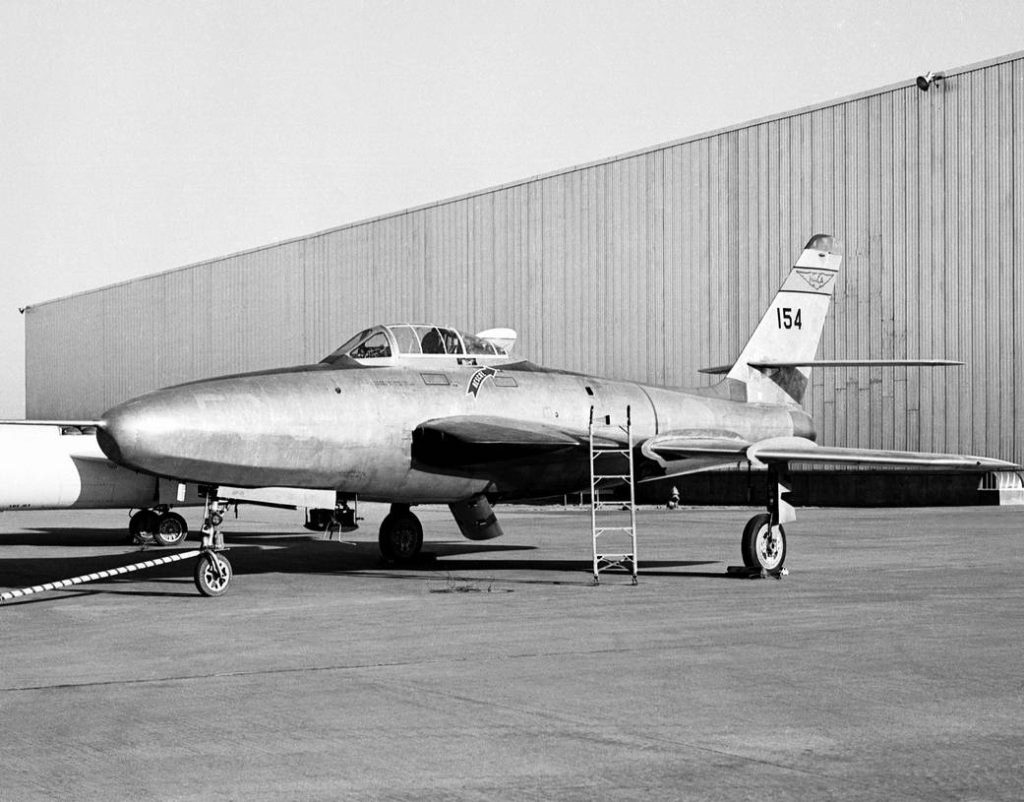
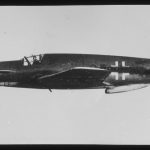
In June 1950, the first F-84F Thunderstreak prototype flew, which was a modified version of the straight-wing F-84. The F-84F Thunderstreak fighter featured a swept wing and entered US Air Force service in 1954 as a ground-support fighter-bomber. The aircraft, featuring wings swept back 40 degrees, was 43.5 feet long, 15 feet high, with a wingspan of 33.7 feet. It was powered by a Wright J65-W-3 engine producing 7,220 pounds of thrust. The aircraft had a maximum speed of 685 mph, with a range of 1,900 miles. Its weight was 27,000 pounds, and it was equipped with six .50-caliber machine guns and 6,000 pounds of bombs externally. NACA flight tests using the YF-84F Thunderstreak, on loan from the Air Force, evaluated the aircraft’s aileron effectiveness before spoilers were incorporated. There were two versions of this aircraft, both with swept wings. The YF-84F had the inlet in the nose. Early in 1952, Republic developed a reconnaissance version of the YF-84F Thunderstreak, the YRF-84F. The R in this designation stood for reconnaissance. The nose was elongated to take the camera equipment and faired in. The intakes were relocated from the nose to the wing root, retaining the swept wing, with fences added to improve airflow. The canopy was retained from the old Thunderjet-type, YF-84A. The YRF-84F (51-1828) came to the High-Speed Flight Research Station in April 1954, with the NACA tail number of 154, and departed in October 1956. It was flown on research missions, as a chase for other research flights, and for pilot proficiency.
Later, the F-84F Thunderstreak became one of the best fighters of its time with 2,711 built. Republic Aviation built 2,112 F-84Fs while General Motors produced an additional 599. Out of all the aircraft produced, 1,301 were delivered to NATO. The reconnaissance version, the RF-84F, was also widely produced, with 715 built. The US Air Force used the fighter by the late 1950s, and as supersonic F-100s evolved, the F-84F Thunderstreak was being replaced by them. Despite being replaced by faster supersonic jets like the F-100 in the late 1950s, the F-84F was temporarily returned to service with the US Air Force in 1961 due to the Berlin crisis. It participated in the mass deployment of 200 fighters across the Atlantic Ocean to Europe in response to the Berlin situation. In the Flight Test Files series, the F-84F Thunderstreak helped modern aviation by improving pilot proficiency, maturing NASA research and missions, and proving the viability of swept-wing design. Read more Flight Test Files articles HERE.
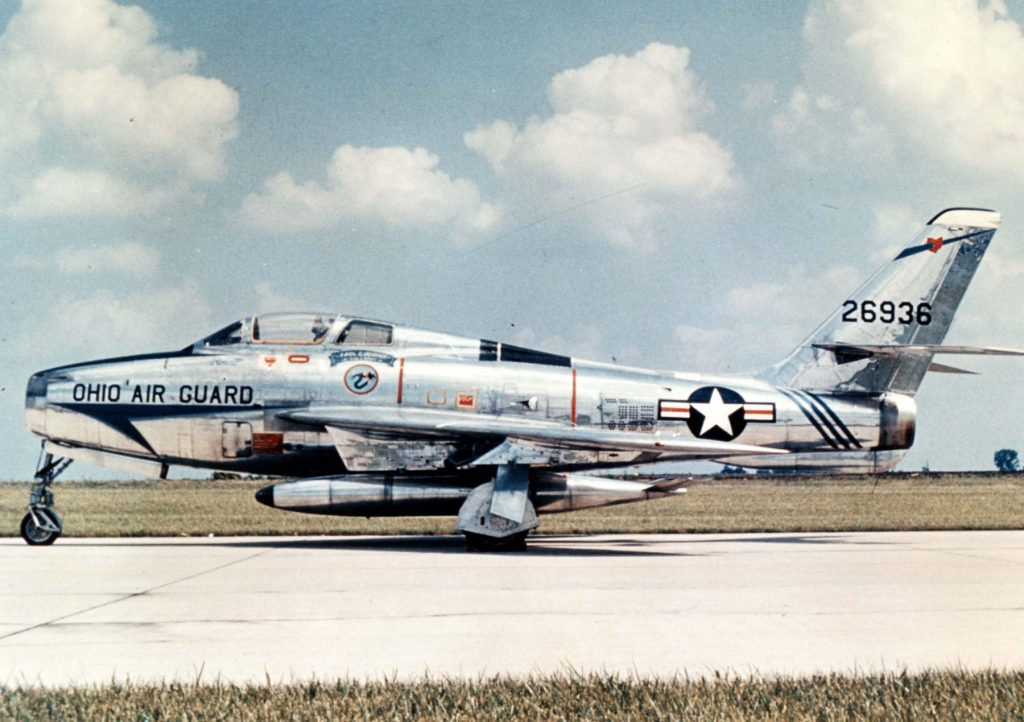



The F-84F was one of those Forties/Fifties designs that still had plenty of potential for further development even after the company that made it had leapfrogged to something newer (in this case, the F-91 and F-105). This is especially evident if you compare the F-84F with its Navy contemporary in class–the Douglas A-4 Skyhawk, early versions of which had the same powerplant! Such was the swing of technology in aerospace in those days. An updated F-84F could have kept Republic relevant in the Seventies as the F-105 was winding down and the A-10 was still awaiting deployment.