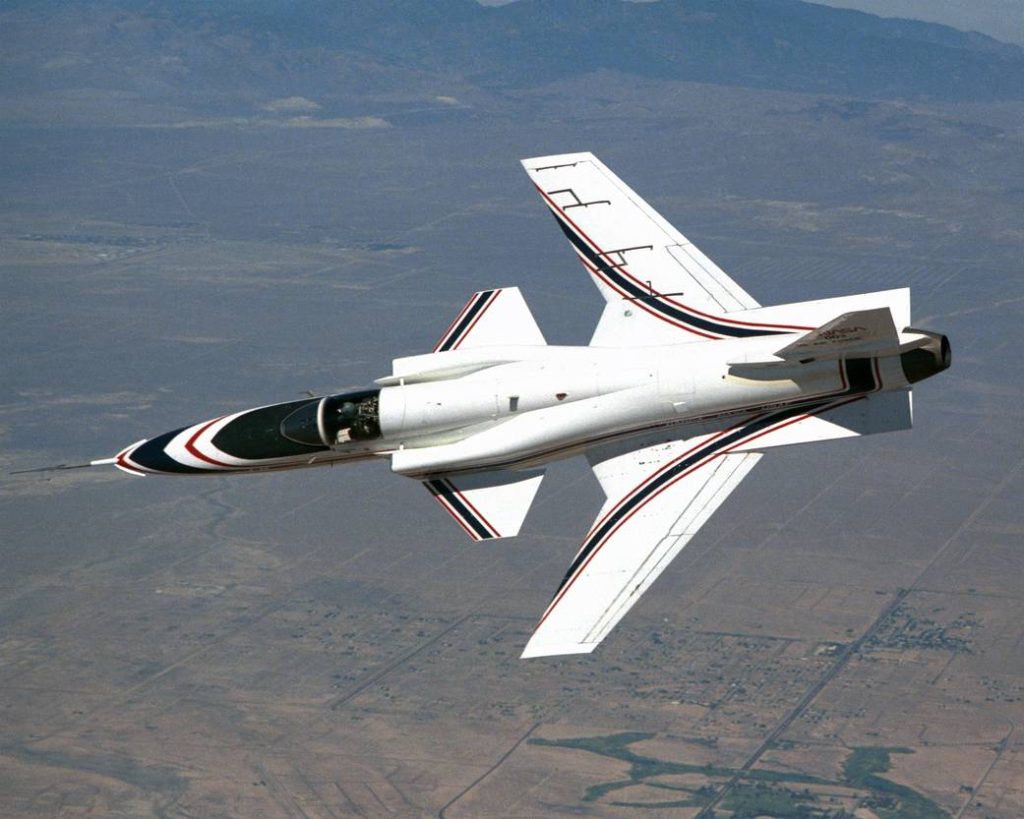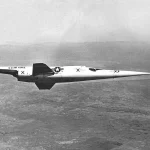
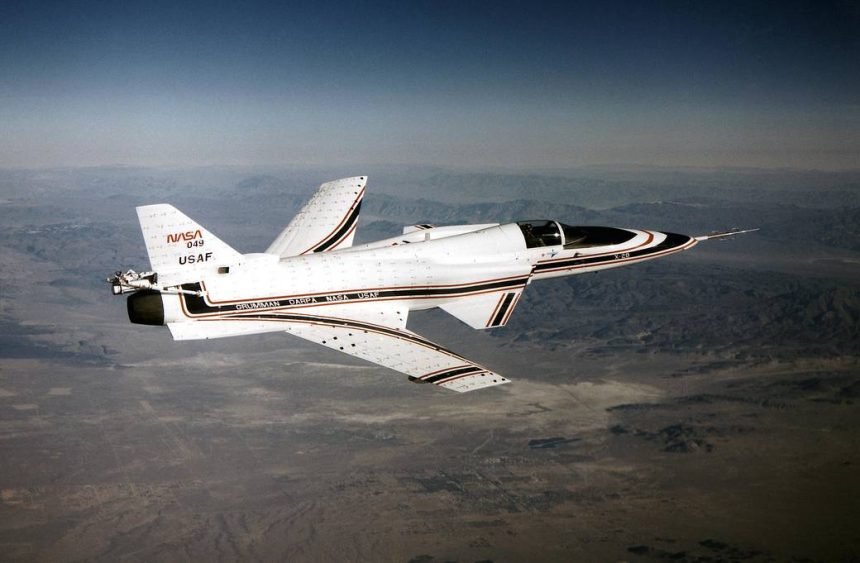

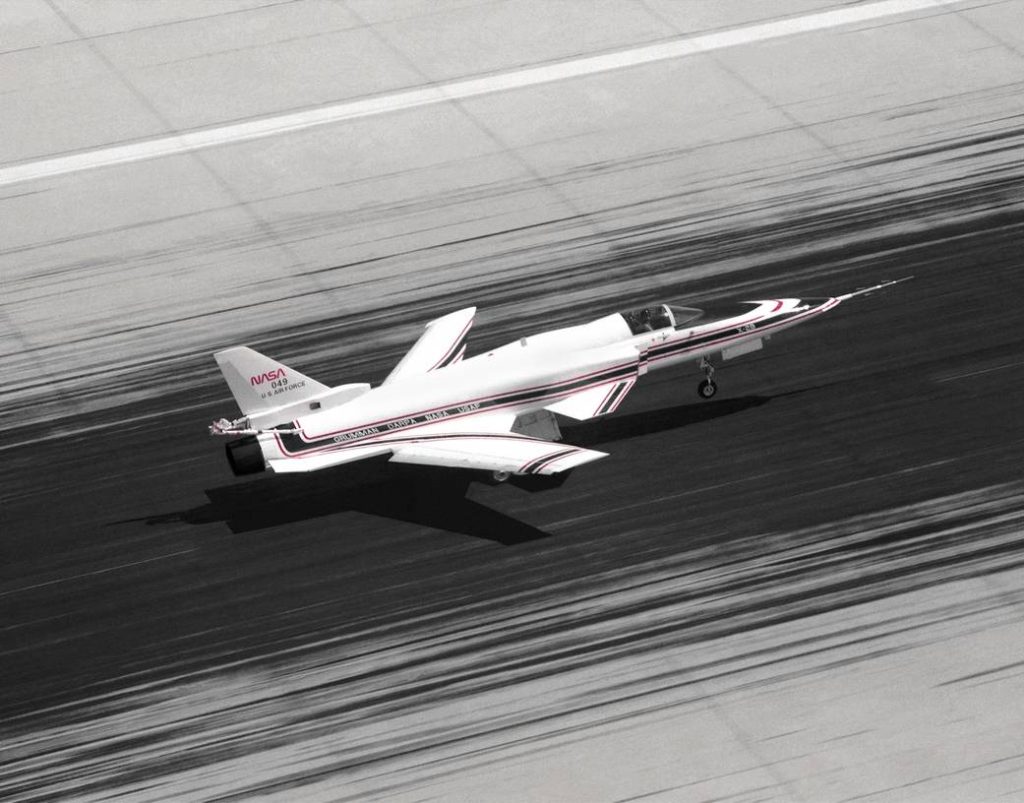
During the late years of the Cold War, the US Air Force and NASA wanted to study new aerodynamic concepts and advanced flight-control systems for the design and development of future aircraft. To achieve this, two X-29 research aircraft were flown at NASA’s Ames-Dryden Flight Research Facility at Edwards Air Force Base, California, between 1984 and 1992. The X-29 was an unusual aircraft, as its wings were swept forward rather than backward, and small control surfaces called canards were placed ahead of the wings. The layout was intentionally unstable and required a computer-based flight-control system to maintain stability. The length of the X-29 was 48.1 feet with a wingspan of 27.2 feet. It was powered by a General Electric F404-GE-400 engine producing 16,000 pounds of thrust. The aircraft’s empty weight was 13,600 pounds, with a maximum takeoff weight of 17,600 pounds. The aircraft structure used a mix of composite materials, aluminum, and titanium. The second aircraft also had an emergency parachute to help recover from spins. The X-29’s maximum speed was Mach 1.6, and the two aircraft completed 422 research flights in total.
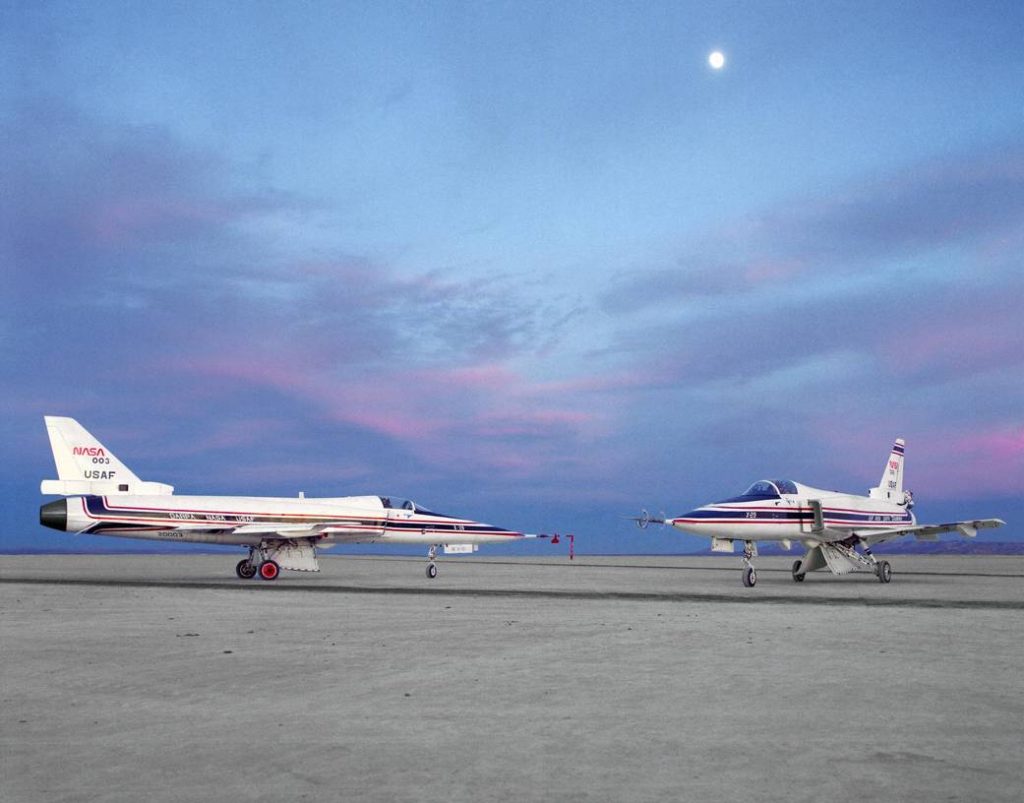
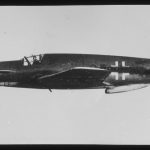
The forward-swept wing concept was not new. It had roots even before World War II. Early wind tunnel work was conducted by NACA (now NASA) in the 1930s. During World War II, Germany built the Junkers Ju 287, a jet aircraft with forward-swept wings. The design showed promise, but could not be fully developed because materials at the time could not prevent the wings from bending and twisting. In the 1960s, the HFB-320 business jet used forward-swept wings, but the concept remained limited. The introduction of composite materials in the 1970s made it possible to build lighter and stronger structures. These materials allowed engineers to control how a wing bends under load, a method known as aeroelastic tailoring, which made forward-swept wings practical for research. In 1977, the Defense Advanced Research Projects Agency (DARPA) and the US Air Force issued a request for a research aircraft to study the concept. Grumman was selected in 1981 to build two X-29 aircraft. The first X-29 flew on December 14, 1984, and the second aircraft flew on May 23, 1989.
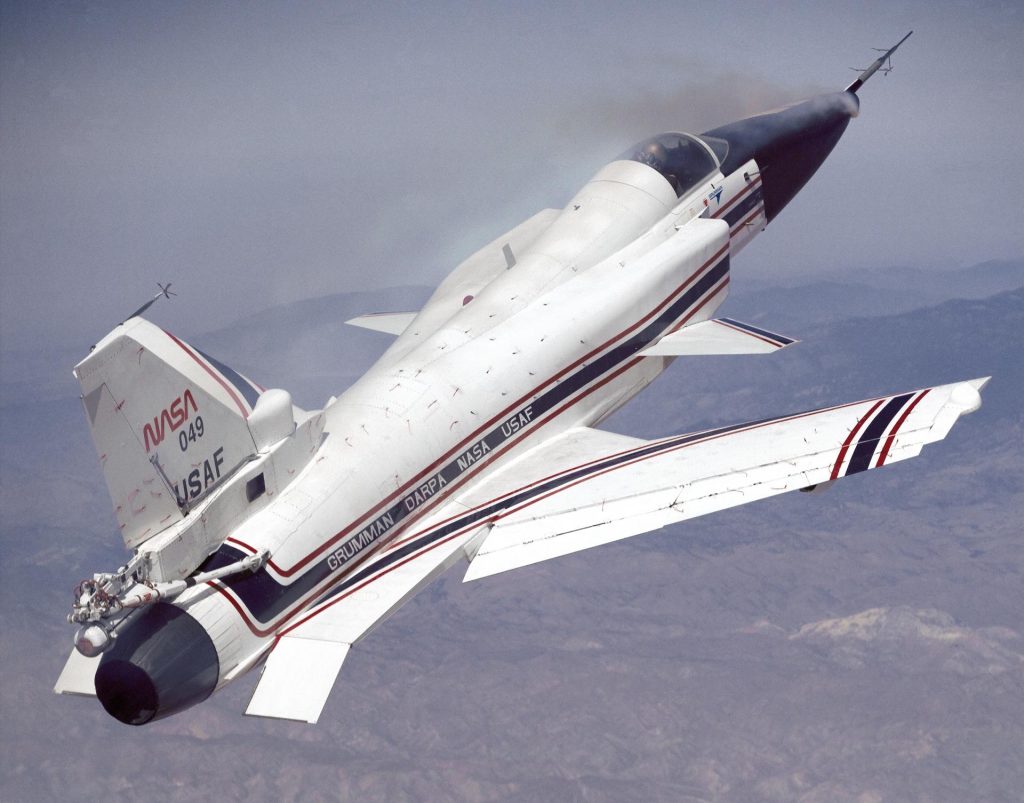
The X-29’s forward-swept wings directed airflow toward the wing bases, helping prevent the wing tips from stalling at high angles of attack. To improve control, the aircraft used forward-mounted canards to provide primary pitch control, wing flaperons to control roll, and strake flaps near the body for extra control. The wings also featured a thin, supercritical airfoil that reduced drag at high speeds. For stability, the X-29 used a digital fly-by-wire system that relied on three digital computers, with one analog backup. The computers constantly monitored the aircraft’s condition and automatically adjusted the control surfaces, sending 40 commands each second to keep the plane stable. Such control permitted the X-29 to fly safely, even though its design wouldn’t be controllable with traditional systems. The first aircraft completed 242 flights during Phase 1 testing of the program. These flights confirmed that the forward-swept wing behaved as expected. The inward airflow helped prevent tip stall at moderate angles of attack. The composite wing structure also prevented aeroelastic divergence within the test envelope. The aircraft demonstrated stable handling and good maneuvering performance during these tests.
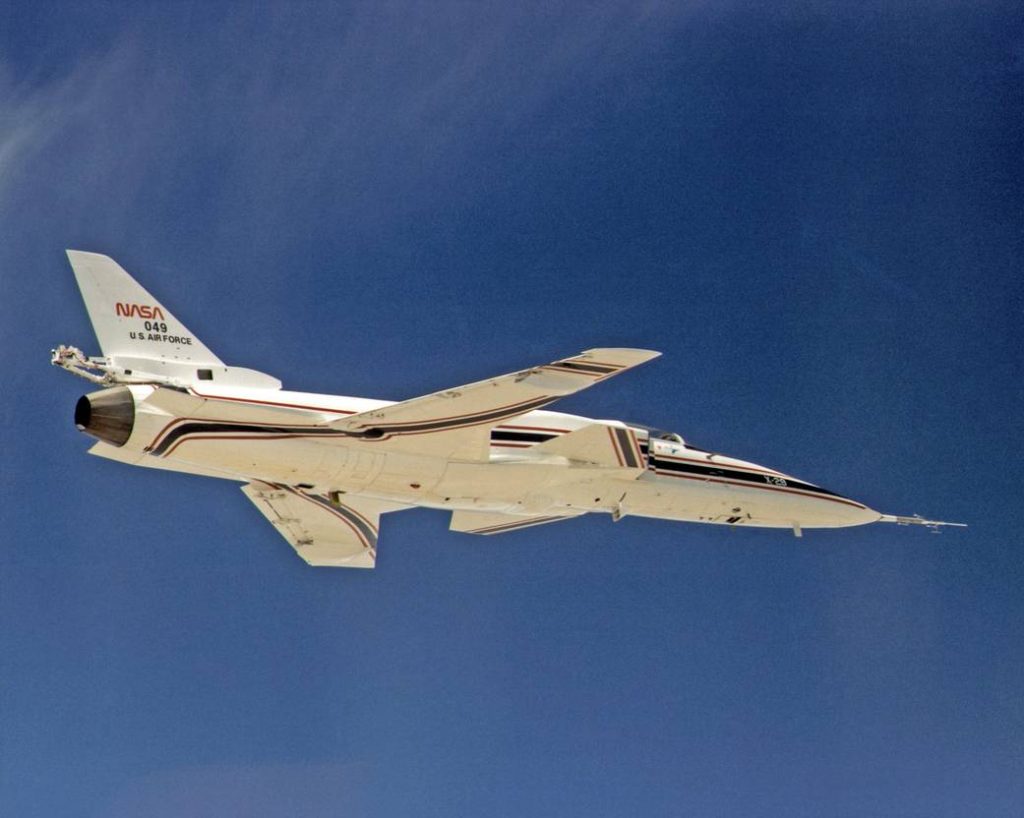
The second aircraft was used for research on high angles of attack and completed 120 flights in Phase 2. During these flights, the aircraft reached angles of attack of up to 67 degrees. Pilots reported good control up to about 45 degrees but had limited control beyond that. The results showed that the aircraft performed better than earlier predictions. It achieved good control at high angles without using thrust vectoring or leading-edge flaps. Researchers collected data using pressure measurements and flow visualization techniques. In 1992, engineers modified the second X-29 for new tests by adding control valves with two small nozzle jets and two high-pressure nitrogen tanks that could inject air into the airflow around the aircraft’s nose. The method, called vortex flow control (VFC), aimed to improve control at high angles of attack. From May to August 1992, 60 successful flights demonstrated that VFC performed better than expected in generating yaw, especially at higher angles of attack, when the rudder is less effective. However, VFC was less effective in providing control when sideslip was present and did little to reduce its rocking oscillation.
Ultimately, VFC, like forward-swept wings, showed promise for future aircraft design. The X-29 program introduced new technologies and found new ways to use proven technologies. According to NASA, the X-29 used aeroelastic tailoring to control structural divergence and use of a relatively large, close-coupled canard for longitudinal control. The program validated control of an aircraft with extreme instability while maintaining good handling. It also demonstrated effective control with three-surface longitudinal control, a double-hinged trailing-edge flaperon at supersonic speeds, effective handling at high angles of attack, vortex control, and the military usefulness of the overall design. In the Flight Test Files series, the X-29 program demonstrated that forward-swept wings and digital flight control could be combined in a practical aircraft. The data collected during the program have been used in later research and aircraft development. Read more Flight Test Files articles HERE.