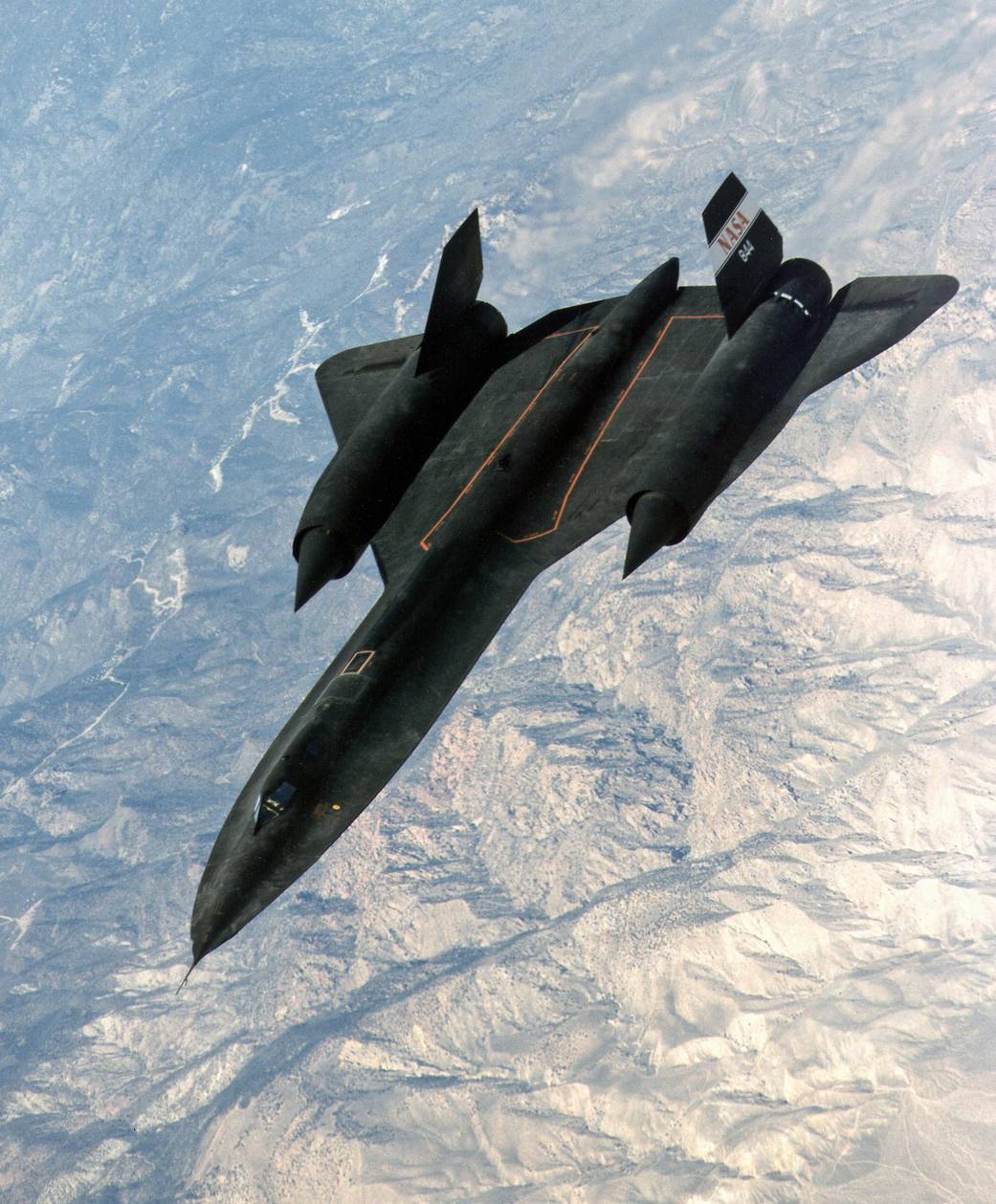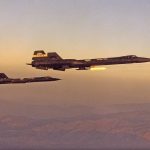
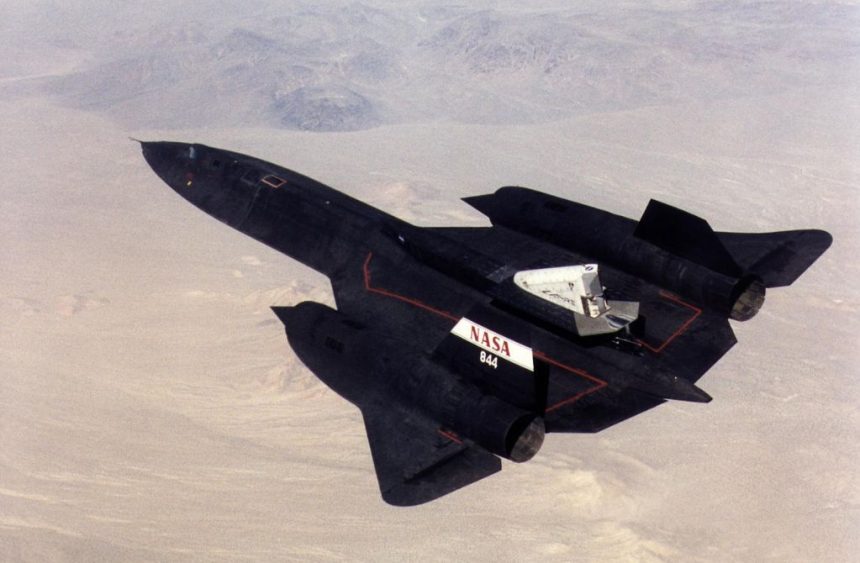

If there is one aircraft that could be termed the craziest development in aviation history, it would be the SR-71, the world’s fastest jet-propelled aircraft. The Blackbird was a top performer in aviation technology during the Cold War, and its operational and performance achievements set it apart from other aircraft. However, the aircraft also helped NASA after the end of the Cold War. In the 1990s, NASA used two SR-71 Blackbird planes for research at the Dryden Flight Research Center in California. The SR-71 was part of the Blackbird family, which also included the A-12 and YF-12, designed by a Lockheed team at the Advanced Development Projects division, commonly known as Skunk Works. The design work began in the late 1950s with the A-12, which flew for the first time in 1962. The SR-71 flew for the first time on December 22, 1964.
The SR-71 Blackbird was designed to fly at speeds over Mach 3 and altitudes higher than 80,000 feet. The high-speed and high-altitude ability made the aircraft useful for research in areas such as high-speed and high-temperature instrumentation, aerodynamics, propulsion, structures, thermal protection materials, atmospheric studies, and sonic boom characterization. One of the first major experiments with the NASA SR-71 Blackbird involved using a laser air-data system, which used laser light instead of air pressure to provide airspeed and attitude data, such as the angle of attack and sideslip. The system used six sheets of laser light projected from the bottom of the airplane. As tiny atmospheric particles passed through these beams, the system measured their direction and speed, converting this information into standard speed and attitude references. The flights collected information about atmospheric particles at altitudes above 80,000 feet, where future hypersonic aircraft will fly.
In March 1993, NASA used the SR-71 Blackbird aircraft for several important experiments. The researchers installed an upward-facing ultraviolet camera in the nose to observe stars and other celestial objects at wavelengths that cannot be detected from the ground. In another project, researchers at the University of California, Los Angeles used the SR-71 Blackbird to investigate the use of charged chlorine atoms to protect and rebuild the ozone layer. Additionally, the SR-71 Blackbird served as a testbed for the development of the IRIDIUM satellite communications system. It acted as a test satellite, allowing engineers to validate communication links with ground stations. NASA scientists also used the SR-71 Blackbird to study ways to reduce sonic boom overpressures that sounded like sharp thunderclaps when they reached the ground. Data from the flights were used in a study to reduce the “peak” of sonic booms and minimize the “startle effect” they produce on the ground.
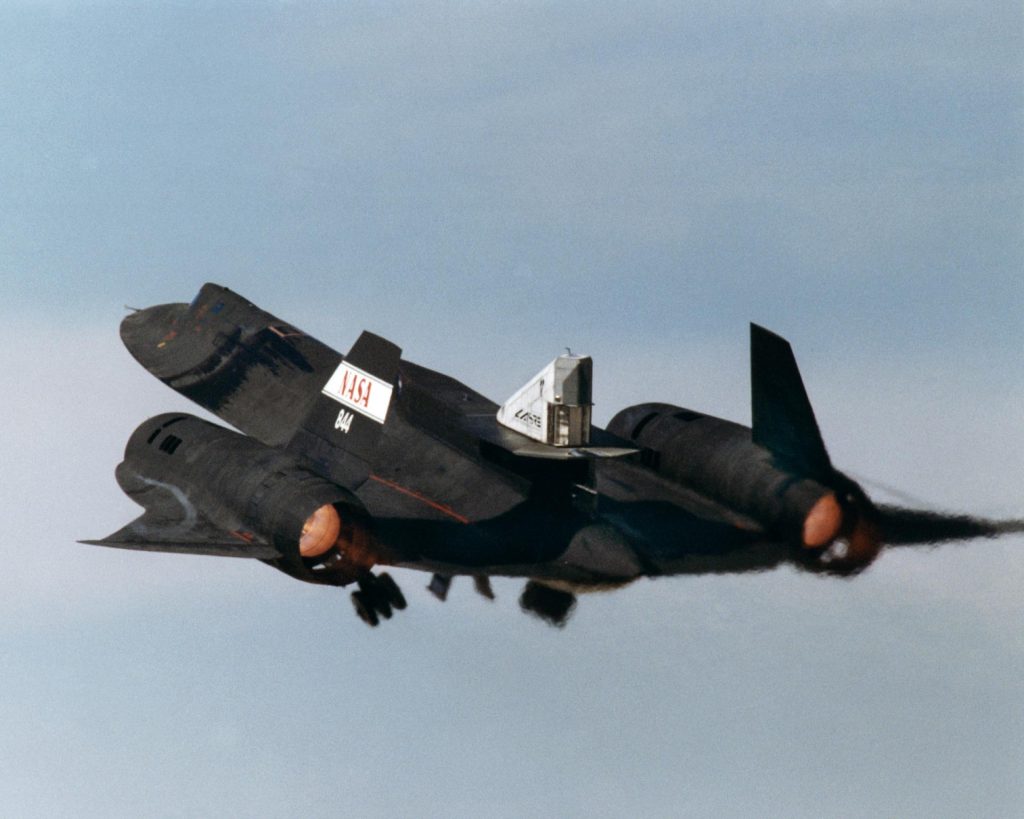
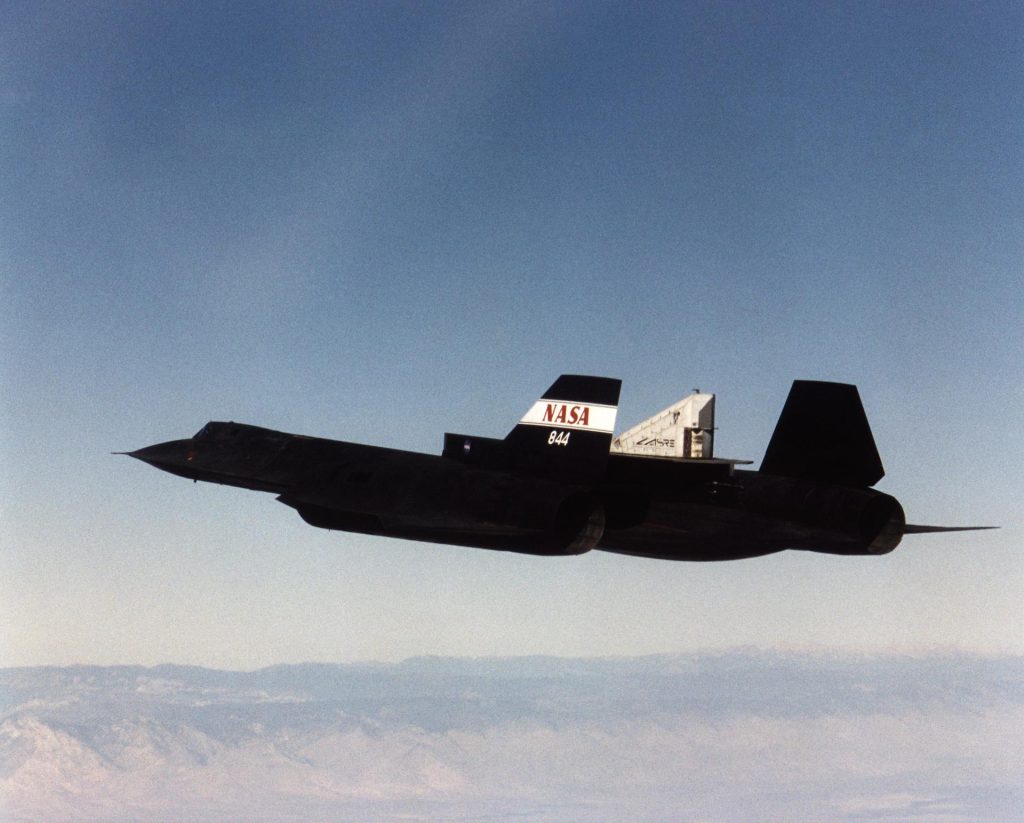
In 1997 and 1998, the SR-71 Blackbird aircraft tested the Linear Aerospike SR-71 Experiment (LASRE). The experiment used a model of a lifting body attached to the back of the aircraft. The model had eight thrust cells that acted like a linear aerospike engine. The SR-71 Blackbird worked as a flying test platform, allowing engineers to gather data on how the aircraft performed in real flight conditions at high speeds and altitudes. NASA’s research with the SR-71 Blackbird in the 1990s built on earlier studies from 1969 to 1979. During that earlier period, NASA and the Air Force flew YF-12 aircraft at Dryden to investigate high-speed flight. One of the YF-12 aircraft was lost in a non-fatal accident in 1971 and later replaced by an SR-71A, which was designated YF-12C for administrative purposes. The earlier tests examined aerodynamic and thermal loads, aerodynamic drag and skin friction, heat transfer, airframe and propulsion system interactions, inlet control system improvements, high-altitude turbulence, boundary-layer flow, landing gear dynamics, noise measurements, measurement of engine effluents for pollution studies, and evaluation of a maintenance monitoring and recording system. Researchers also examined how crews handled sustained high-speed flights. They conducted ground tests to simulate aerodynamic heating effects at Mach 3. These tests improved theoretical prediction methods and computer models dealing with structural loads, materials, and heat distribution at up to 800 degrees Fahrenheit. At Mach 3 speeds, the SR-71’s titanium skin heated to temperatures exceeding 300°C (570°F), causing the aircraft to expand by several inches along its length. To manage this, engineers designed overlapping panels, corrugated sections and flexible joints that could absorb and redistribute thermal stress as the structure expanded and contracted during flight. NASA later studied this thermal expansion behaviour in detail, analysing how heat was conducted across the airframe, how different components expanded at varying rates, and how the design prevented warping, buckling or material fatigue—demonstrating how the aircraft maintained structural integrity under extreme aerodynamic heating.
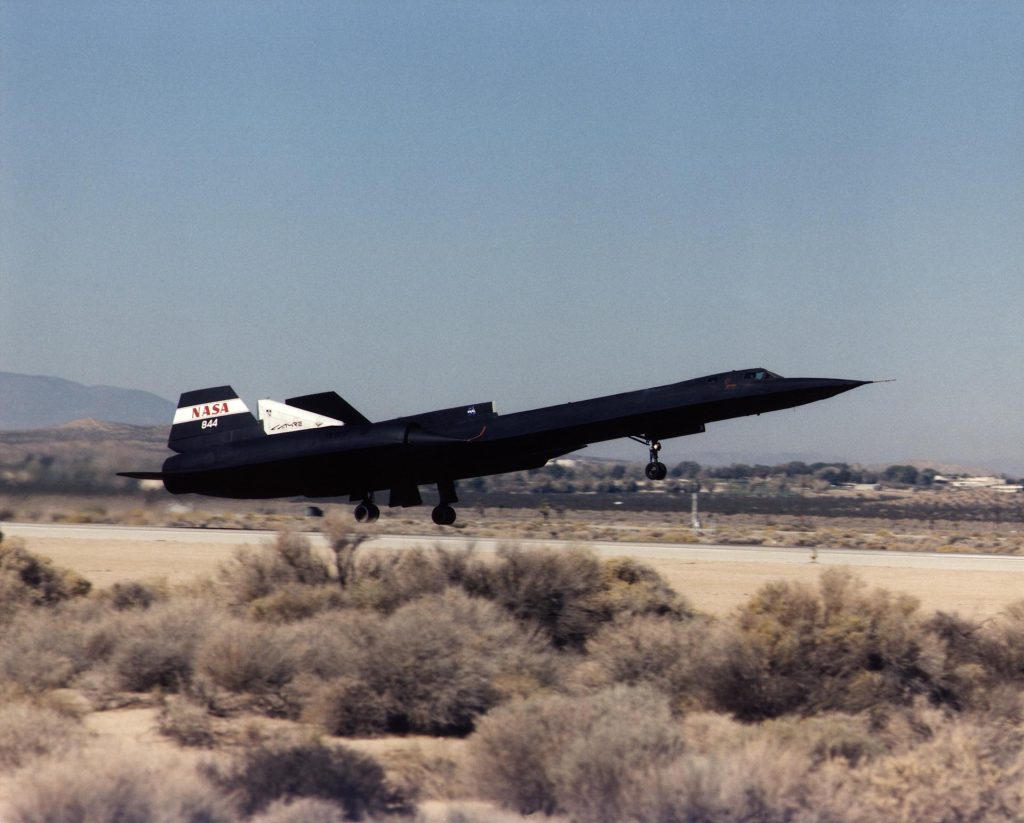
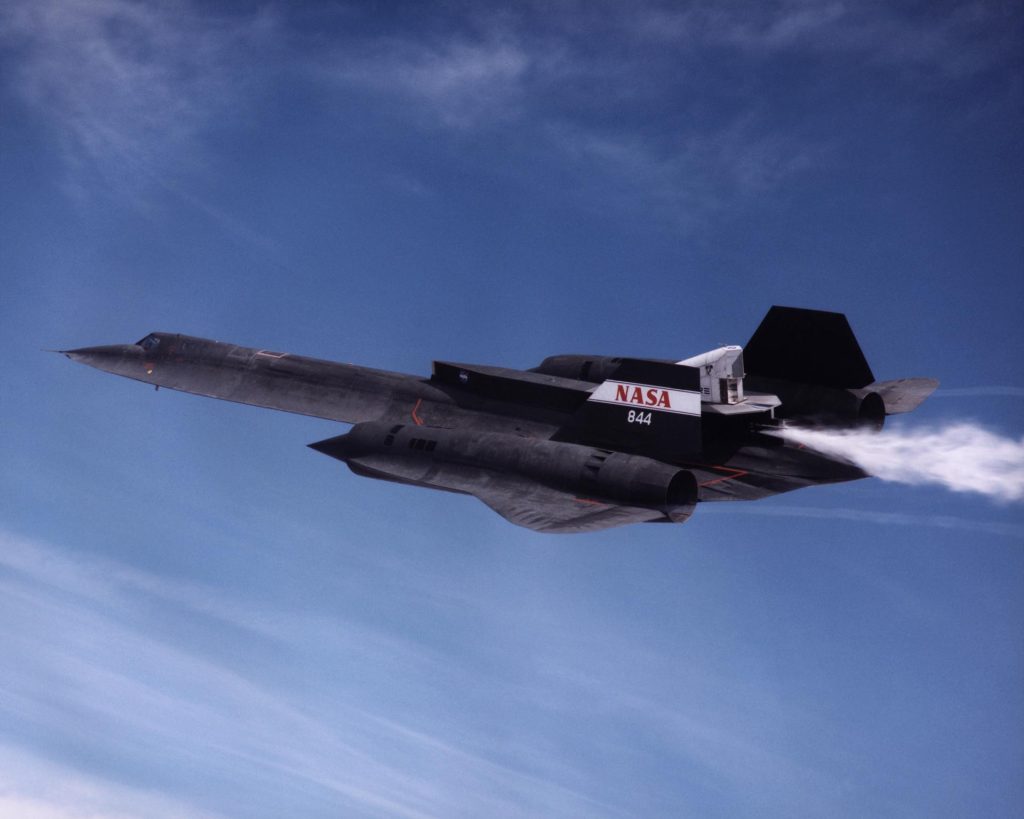
The SR-71 Blackbird was 107.5 feet long, 18.6 feet high, with a wingspan of 55.6 feet. Its maximum takeoff weight was about 140,000 pounds, with a range of more than 2,900 statute miles, and a ceiling of over 85,000 feet. It was powered by two Pratt & Whitney J58 turbojet engines, each producing about 32,500 pounds of thrust with afterburner. In the 1990s, NASA operated four Lockheed SR-71 Blackbird airplanes, two for research, two to support the Air Force’s reactivation of the SR-71 for reconnaissance missions. Although the Air Force retired the Blackbird in 1990, Congress later provided funding for more flights. The first SR-71A, with the identification number 61-7980 (NASA 844), arrived at Dryden on February 15, 1990. It was stored until 1992 and then used for research until its last flight on October 9, 1999. The second SR-71A, identified as 61-7971 (NASA 832), arrived on March 19, 1990, but was sent back to the Air Force when the first plane was reactivated in 1995. Along with another SR-71A (61-7967), it was flown by NASA crews to support the Air Force program. The SR-71B, with the identification number 61-7956 (NASA 831), arrived at Dryden on July 25, 1991. It served both as a research platform and for training until October 1997. In the Flight Test Files series, the SR-71 Blackbird operated as a stable platform for high-speed research. It could fly at Mach 3 and at very high altitudes, allowing engineers to gather data that other aircraft could not collect. This research helped advance high-speed flight and propulsion systems. Read more Flight Test Files articles HERE.