

Before World War I, Henry Deutsch de la Meurthe, a French aviation supporter, launched the Coupe Deutsch de la Meurthe air race in 1909, with the first two seasons held in 1912 and 1913. Because the aviation world was still new, the races aimed to raise public awareness and promote aircraft and aviation. At the same time, French aeronautical engineer René Arnoux, who was known for designing tailless airplanes, built his first biplane in 1909, followed by a monoplane in 1912. Arnoux’s work was important because he introduced a new way to design airplanes. He was the original creator of the “flying plank” type of tailless airplane. All his planes featured a plain, straight, rectangular, or slightly tapered wing, without any sweepback, dihedral, stagger, or stabilizing wingtips. The monoplane he built had a reflex camber airfoil section. At the Paris Air Show in 1913, Arnoux displayed his monoplane, designated Stablavion, a low-wing two-seater powered by a 55-horsepower pusher engine.
Design of Carmier-Arnoux Simplex
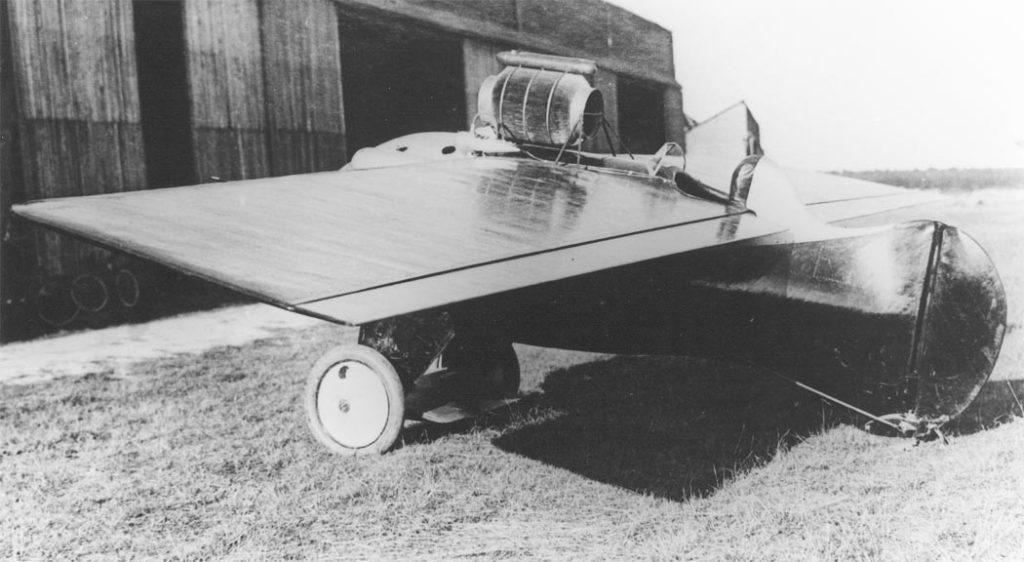
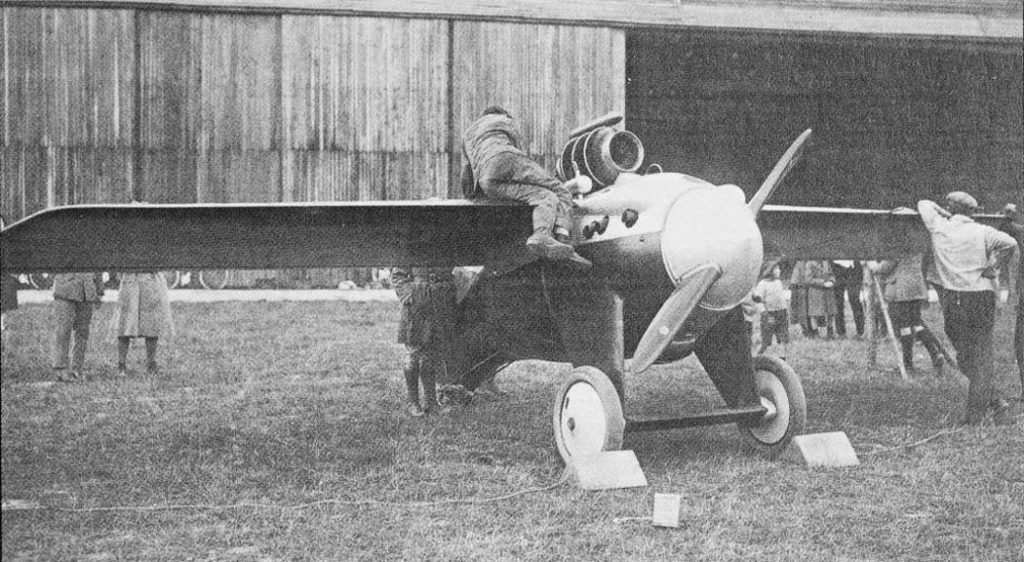
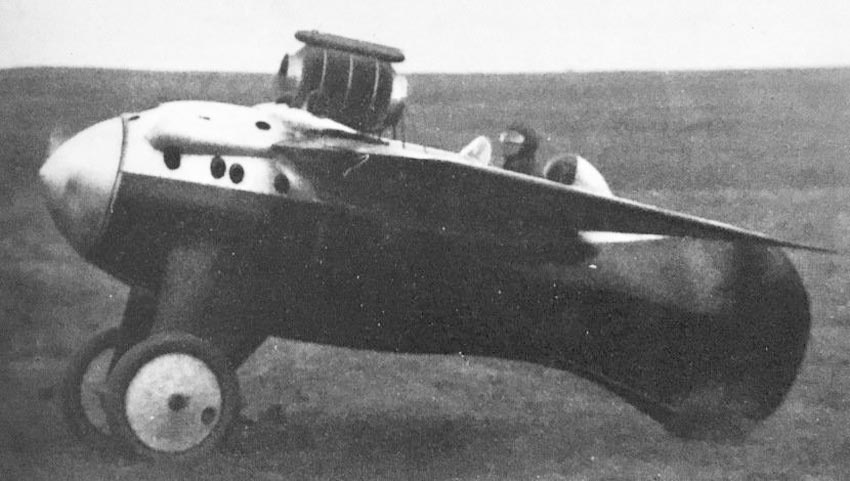
As World War I began in 1914, the Coupe Deutsch de la Meurthe air race did not take place until 1919. At the same time in 1919, Arnoux also resumed his work and built a tailless biplane from surplus parts of wartime aircraft. His new plane had a 130-horsepower rotary engine and featured vertical rudder surfaces on both sides of the short nacelle behind the pilot. In 1922, the biplane flew several times. After it was modified to a single rudder, it impressed the French aviation authorities. The plane later crashed during a test, but the results were promising enough to form the Société des Avions Simplex (Simplex Aircraft Company) to develop the aircraft for the Coupe Deutsch de la Meurthe race scheduled for September 30, 1922. For this, Arnoux designed a tailless racing monoplane with another French engineer, Pierre Carmier, who helped with the project; the new aircraft was called the Carmier-Arnoux Simplex. The Carmier-Arnoux Simplex aircraft was a single-seat monoplane powered by a 12-cylinder Hispano-Suiza engine producing 320 horsepower. The aircraft was 17.9 feet long with a wingspan of 29.6 feet and a wing area of 150.7 square feet. The empty weight of the aircraft was 1,764 pounds, and the gross weight was 2,161 pounds. Equipped with a two-bladed propeller, the maximum speed of the aircraft was 239 mph. The aircraft had a symmetrical wing design, and it controlled balance by adjusting flaps along the trailing edge.
The Cancellation
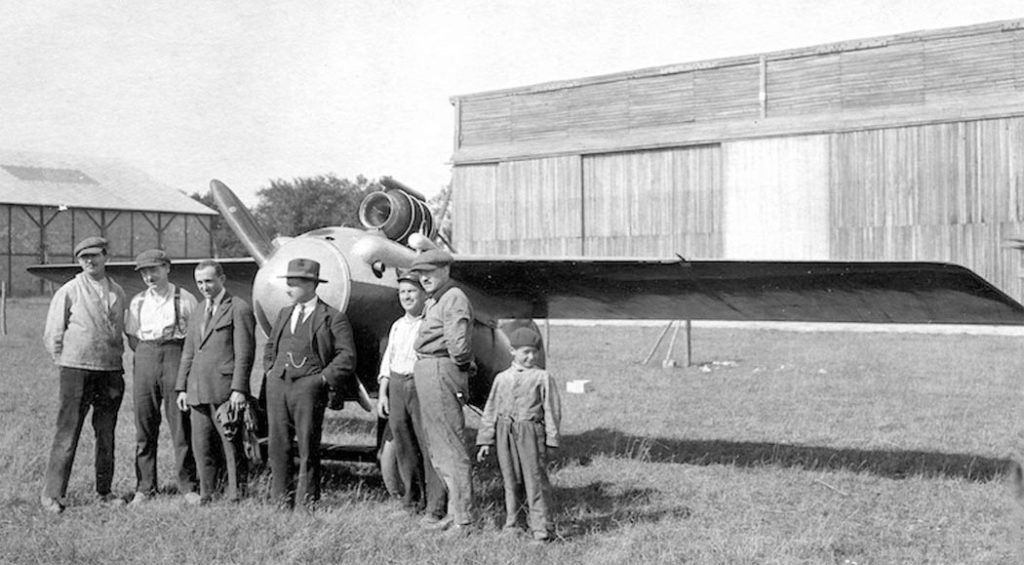
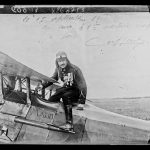
The test pilot for the aircraft was Georges Madon, a French World War I ace credited with 41 aerial victories, who recommended removing limiters on the control surfaces. However, it made the Carmier-Arnoux Simplex very sensitive to changes in weight distribution and reduced visibility from the cockpit, leading to the aircraft crashing on its second flight during flight testing and injuring Madon. The prototype was completely destroyed, and the crash ended René Arnoux’s career as a designer. After spending all his money and struggling to find new sponsors for the aircraft, Arnoux halted the development of Carmier-Arnoux Simplex. Some sources say Arnoux was discouraged from designing any new aircraft after his last two planes crashed. Still, the Carmier-Arnoux Simplex was the simplest and most effective design of its kind. The aircraft was aerodynamically sound and structurally stronger than any other known tailless system. Arnoux later rejoined the French Air Force and was sent to serve in one of the French African colonies, and a year later, he died in a plane crash while flying a regular aircraft. Both Carmier-Arnoux Simplex and René Arnoux did not receive the attention they deserved. Despite being a good airplane and a good idea, the Carmier-Arnoux Simplex was discouraged from flying in the open skies or from taking part in the Coupe Deutsch de la Meurthe air race. In the Grounded Dreams series, Carmier-Arnoux Simplex stands as a unique tailless racing airplane that the aviation world misunderstood. Read more Grounded Dreams articles HERE.