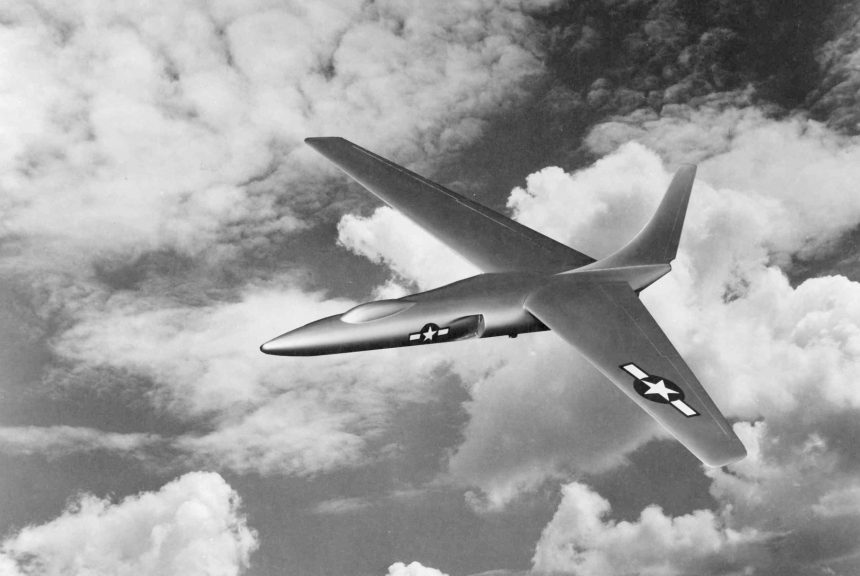


In the uneasy years just after World War II, the US Air Force was in a hurry. Jet engines had arrived faster than anyone expected, and every aircraft manufacturer in America was racing to define what airpower would look like in the jet age. It was when an American aircraft-manufacturing company, Convair, originally Consolidated Vultee Aircraft Corporation, sketched one of the most unusual bombers the US would never fly, called the XB-53. The XB-53 followed a unique design as its wings swept forward instead of back, and its engines were mounted internally within the fuselage rather than in external nacelles. The aircraft relied primarily on wing-mounted control surfaces for pitch and roll, reducing the role of a traditional tailplane. It was fast on paper and built around aerodynamic ideas that the US had only just acquired from defeated Germany. But like many aircraft remembered in Grounded Dreams, the XB-53 was not killed by failure, but by overlap, cost, and a military that decided it had better options before the airplane was finished.
XB-53: From Attack Aircraft to Bomber
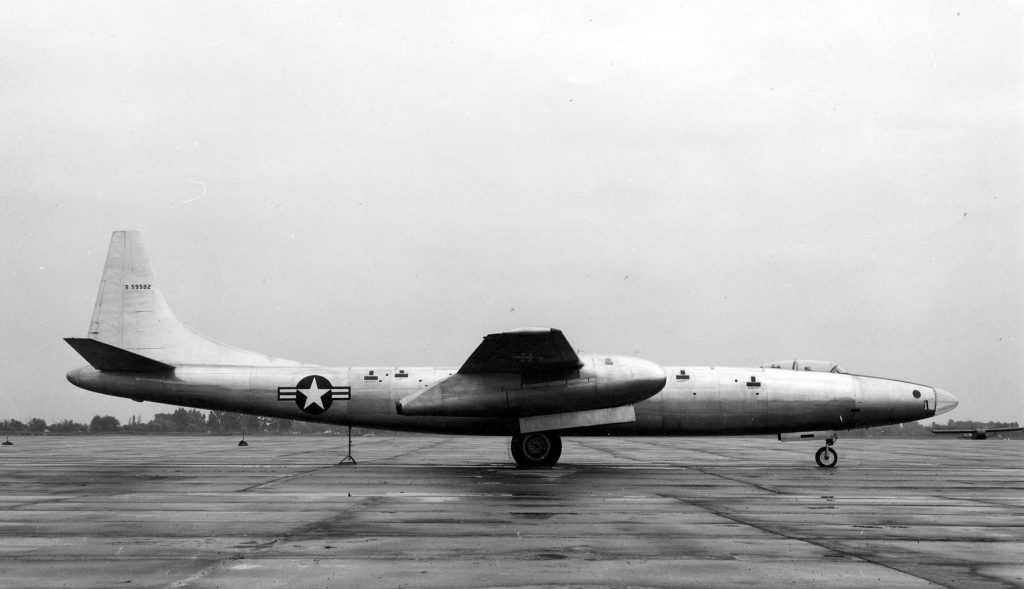
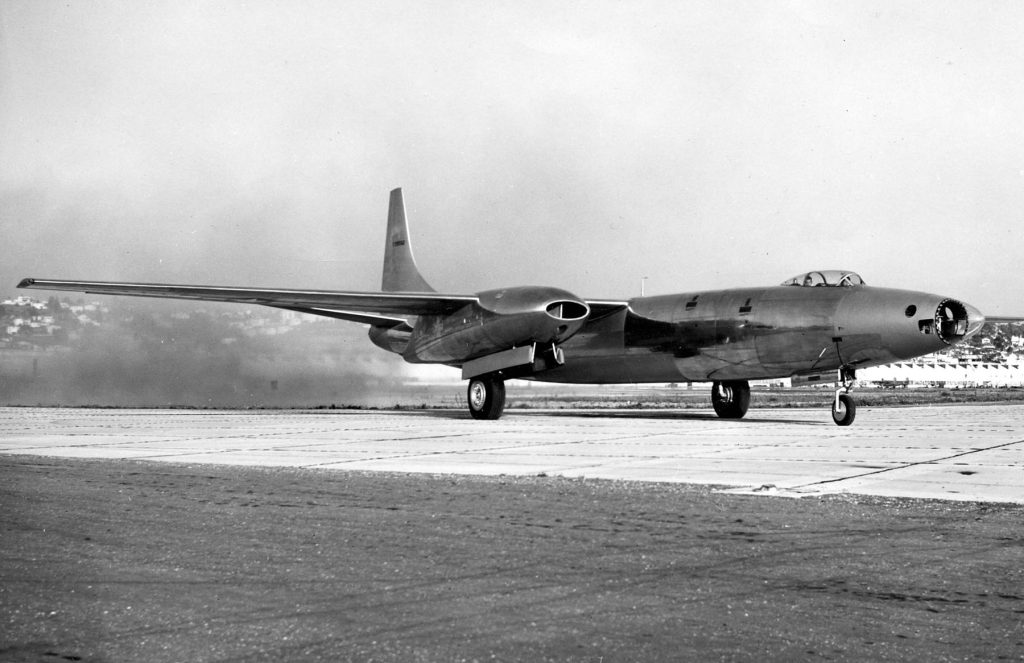
When the XB-53 arrived, the Air Force had already funded the development of nearly half a dozen jet bombers, including the XB-46, XB-47, XB-48, and the North American B-45 Tornado, which would enter service first. The Convair original XB-46 contract, dated back to 1945, called for three flight-test prototypes and one static test airframe, at a cost exceeding $10 million. As testing progressed, the Air Force realized the XB-46 offered little that the B-45 could not already deliver, and with better growth potential. Rather than cancel it, the Air Force called Convair to complete one XB-46 as a testbed and to redirect the remaining funds toward building two XA-44 aircraft instead. The XA-44 was a jet-powered attack aircraft intended to fly fast and low, carrying a heavy load of bombs and rockets. However, by late 1946, the attack mission that had justified the XA-44 aircraft was losing priority, and the program was ended in December 1946. The Air Force called for converting the aircraft into a light bomber, which was redesignated as the XB-53.
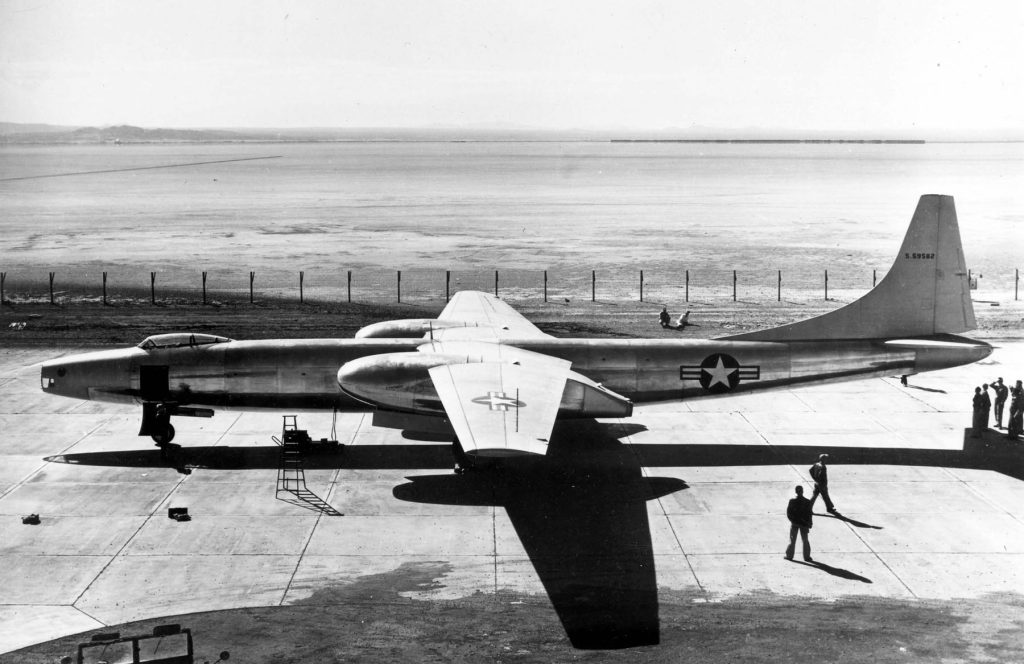
The redesign increased wing sweep, the XB-53’s most unique feature, from 12 degrees to 30 degrees, raising predicted top speed by more than 60 mph, and cruise speed by nearly 90 mph. Convair took inspiration for a forward-swept wing from German aircraft captured at the end of World War II. The engineers believed that this layout could improve control at low speeds and remain manageable at high angles of attack. The design called for three General Electric J35 turbojets, each with 4,000 pounds of thrust, mounted in the fuselage. On paper, the aircraft promised a top speed of roughly 580 mph, the ability to carry up to 12,000 pounds of bombs, and 40 High Velocity Aerial Rockets under the wings. But these gains came at a price, and as the XB-53 became faster, the defensive guns and turrets meant to protect it could no longer keep up. Adding more guns would slow the aircraft down and cancel out the very advantages it was designed for.
Cancelled Before It Could Prove Itself
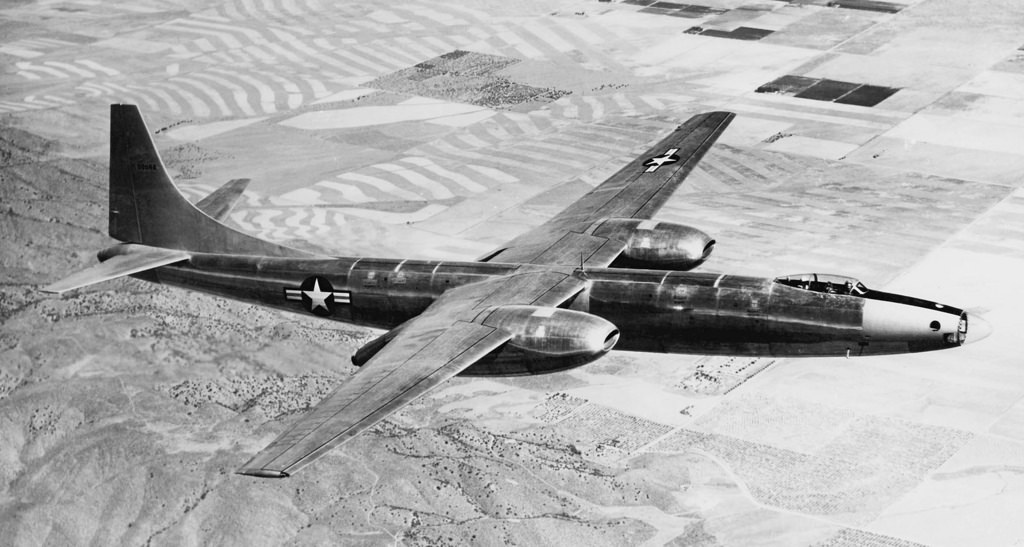
By the time the XB-53 was taking shape, Convair engineers concluded that the guns, turrets, and defensive systems available at the time were designed for slower bombers, and once aircraft would attain speeds of Mach 0.9, fitting them would undo everything the design was meant to achieve. At the same time, costs were increasing, and what began as a clever way to reuse XB-46 funding had grown into a project estimated at nearly $20 million. It was roughly $8 million more than the original bomber contract, while delivering an aircraft whose performance was now judged too similar to the competing Martin XB-51, but at significantly higher cost. As a result, an under-pressure and under-budget Air Force had to cancel the program. The XB-53 was briefly revived in February 1949, but only on paper. No prototype was completed, and no flight testing ever occurred. The Air Force concluded that whatever aerodynamic insight the aircraft might deliver could no longer justify its expense or duplication.
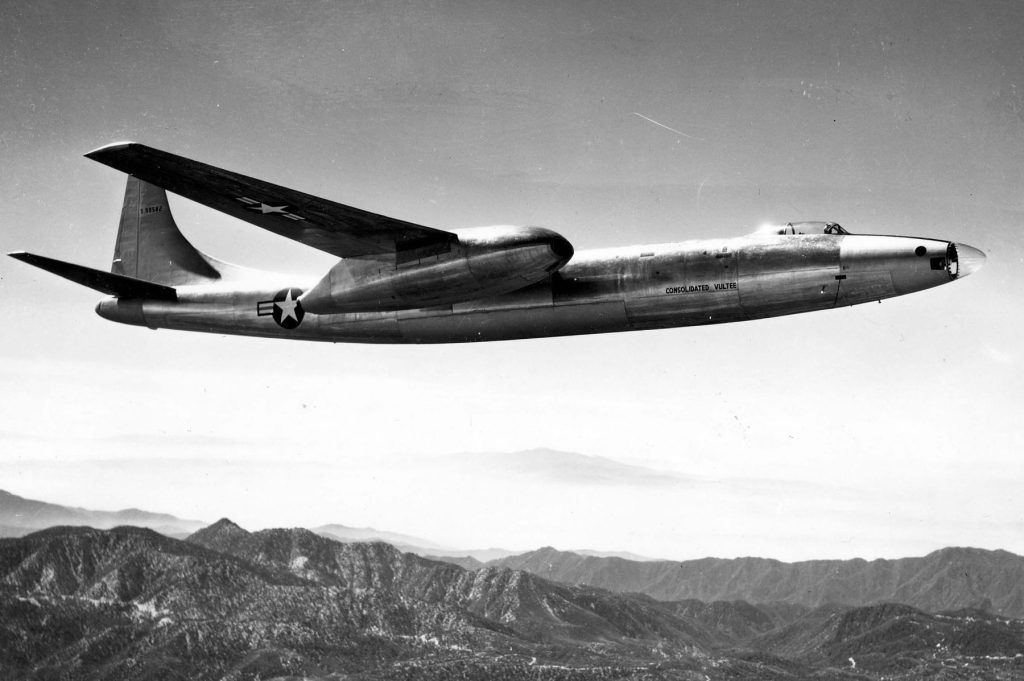
In the end, the Convair XB-53 was not an aircraft that failed because it was poorly designed. It failed because it arrived at a moment when the US military was still figuring out what really mattered in the new jet age, with too many projects competing for money at the same time. Its forward-swept wings, unconventional control layout, and deeply integrated engines were ideas that made sense on paper, but needed technologies and budgets that simply did not exist yet. Like many aircraft in the Grounded Dreams series, the XB-53 never flew, never entered service, and was quietly set aside. But it stands as a reminder of a short period when the future of airpower was still uncertain, and engineers were not scared to experiment. Check our previous entries HERE.