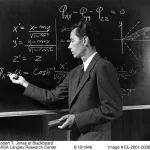
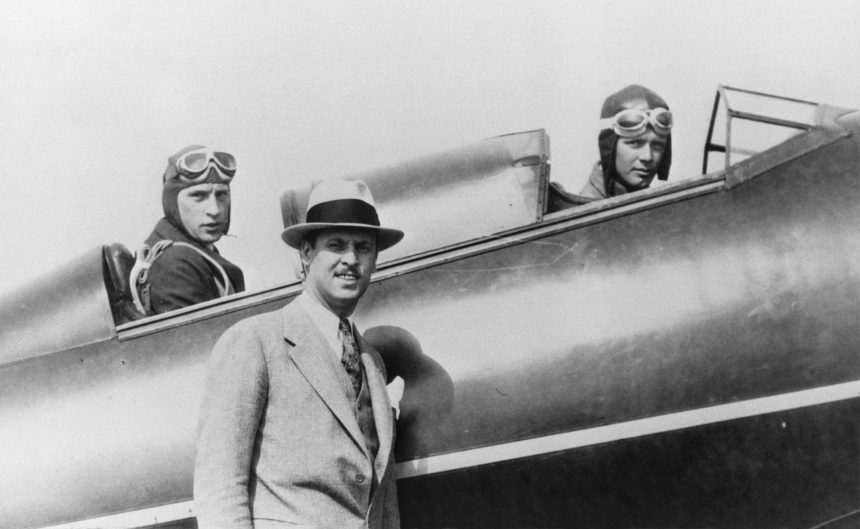

Light aircraft have made flying easier for many people, and the aeronautical engineer behind their development was Fred E. Weick. He made important contributions to aircraft design that improved performance, safety, and handling in both civil and military aircraft. He was born in Berwyn, Illinois, a suburb of Chicago. He was inspired to become an aviator at age 12 when he saw planes flying around a nearby airfield. Even though he did not have formal engineering training, his high school science teacher encouraged him to pursue engineering. He graduated from the University of Illinois with a degree in mechanical engineering in 1922. Soon after, Fred E. Weick found that there were not many jobs for aeronautical engineers in the US. He started as a draftsman for the US Air Mail Service before joining Yackey Aircraft Company in 1923. There, he did various tasks, like refueling planes and selling rides. He then applied for a junior aeronautical engineer position at the Navy’s Bureau of Aeronautics. He became the bureau’s first civilian assistant for propeller research. He also began writing a textbook on propeller design, which later became a classic. As a Navy engineer, Fred E. Weick suggested that NACA create a large wind tunnel with a test section about 20 feet wide to test full-sized propellers. Later, NACA offered him the job as a designer and head of the facility, which he accepted.
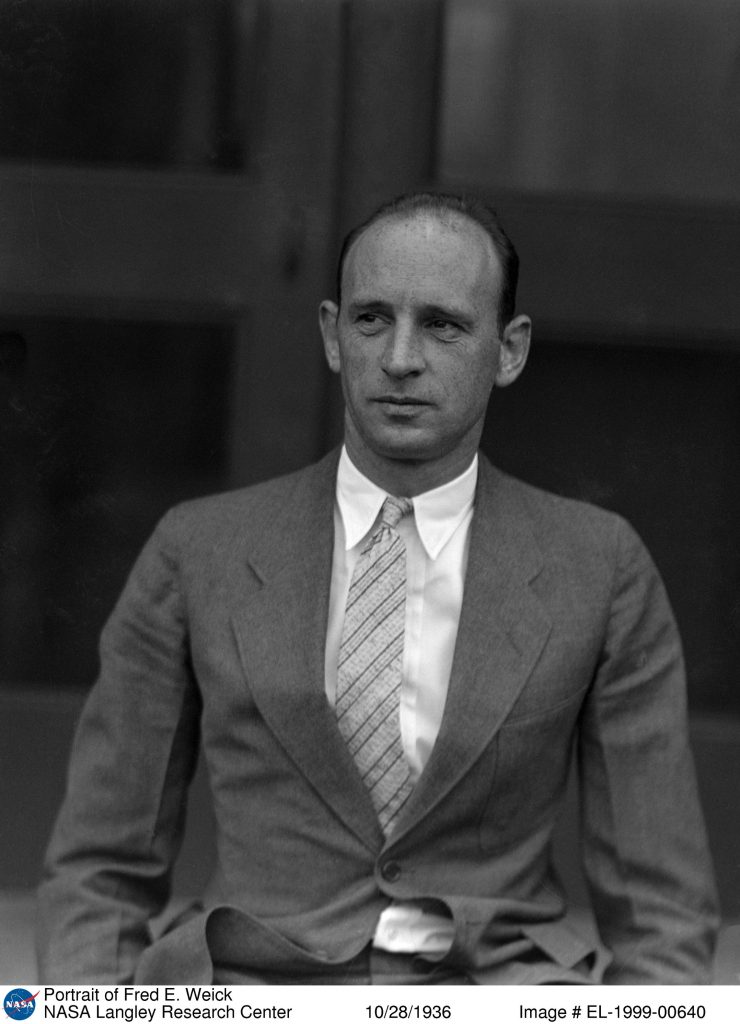
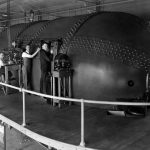
Fred E. Weick joined the NACA Langley Memorial Aeronautical Laboratory in 1925. There, he worked with Dr. Max Munk to create the Langley Propeller Research Tunnel (PRT). This was the first wind tunnel dedicated to full-scale propeller research. He led the PRT from 1925 to 1929. After proving the PRT’s value with initial propeller tests, Weick focused on developing a low-drag engine cowling for air-cooled radial engines, which improved aircraft performance and helped in proper engine cooling. His work earned the NACA its first Collier Trophy in 1929. Weick then started research on where to place engines on multi-engine airplanes and how this affected their performance. He planned tests for the PRT to change the vertical position of an engine with a NACA cowling in relation to the wing. Although the tests were done after Weick left, the results influenced airplane design by helping identify the best engine position along the wing. These findings were first applied in the Boeing 247, Douglas DC-2, and Martin B-10, becoming crucial to the design of cost-effective airliners. Fred E. Weick left Langley in 1929 to become the chief engineer at the Hamilton Aero Manufacturing Company. There, he tested propellers on Charles Lindbergh’s Sirius airplane at Lindbergh’s request. In 1930, the Great Depression hit aviation companies, and Weick returned to the NACA, where he focused on aircraft spinning, a major problem that caused many fatal accidents. Before taking the job, he made sure he could work on stability and control in general. This way, Fred E. Weick aimed to prevent aircraft from spinning and avoid the problem altogether.
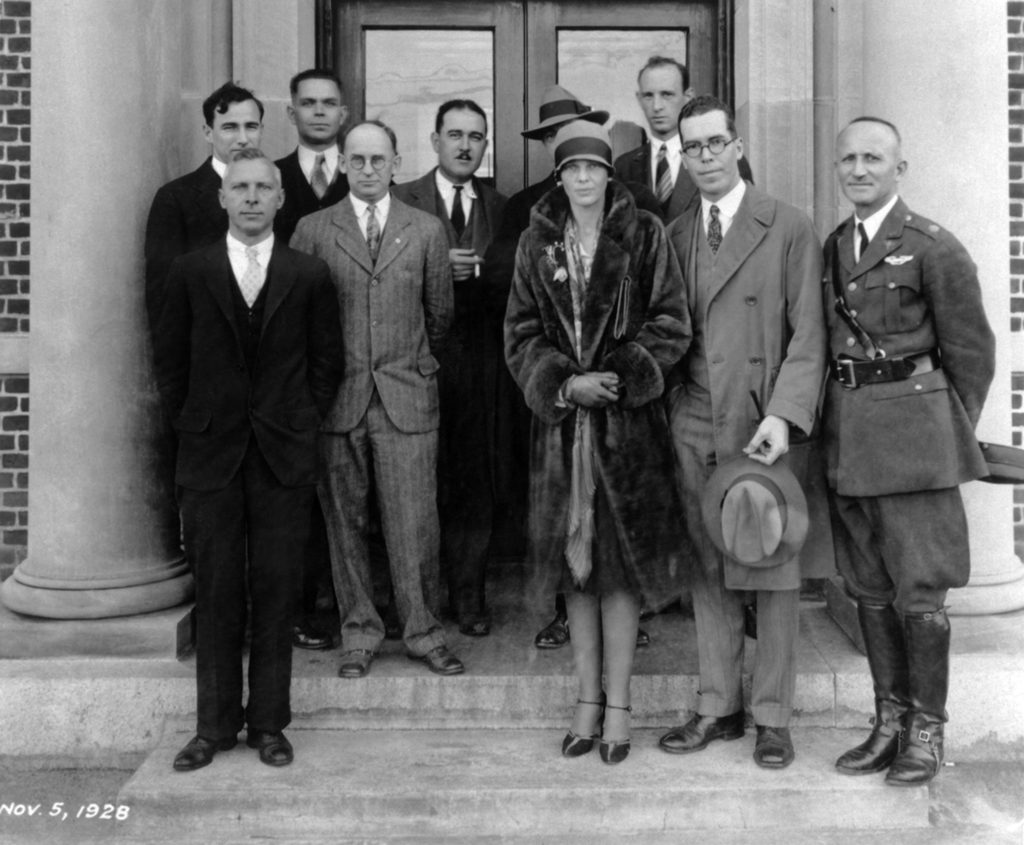
After returning to Langley, Fred E. Weick became the Assistant Chief of the Aerodynamics Division. He led research in a 7-by-10-foot atmospheric wind tunnel. His team worked on high-lift devices and new aircraft-control concepts to make landings safer at lower speeds. They even held a contest for the best personal-aircraft design. The work led to Weick’s innovative W-1, which featured a high parasol wing and an unusual auxiliary wing. Weick and nine engineers built the W-1 in their free time. It was the first aircraft with steerable tricycle landing gear. NACA pilots evaluated it, and it was tested in the Langley Full-Scale Tunnel, resulting in a modified version called the W-1A. Weick left NACA in 1936 to become the chief designer at the Engineering and Research Corporation (ERCO) in Washington, D.C. His Ercoupe airplane showcased his commitment to safety by merging rudder and aileron controls into a user-friendly device for amateur pilots. Initially a two-seater and later a four-seat model, the Ercoupe was the first personal airplane certified as spin-proof. By the time of Weick’s death in 1993, around half of the 6,000 built were still flying. After the post-war decline in general aviation, Fred E. Weick joined Texas A&M University in 1948.
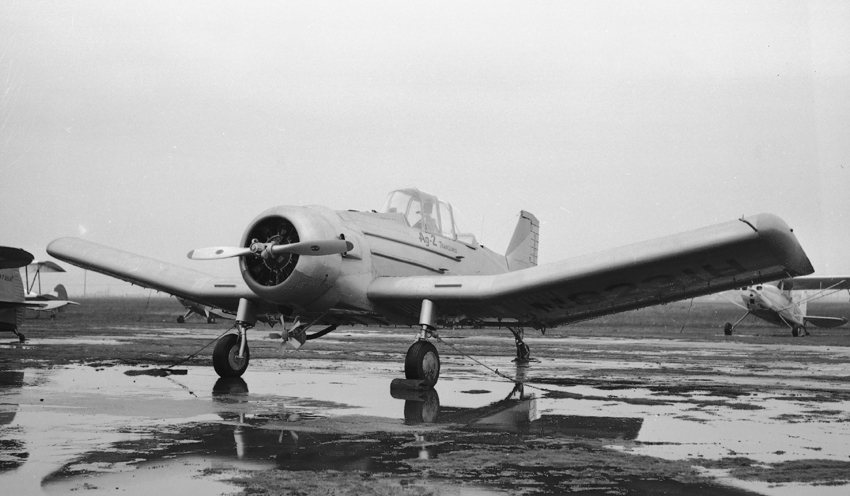
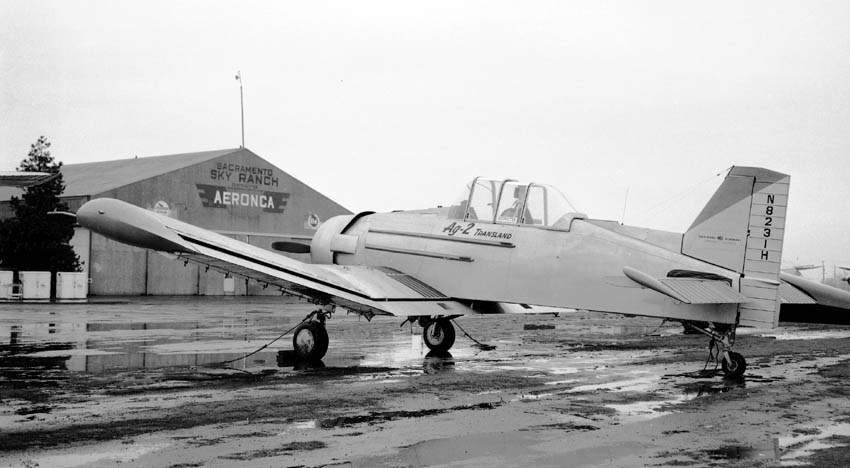
Despite lacking experience in agricultural aircraft, Fred E. Weick developed the Ag-1 crop duster and designed the Ag-3, which influenced the Piper PA-25 Pawnee series. His designs were recognized for their safety enhancements, establishing him as a leading technical expert in agricultural aviation. In 1957, Fred Weick became the director and chief engineer at Piper Aircraft in Vero Beach, Florida. He helped design the popular Cherokee line of light aircraft and the Pawnee. Fred E. Weick retired in 1969 at the age of 70 but continued to work as a consultant and was active in the Experimental Aircraft Association. Weick received the Sylvanus A. Reed Award in 1945 and the W. H. Fawcett Award in 1946 for his work in aeronautics. His autobiography, “From the Ground Up,” was published in 1988, and he died on July 8, 1993, in Vero Beach, Florida, at the age of 93. As one of the Pioneers of Aeronautical Engineering, Fred E. Weick’s contribution to aviation as it is today is invaluable. Read more such articles HERE.