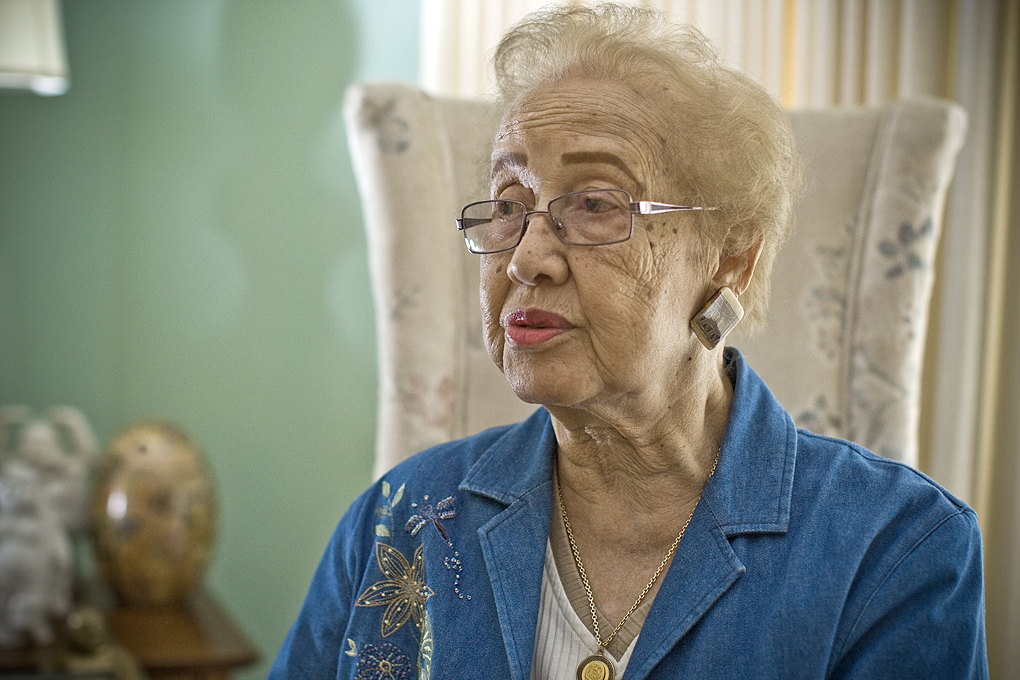
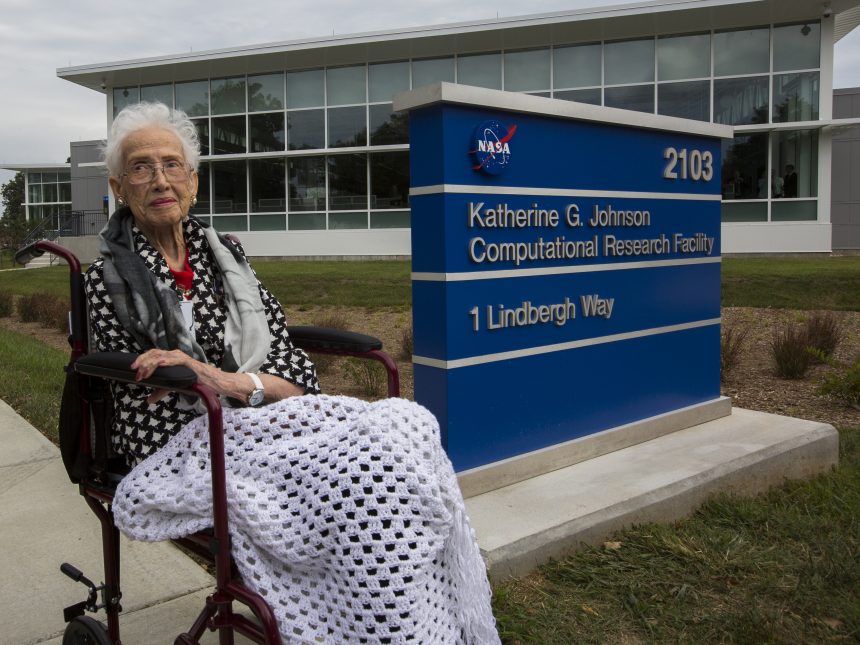

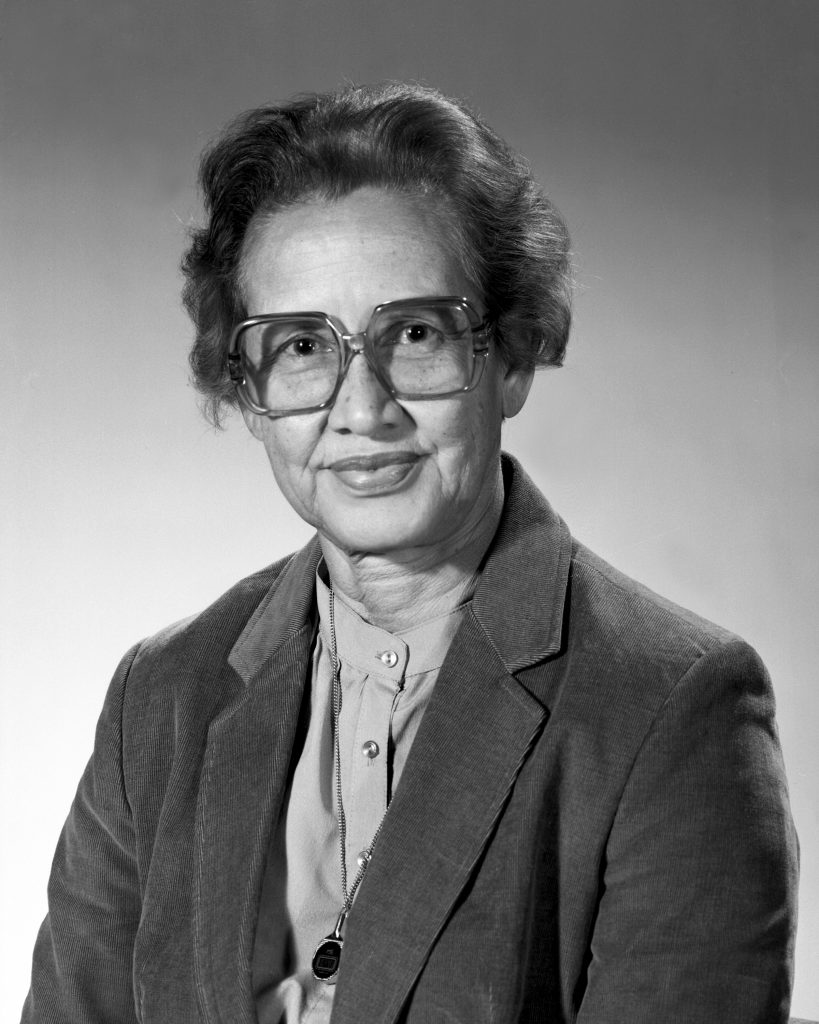
Katherine Johnson loved math. In the early part of her career, people called Katherine a “computer” because she performed complex calculations. She helped NASA send an astronaut into orbit around Earth and later helped put a man on the Moon. She was born in 1918 in West Virginia. She was a research mathematician who was fascinated by numbers. By the time she was 10 years old, she was already a high school freshman. It was impressive because during her time, many African-American students had access to school only until eighth grade. When she turned 18, she enrolled in college, where she learned a lot about math. She graduated with top honors in 1937 and then started teaching at a public school for Black students in Virginia. When Katherine Johnson was 34, she learned that the National Advisory Committee for Aeronautics (NACA’s, now NASA) Langley laboratory was hiring African American women to solve math problems. These women were called “computers.” Katherine applied for a job, but all the positions were filled. However, when she applied again the next year, and at that time, NACA hired her. She worked with a group of women known as “computers.” Katherine started working at Langley in the summer of 1953. Two weeks later, Dorothy Vaughan, the head of Langley, assigned her to work on a project in the Maneuver Loads Branch of the Flight Research Division.
What began as a temporary position quickly became permanent. For the next four years, Katherine Johnson analyzed data from flight tests and helped investigate a plane crash caused by wake turbulence. As she was finishing this work, her husband passed away from cancer in December 1956. In 1957, the launch of Sputnik, the Soviet satellite, changed history and impacted Katherine Johnson’s life. In 1957, she provided some calculations for a 1958 document called Notes on Space Technology. The document provided a summary of lectures by engineers in the Flight Research Division and the Pilotless Aircraft Research Division (PARD). These engineers were important players in the Space Task Group, NACA’s first official effort in space travel. Johnson, who had worked with many of these engineers since arriving at Langley, continued with the program as the NACA became NASA later that year. Katherine Johnson conducted trajectory analysis for Alan Shepard’s mission, Freedom 7, in May 1961, which was the US’s first human spaceflight. In 1960, she and engineer Ted Skopinski wrote a report titled “Determination of Azimuth Angle at Burnout for Placing a Satellite Over a Selected Earth Position.” The report outlined the equations for orbital spaceflight and specified where the spacecraft would land. It was the first time a woman in the Flight Research Division was credited as an author of a research report. In 1962, NASA was getting ready for John Glenn’s orbital mission.
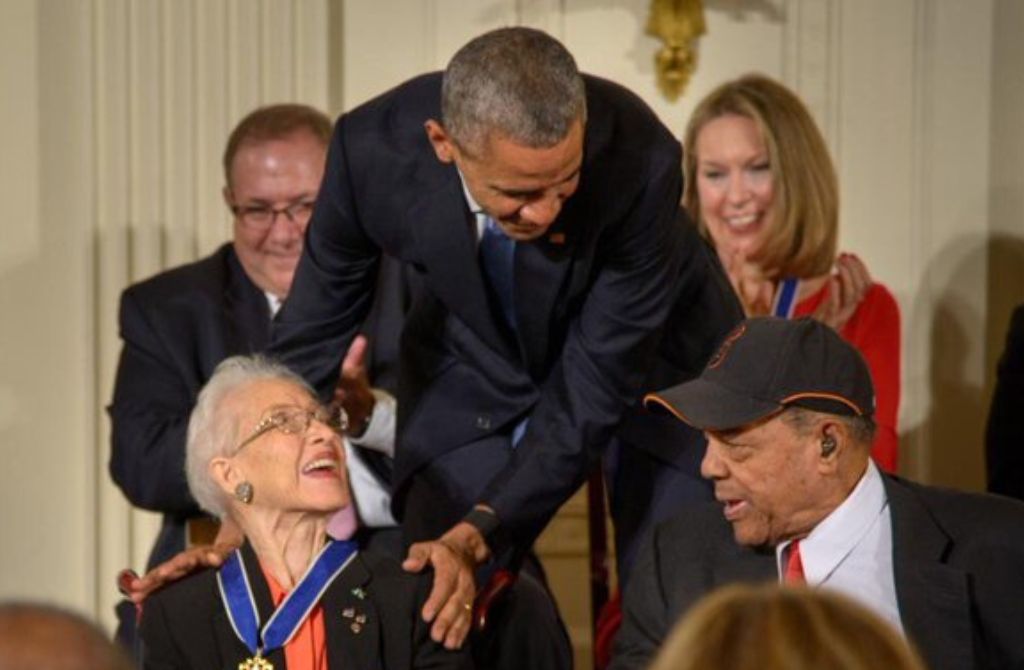
Katherine Johnson was called in for the crucial task for which she was famous. The complexity of the mission required a global communications network connecting tracking stations around the world to IBM computers in Washington, Cape Canaveral, Florida, and Bermuda. The computers were programmed to calculate the capsule’s path from launch to landing. However, the astronauts were cautious about trusting only these machines, which sometimes had problems or failed. As part of their preflight checks, Glenn asked the engineers to bring Johnson to run the same calculations by hand on her mechanical calculating machine. Glenn’s flight successfully marked a key moment in the space race between the United States and the Soviet Union. According to Katherine Johnson, her biggest contribution to space exploration was her calculations that helped connect Project Apollo’s Lunar Module with the Command and Service Module orbiting the Moon. In addition, she worked on the Space Shuttle and the Earth Resources Technology Satellite, which later became known as Landsat. Johnson wrote or helped write 26 research reports and retired in 1986 after spending 33 years at Langley. In 2015, when Katherine Johnson was 97, President Barack Obama awarded her the highest civilian honor in America, the Presidential Medal of Freedom. When she was 101 years old, she passed away on February 24, 2020. As one of the Pioneers of Aeronautical Engineering, Katherine Johnson really was a computer when computers wore skirts. Read more Pioneers of Aeronautical Engineering articles HERE.