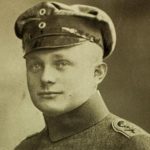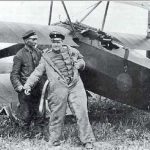

Many aces who fought in WWI and survived went on to fight in WWII as well. But there was a Royal Air Force pilot who became an ace in WWI and developed air power doctrine in WWII. Arthur Coningham, who was born on January 19, 1895, in Brisbane, Australia, grew up in New Zealand. He joined the 5th Wellington Regiment on August 10, 1914, and served in Samoa and Egypt at the start of the war. After getting typhoid fever, he was found unfit for service and was discharged from the army on April 1, 1916. Later that month, Arthur Coningham paid for his own trip to England and was accepted as a cadet in the Royal Flying Corps. He was promoted to Second Lieutenant (on probation) on August 8, 1916, and learned to fly at Netheravon and Upavon. He graduated from the Central Flying School in November 1916. He was then assigned to 32 Squadron and arrived at Lealvillers, northwest of Albert, on December 19, 1916. Flying the Airco D.H.2, Coningham scored his first victory on January 23, 1917. Later that year, as No. 32 Squadron converted to the Airco D.H.5, he continued his combat service in the new fighter. After scoring on July 11 and 12, Arthur Coningham shot down three aircraft on July 20 to become an ace. He scored four more victories in July, bringing his score to 10. In the same month, he was wounded and spent several months in the hospital.
Ace Journey of Arthur Coningham
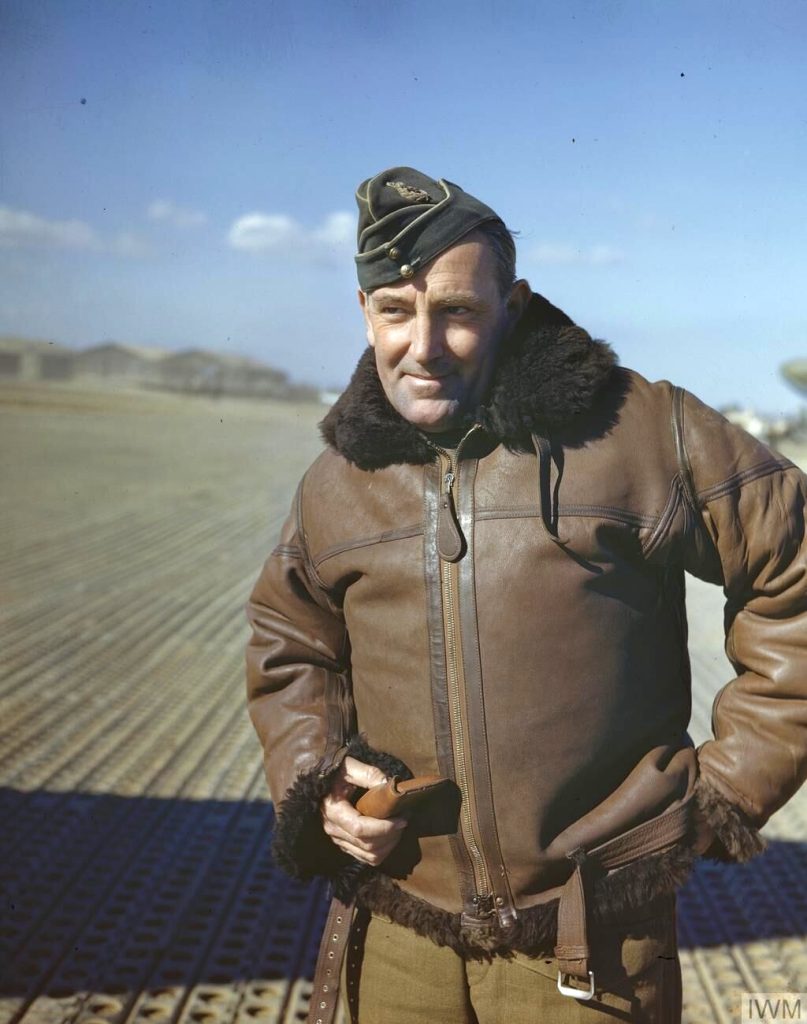
Arthur Coningham was awarded a Military Cross in September and, in January, a Distinguished Service Order (DSO), with a citation, “For conspicuous gallantry and devotion to duty. With three other pilots, he attacked an enemy machine which was protected by ten others, shot it down, and destroyed another one the same evening. Shortly afterwards, he and two others attacked five of the enemy, and although wounded and rendered unconscious for the moment, he succeeded in driving down two of the enemy. In spite of being much exhausted by loss of blood, he continued his patrol until he was sure that no more enemy machines were in the vicinity, setting a splendid example of pluck and determination.” On March 26, 1918, he took command of 92 Squadron in Tangmere, Sussex. While with this squadron, he achieved four more victories flying the S.E.5a, bringing his WWI score to 14. Arthur Coningham remained in the Royal Air Force and was promoted to Flight Lieutenant on August 1, 1919. In the early 1920s, he served as a flying and technical instructor before joining 55 Squadron in Iraq to fly Airco DH.9As. In 1923, he became a squadron leader and took charge of 55 Squadron. From early 1924 to early 1926, he served as a staff officer at the headquarters of the Egyptian Group and the RAF Middle East. In 1925, he led a 3,000-mile flight from Egypt to Nigeria, making the first air journey across Africa from west to east. For this achievement, Arthur Coningham received the Air Force Cross. After more time at the RAF College and the Central Flying School, he was promoted to wing commander in 1931 and served in Sudan.
WWII and Legacy
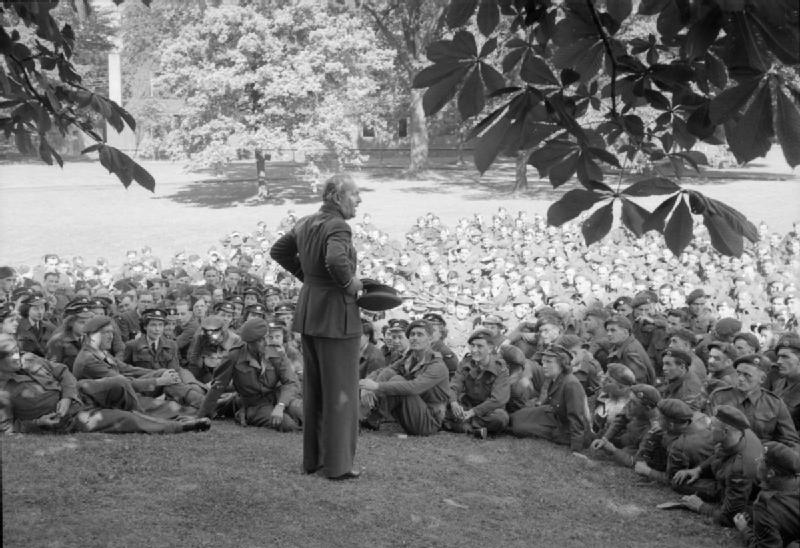
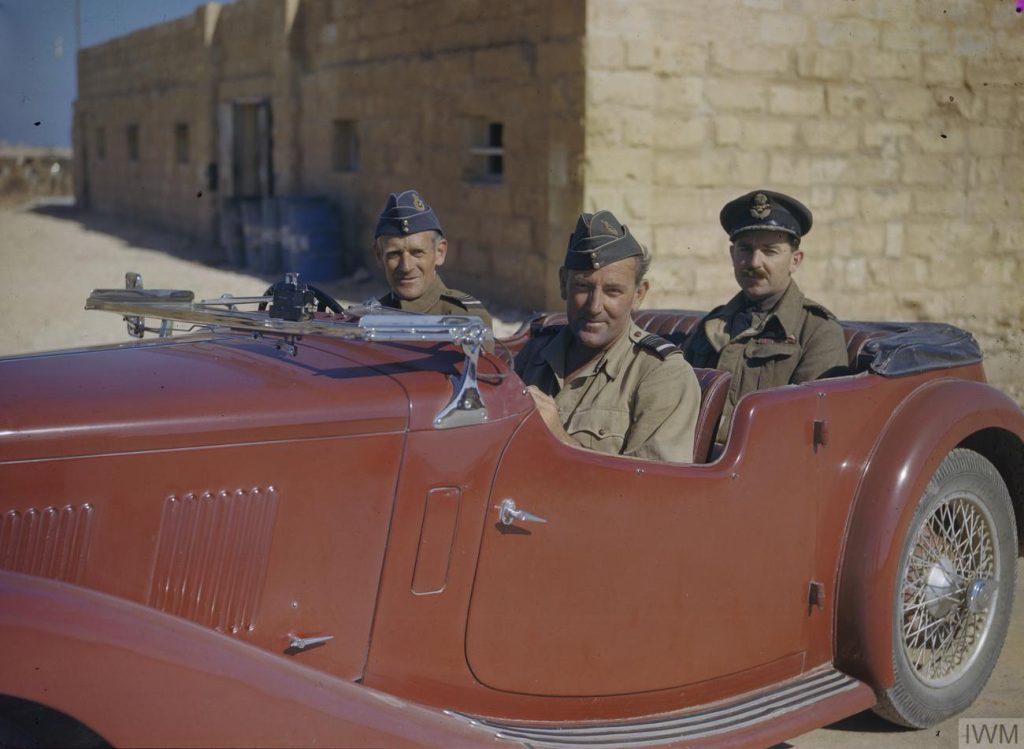
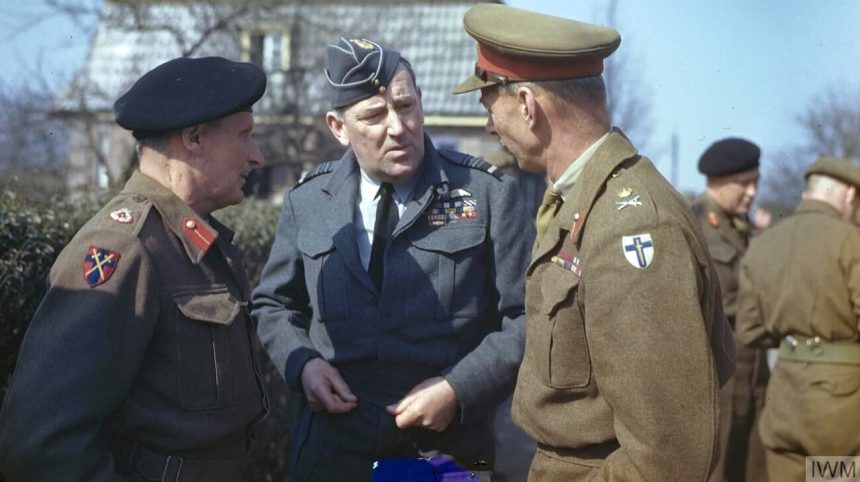
When Arthur Coningham returned to the UK in 1935, he worked in Coastal Command and was promoted to group captain in 1937. He then served as the Senior Air Staff Officer at No. 17 (Training) Group and later commanded RAF Calshot until 1939. During World War II, Coningham served as the air commander for Field Marshal Bernard L. Montgomery in the Desert War. He promoted an airpower strategy that later influenced General Dwight D. Eisenhower and became the tactical air doctrine of the United States Air Force. The doctrine has three principles. First, airpower is strongest when it is flexible and can quickly focus its efforts. Second, this control should be under the command of someone trained in air operations. Finally, air forces should be used as a whole, not split into small groups. In January 1944, Arthur Coningham took command of the British Second Tactical Air Force and played an important role in the Normandy invasion. By the end of World War II, he had become an Air Marshal and was knighted by the King of the United Kingdom. On January 30, 1948, Arthur Coningham was on a British South American Airways flight that disappeared en route to Bermuda. The passengers and crew of the Star Tiger, an Avro Tudor IV, were never found. In the Aces series, Arthur Coningham was not merely an ace. He was the architect of the modern approach to using aircraft in tactical operations. Read stories of other Aces HERE.