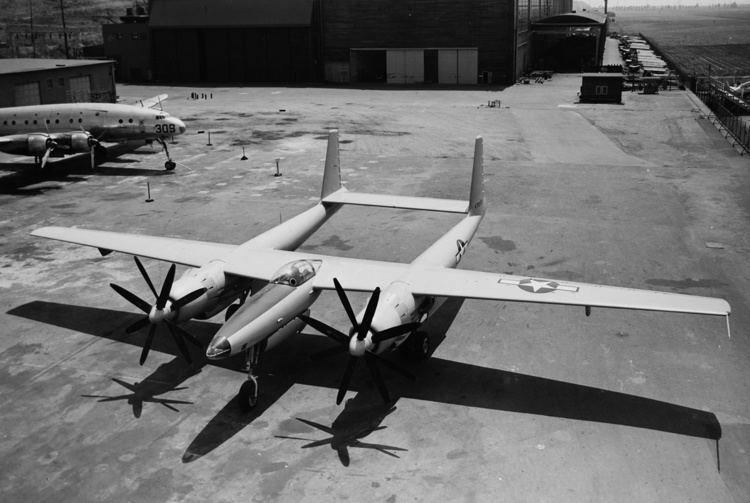

In 1937, Howard Hughes started designing an advanced twin-engine aircraft with twin booms and designated it the Hughes D-2. At the time, Hughes had just set a global speed record for circling the Earth using a Lockheed 14. Many aviation historians believe that the D-2 was built so that Hughes could set another world record. However, with the outbreak of WWII, much of the airspace became restricted, and it was hard to buy aircraft parts without government approval. As a result, Hughes decided to sell the aircraft to the US military instead. The first documented evidence of the D-2 project comes from a letter Hughes wrote to the United States Army Air Corps (USAAC) in December 1939. In the letter, he proposed that the service buy the Hughes D-2 and described it as a “pursuit-type airplane.” The design was similar to the Lockheed P-38 Lightning, which won the 1939 USAAC design competition for interceptor aircraft. Later, Hughes testified to the US Senate that Lockheed had stolen his design, but many people have challenged this claim. Instead, Hughes later said during a Senate investigation in 1947 that he decided to design and build a completely new airplane with his own money. He believed it would be so impressive that the Army would have to accept it.
Design of Hughes D-2
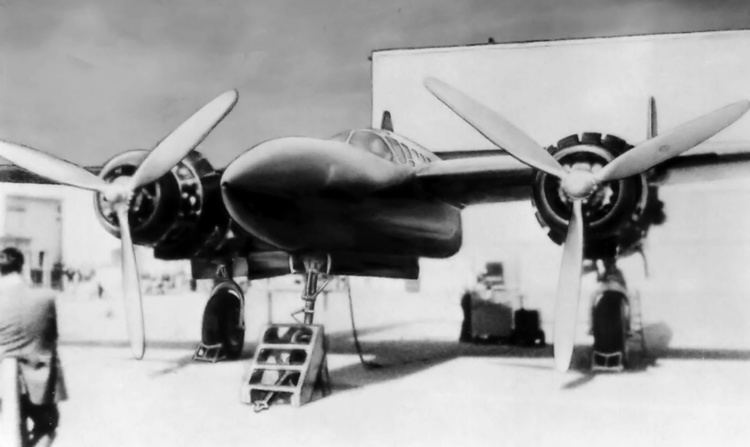
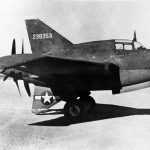
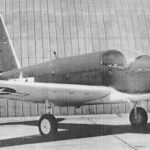
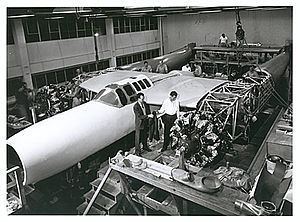
Most of the Hughes D-2 airframe was made of Duramold plywood. Originally, the aircraft was supposed to have a tailwheel, but the design changed to a tricycle landing gear. The main wheels retract backward into the twin booms, and the nosewheel also retracts backward and rotates 90 degrees to lie flat in the center fuselage. The Hughes D-2 was first envisioned to be powered by two experimental Wright R-2160 Tornado engines. It was 57.10 feet long, 27.4 feet high, with a wingspan of 60 feet and a wing area of 616 square feet. The D-2 was built secretly at the Hughes factory in Culver City, California. Glenn Odekirk, a longtime associate of Hughes, helped with the engineering. The secretive nature of the project upset USAAC officials, especially when Hughes denied them access to the factory. The difficulty in obtaining the Wright Tornado engines led to the decision to use proven Pratt & Whitney R-2800 engines instead. The project received several designations, including D-2, DX-2, DX-2A, D-3, D-5, XA-37, and XP-73. In addition, the USAAC was unsure how to use the aircraft, which lacked the maneuverability of a fighter or the payload capacity of a bomber or attack aircraft. In June 1942, a US Army Air Forces (USAAF) report described the Hughes Model DX-2A as a multipurpose aircraft, primarily for convoy protection. The latest specifications identified it as a fighter and expected its weaponry to be similar to that of the XP-58. The only reason it was called a bomber was due to its bomb bay doors. It was to be purchased in its commercial version, the XP-73, for contract purposes.
The Cancellation
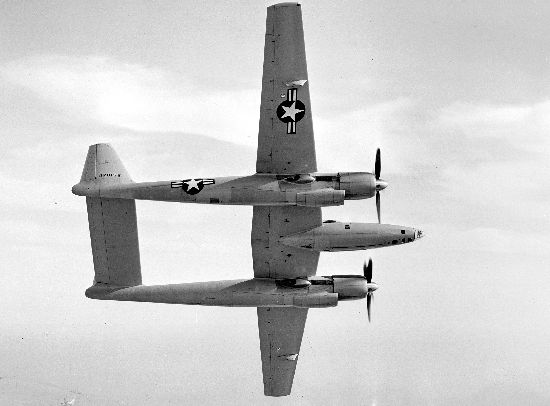
The XP-73 was a temporary name for the Hughes D-2 after the Material Command at Wright Field got approval to buy “one Hughes DX-2 airplane in its current commercial form as a prototype.” Just three days later, the D-2 was changed to the XA-37 for contract purposes. However, engineers at Material Command strongly opposed the aircraft. They were concerned because it was made of wood rather than aluminum, and because they believed Hughes could not produce the aircraft. Therefore, neither of these USAAF designations referred to any actual airplane. Hughes had a high political and public profile, which made the program very controversial. In July 1942, President Franklin D. Roosevelt asked USAAF chief General Henry “Hap” Arnold for updates on the aircraft’s progress. In 1942, Howard Hughes took charge of the flight tests for the Hughes D-2 aircraft after it was prepared. However, after only a few short flights, he noticed that handling the aircraft required too much effort. By spring 1943, full flight testing had begun, but the necessary changes to fix this issue had not yet been made. Hughes realized that the D-2 needed many changes, including a complete redesign of the wings and a different wing shape. The center section of the wing, which ran through the fuselage, needed to be modified to accommodate a larger bomb bay. After these adjustments, the aircraft would be renamed D-5. Eventually, after a few more test flights, the D-2 was set aside.
The Controversy
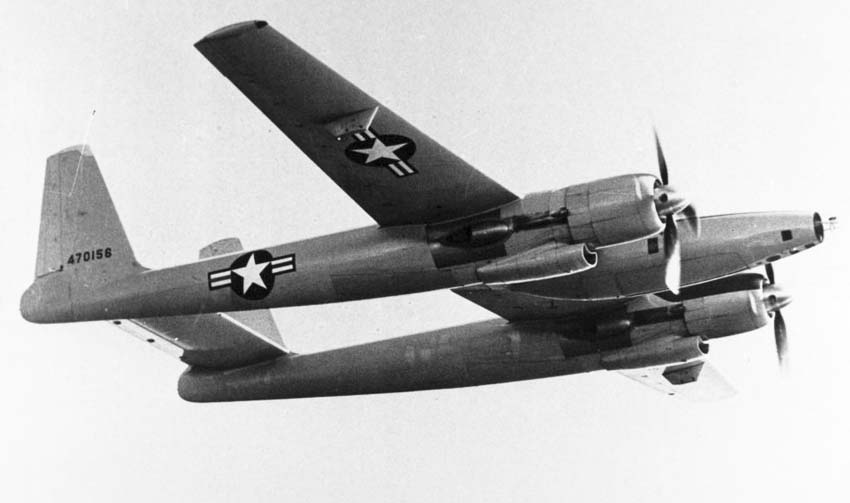
In August 1943, Colonel Elliott Roosevelt, the son of the President and commander of the Northwest African Photographic Reconnaissance Wing, led a team to evaluate several American reconnaissance aircraft projects. He received generous hospitality from Howard Hughes and his staff. On August 20, he sent General Arnold a strong recommendation for the Hughes D-2 aircraft, modified for photographic reconnaissance and designated XF-11. Roosevelt claimed that delivering a few of these planes would help win the war within six months. This recommendation, which Elliott shared with his father, influenced General Arnold to order the aircraft despite ongoing objections from Materiel Command. On October 11, 1943, a letter of intent was signed to purchase 100 XF-11s for $48,500,000. The D-2 prototype could not fly well in tests and was destroyed in a fire at Harper Dry Lake on November 11, 1944. It led to another controversy between the USAAC and Howard Hughes. Hughes wanted the military to pay the plane’s original development costs, but the USAAF refused. After the fire, however, the service agreed to share the costs equally. Hughes signed a contract in mid-1944 to develop the XF-11, a new high-altitude, high-speed version. The whole project was closely examined by the Senate War Investigating Committee in 1947, leading to the famous Hughes-Roosevelt hearings in August and November that year. In the Grounded Dreams series, Hughes faced many controversies in the 1940s, including the Hughes D-2 and the XF-11, which was also canceled. Read more Grounded Dreams articles HERE.