





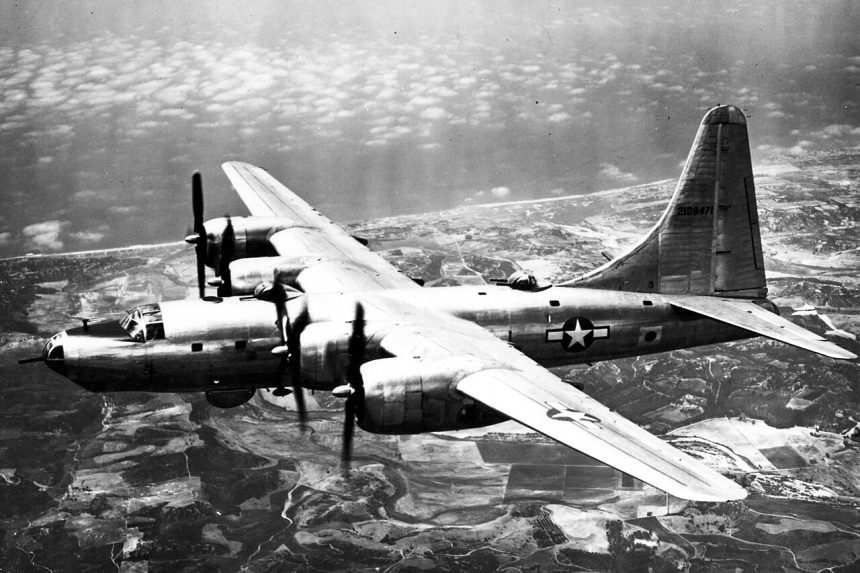

On this day in aviation history, 84 years ago (September 7, 1942), the Consolidated XB-32 Dominator took flight for the first time. Developed during WWII as an American heavy strategic bomber, the B-32 was conceived as a backup to the Boeing B-29 Superfortress in case that aircraft encountered serious development problems. The U.S. Army Air Corps requested that Consolidated develop the bomber in June 1940. Based partly on concepts from the company’s B-24 Liberator, the new design featured a large Davis wing and was originally intended to have a pressurized cabin and remotely controlled defensive turrets. The first XB-32 was completed at Fort Worth, Texas, but development ran six months behind schedule. Problems with its pressurization system, turrets, and landing gear doors meant those features were omitted from the prototype for its first flight.

Development remained troubled, with engine cooling, pressurization, armament, and stability problems delaying the B-32 while the B-29 successfully entered combat. The Dominator finally reached the Pacific in May 1945 and flew a limited number of combat and reconnaissance missions before the end of WWII. On August 18, a B-32 crewman, Sergeant Anthony Marchione, was killed during an attack by Japanese fighters over Tokyo, becoming the last American to die in air combat during the war. Production was cancelled shortly afterward, with 118 B-32s completed. The production B-32 measured 82 feet 1 inch in length with a wingspan of 135 feet and was powered by four 2,200-horsepower Wright R-3350 Duplex-Cyclone radial engines. It could reach 357 mph at 30,000 feet, had a range of 3,800 miles, and a service ceiling of 30,700 feet. Defensive armament consisted of ten .50-caliber machine guns, while the Dominator could carry up to 20,000 pounds of bombs.











Today I finished a summer read on the B 32.
Also mentioned that Tony Marchione twenty years young lost his life over Tokyo . Yes the last fight airmen to lose his life in WW2.
So seeing this Aviation history on the phone feed, I needed to see the history. Thanks for mentioning this aircraft for just yesterday . I was with a few seniors, we had a conversation about our father’s war time endeavors.
So it was interesting to hear none of these gentlemen knew about the B32 .
What amazes me is that not a single example of the B-32 remains.
What was the difference between the B-32 and the PB4Y-2 Privateer?
The PB4Y-2 Privateer was a variant of the B-24 Liberator. Developed for the Navy, the main differences were the single vertical tail fin which gave it better directional control. The fuselage was lengthened to provide a flight engineer location, and the engines were non turbo charged as maritime patrol operations were typically flown at lower altitudes making the turbo chargers unnecessary and saving weight.
The B-32 was developed as a backup for the B-29 should that aircraft experience development issues. Both aircraft had problems, but the B-29’s were for the most part solved more quickly. And, the B-29 was the preferred design. B-32’s did serve in WW2, but arriving late in the pacific theater mid May 1945, they flew limited combat missions before hostilities ceased with Japan’s surrender.