






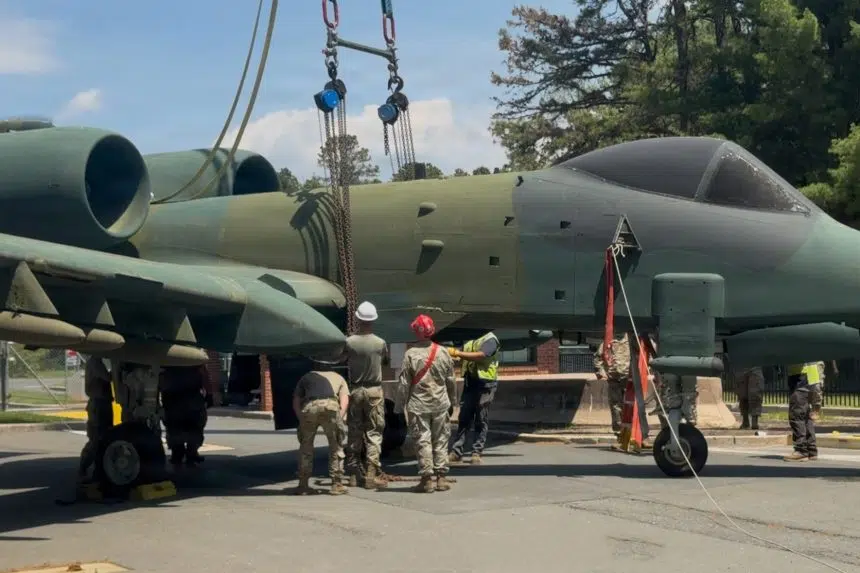

A small crowd watched from the ramp at Barnes Air National Guard Base on May 19, 2026, as the boom of a large yellow crane began to rise. Under a clear sky, an A-10 Thunderbolt II was about to do something it had not done in nearly three decades: fly. There was no roar from its General Electric turbofans, no scent of JP-8, and no exhaust trailing behind it. Instead, diesel hydraulics hummed and steel chains clanked as the green A-10 slowly lifted away from the concrete pedestal it had occupied since September 25, 1997.

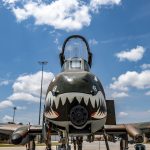
Suspended above the ground, the aircraft carried two identities—and two intertwined stories of combat service, loss, remembrance, and survival. The airframe is A-10A 79-0100, a Desert Storm veteran once known as Georgia Girl. Retired U.S. Air Force Chief Master Sgt. Rob Roy was a crew chief when the aircraft arrived at Barnes and recalled its history. “A-10 jet number 79-0100, also known as Georgia Girl, was a veteran of Desert Storm,” Roy said. “It came to Barnes from the 354th Tactical Fighter Wing at Myrtle Beach Air Force Base, South Carolina, on March 12, 1992, after the base was selected for closure through BRAC.” Following years of operational service, the A-10 was retired because of fatigue in its wing structure and reassigned as a battle-damage repair training airframe. Members of the unit, however, believed the combat veteran deserved a more dignified fate. In 1997, they restored its exterior and selected it for a permanent memorial display. In that role, 79-0100 would surrender its familiar identity as Georgia Girl to commemorate a local pilot who had been lost more than a decade earlier.

Remembering Maj. John Southrey
On September 17, 1986, two A-10s collided during a training mission over Wells, New York. Maj. John Southrey of the 104th Tactical Fighter Group was killed, and his aircraft, A-10A 78-0648, was destroyed. When the unit prepared 79-0100 for display in 1997, it repainted the aircraft with Southrey’s tail number, 78-0648, and placed his name beneath the canopy. The former Georgia Girl had taken on a second identity, becoming a lasting memorial to the fallen pilot. On September 25, 1997, a crane from Westover Air Force Base raised the restored A-10 onto its pedestal at Barnes. For nearly 29 years, the aircraft stood watch over the base. Birds nested in its intakes, families posed for photographs beneath its wings, and generations of airmen passed the memorial as they entered the installation. That long vigil was interrupted by the construction of a new main gate and a broader plan to consolidate the base’s historic aircraft in a more visible location.
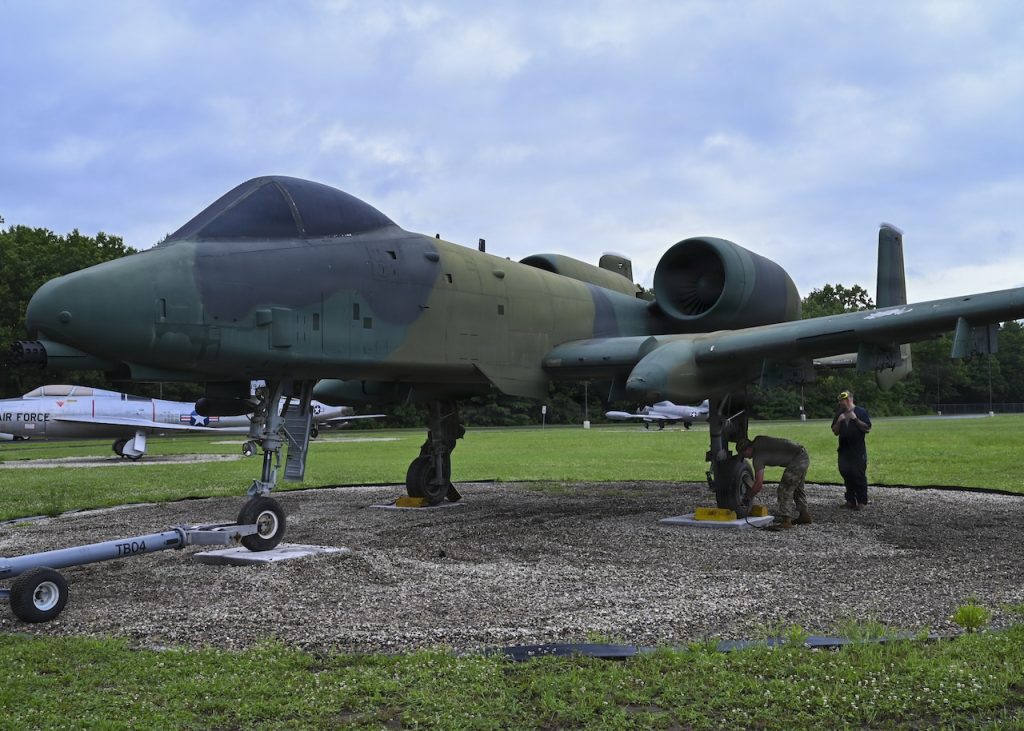
(Image credit: U.S. Air National Guard Photo by Jay Hewitt)
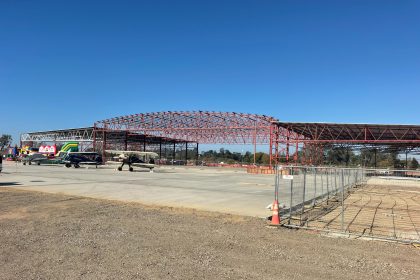
“Following the completion of the new main gate, wing leadership decided to relocate the base’s static displays to improve their visibility,” said U.S. Air Force Master Sgt. Adam Dempsey, 104th Fighter Wing TAMS superintendent, who worked on the relocation project. The selected area, nicknamed the “Field of Dreams” by the 104th Fighter Wing Chiefs Council, offered space for a walking park where the base’s historic aircraft could be displayed together. Moving the A-10 from its longtime pedestal was the first step toward giving it a new home there.
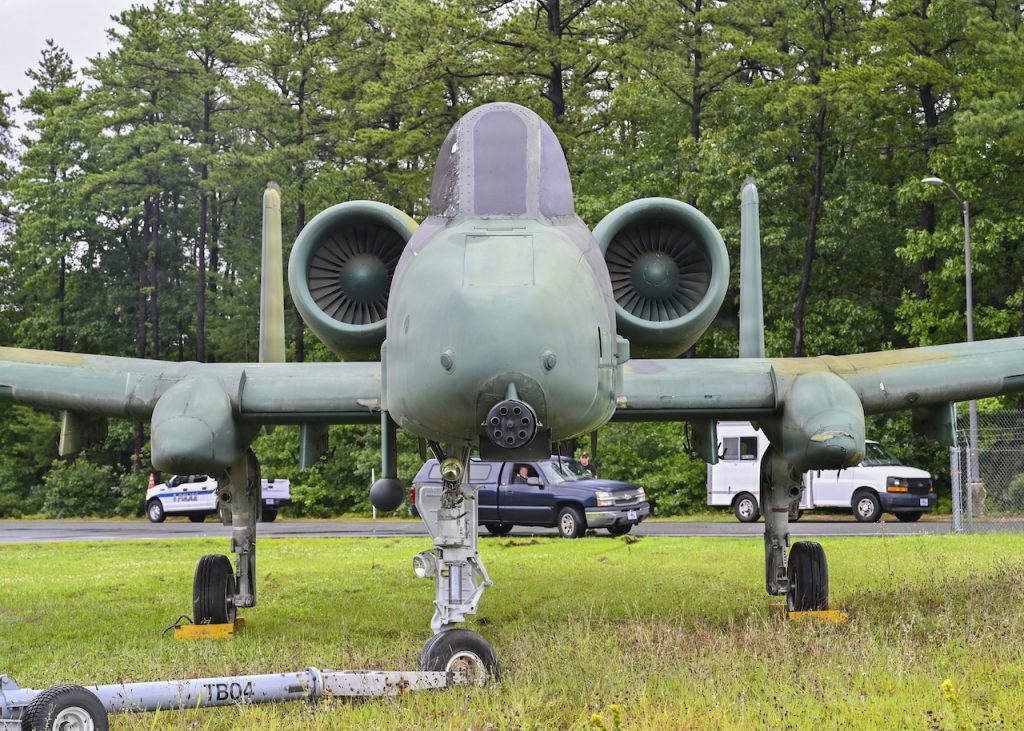
(Image credit: U.S. Air National Guard Photo by Jay Hewitt)
A Brief Return to the Air
On May 19, crews from Central Mass Crane Service Inc. began the delicate process of lifting the aircraft. The operation required several attempts as the A-10 shifted under the crane. At last, it rose clear of the pedestal and briefly hung in the air before being lowered to the ground near the former main gate. The aircraft was subsequently towed to the Field of Dreams, completing a short but complex journey from the perch it had occupied since 1997.
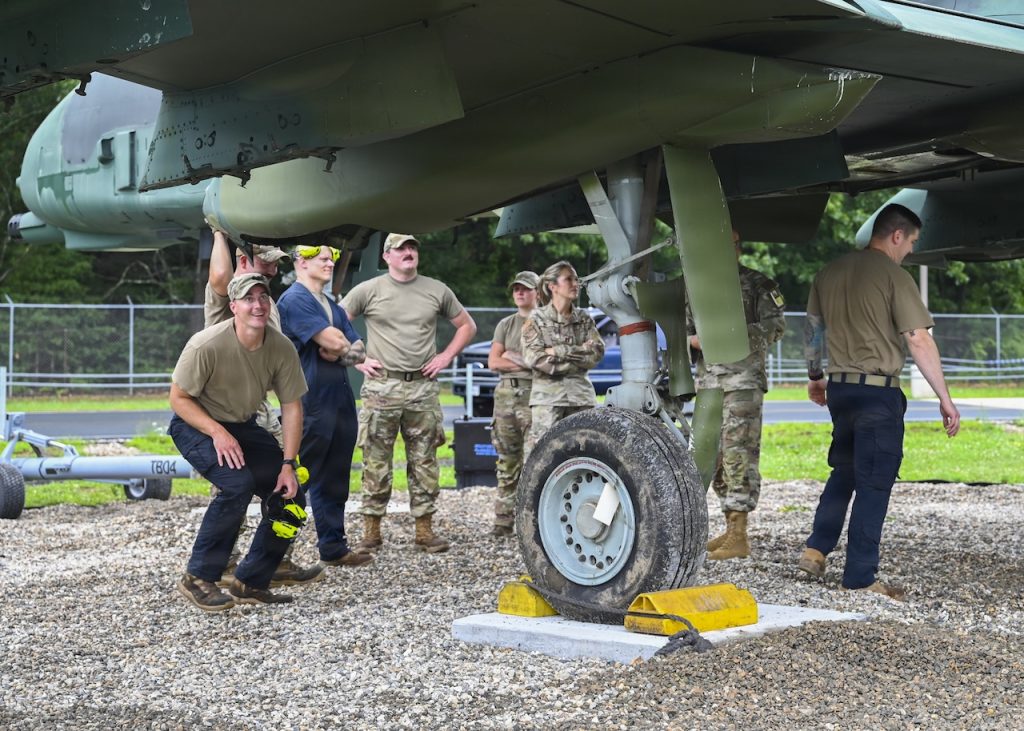
(Image credit: U.S. Air National Guard Photo by Jay Hewitt)
The move also led to the opening of a time capsule that had been placed inside the aircraft. Among its contents was a key labeled “79-100,” sealed in a bag with an old issue of the base’s Airscoop newsletter. The newsletter’s front page reported Southrey’s death. Together, the objects provided a tangible link between the A-10’s two identities: the combat veteran 79-0100, known as Georgia Girl, and the memorial marked as 78-0648 in honor of Maj. John Southrey. The Warthog will not fly again, but its story will continue at the Field of Dreams. A new time capsule is planned for the display, preserving the histories of both aircraft and explaining how one retired A-10 gave up its outward identity to keep the memory of a fallen airman alive.













Some day the military techno-geeks will regret phasing out the crop dusting Angels of death.