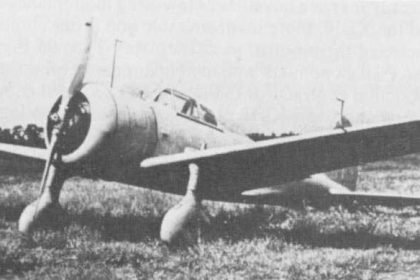
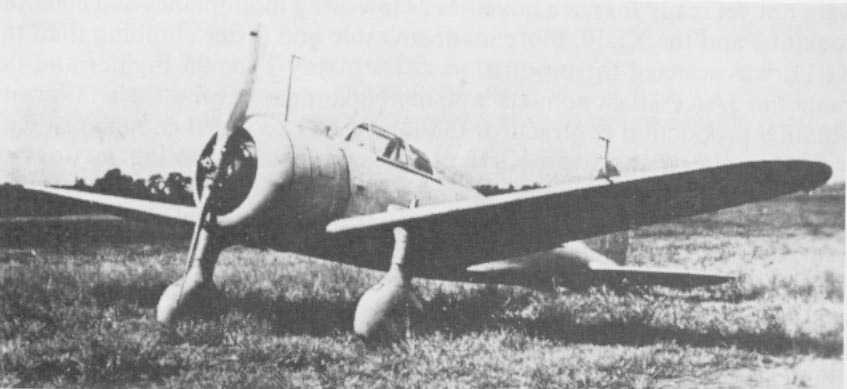


On this day in aviation history, 90 years ago (October 15, 1936), the prototype Nakajima Ki-27 took flight for the first time. Developed as a replacement for the Kawasaki Ki-10 biplane, the Ki-27 was a lightweight monoplane fighter built for the Imperial Japanese Army Air Service. Known to the Allies during WWII as “Nate,” the Ki-27 became Japan’s first Army fighter of monoplane configuration to enter widespread service. Development of the Ki-27 grew from Nakajima’s earlier experiments with monoplane fighters. In 1935, the Imperial Japanese Army instructed Nakajima, Mitsubishi, and Kawasaki to develop competing advanced fighters. Nakajima’s design featured a low-mounted wing, enclosed cockpit, fixed landing gear, and lightweight construction. Although competing designs offered better speed and climb performance, Army evaluators favored the Ki-27 for its exceptional maneuverability.

The Ki-27 entered service in 1937 as the Army Type 97 Fighter and became the Imperial Japanese Army’s principal fighter until 1940. It saw extensive combat over China and later participated in operations throughout Southeast Asia and the Pacific. The faster Nakajima Ki-43 eventually replaced it in frontline service, after which many Ki-27s were used as trainers. During the final year of WWII, some were also employed in kamikaze attacks. A total of 3,368 Ki-27s were constructed. The Ki-27b measured 24 feet 8 inches in length with a wingspan of 37 feet 1 inch and was powered by a 710-horsepower Nakajima Ha-1b radial engine. It could reach a maximum speed of approximately 290 mph, had a range of around 390 miles, and a service ceiling of 40,300 feet. Armament consisted of two synchronized 7.7 mm Type 89 machine guns mounted in the fuselage.