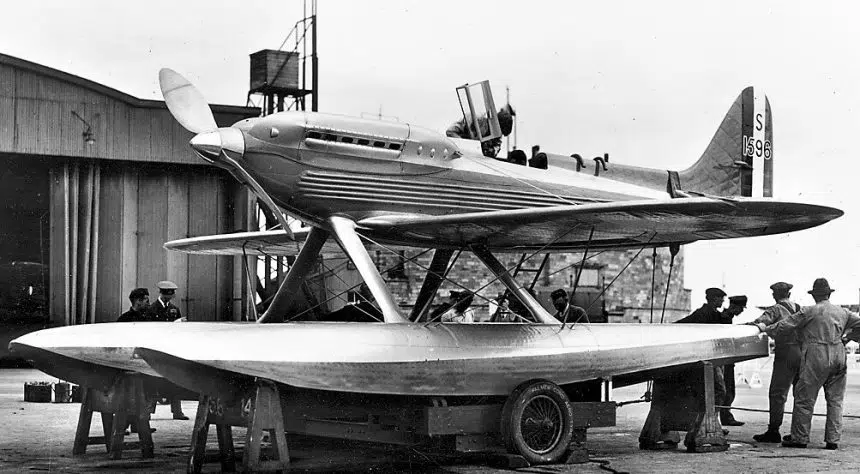

On this day in aviation history, 95 years ago (September 29, 1931), Flight Lieutenant George Stainforth flew Supermarine S.6B S1595 to a new world airspeed record of 407.5 mph. The achievement made Stainforth the first pilot to exceed 400 mph and marked another milestone for Britain’s remarkable series of Schneider Trophy racing seaplanes. Designed by R.J. Mitchell, the S.6B was an improved development of the Supermarine S.6, created for the 1931 Schneider Trophy competition. With only months available for development, Mitchell refined the existing aircraft with improved aerodynamics, redesigned floats, and a substantially more powerful Rolls-Royce R engine. Two S.6Bs, S1595 and S1596, were constructed.

Earlier that month, S1595 had been flown by Flight Lieutenant John Boothman to victory in the Schneider Trophy, securing the trophy permanently for Britain after three consecutive victories. For the speed-record attempt, S1595 was fitted with a specially prepared Rolls-Royce R engine. On September 29, Stainforth made four timed runs in opposing directions over the course, establishing an official world record of approximately 407.5 mph and becoming the first person to fly faster than 400 mph. The Supermarine S.6B measured 28 feet 10 inches in overall length with its floats and had a wingspan of 30 feet. Its Rolls-Royce R V-12 normally produced approximately 2,350 horsepower, although a specially prepared engine producing greater power was used for the record attempt. The aircraft weighed approximately 6,086 pounds loaded and could reach around 390 mph in normal level flight. Only two S.6Bs were built, and the record-setting S1595 survives today at the Science Museum in London.