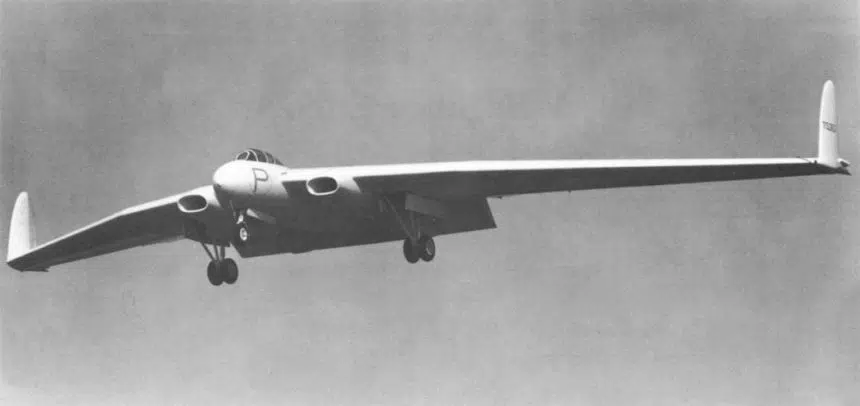


Even before WWI, the flying-wing aircraft concept was taking shape. But by the 1930s, many projects that were undertaken to prove the concept could not succeed. In the mid-1940s, the British company Armstrong Whitworth explored combining the flying-wing design with laminar-flow airfoils and turbojet engines. During WWII, the Ministry of Supply contacted John Lloyd at Armstrong Whitworth. The Ministry asked him to design a full-scale wing to test laminar-flowdrag in a wind tunnel at the National Physical Laboratory. It led to real-world tests of an Armstrong Whitworth laminar-flow wing fitted to a modified Hawker Hurricane. The tests showed that the wing provided some performance improvements, but these benefits quickly decreased as dirt collected on the wing and disturbed the airflow. Lloyd figured that a clean, tailless design with a laminar wing could reduce the aerodynamic drag to a third of a normal aircraft. He then began planning an airliner with these features. By 1943, an initial design for a new airliner was starting to take shape. The plane would have jet engines, six or four. The engines were placed in the wings to keep the airflow over the plane smooth. The design was larger than previous flying wings to allow enough room for passengers. It was expected to weigh around 180,000 pounds and have a wingspan of at least 160 feet. The structure was to be lightweight since it would not have a traditional body or tail. However, this design needed extensive testing, including flying scaled models of the aircraft. The first design was known as the A.W.50.
The Wooden Glider

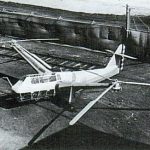
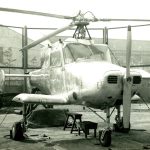
To test the design’s low-speed features, the team built a wooden glider, the Armstrong Whitworth A.W.52 G. It had a wingspan of 53 feet 10 inches and was about half the size of the powered Armstrong Whitworth A.W.52, which itself was half the size of the planned airliner. The glider took less time to build than a powered aircraft. The glider would provide valuable aerodynamic data for improving the powered version, especially in control and stability. The A.W.52 G was mostly made of wood and consisted of a central unit with a cockpit for two pilots and two outer wing sections. It used two wing-tip elevons to control flight, serving as both elevons and ailerons. It also had a pair of Fowler flaps along the trailing edge. In March 1943, construction of the Armstrong Whitworth A.W.52 G began. It was decided to add a pair of anti-spin parachutes at the wing tips. These parachutes would help pilots recover if they had serious handling issues. Exactly two years later, on March 2, 1945, the glider made its first flight, towed by an Armstrong Whitworth Whitley bomber. The tow started at 20,000 feet, and the glider flew for about 30 minutes. Flight testing continued successfully until 1947. Later, the glider was displayed outside the company’s facility in Baginton before being dismantled in the late 1950s. The glider provided useful data on low-speed performance, but it could not fly fast enough to collect all the needed information. To gather this data, self-propelled aircraft were required. In late 1944, the Ministry of Supply became interested in Armstrong Whitworth’s proposals and issued a contract to produce two Armstrong Whitworth A.W.52 prototypes for testing. These planes were mainly intended to carry mail.
The Armstrong Whitworth A.W.52

The Armstrong Whitworth A.W.52 was built for high-speed research and was an all-metal aircraft powered by a turbojet engine. It had retractable landing gear. Aerodynamically, it resembled a glider, as both were flying wings with a straight back edge on the center section. The wing tips featured small end-plate fins and rudders that operated at different angles, with the outer one moving more. The aircraft controlled roll and pitch with elevons located near the wing tips. For the Armstrong Whitworth A.W.52, these elevons extended about three-quarters down the outer, swept section of the wing’s trailing edge. They moved together to act as elevators and differently to act as ailerons. The elevons were complex surfaces that included trim tabs and were hinged to wing-mounted “correctors” that helped adjust pitch. Pumps pulled air out of a slot just ahead of the elevons to keep it from stalling at the tips. The inner section of the wing was fitted with Fowler flaps and the upper surface of the outer section had spoilers. The first prototype made its first flight on November 13, 1947. It used two Rolls-Royce Nene engines, each producing a maximum thrust of 5,000 lbf. Nearly a year later, on September 1, 1948, the second prototype flew. This version had two lower-powered Rolls-Royce Derwent engines, each providing up to 3,500 lbf. Testing of both prototypes was mostly disappointing. They could not maintain laminar flow, so their maximum speeds were lower than expected. It was determined that a flying wing design could not achieve the hoped-for laminar flow.
The Cancellation

Additionally, like other tailless aircraft, these prototypes needed longer take-off and landing runs than conventional aircraft with similar wing loadings. It was because, at high angles of attack, the downward forces from the elevons were much greater than those from elevators, making the aircraft harder to control. On May 30, 1949, test pilot John Oliver Lancaster was flying the first prototype at 320 mph when he experienced a pitch oscillation. The problem, thought to be caused by elevon flutter, started at two cycles per second and became overwhelming. As structural failure seemed likely, Lancaster decided to eject using the aircraft’s Martin-Baker Pre-Mk.1 ejection seat. He became the first British pilot to use this seat in a real emergency. After the incident, the aircraft stopped fluttering and glided down to land safely in a field north of Southam in Warwickshire with only minor damage. Because the results so far were not very encouraging, Armstrong Whitworth’s management decided to stop developing the flying wing concept. Instead, they focused their resources on the Armstrong Whitworth Apollo, a turboprop airliner with a more traditional design. After Armstrong Whitworth withdrew from the project, the second Armstrong Whitworth A.W.52 was given to the Royal Aircraft Establishment and moved to RAE Farnborough, where it flew experimental missions for several years. In June 1954, the aircraft was scrapped. Read more Grounded Dreams articles HERE.