





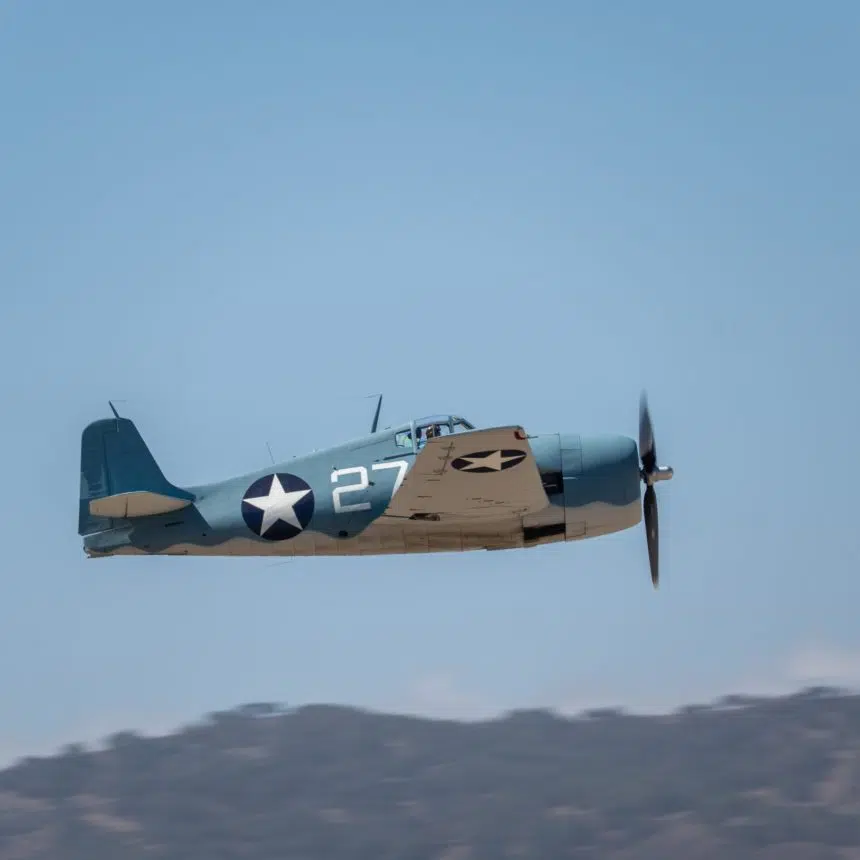

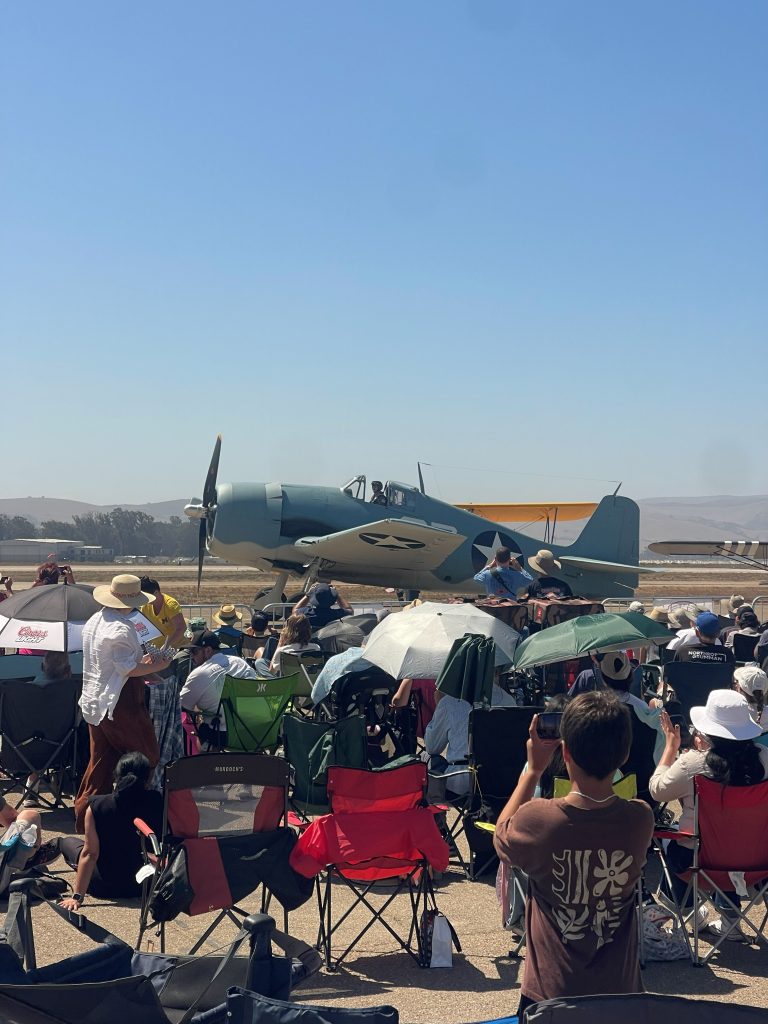
During the annual Warbird Roundup in Nampa, Idaho, and the Central Coast Airfest in Santa Maria, California, a newly restored Grumman F6F-3 Hellcat painted in a light blue-gray paint scheme became a subject of interest for some attendees. Few, however, realized that not only is this Hellcat the oldest survivor of the aircraft that helped ensure naval air supremacy for the United States during WWII, but that its appearance at these two airshows marked the culmination of a 49-year effort to return this aircraft to the skies.
Built at the Grumman Aircraft factory in Bethpage, New York, as construction number A-212, the aircraft was delivered to the US Navy as Bureau Number 08825 on April 23, 1943. BuNo 08825 was then transferred from New York to San Diego, California. The aircraft would spend much of WWII in reserve at both San Diego and Alameda, California.
Following this stateside deployment, BuNo 08825 on deployment with the escort carrier USS Sangamon (CVE-26) being assigned to Fighter Squadron 37 (VF-37). Throughout the first half of 1944, the ship, and by extension Hellcat BuNo 08825 took part in supporting numerous amphibious assaults on islands and atolls across the Pacific, including the Battle of Kwajalein in January-February 1944, the Battle of Eniwetok in February 1944, the Landing at Aitape in April 1944, the invasion of Saipan in June 1944, and the liberation of Guam from July to August 1944. Hellcat BuNo 08825 also participated in numerous combat air patrols as well, making BuNo 08825 a decorated combat veteran of the Pacific Theater of Operations.
By 1945, BuNo 08825 was in the aircraft reserve pool of Carrier Aircraft Service Unit 5 (CASU-5) in San Diego. By this point, the latest variant of the Hellcat, the F6F-5, was in widespread use, and the remaining F6F-3s were increasingly being used for training and reserve units, or were stricken from the fleet entirely. On April 31, 1945, F6F-3 BuNo 08825 was officially stricken from the USN inventory; it appears the aircraft was kept in storage, as the first records of this aircraft on the US civil registry do not emerge until 1959.

That year, F6F-3 Hellcat BuNo 08825 was officially registered with the newly founded FAA as N4965V as being the property of pilot Michael E. Coutches of Hayward, California. Coutches was well-known for his purchases of surplus WWII aircraft, namely P-51 Mustangs being stricken from Air National Guard units, and for selling these surplus aircraft to private pilots as part of the nascent warbird community; he was also involved with other surplus F6F Hellcats. During the early 1960s, N4965V largely stayed on the ground during its time in Hayward, with its USN scheme being kept largely intact, save for the civilian registration being painted on the vertical stabilizer.

By 1964, N4965V was acquired by Wayne Fowler of Shaw Island, Washington, who converted the former fighter into a crop duster, with a red band around the rear fuselage and a pair of bands on N4965V’s wings, and the aircraft was fitted with an external tank of pesticides. While it might seem unusual to turn a WWII fighter into a crop duster, there were instances of other fighters such as FM-2 Wildcats and P-40 Warhawks being briefly used for this purpose. Around 1968, the Hellcat was acquired by Charles F. Willis, Jr., a former WWII naval aviator who flew PBY Catalinas, PB4Y-1 Liberators, and F6F Hellcats, and who was then the president of Alaska Airlines. At the time, Alaska Airlines was invoking the spirit of the gold rushes of the 1890s, with their fleet of jets such as the Boeing 727 flying as the “Golden Nugget Jets” with a white and gold scheme. In line with this, Willis painted N4965V in this scheme as well, named his Hellcat “Little Nugget,” and kept the aircraft at Paine Field in Everett, Washington, just north of Alaska’s corporate headquarters in Seattle (A 1970 photo of Little Nugget by Frederick A. Johnsen can be viewed HERE and HERE). In 1970, N4965V was acquired by Willard “Bill” Compton. A former US Army Air Forces B-25 pilot in WWII, Compton now owned a farm in Canby, Oregon, just south of Portland. Throughout the early to mid 1970s, Compton flew BuNo 08825/N4965V from nearby Lenhardt Airpark near Hubbard, Oregon. Compton repainted the aircraft in a USN scheme, and flew it to numerous airshows across the Pacific Northwest in both the United States and Canada, and was seen several times at the Abbotsford International Airshow in Abbotsford, British Columbia.

Then on June 12, 1977, Bill Compton was flying Hellcat N4965V from Portland to Canby when his engine in flight due to fuel exhaustion. On attempting to land off-airport, the Hellcat went into a ditch, severely damaging N4965V and causing serious injuries to Compton. It would be determined that before before the flight, Compton, who had been repairing the fuel selector valve, had reassembled it incorrectly, with the fuel flow controls reversed. While the damage to N4965V was substantial, and N4965V was stricken from the FAA registry on September 30, 1977, Compton did not give up on his Hellcat, so he brought the aircraft back to his barn in Canby and would spend the rest of his life gathering spare parts to repair N4965V. But ill health would sadly prevent Bill Compton from seeing his project to completion by the time he died in November 2014, aged 91. By this time, though, the remains of F6F-3 Hellcat BuNo 08825 were acquired by John V. “Jack” Croul.
Croul was a Captain in the US Army Air Forces during WWII, flying as a navigator on B-17 Flying Fortresses with the 338th Bombardment Squadron, 96th Bombardment Group, 8th Air Force. Croul flew 33 missions, including two on D-Day, and earned the Distinguished Flying Cross, Purple Heart, and the Air Medal. Years later, the French government would also bestow on him the Legion of Honor. After WWII, Croul studied business at Stanford University and Claremont Men’s College (later Claremont McKenna College) and married fellow student Janet Behr, whose family started a small paint company. Croul would help build the Behr Paint Company into a nationally recognized brand, and in addition to becoming a philanthropist, Croul also became a prominent vintage automobile and aircraft collector, whose aircraft collection was known in the warbird community as Allied Fighters, LLC.
With hangars at both Chino, California, and Caldwell, Idaho, Jack Croul was most famous for his P-51D Mustang, P-38L Lightning “Honey Bunny,” and the P-47D Thunderbolt “Dottie Mae,” the latter of which was restored by Vintage Airframes in Caldwell, Idaho, owned by aircraft restorer Mike Breshears. After acquiring the remains of BuNo 08825/N4965V from Bill Compton, Jack Croul sent the Hellcat to Vintage Airframes. Work on Hellcat 08825 proceeded slowly, but once “Dottie Mae” returned to the skies on June 23, 2017, BuNo 08825 became the main focus for Vintage Airframes. From 2010 to 2012, F6F-3N Hellcat BuNo 41476 (now displayed at the American Heritage Museum in Hudson, Massachusetts) was loaned to Vintage Airframes and used as a pattern to create jigs for the restoration of BuNo 08825 before it was then shipped to American Aero Services in New Smyrna Beach, Florida, for its own restoration to airworthiness on behalf of the Collings Foundation.
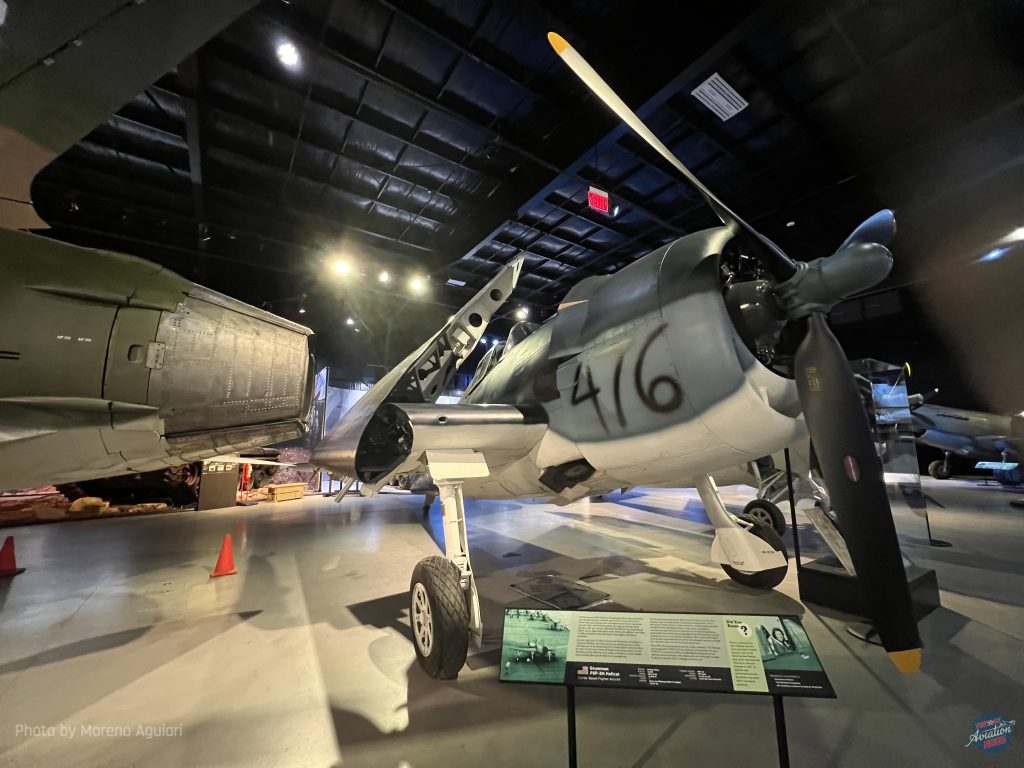
It was decided that in light of its pedigree as the oldest surviving Grumman F6F Hellcat, the aircraft would be painted with the light blue-gray colors worn by the early F6F-3 Hellcats rolling out of the Grumman factory in the spring of 1943, before the type would make its combat debut later that year. Unfortunately, Jack Croul would not live to see the Hellcat complete, for on February 23, 2025, he would pass away peacefully at his home at the age of 100. But F6F-3 Hellcat BuNo 08825 was already in the final stages of its decades-long restoration, and by the summer of 2026, N4965V completed its first post-restoration flight.
On August 29-30, 2026, during the 24th Annual Warbird Roundup at the Warhawk Air Museum in Nampa, Idaho, BuNo 08825/N4965V made its public debut. The Warhawk Air Museum is about 7 miles down the road from Vintage Airframes, and the Roundup had also served as the public debut for “Dottie Mae” nine years earlier. Just one month later, BuNo 08825/N4965V made its second public appearance at the Central Coast Airfest at Santa Maria Public Airport, California, both conducting solo passes for the crowds and flying in formation with the Planes of Fame Air Museum’s Grumman F8F-2 Bearcat and the Lewis Air Legends’ Grumman F7F-3P Tigercat BuNo 80390 “Here Kitty, Kitty!”
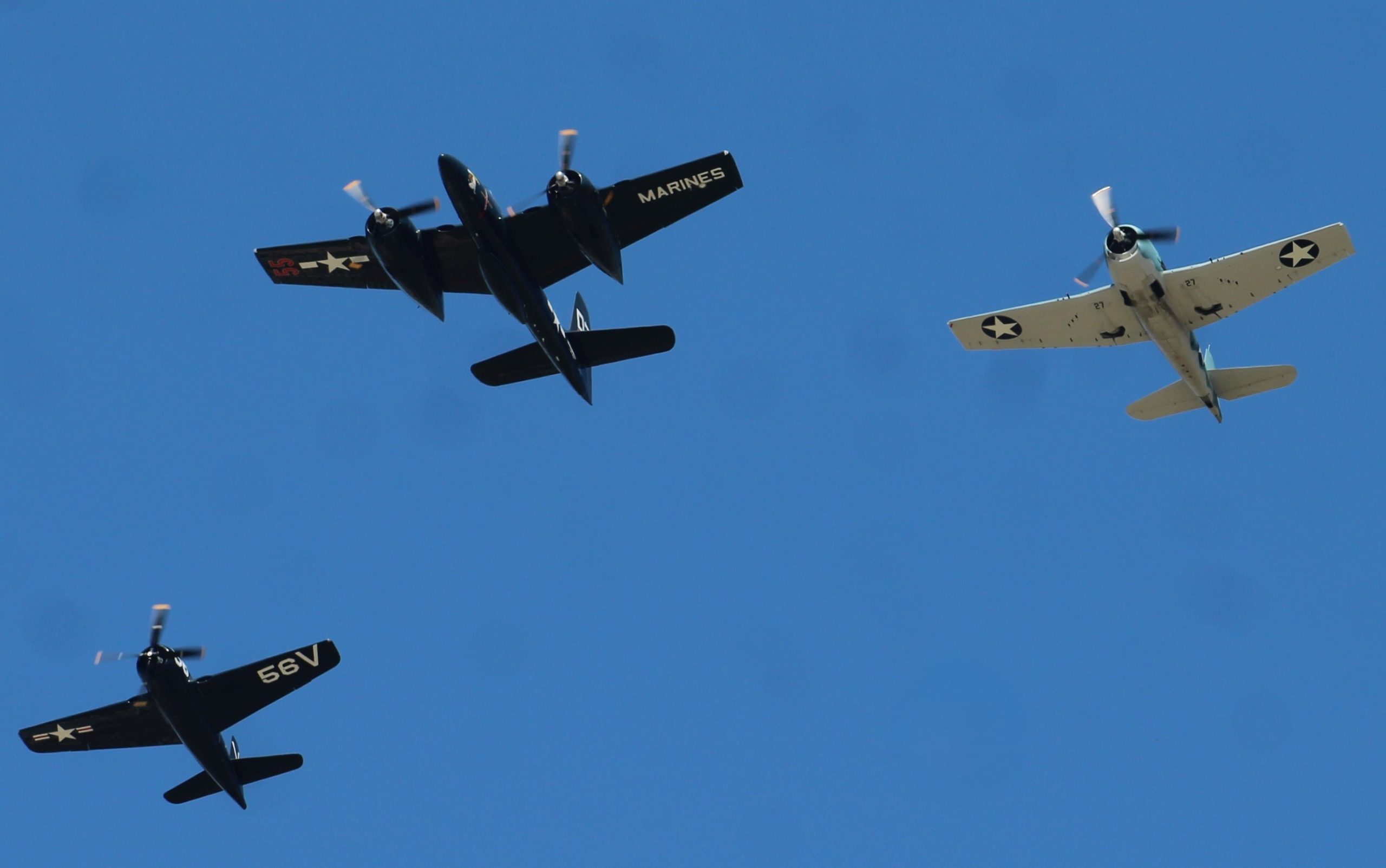
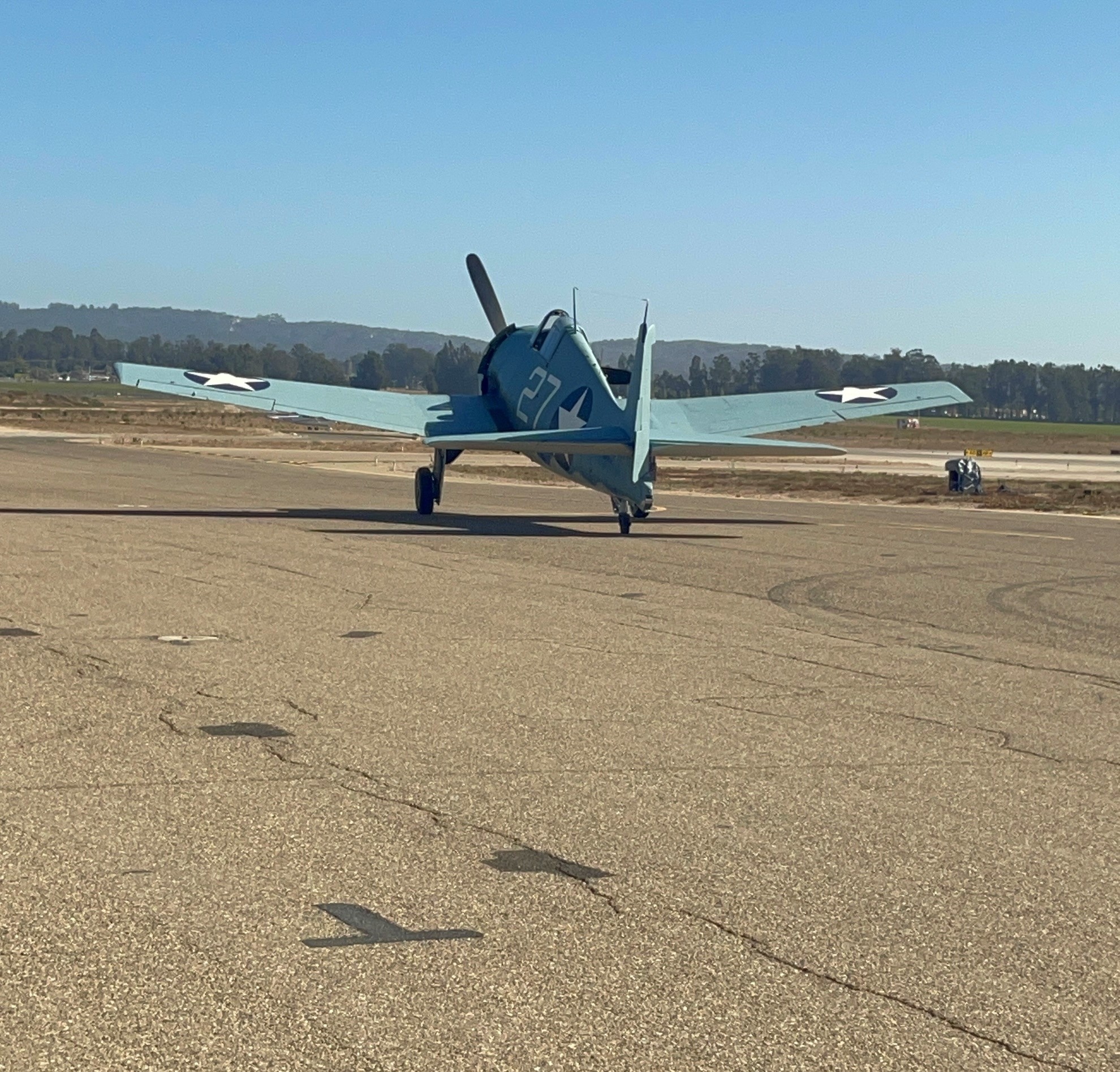
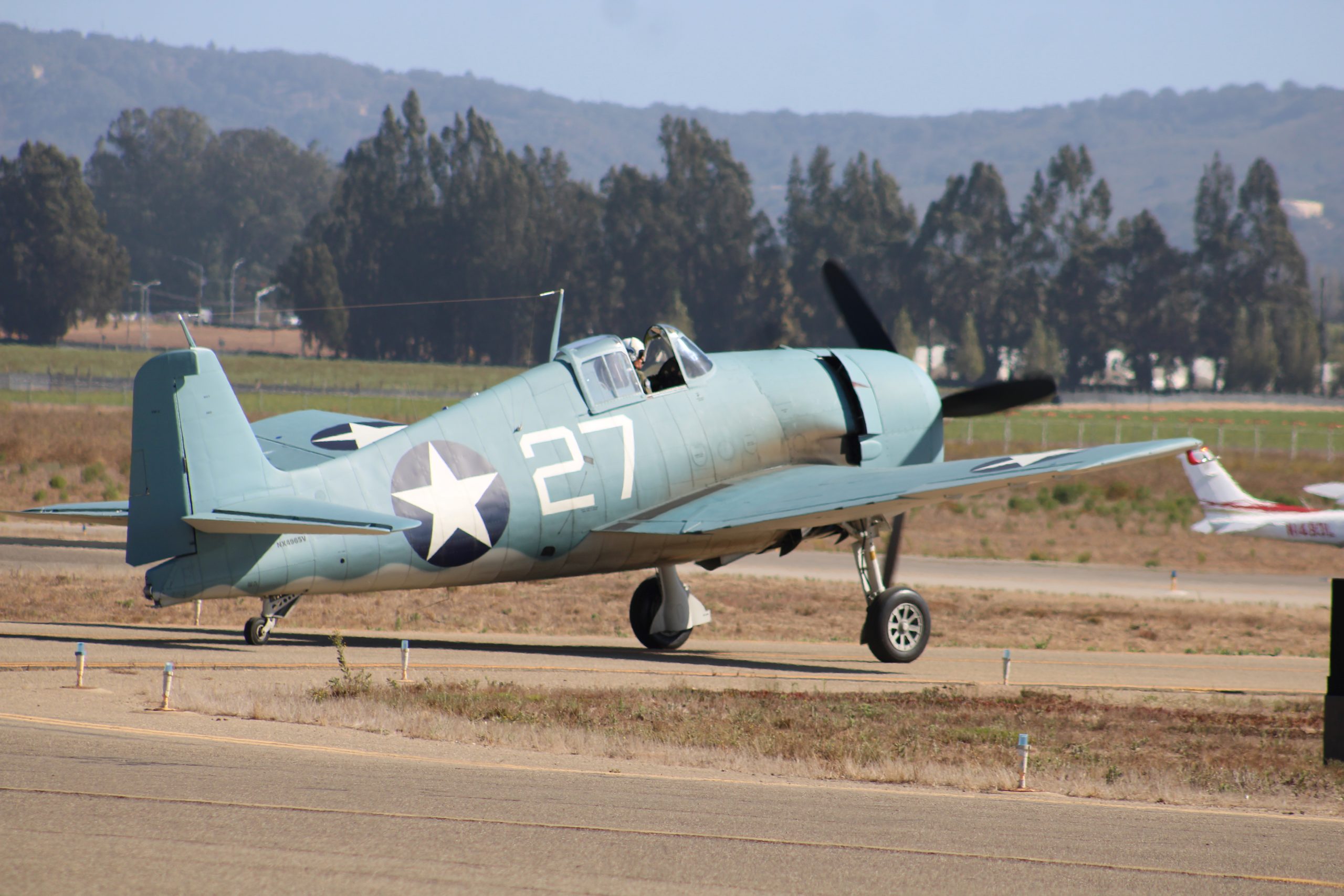
So after a storied history involving carrier operations, combat against the Japanese in WWII, flights over the Pacific Northwest, and an intensive restoration to resurrect the aircraft after 49 years on the ground, F6F-3 Hellcat BuNo 08825 is now back in the air where it belongs. We look forward to seeing more of this aircraft at more airshows, as this Hellcat has not lived its ninth life just yet!











What are you talking about re: “only survivor”? I hope this is only a typo.
It is a typo, and thank you for pointing it out. It has now been fixed.
Great to hear this plane is back in the air. Hope to see it on the east coast or even florida sun n fun!
A Great Airplane, we used to have one appear regularly at UK Air Shows, along with a Wildcat & Bearcat.
We have many, and many, people to thank for preserving these aircraft; how empty the Skies would be without them.
A great testament to all those ex-airmen from WW2 and civilian owners, the talented restoration people, to see an early model of this famous type being returned to the skies. Was really great to see 3 of Grummans “Cats” flying together too ~
Lots of errors here!
It was never in VF-4. VF-4 was flying F4Fs off of the USS Ranger off Norway.
It was based at Lenhardt’s Airpark in Hubbard, OR never in Canby. Drake Field???????
Re the crash it was not engine failure it was fuel starvation. Work was done on the fuel selector
and it was reassembled wrong. To get fuel Bill would have had to turn it to the off position.
Bill force landed in a muddy field with the gear down which was a terrible mistake and when the wheels dug into
the muddy ground it cartwheeled and tore itself apart.
Thanks Jack. I know Adam has already corrected the article.