
A Historic Flight Into Afghanistan
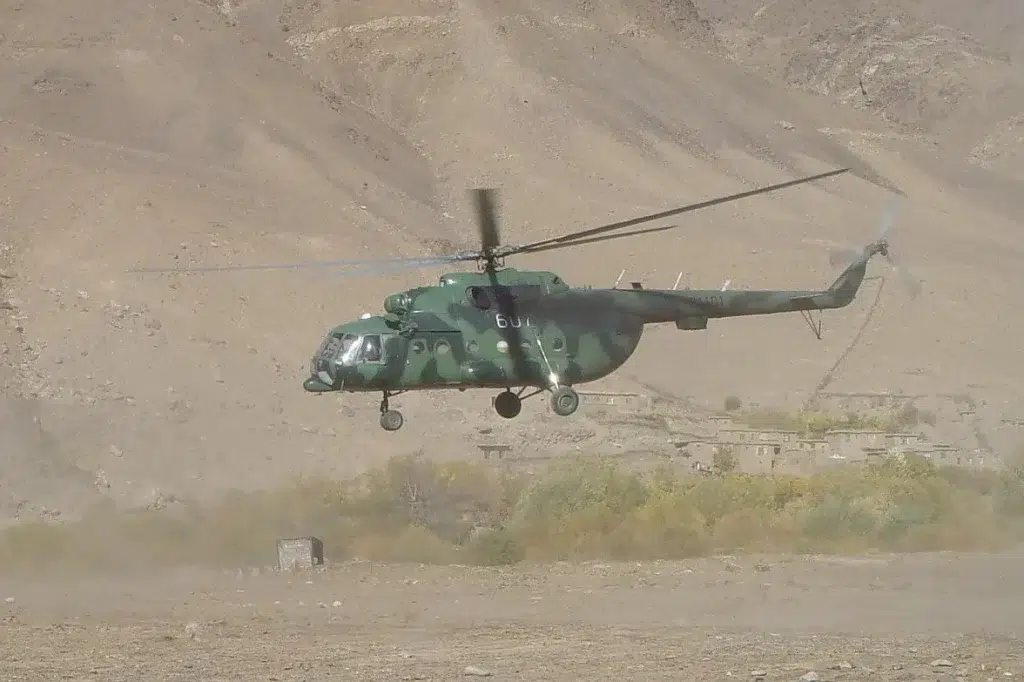
On September 26, 2001, just 15 days after the terrorist attacks on New York and Washington, a CIA team departed aboard a Russian-built helicopter bound for Afghanistan’s Panjshir Valley. The mission, codenamed JAWBREAKER, was led by veteran CIA officer Gary Schroen, who had postponed his retirement to lead the operation. The team consisted of seven CIA officers, accompanied by three aircrew members and two Afghan partners. Their objective was to establish contact with the Northern Alliance, an Afghan resistance movement opposing the Taliban, and begin coordinating operations against al-Qaeda and its supporters. The mission took place under extraordinarily difficult circumstances. Afghanistan’s mountainous terrain, high elevations, and unpredictable weather presented significant challenges for helicopter operations. The flight required the heavily loaded aircraft to cross the Anjuman Pass in the Hindu Kush mountains at approximately 14,500 feet. The helicopter carried personnel, weapons, ammunition, fuel, equipment, and substantial amounts of cash intended to support Afghan resistance forces. Operating at such high altitude with a heavy payload pushed the aircraft toward the limits of its capabilities. During the helicopter’s original dedication ceremony in 2019, Schroen recalled the aircraft struggling as it climbed toward the pass. Despite the danger, the passengers remained focused on their mission. The successful arrival of the JAWBREAKER team established the foundation for subsequent American operations in Afghanistan, including coordination with Northern Alliance forces ahead of the broader U.S. military campaign.
(Image credit: CIA Museum)
Why the CIA Chose a Soviet-Designed Helicopter
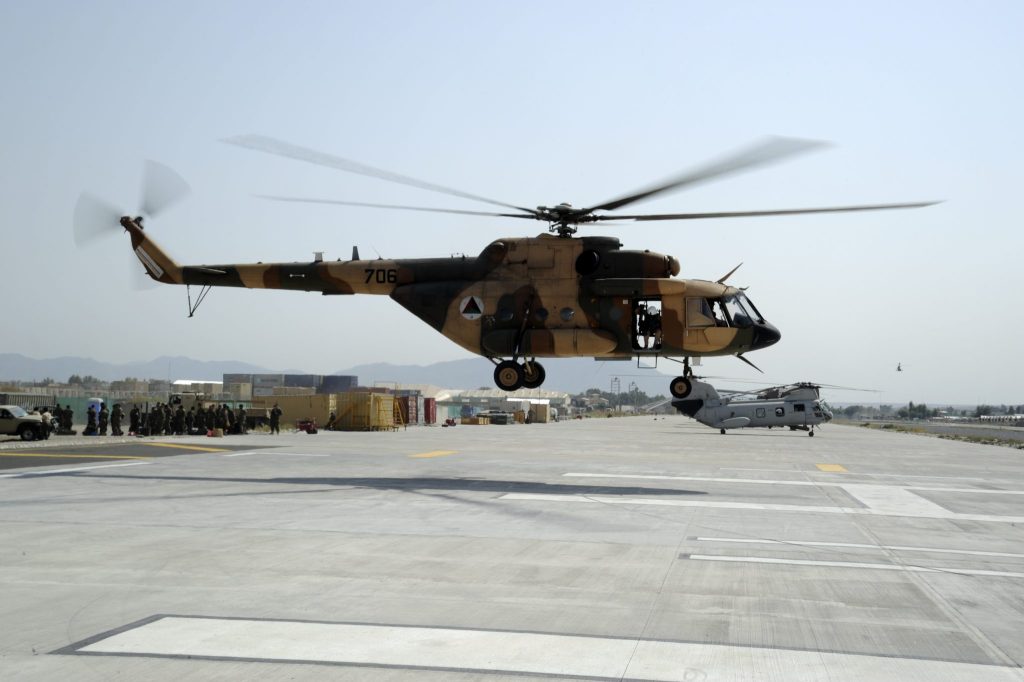
The choice of aircraft was deliberate. Rather than employing an American-built helicopter, the CIA selected a Soviet-designed Mil Mi-17, a rugged medium transport helicopter developed from the successful Mi-8 family. The type was already widely operated throughout Afghanistan, including by both the Northern Alliance and Taliban forces. Its familiar appearance helped reduce the likelihood that the helicopter would attract unwanted attention. The CIA had acquired the aircraft during the 1990s and modified it for specialized operations. The Mi-8/Mi-17 family had earned a reputation for reliability in demanding environments, particularly where conventional infrastructure and maintenance support were limited. Its twin-engine configuration, substantial lifting capacity, and ability to operate from unimproved landing areas made it well suited to Afghanistan’s rugged geography. Although the CIA officially identifies the aircraft as an Mi-17, a former CIA paramilitary officer, Ronald Moeller, publicly noted that its more precise designation is Mi-8MTV. The distinction reflects the closely related variants within the helicopter family, with the Mi-17 designation commonly associated with export versions. For the JAWBREAKER mission, the helicopter’s practical capabilities mattered far more than its appearance. The aircraft had to transport a heavily equipped team across some of the world’s most challenging terrain while operating in an environment where mechanical reliability was essential. Schroen emphasized this characteristic during the 2019 dedication ceremony, describing the helicopter as a machine built for utility and capable of withstanding demanding service. The aircraft’s performance during the September 2001 mission demonstrated why the CIA had selected the type for its operations in Afghanistan.
More Than 300 Missions Before Retirement
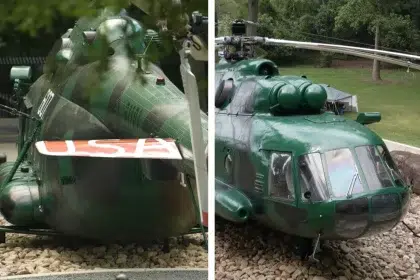
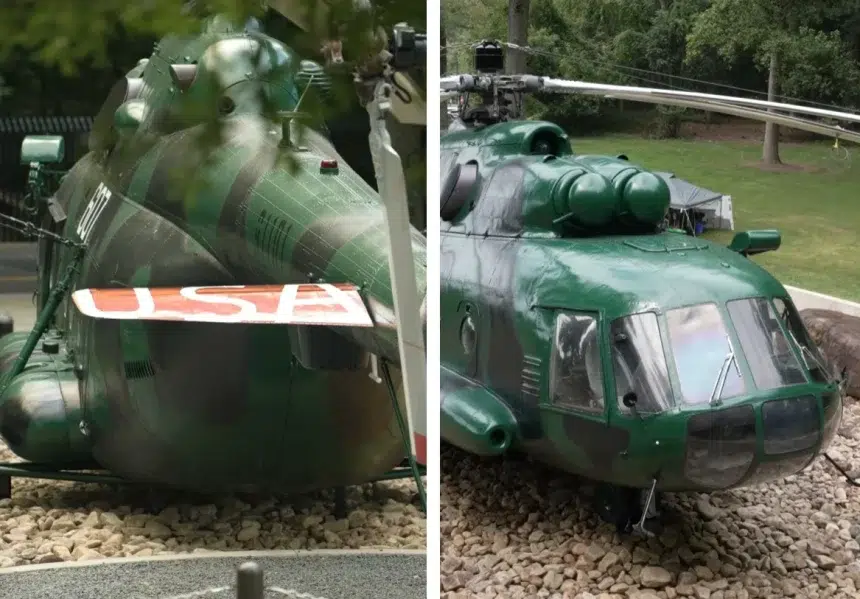
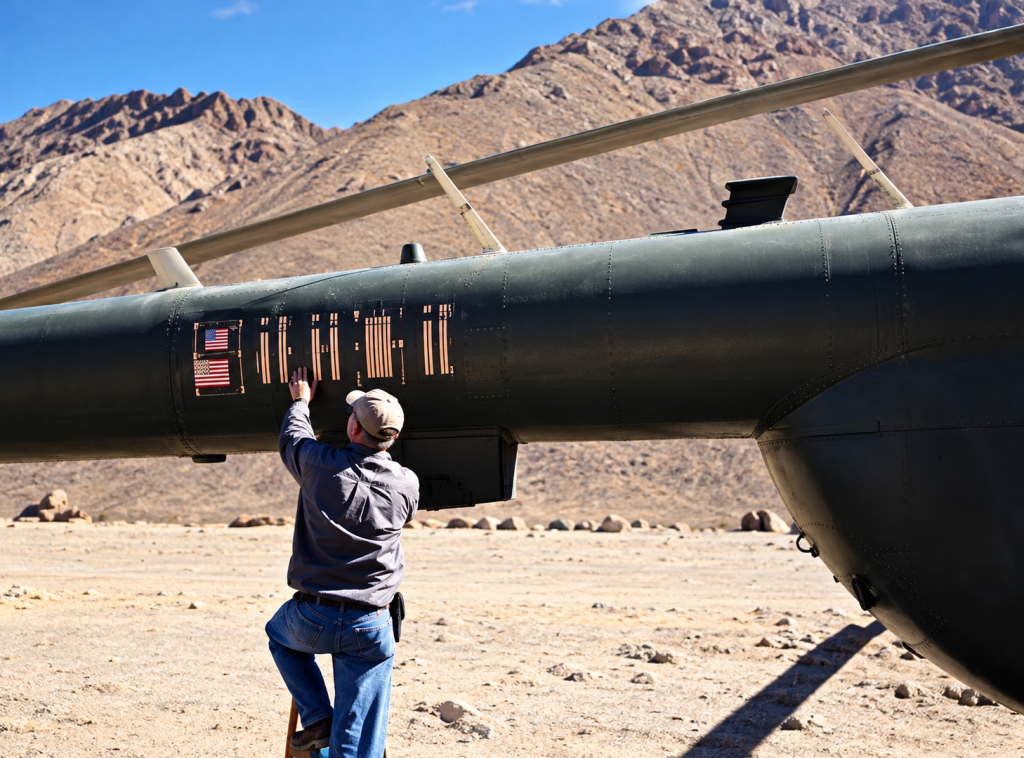
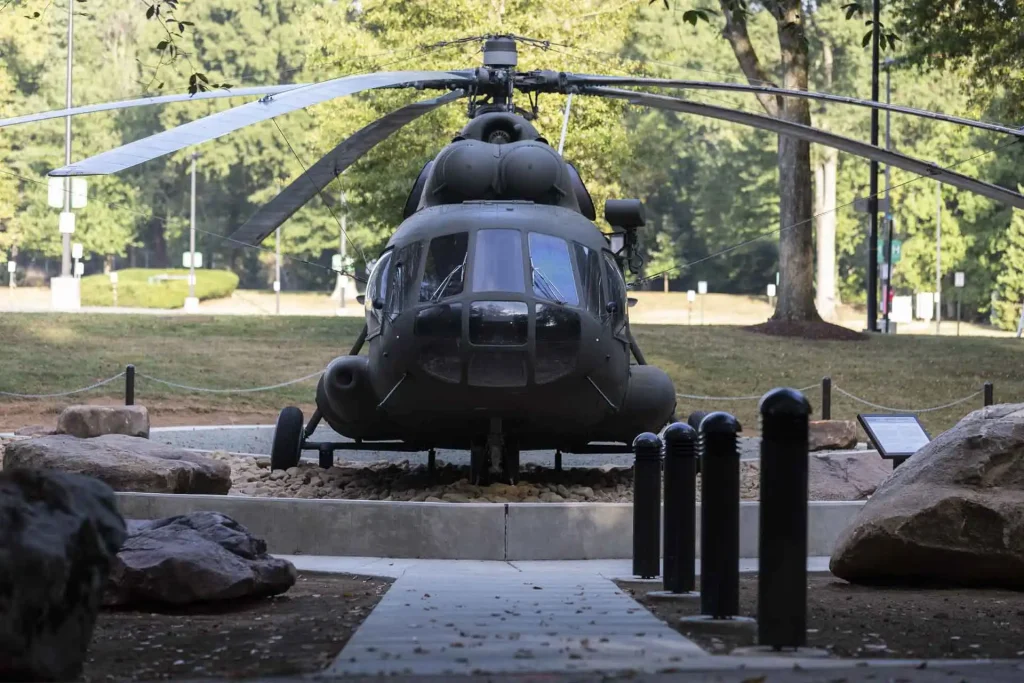
The helicopter’s historic September 26 flight was only the beginning of its operational career in Afghanistan. According to the CIA, the aircraft subsequently completed more than 300 missions in the country, supporting intelligence and operational activities over the following decade. Its final operational flight took place in 2012, bringing to an end a career that had begun during the opening stages of America’s post-9/11 campaign. Recognizing the aircraft’s historical importance, the CIA Museum began efforts to preserve it as a permanent artifact representing the agency’s early response to the terrorist attacks. The museum had already collected numerous objects associated with Operation JAWBREAKER, including photographs, maps, personal equipment, flight-related artifacts, and a cockpit instrument from the helicopter itself. In 2018, the helicopter was transported to CIA Headquarters, reuniting the previously preserved instrument with the aircraft from which it had been removed. The helicopter underwent restoration and preparation for permanent display before its formal dedication on September 26, 2019, exactly 18 years after the JAWBREAKER team arrived in Afghanistan. The ceremony brought together CIA personnel and veterans of the operation, including Schroen, who spoke about the mission’s challenges and the extensive planning that had made it possible. The aircraft was positioned in a landscaped area northeast of the CIA’s Original Headquarters Building. Rocks and surrounding terrain were arranged to evoke the Afghan landscape in which the helicopter had operated. The display also incorporated the tail number 9-11-01, commemorating the date of the terrorist attacks that led to the mission.
(Image credit: CIA Museum)
Restoring an Aircraft Exposed to the Elements
Although the helicopter had been restored for its original installation, years of outdoor exposure eventually created new preservation challenges. Like many historic aircraft displayed outside, the Mi-17 was subjected to sunlight, precipitation, temperature fluctuations, and environmental deterioration. Over time, its paint faded considerably, while openings in the fuselage allowed animals to enter the aircraft. CIA Museum Director Robert Byer described these problems in comments reported by CBS News and subsequently referenced by Defence Blog. The latest restoration concentrated on correcting the deterioration while returning the helicopter to an appearance representative of its September 2001 mission. During the project, restorers sealed holes and openings in the fuselage to prevent further intrusion and protect the aircraft’s interior. The helicopter was also repainted in the camouflage scheme associated with its original deployment into Afghanistan. Particular attention was given to restoring the number “607,” which was associated with the Afghan pilot who operated the helicopter during the JAWBREAKER mission. The work was carried out over approximately a year leading up to the September 2026 anniversary. For the CIA Museum, the project presented a familiar challenge in historic aircraft preservation: balancing the need for long-term protection with the importance of maintaining an artifact’s historical appearance. Unlike an aircraft preserved inside a climate-controlled museum, an outdoor exhibit must withstand continuing exposure to weather and environmental conditions. Protective coatings, sealed openings, and periodic maintenance are therefore essential to ensuring the long-term survival of the aircraft. The latest work represents a further stage in the helicopter’s preservation rather than its first restoration, building upon the efforts that prepared it for display in 2019.
Preserving the Legacy of Operation JAWBREAKER
The Mi-17 occupies a distinctive place in the CIA Museum’s collection. While the agency preserves numerous documents, equipment, and artifacts associated with intelligence operations, relatively few surviving aircraft are directly connected to such consequential historical events. The helicopter’s importance lies not in its technological sophistication but in its operational history. A Soviet-designed transport helicopter, originally developed for military and civilian service, became the aircraft that carried the first American team into Afghanistan following the September 11 attacks. Its continued service over more than 300 missions further illustrates the demanding operational environment in which it was employed. During the September 2019 dedication, then-CIA Director Gina Haspel described the aircraft as a tribute to the personnel who participated in the mission and those who supported it from behind the scenes. The ceremony also highlighted the extensive logistical and organizational effort required to launch the operation just two weeks after the attacks. Schroen credited not only the members of his team but also the CIA personnel who arranged the mission, as well as the relationships established with Afghan partners before September 2001. For the museum, the helicopter provides a tangible connection to those events, complementing other artifacts associated with the agency’s response to 9/11. Its latest restoration ensures that the aircraft will continue to serve as a historical landmark at CIA Headquarters, preserving the story of the crew, passengers, and support personnel who participated in the mission. Twenty-five years after crossing the Hindu Kush into Afghanistan, the helicopter has returned to the appearance it carried during one of the defining missions of its operational career. As an aviation artifact, it stands as a reminder that historic aircraft are not always remembered for their speed, technological achievements, or combat capabilities. Sometimes their significance comes from a single mission and the people they carried. The CIA’s restored Mi-17 is one such aircraft.
(Image credit: CIA Museum)
Sources: Central Intelligence Agency, “CIA’s Mi-17 Helicopter Comes Home,” September 26, 2019; Defence Blog, “CIA Restores Helicopter That Took First Americans to Afghanistan,” September 28, 2026.