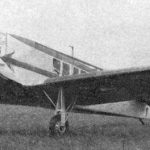
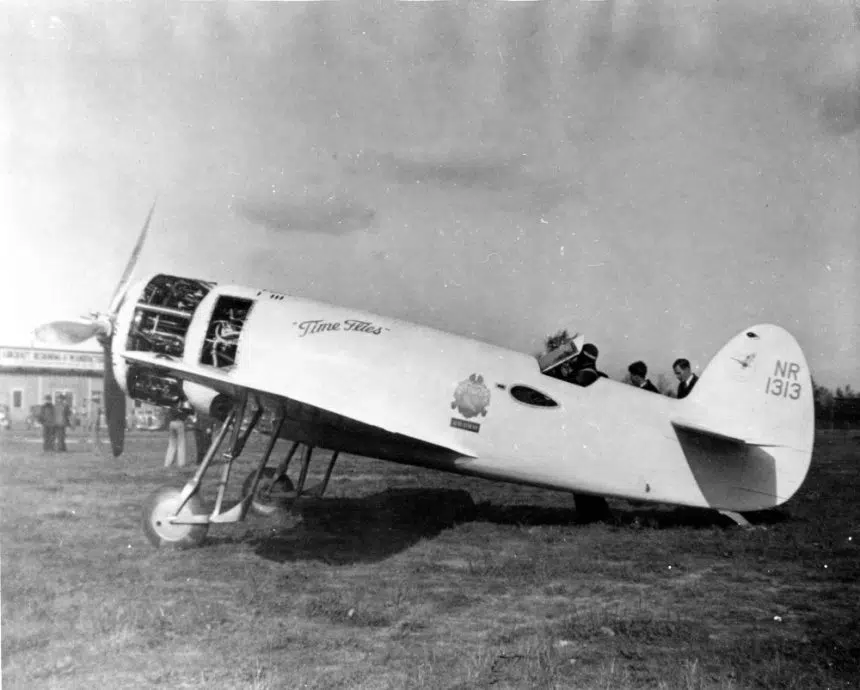


On this day in aviation history, 90 years ago (October 18, 1936), the Hawks Miller HM-1 made its first flight. Designed by Howell W. “Pete” Miller for noted racing pilot Frank Hawks, the HM-1 was a sleek, purpose-built racing aircraft intended to combine very high speed with relatively long range. It was constructed by Miller’s company, the Time Flies Corporation, and became one of the distinctive American racing aircraft of the late 1930s. The HM-1 was an all-metal, low-wing monoplane powered by a Pratt & Whitney R-1830 Twin Wasp radial engine. One of its most unusual features was its retractable cockpit canopy. Rather than projecting above the fuselage during high-speed flight, the canopy could be lowered until nearly flush with the fuselage, reducing aerodynamic drag. A small windshield remained available to the pilot.

Hawks used the aircraft to establish a number of speed records. On April 13, 1937, he flew from Hartford, Connecticut, to Miami, Florida, in 4 hours, 55 minutes, later setting additional point-to-point records. The HM-1 was subsequently acquired by the Gruen Watch Company and renamed Time Flies. It was later modified into the two-seat Miller HM-2 before eventually being destroyed in a crash. The Hawks Miller HM-1 had a wingspan of 28 feet, a length of 24 feet, and a height of 7 feet 9 inches. Powered by a Pratt & Whitney R-1830 Twin Wasp radial engine, the aircraft had a maximum speed of approximately 265 mph.