
Prologue
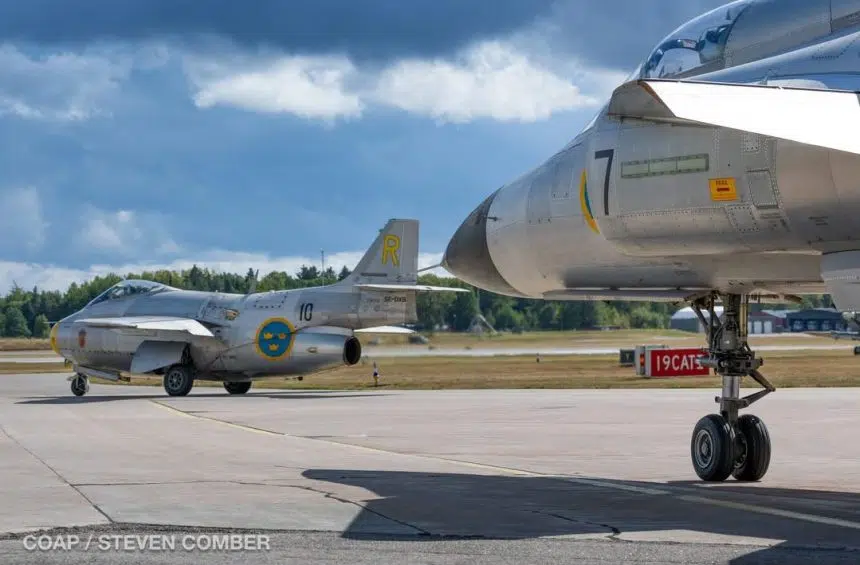
On July 1, 1926, the Swedish Air Force—Flygvapnet— formally came into existence as an independent branch of Sweden’s armed forces. Established under the 1925 Defence Act, the new service brought together the aviation organisations that until then had developed separately within the Swedish Army and Navy. It was the beginning of an independent air arm that, over the following century, would evolve from a modest collection of aircraft and personnel into a technologically advanced modern air force. Swedish military aviation, however, was already well established by 1926. Its origins reached back to the pioneering years before the First World War, and few places are more closely associated with those beginnings than Malmen, on the outskirts of Linköping. In 1912, aviation pioneer Baron Carl Cederström established a flying school on the military exercise grounds at Malmen. Known as Flygbaronen— the “Flying Baron”—Cederström had become the first Swede to earn a pilot’s certificate two years earlier. Malmen soon became closely associated with the development of Swedish military flying, beginning a relationship with aviation that has continued for more than a century.
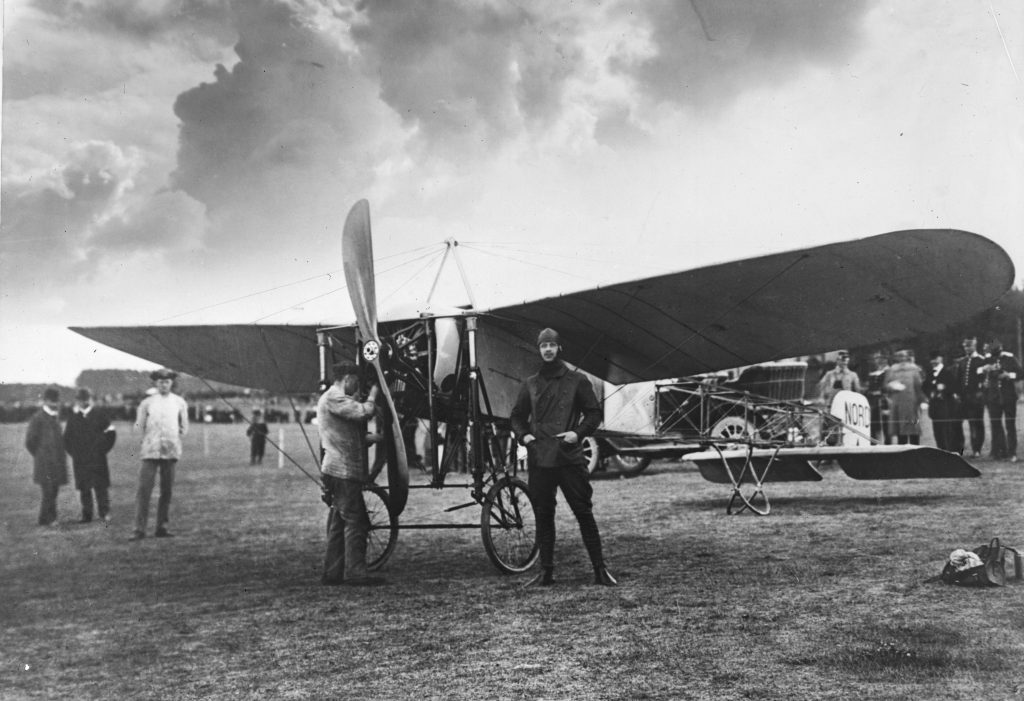
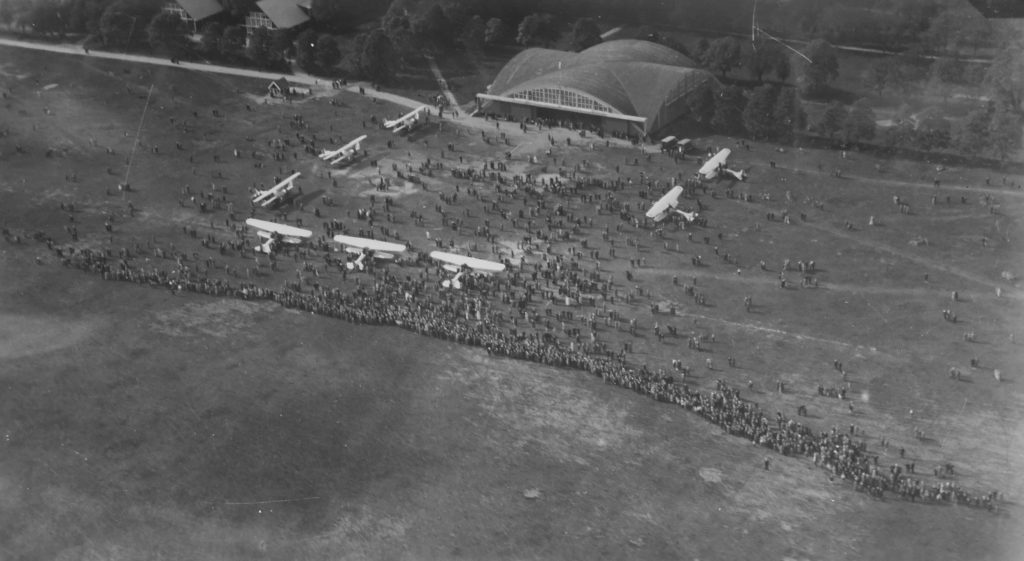
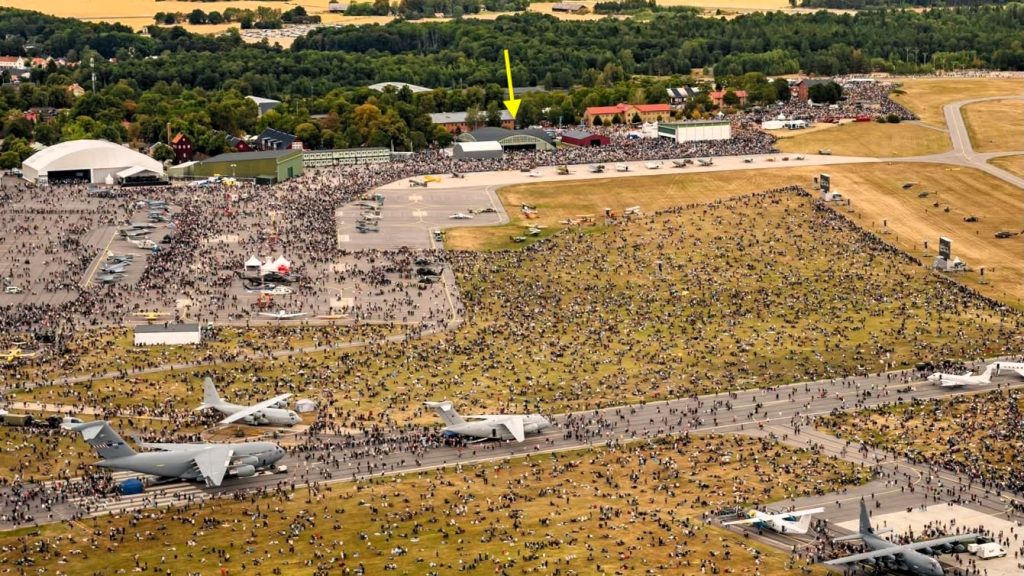
When Flygvapnet was created in 1926, it therefore inherited more than aircraft, personnel and experience from the Army and Navy. It inherited an aviation tradition already fourteen years in the making. The early years of the new Air Force also left a physical legacy at Malmen which remains visible today. Hangar 81, the first hangar built for Tredje Flygkåren, was already under construction in the summer of 1927. It can be seen overlooking the crowds gathered for an F 3 flying day in 1934. Ninety-two years later, the same hangar remains in active use — and can again be picked out overlooking the crowds gathered at Malmen for the centenary celebrations in 2026. Today, the building is also protected for its historic significance.
A century later, it was fitting that Malmen should host a major public celebration of the Swedish Air Force’s 100th anniversary. Held on August 22–23, 2026, the centenary airshow provided a remarkable opportunity to see much of Flygvapnet’s history represented both on the ground and in the air at an airfield that remains in active military use today.
Past, Present, and Future
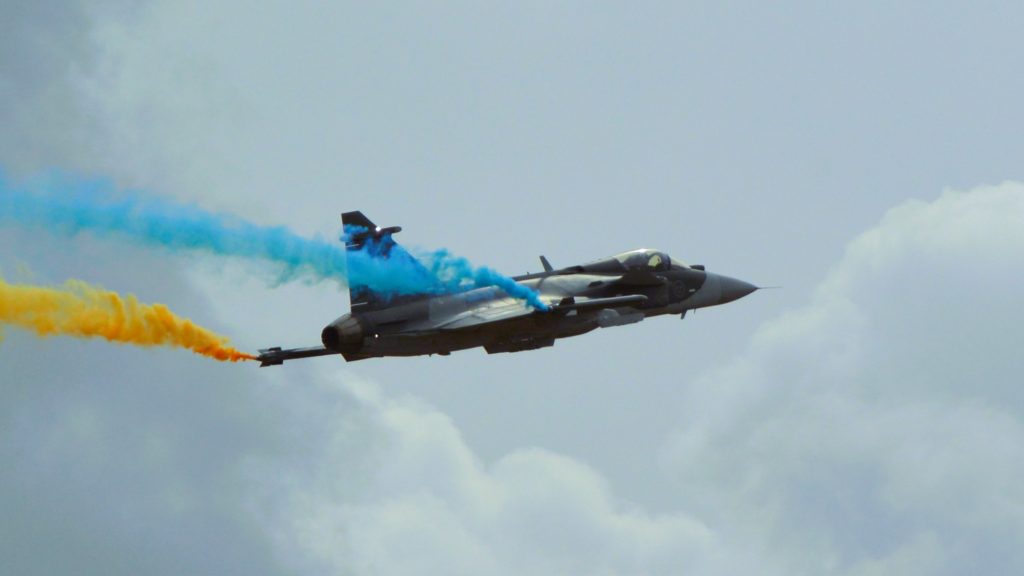
Malmen remains a busy operational military airbase. Today it is home to the Swedish Armed Forces’ Helicopter Wing, while also supporting military pilot training, special-mission aviation and flight-test activities. For the centenary, this operational airfield was opened to the public for two full days of ground displays and almost eight hours of flying each day. Public interest was remarkable: an estimated 145,000 visitors attended on Saturday and a further 85,000 on Sunday, bringing the weekend total to approximately 230,000. Because admission was free, attendance was estimated in part through aerial photographs of the crowds. The celebrations followed the theme “Past–Present–Future,” with a flying program spanning more than a century of Swedish aviation. Historic aircraft shared the program with present-day Flygvapnet capabilities and visiting aircraft from allied air forces. For the vintage aviation enthusiast, however, it was the extraordinary breadth of Swedish aviation history assembled at Malmen—and the amount of it that actually flew—that made the centenary particularly special.
(Image credit: Rich Cooper)
Aircraft of the Swedish Air Force
The historic flying program at Malmen was more than a gathering of familiar warbirds. It brought together aircraft representing distinct chapters of Swedish military aviation, combining indigenous designs with internationally familiar types that had themselves served with Flygvapnet. There was perhaps no more appropriate setting than Linköping. Saab consolidated its aircraft development in the city in 1939, beginning a remarkable tradition of Swedish military aircraft design and production. The wartime Saab B 17 made its maiden flight in May 1940 and was followed by an increasingly ambitious succession of designs, eventually encompassing such distinctive aircraft as the J 29 Tunnan, J 32 Lansen, J 35 Draken and 37 Viggen, and continuing today with the JAS 39 Gripen. Much of that development took place only a short distance from Malmen. Sweden also looked abroad when circumstances or operational requirements demanded it. The Mustang became the J 26, the reconnaissance Spitfire the S 31, the Vampire the J 28, the DC-3 the Tp 79, and the Catalina the Tp 47. Their appearance at the centenary was therefore not simply that of familiar foreign warbirds but represented aircraft types that had once formed part of the Swedish Air Force itself.
(Image credit: Rich Cooper)
From D-Day to Flygvapnet: DC-3 Daisy
The historical program at Malmen reached back beyond the creation of Flygvapnet itself. Several aircraft representing aviation’s pioneering and First World War era took to the air during the weekend, including the Blériot XI and Swedish-built Ö 1 Tummelisa. Their leisurely progress over Malmen provided a striking contrast to the increasingly capable military aircraft of the century that followed. Among the historic aircraft at Malmen, few could match the remarkable history of DC-3 Daisy. Built in 1943 as C-47A 43-30732, she participated in Mission Boston on June 6, 1944, carrying American paratroopers to Normandy during the opening hours of D-Day, and later took part in Operation Market Garden. After the war she passed into Scandinavian civil service before beginning yet another chapter of her career with the Swedish Air Force.
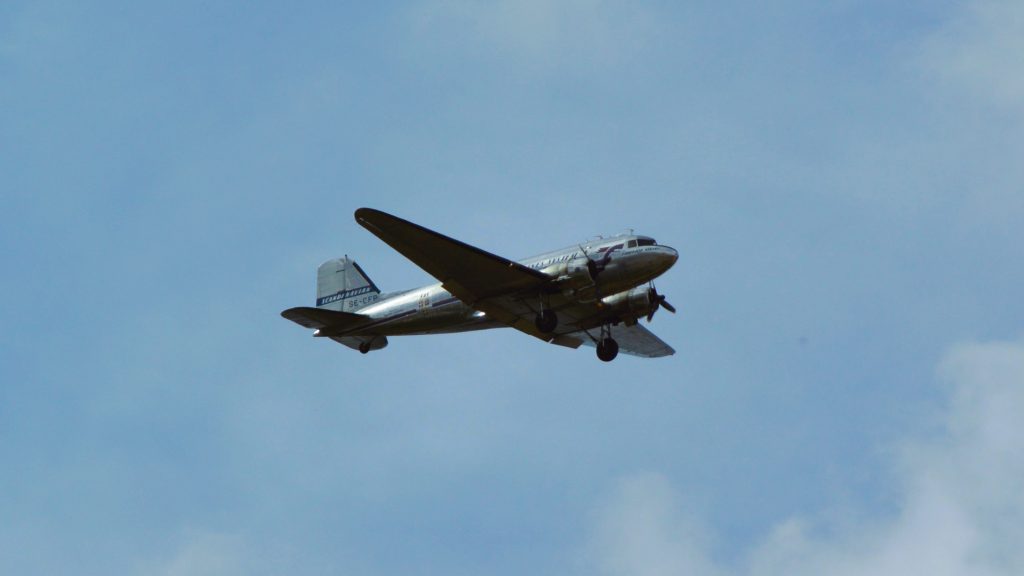
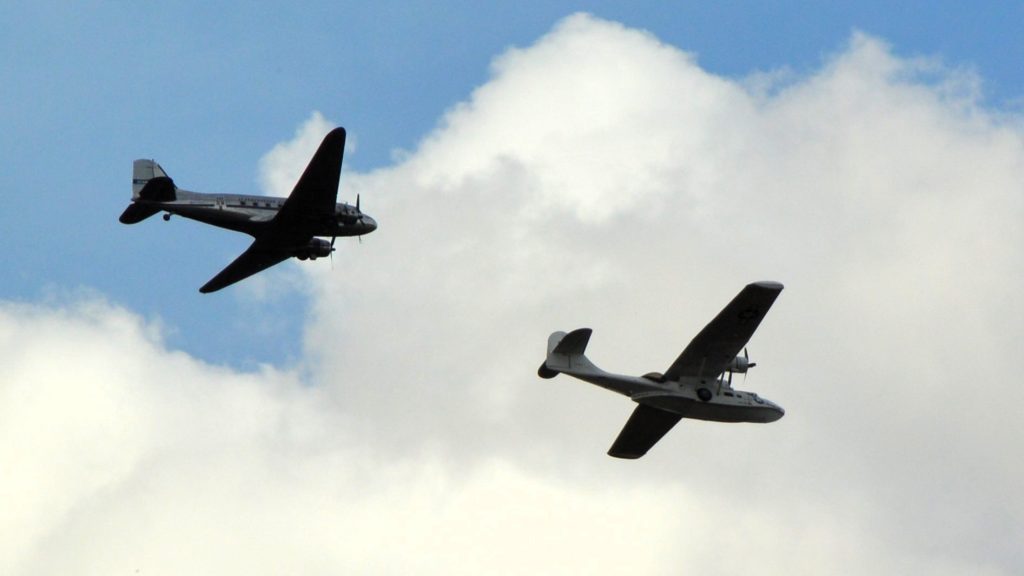
Entering Flygvapnet service in 1960 as Tp 79 79006, Daisy remained in military use until 1982. Today operated by Flygande Veteraner, her appearance at Malmen was therefore far more than that of a representative DC-3: the aircraft flying before the centenary crowds was both a genuine D-Day veteran and a veteran of more than two decades of Swedish Air Force service. Daisy flew at Malmen alongside a Tp 47 Catalina, another American-built type once operated by Flygvapnet. Together the two types recalled the Catalina Affair of 1952, when a Swedish Tp 79 on a signals-intelligence mission over the Baltic was shot down by a Soviet MiG-15, followed three days later by the shooting down of a Tp 47 searching for its missing crew. Daisy herself was not involved — she entered Swedish service eight years later — but remarkably, all three aircraft types central to the events of 1952 were represented in the flying programme at Malmen, with a MiG-15 taking to the air later in the day as part of a separate historic jet display.
A Spitfire in Swedish Colors
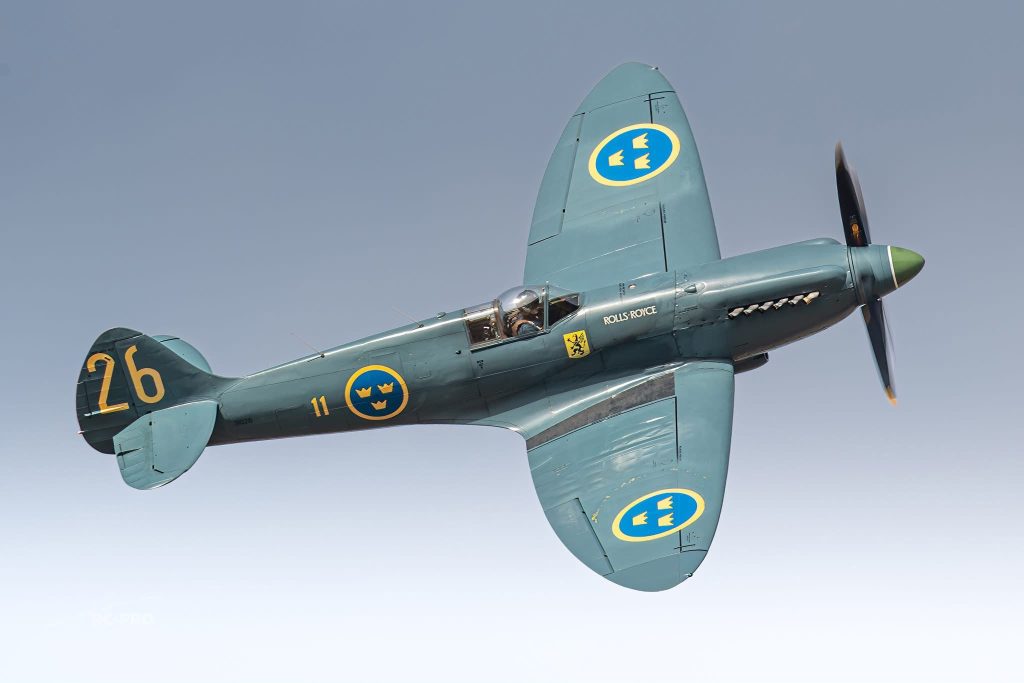
The appearance of a Spitfire at a European airshow would hardly be unusual, but its presence at Malmen had particular relevance. Beginning in 1948, Flygvapnet acquired 50 photo-reconnaissance Spitfire PR.XIXs, designated S 31 and operated by F 11 at Nyköping during the opening years of the Cold War. At the time, the high-flying PR.XIX provided Flygvapnet with a formidable high-altitude reconnaissance capability. The S 31’s Swedish career was relatively brief, ending in the mid-1950s, and remarkably none of the 50 aircraft was preserved. The S 31 displayed today at Flygvapenmuseum at Malmen is therefore not an original Swedish survivor, but PR.XIX PM627, acquired decades later and restored to represent S 31 No. 31051.
(Image credit: Rich Cooper)
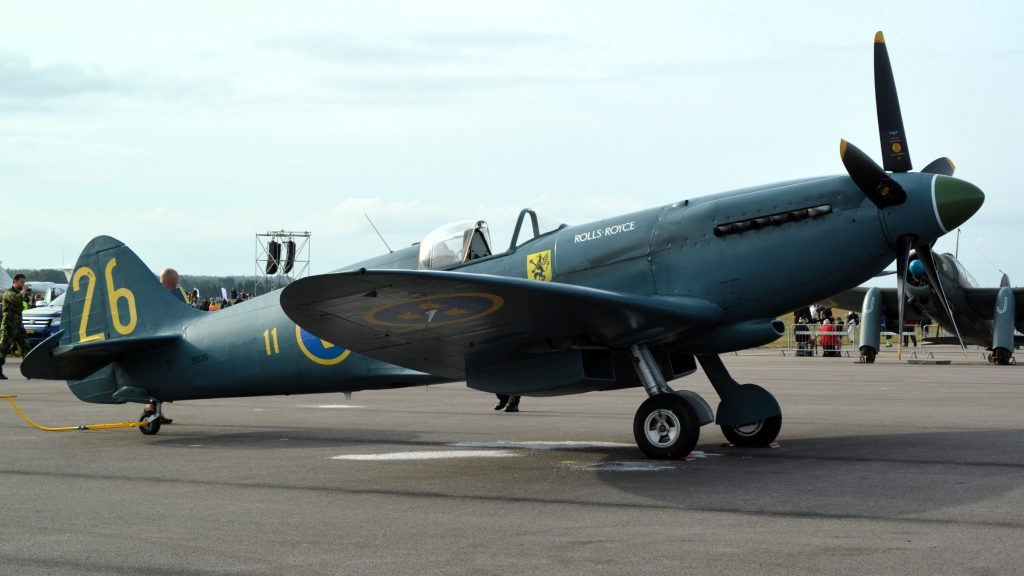
For the centenary, Rolls-Royce brought its own PR.XIX, G-RRGN, from Britain carrying the identity of another individual Swedish Spitfire, S 31 No. 31026. The presentation went beyond simply applying Swedish roundels: the aircraft carried the F 11 identity and individual code 11-26, representing a Spitfire that had served with Sweden’s dedicated reconnaissance wing at Nyköping. That attention to detail made its appearance at Malmen particularly appropriate — not simply a British Spitfire dressed in Swedish colors, but a carefully presented tribute to the type’s place in Flygvapnet history.
The Mustang in Swedish Service
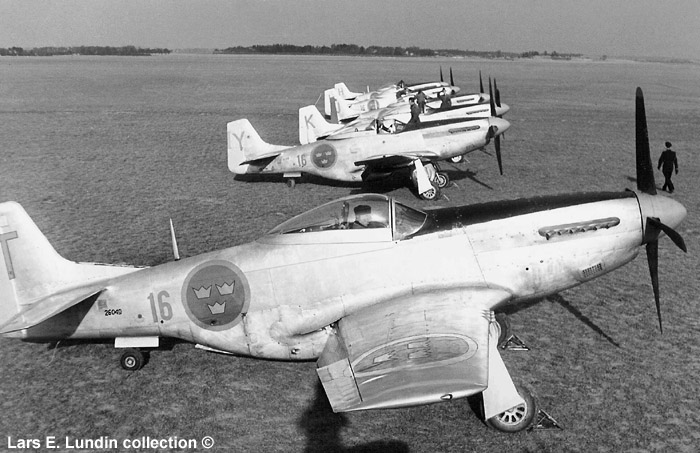
Another instantly recognizable Allied fighter at Malmen also had a substantial Swedish connection. Beginning in 1945, Flygvapnet acquired more than 160 North American P-51 Mustangs, designated J 26 in Swedish service. Arriving as the Second World War ended in Europe, the Mustang provided Sweden with a modern fighter during the transition toward the jet age, before being progressively replaced by aircraft including the J 29 Tunnan during the early 1950s. Sweden initially preserved none of its Mustangs when the type was retired, with aircraft instead sold abroad, among them 25 J 26s sold to Israel. One eventually made the journey back. A former Swedish Mustang was returned from Israel for preservation in the mid-1960s and today represents J 26 No. 26020 at Flygvapenmuseum, adjacent to Malmen. The Mustang’s appearance in the centenary flying program therefore represented not simply one of America’s most celebrated wartime fighters, but an aircraft type with a substantial chapter of its own in Swedish Air Force history.
Built in Sweden
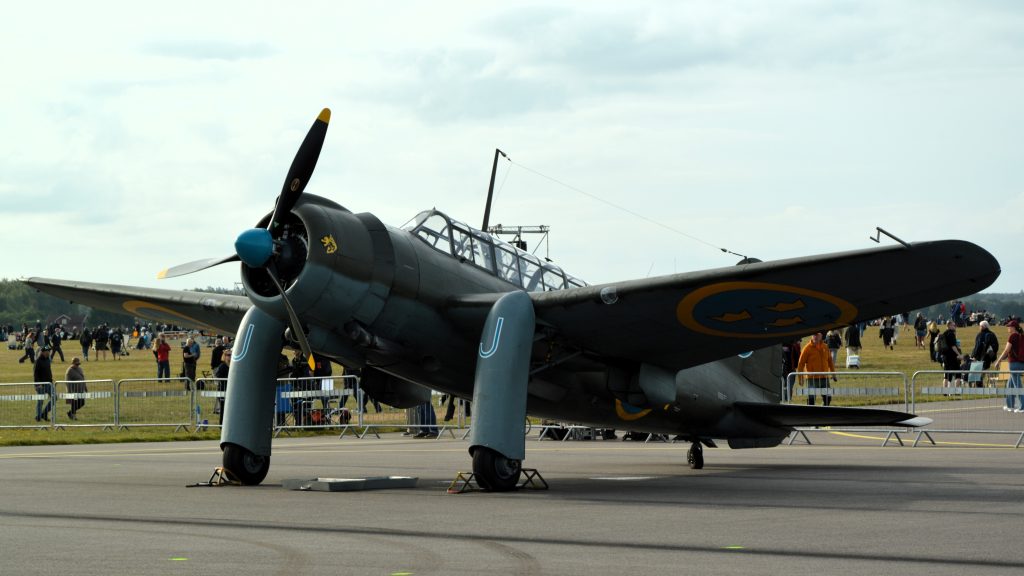
Sweden’s wartime aviation industry was represented by two particularly important indigenous designs. The Saab B 17, which first flew in 1940, became the company’s first aircraft to enter series production and served Flygvapnet as both a bomber and reconnaissance aircraft. The surviving B 17A, s/n 17239 “Blå Johan,” is the world’s only airworthy example of the type and will already be familiar to Vintage Aviation News readers, having been the subject of an earlier VAN feature detailing its remarkable restoration. At Malmen, the aircraft provided one of the weekend’s particularly elegant historic flying displays.
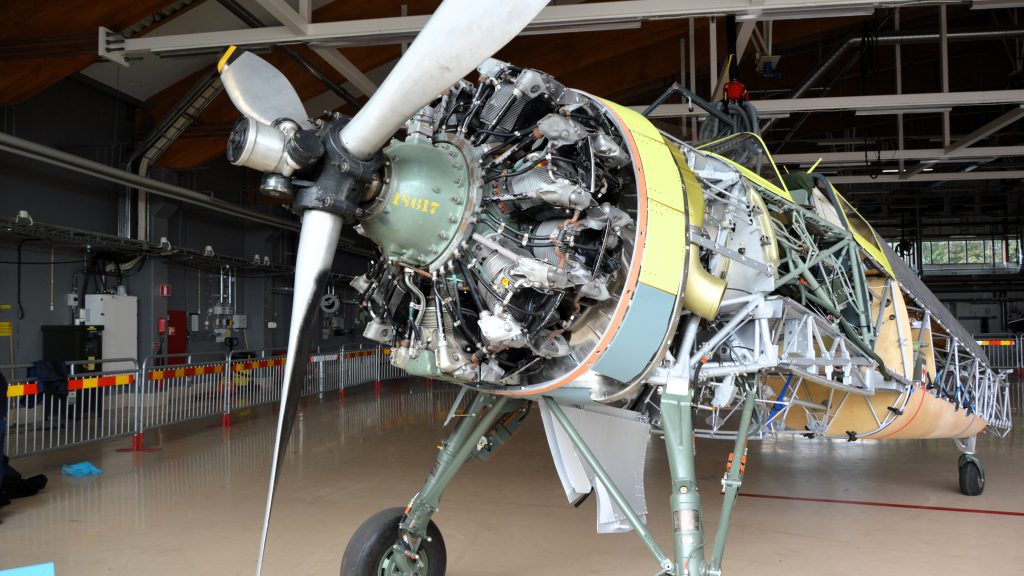
The FFVS J 22 emerged from rather different circumstances. With wartime restrictions making modern fighters increasingly difficult to obtain from abroad, and Saab already committed to other aircraft production, Sweden established a separate organization to develop and manufacture a new fighter. The resulting J 22 first flew in 1942 and entered service the following year, combining a steel-tube fuselage structure with extensive use of wood to conserve strategic materials. At Malmen, J 22A No. 22149 was displayed in partially restored condition, offering visitors a revealing look at the construction normally hidden beneath the aircraft’s skin. The aircraft will already be familiar to Vintage Aviation News readers: VAN featured the restoration project in June 2026. Owned by Svedinos Bil- och Flygmuseum and being restored by Warbirds of Sweden at Aeroseum near Gothenburg, 22149 is being restored with the ambitious goal of returning it to flying condition — an objective confirmed by the restoration team exhibiting the aircraft at Malmen. If successful, another important chapter of Sweden’s wartime aviation history will return to the air.
The Cold War Lineage
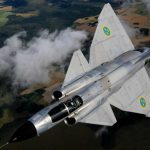
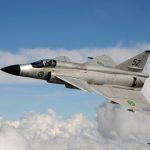
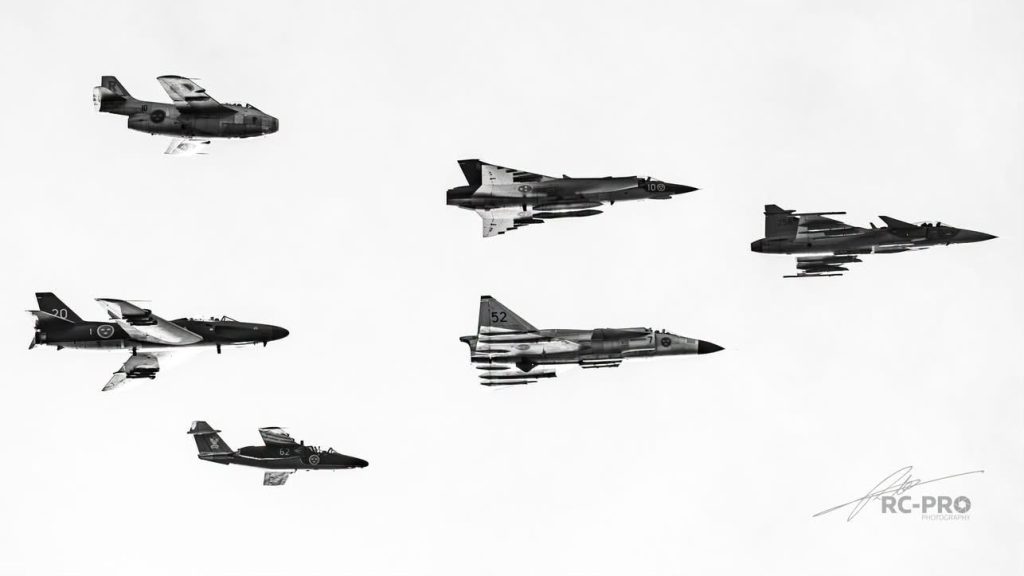
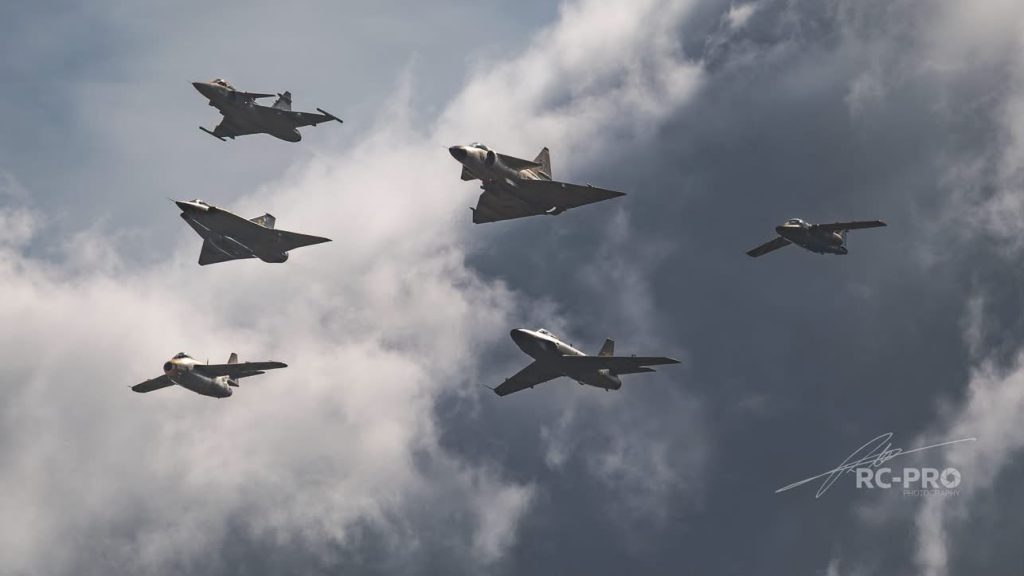
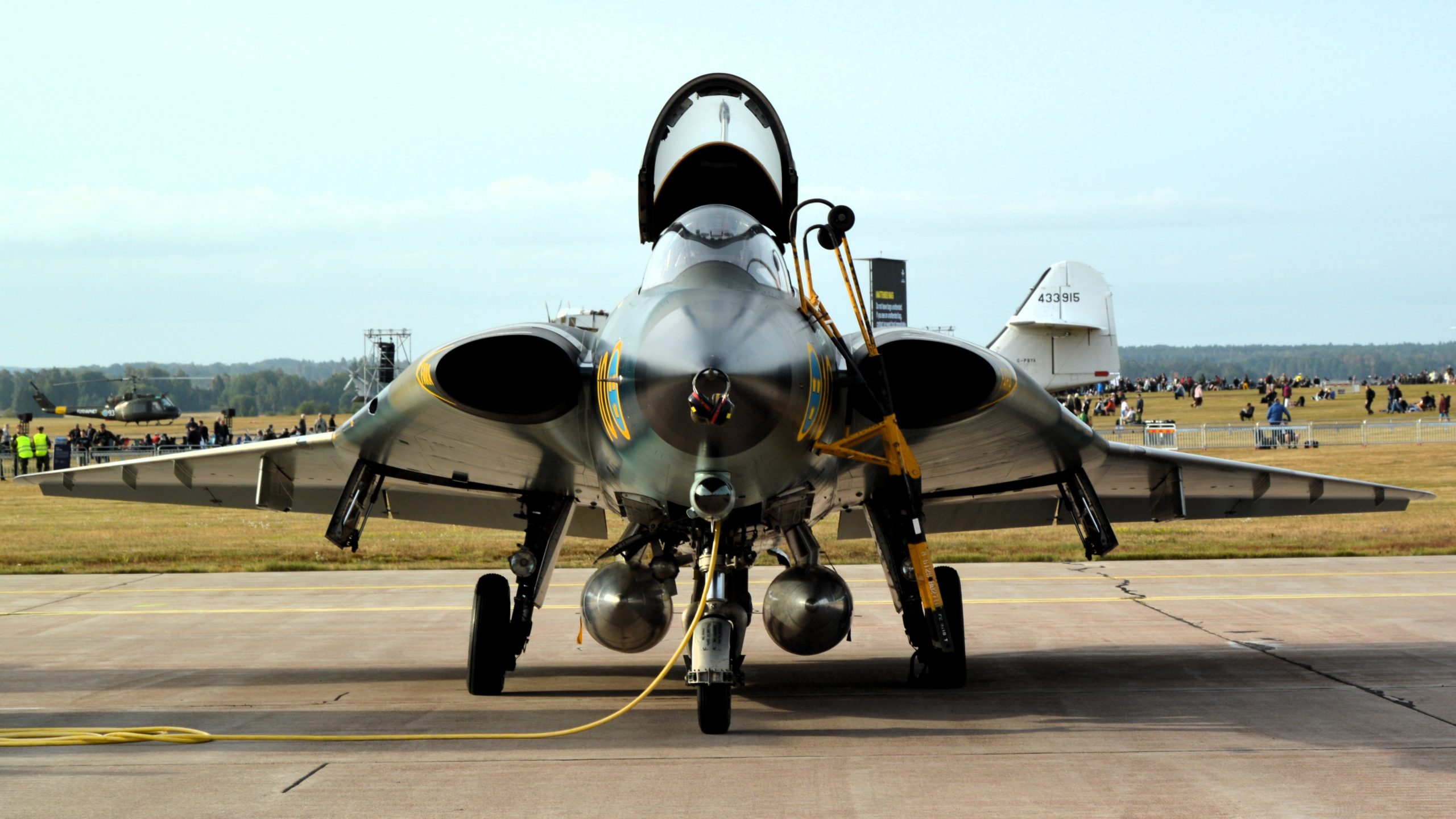
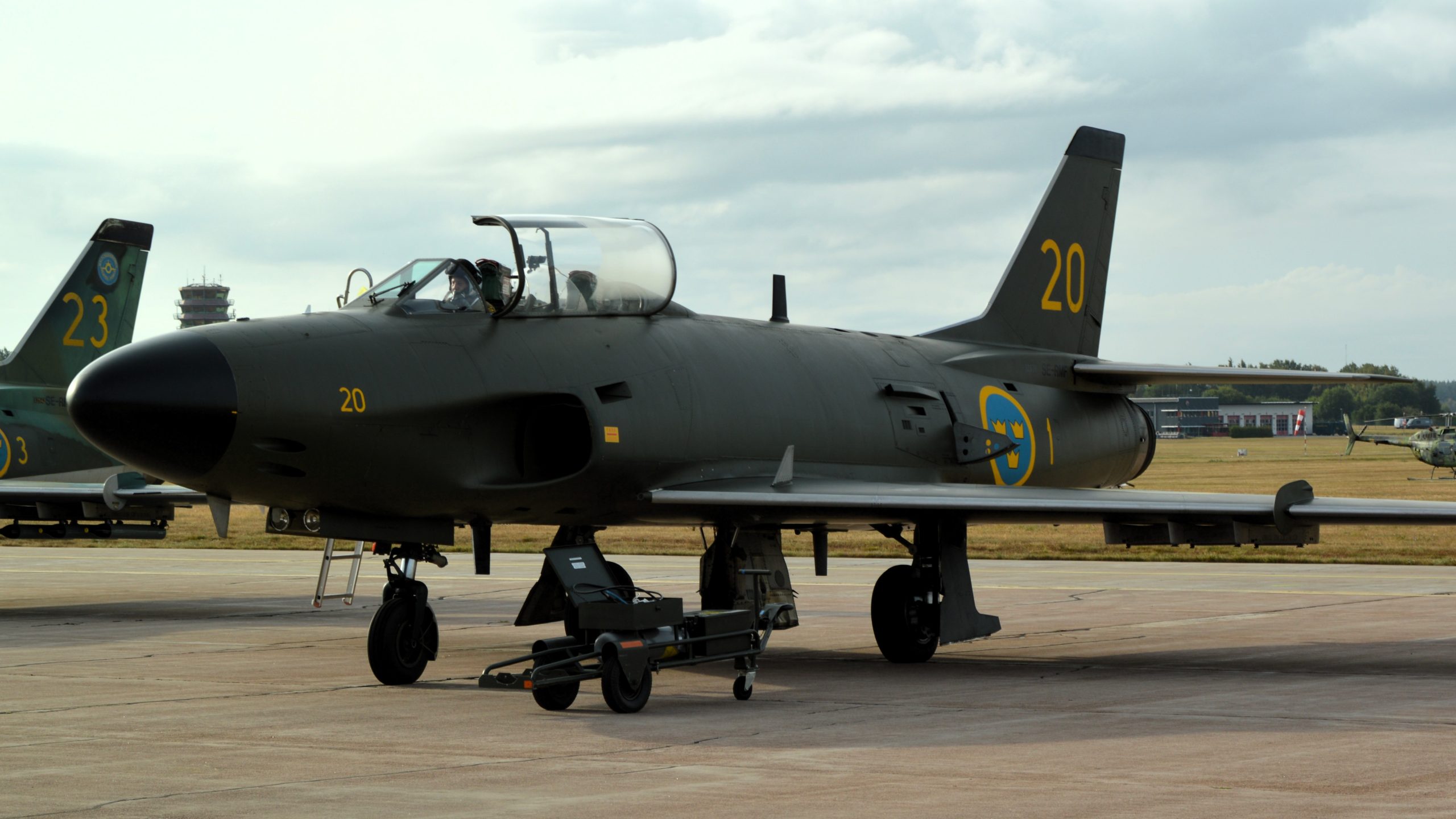
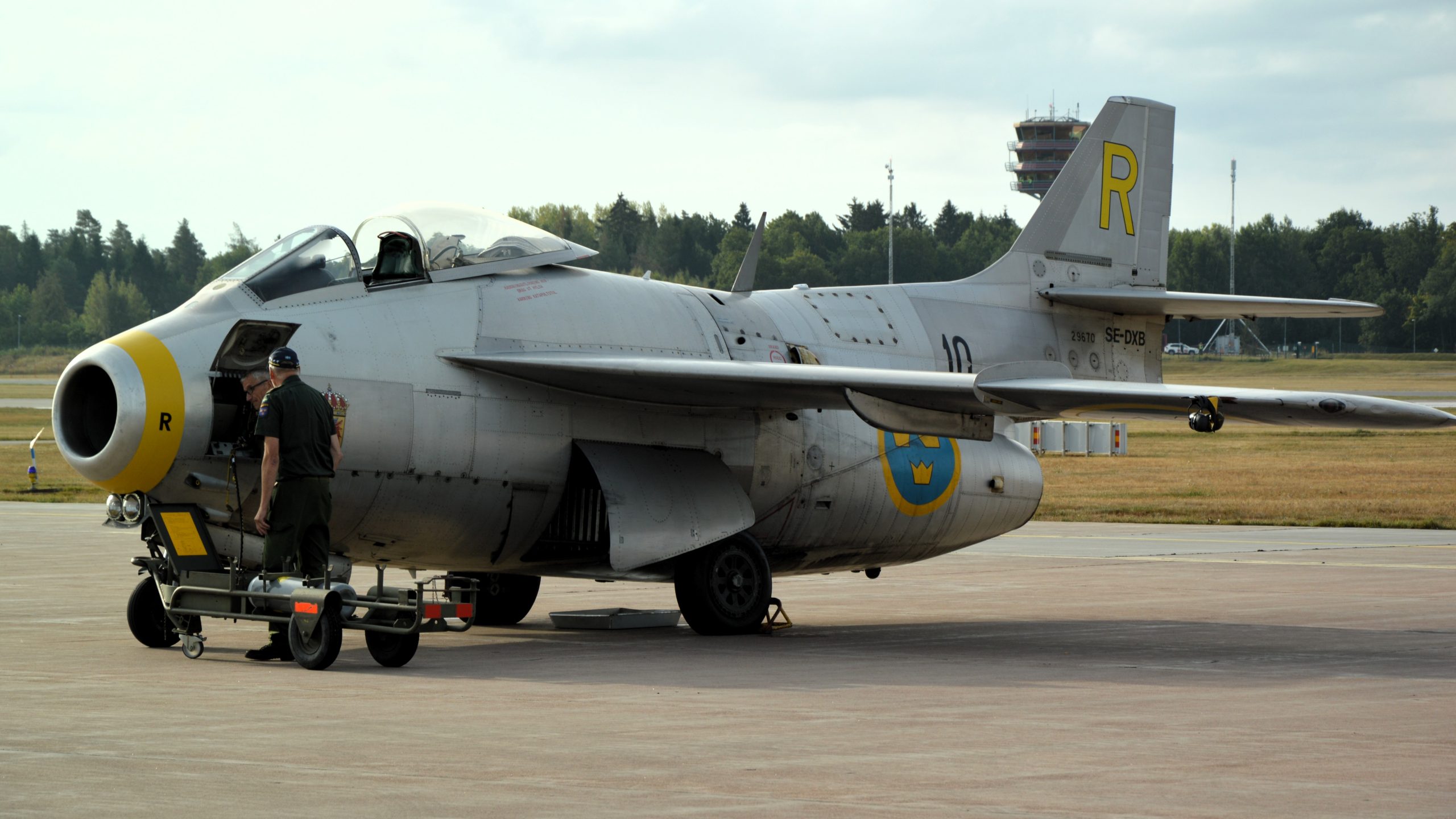
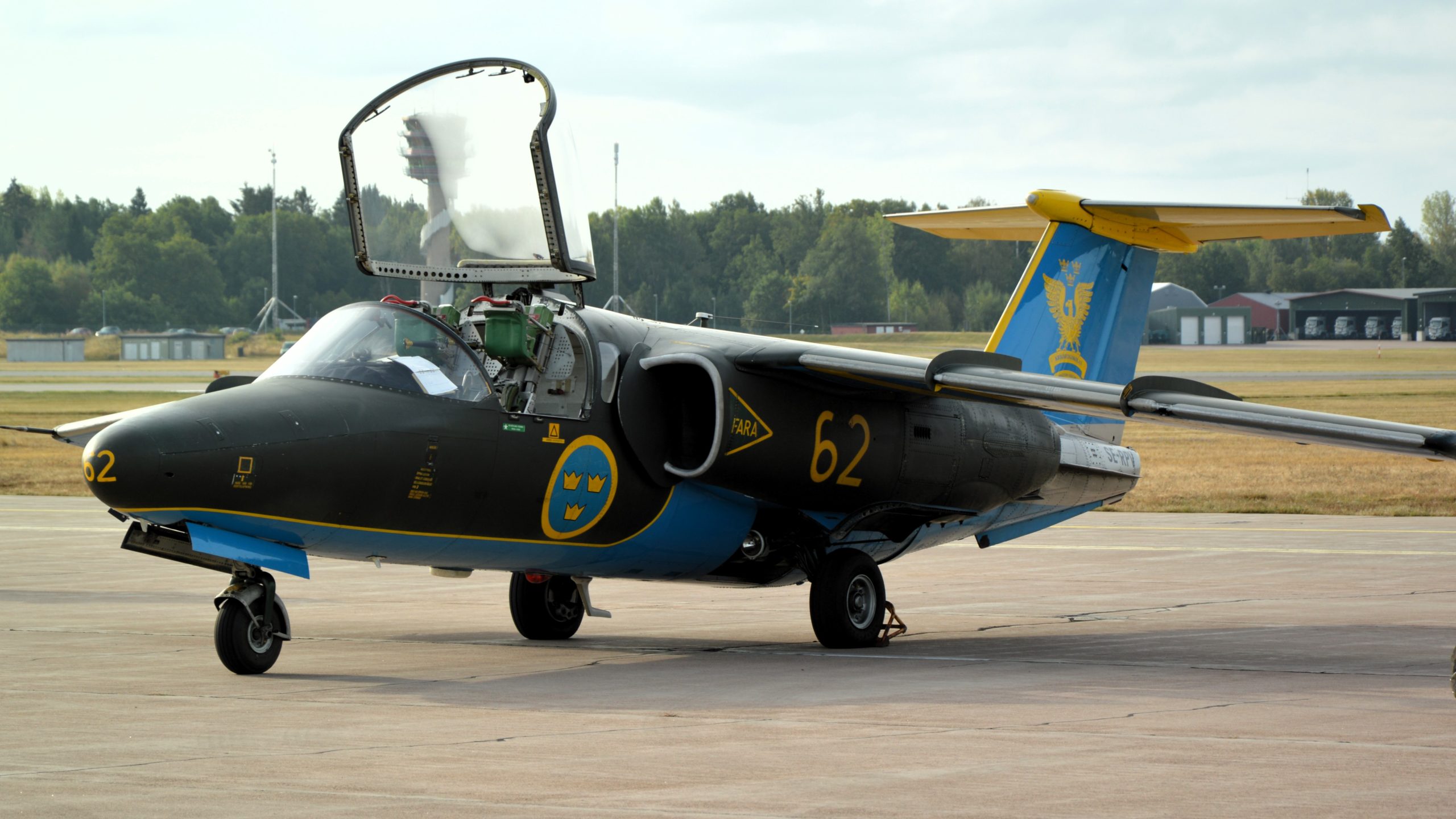
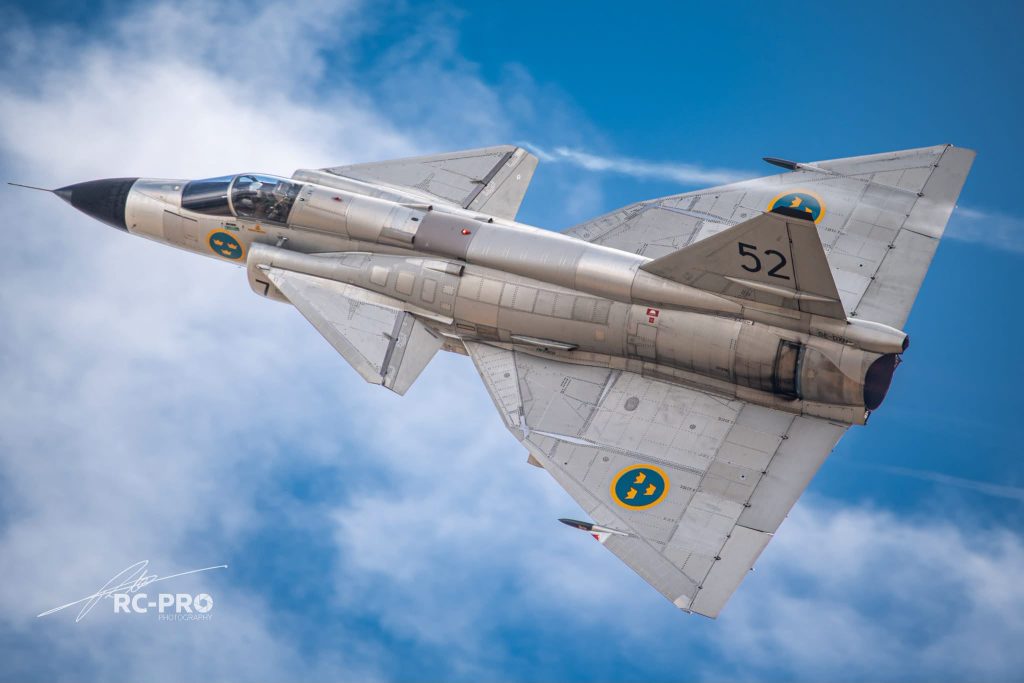
Sweden’s transition into the jet age was represented at Malmen by the de Havilland Vampire. Sweden became the type’s first foreign customer in 1946, with the aircraft entering Flygvapnet service as the J 28. The British-built Vampire gave the Swedish Air Force its first operational experience with jet fighters, providing an important bridge between the wartime generation and the Swedish-designed jets that followed. Perhaps the most striking demonstration of Sweden’s aircraft-development tradition came when six Swedish-designed jets appeared together over Malmen. Led by a JAS 39 Gripen, the formation brought together the J 35 Draken and 37 Viggen, followed by the Sk 60, J 32 Lansen and J 29 Tunnan — an extraordinary airborne timeline of Swedish military aircraft development.
(Image credit: Rich Cooper)
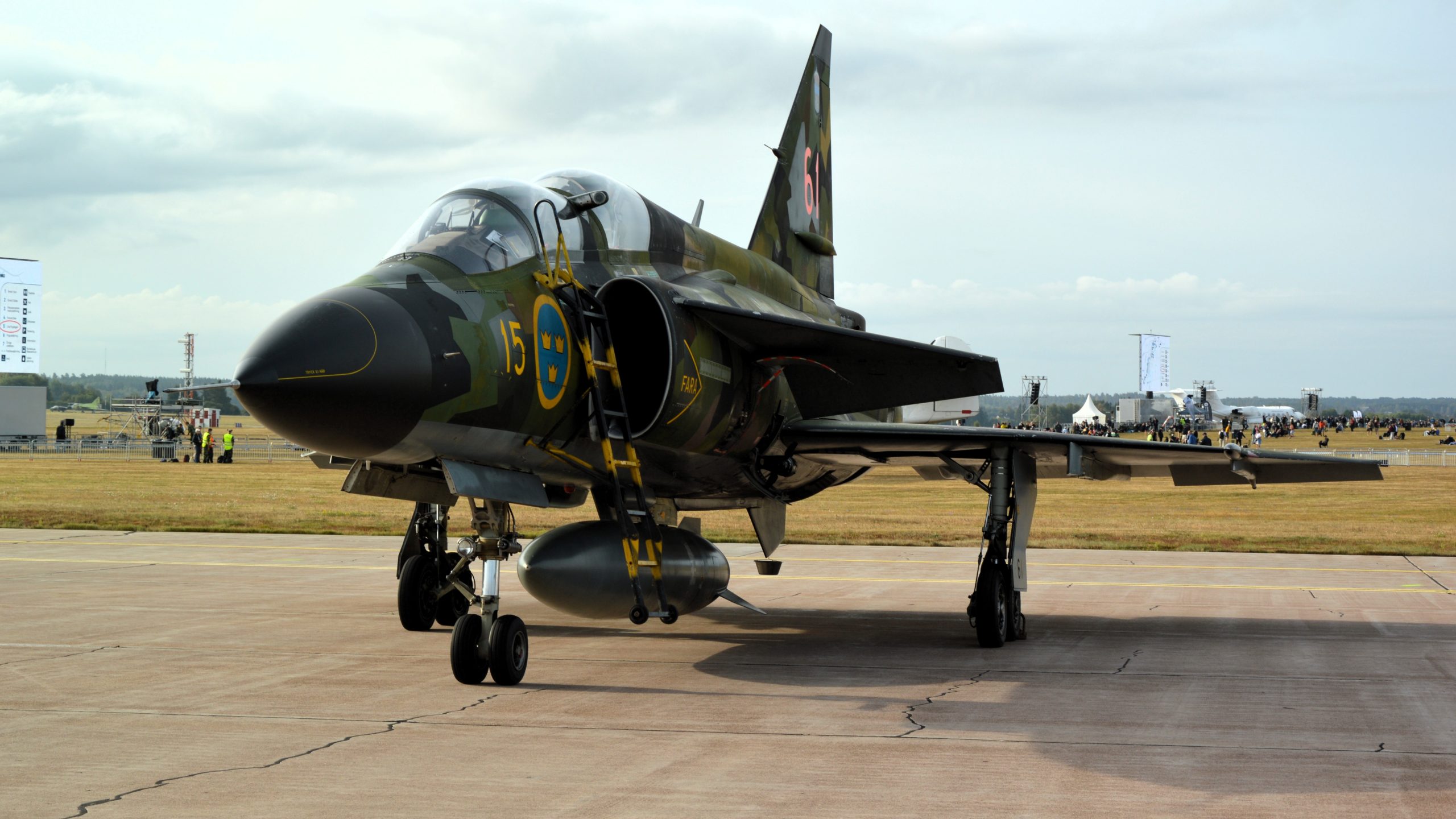
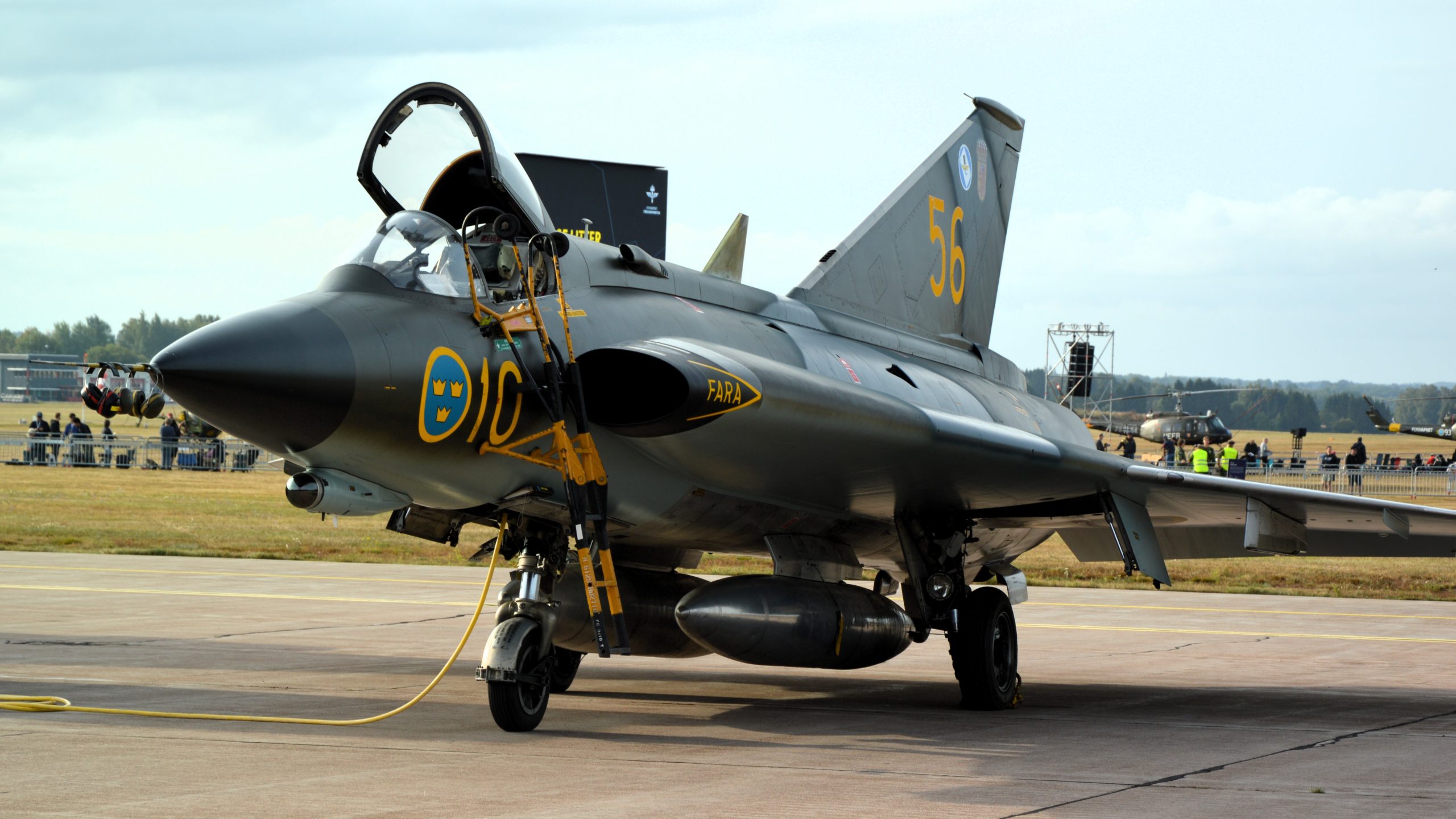
For the vintage enthusiast, the formation was particularly remarkable for bringing together so many surviving Cold War types. The swept-wing J 29 Tunnan, first flown in 1948, established Sweden firmly among the small number of nations capable of developing modern jet fighters in the immediate post-war era. The type also became one of the few Swedish-designed combat aircraft to see active combat service, deploying to the Congo in the early 1960s as part of Sweden’s contribution to the United Nations operation there. It was followed by the J 32 Lansen, the distinctive double-delta J 35 Draken, and ultimately the 37 Viggen, developed around distinctly Swedish requirements including dispersed operations from short sections of roadway. The Sk 60, meanwhile, served as Flygvapnet’s principal jet trainer for more than half a century.
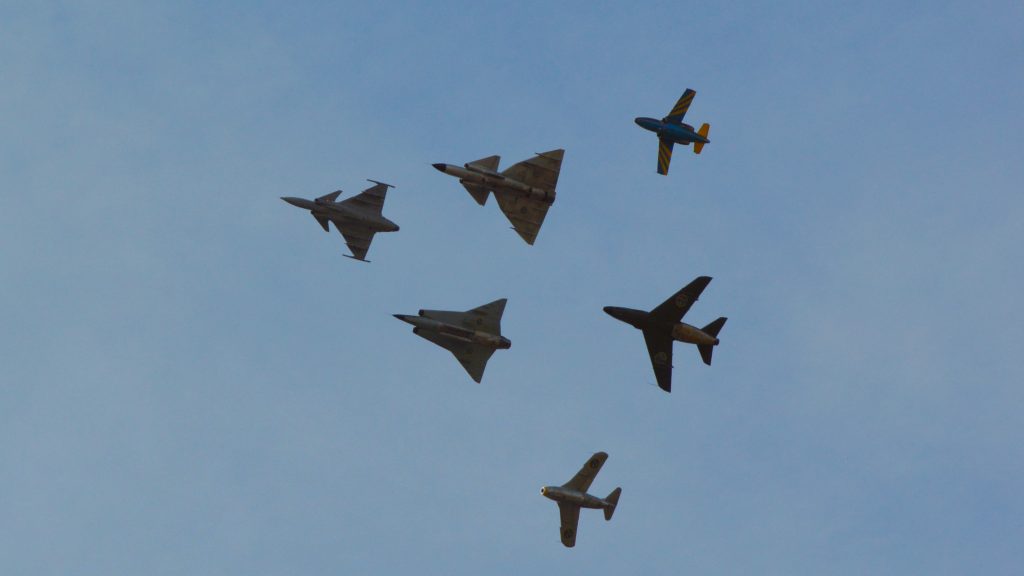
That such a collection of historic Swedish jets can still be seen in the air is largely thanks to the Swedish Air Force Historic Flight (SwAFHF), whose purpose is to preserve and fly aircraft types formerly operated by Flygvapnet. Its operational fleet includes the Tunnan, Lansen, Draken, Viggen and Sk 60, maintained and flown by volunteer pilots and technicians. Seeing so many of them airborne together, with the Gripen leading its predecessors over Linköping, provided one of the centenary weekend’s most powerful demonstrations that Sweden’s aviation heritage is not simply being preserved on the ground — it is still flying.
A Century in the Air
As a Malmslätt resident living within walking distance of Malmen, the airfield is part of my everyday surroundings. Aircraft arriving and departing overhead are a familiar sight, and aviation is deeply woven into the community around us. Many who live here work at Malmen, at Saab, or in the wider aviation community. For those of us who call Malmslätt home, the airfield and the aircraft operating from it are not something encountered only at an airshow—they are part of everyday life.
That made the scale of the centenary celebrations particularly powerful. Our normally familiar surroundings were transformed for the weekend as some 230,000 people came to Malmen. For all the disruption that inevitably brought to the local community, it was an honour to welcome visitors from across Sweden and far beyond to share in something that means so much to those of us who live here. To see aircraft representing more than a century of aviation take to the skies above the same active airfield was an extraordinary sight, and a genuine source of local pride.
(Image credit: Rich Cooper)
From the pioneering aircraft of aviation’s earliest years to Daisy, the Spitfire and Mustang, Sweden’s wartime designs and successive generations of Swedish jets, the weekend brought together chapters of aviation history ordinarily separated by decades. For one remarkable weekend at Malmen, they were not simply chapters in that history. They were back in the air over home.