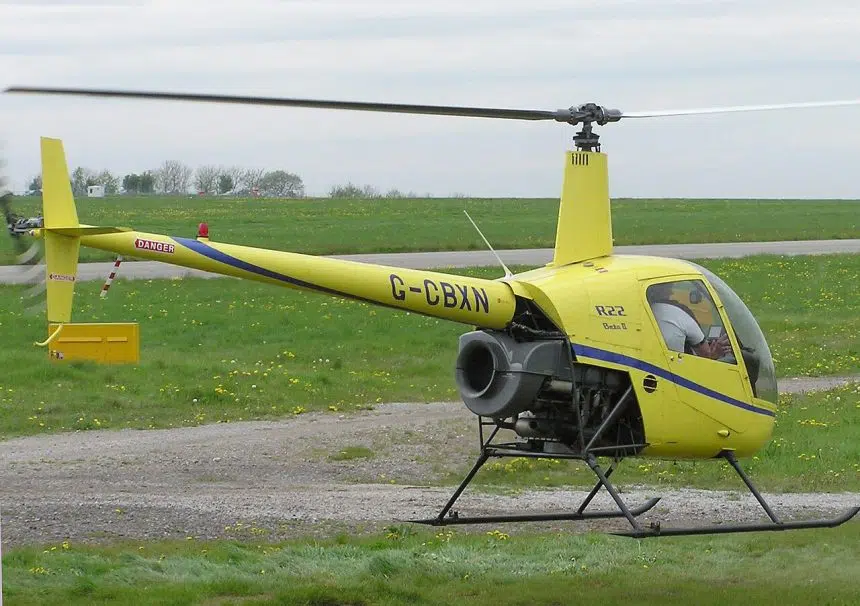

On this day in aviation history, 51 years ago (August 28, 1975), the Robinson R22 took flight for the first time. Designed by Frank Robinson, the two-seat light helicopter was developed around the idea of producing a simple and relatively affordable personal rotorcraft. The R22 would eventually become one of the world’s most recognizable light helicopters and a widely used primary helicopter trainer. Robinson began designing the R22 in 1973, with much of its subsequent flight testing conducted at Zamperini Field in Torrance, California. The aircraft utilized a lightweight steel-tube structure, two-bladed teetering main rotor, and piston engine. Another distinctive feature was its T-bar cyclic control, which eliminated the conventional pair of floor-mounted cyclic sticks. The R22 received FAA certification in March 1979 and entered production that year.

The R22 found widespread use in flight training, personal transportation, aerial photography, and livestock management. Its lightweight, low-inertia rotor system and sensitive controls also made proper training particularly important. The aircraft eventually became subject to specialized FAA training and endorsement requirements in the United States. More than 4,800 R22s had been constructed by 2019, while the basic design also provided the foundation for Robinson’s larger R44. The original R22 measured 28 feet 8 inches in length and had a 25-foot 2-inch main rotor diameter. Power came from a 124-horsepower Lycoming O-320 piston engine. The helicopter could cruise at approximately 110 mph, had a range of 241 miles, and a service ceiling of 14,000 feet. With a maximum takeoff weight of just 1,370 pounds, the R22 accommodated a pilot and one passenger seated side-by-side.