






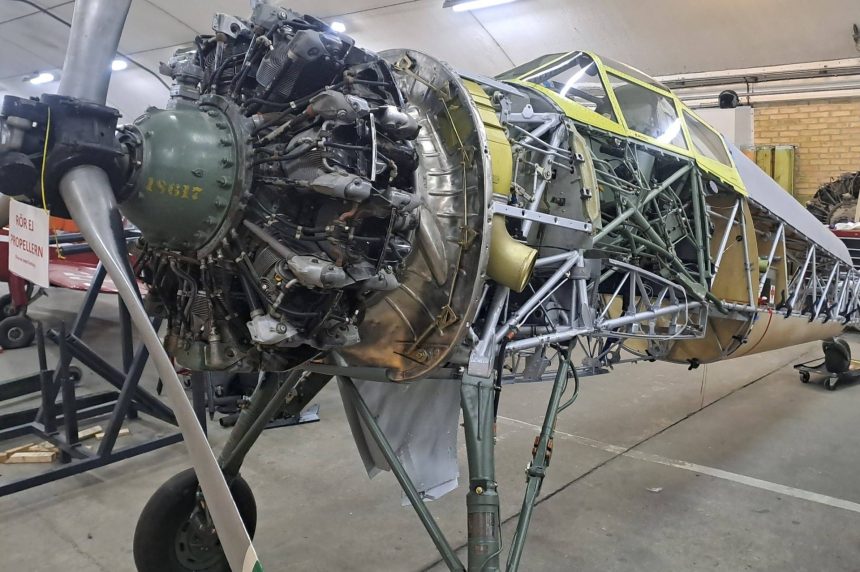

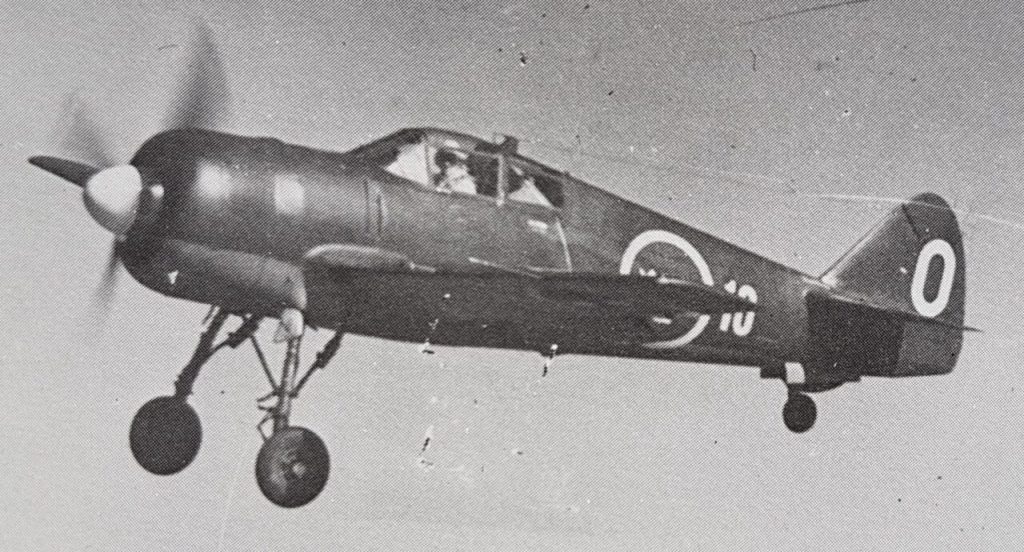
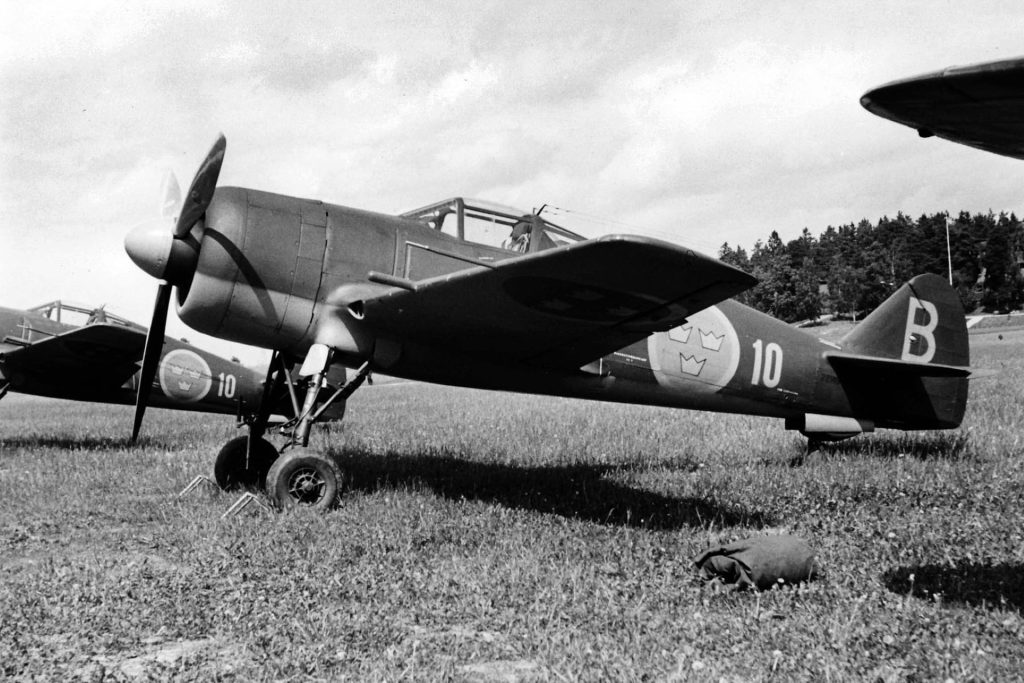
The need to uphold its country’s neutrality during World War II led the Swedish Air Force to develop the J 22, a wartime fighter that became one of the era’s most notable Swedish engineering accomplishments. In an effort to preserve the legacy of these incredible machines, Swedish restorers are now dedicating themselves to the task of bringing one of these planes back into the skies. Although little known outside of true aviation enthusiast circles, the FFVS J 22 can be considered the epitome of the World War II emergency fighter. With decent performance, the aircraft was also inexpensive, reliable, and well-armed, becoming not merely a stopgap solution, but a capable front-line fighter that proved to be a key component of the Swedish air defense system during the final years of WWII. Credited to Swedish aircraft designer Bo Lundberg, the early GP9 project (which would evolve into the J 22) presented the idea for a small mid-wing lightweight fighter based on a steel-tube framework covered by molded birch plywood panels—an approach adopted not for the sake of lightness and performance, but due to limitations on strategic materials resulting from Sweden’s strict policy of neutrality and isolationism during the conflict.
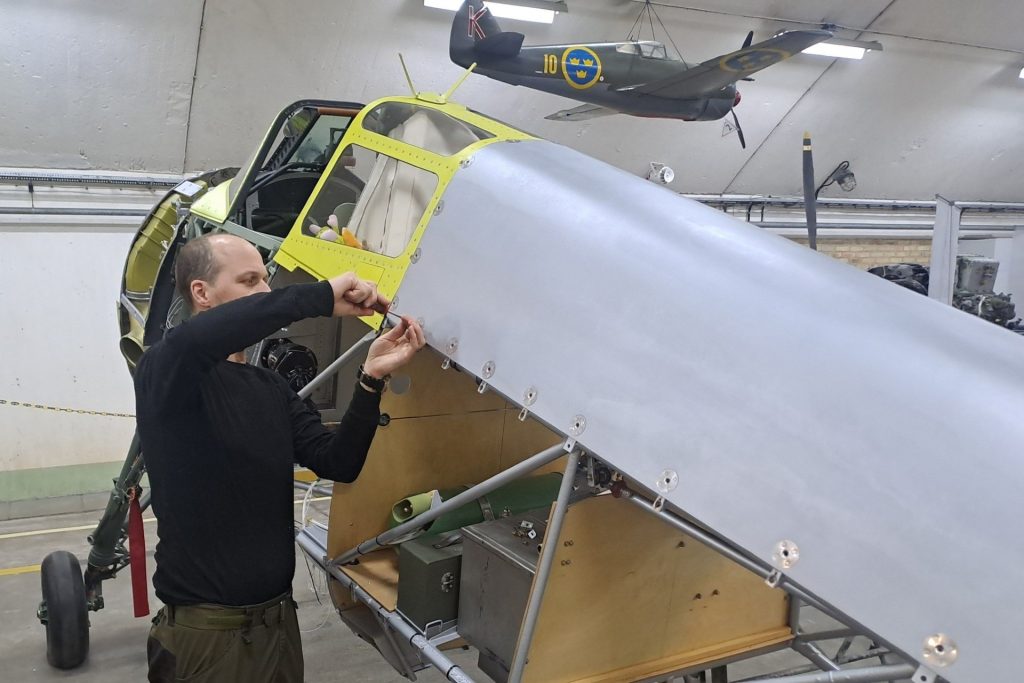
The wing was constructed in a similar manner, featuring a welded main spar, ribs, and plywood-covered surfaces. The landing gear retracted into the fuselage via a highly sophisticated mechanism, thereby providing a fully efficient aerodynamic wing. The ambition behind the project, which in its early stages seemed somewhat unrealistic, would eventually pay off in 1942, when the first J 22 took off at the FFVS (Flygförvaltningens Flygverkstad i Stockholm) facilities in Bromma, Stockholm. By 1945, when production of the model ceased, 198 J 22 A and J 22 B aircraft had been delivered to the Swedish Air Force (Flygvapnet). However, the very simplicity that had been the model’s trademark would prove to be its Achilles’ heel. Shortly after the conflict, the aircraft was deemed expendable by the Swedish Air Force. By the early 1950s, the J 22 had been phased out of the force’s inventory, with most examples deliberately destroyed to make way for a new era in military aviation.
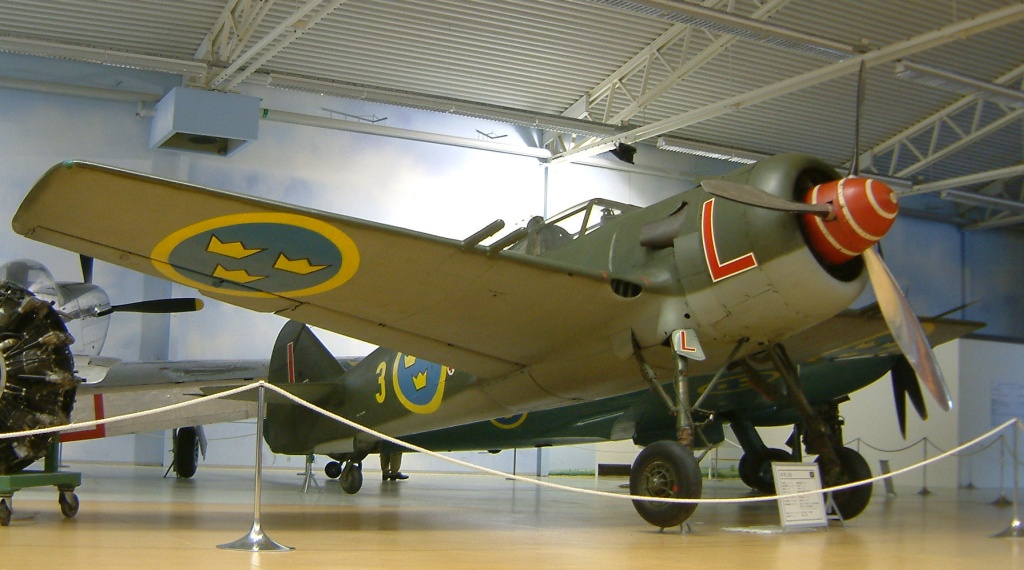
This is why, today, only two intact J 22s remain preserved in museums. Soon, however, this pair may welcome a new brother to the family, as Warbirds of Sweden Inc. (WoS) aims to restore J 22 A No. 22149 to flying condition. Before examining the restoration effort itself, it is worth looking at the remarkable history of the aircraft at the center of the project.
A Brief History of J 22 A No. 22149
Produced by FFVS, this aircraft was delivered to the Swedish Air Force on August 4, 1944, and was officially assigned to F 16 Wing (Uppsala) on August 16 of that year. Its primary task was to integrate into the Stockholm defense perimeter, particularly along the city’s northern and western approaches, performing this role without incident until early 1945. In May of that year, J 22 A No. 22149 (re-designated by the Swedish Air Force as J 22-1) was transferred to F 10 Wing (Ängelholm), already equipped with an STWC3 engine. The aircraft’s mission now consisted of conducting neutrality patrols over the Kattegat—the strait separating Denmark from Sweden—as well as actively protecting the critical industrial region of Skåne (Scania). During this assignment, the aircraft was involved in the only serious incident of its career when, during a crash landing, the left landing gear and the aircraft’s left wing root suffered moderate damage.
In 1947, the aircraft underwent a major overhaul, considerably extending its service life. Two years later, the J 22 A was transferred to its third and final unit, F 3 Wing (Malmslätt). Having been superseded as a front-line fighter following the introduction of aircraft such as the J 26 (P-51D Mustang) and J 28A (Vampire Mk.1), it was only a matter of time before J 22 A No. 22149 was officially retired. This occurred in November 1950 after the aircraft had accumulated 602 flight hours. Following its retirement, No. 22149 narrowly escaped the fate that befell most surviving J 22s. After being salvaged from the Karlsborg Arms Test Center in 1972, the aircraft underwent a static “renovation” and was exhibited in this form at the Svedinos Bil- och Flygmuseum (Ugglarp, Sweden) beginning in 1980. In 2005, an agreement was signed between the museum and the French Memorial Flight Association regarding the restoration of No. 22149 to airworthy condition. The aircraft was then shipped to France, where it was disassembled and fully cataloged. However, after only a few months, the project stalled due to costs until it was finally returned to Sweden by WoS in 2020.
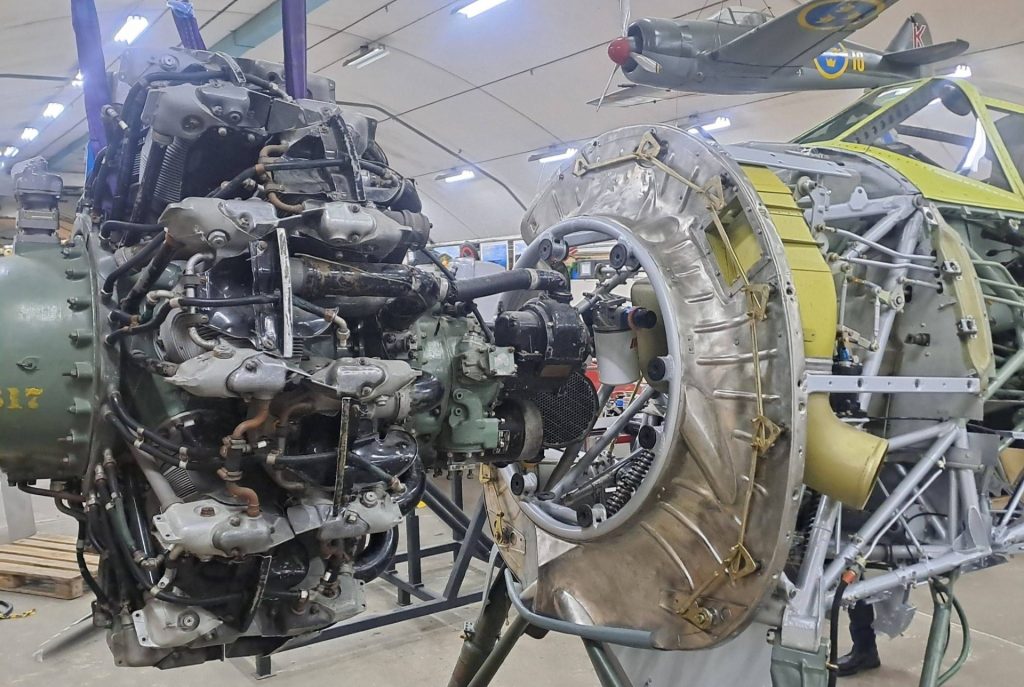
Since then, the team has been dedicated to the task of gradually piecing the puzzle back together, as explained by Svante Kihlén, one of the key figures behind WoS and spokesperson for the J 22 project: “When we arrived in France in 2019, the plane was completely dismantled. So, when we made our trip back to Sweden, we had most of the plane packed onto seven pallets, in addition to the fuselage structure, two wings, the engine, and the landing gear […] Now, six years later, we can say that we are 90% through the restoration.” Currently, the WoS team of mechanics and restorers has been focusing primarily on restoring the aircraft’s subsystems, particularly the engine compartment. “A few weeks ago, we installed an STWC3-G engine on the plane, which allowed us to complete the oil and electrical systems. We note, however, that in its final form, the plane will be restored with its original Pratt & Whitney. But for now, we had to use the STWC3-G as a stand-in, since the electrical system is one of the most important aspects for us, because the J 22, like the Focke-Wulf Fw 190, is mostly electrical. Well, aside from the brakes, there are no hydraulic systems in it,” commented Svante.
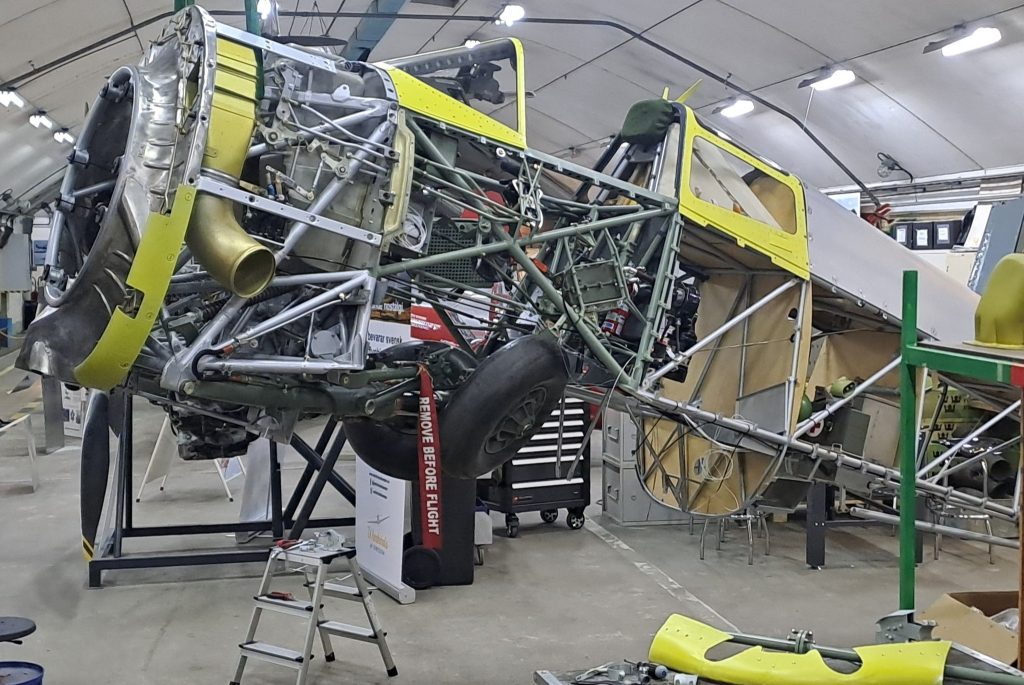
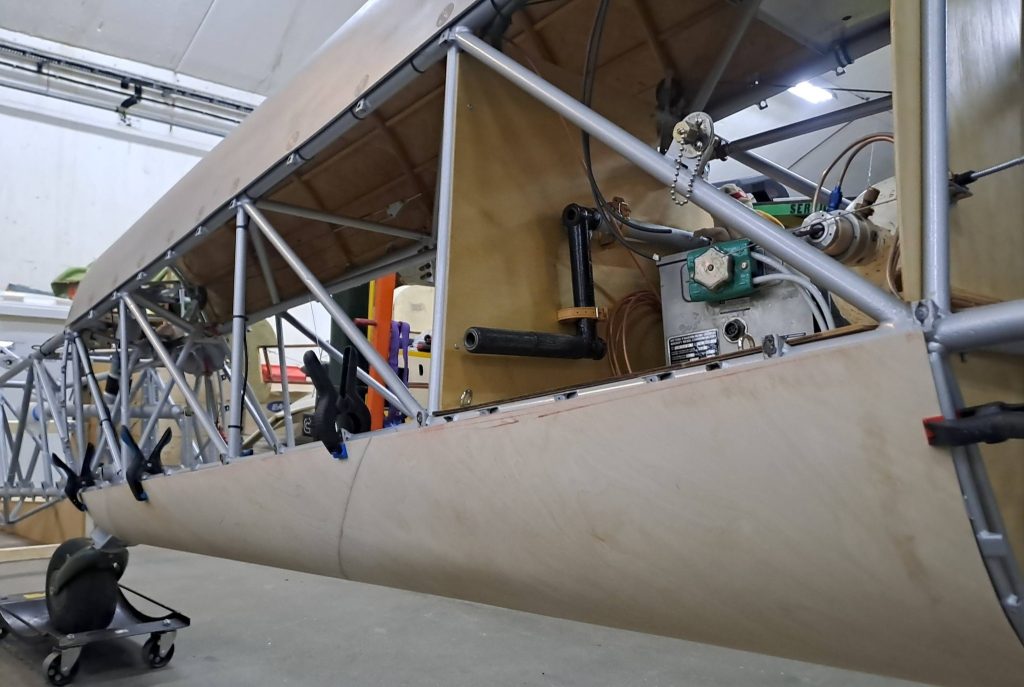
Svante also noted how the simplicity of the aircraft has contributed to the rapid pace of the restoration: “The more complex the airplane, the more complex the construction, the more complex your jigs and your processes must be. For example, we have been working for a few months on the plane’s stressed plywood panels, and we have the side ones ready to be fitted, while the bottom one will probably be finished by June.” However, he also mentioned that WoS faces major challenges ahead, given the ambitious task of restoring J 22 A No. 22149 to flying condition: “The original wing spar was so corroded and damaged that it was impossible to refurbish it to an acceptable level. But recently, the Swedish Air Force Museum was very kind to us, providing an original AGA spar for our project. But that’s one challenge in this process,” Svante continued, adding, “I think the most difficult part is integrating modern regulated avionics and other equipment into a historic airplane without compromising too much of its historic character. I can say that sometimes it’s difficult to balance the limitations of the J 22 A’s original construction with the modernity required today to allow it to fly.”
However, these are only minor setbacks, with Svante estimating that the aircraft’s completion and first flight will take place during the fall of 2027. It is important to note that throughout the restoration process, several institutions have provided direct support and assistance to WoS, including the Aeroseum, which is the official home of the J 22 A project; the Flygvapenmuseum (Swedish Air Force Museum); and the Svedinos Bil- och Flygmuseum itself, where the history of the J 22 restoration began.










An interesting aircraft, and unknown to me; I must make a point of looking up its performance figures.
And it would be nice to see it fly … in Europe!