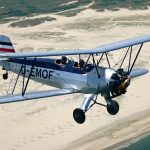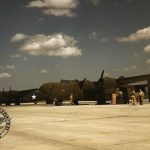

In 1924, American businessman Sherman Fairchild founded Fairchild Aviation Corporation in New York. It was created as the main company for Fairchild’s many aviation interests. It made the first US aircraft with a fully enclosed cockpit and hydraulic landing gear, called the Fairchild FC-1. At one time, it was also known as the Fairchild Aircraft Manufacturing Company. In 1925, Fairchild formed the Fairchild Engine Company by buying the Caminez Engine Company. In 1929, Sherman Fairchild bought a majority stake in Kreider-Reisner Aircraft Company, located in Hagerstown, Maryland. The company moved to Hagerstown in 1931. Fairchild designed a series of aircraft for aerial photography, starting with the Fairchild FC-1 and continuing to the Fairchild 71. The company created these planes because existing models could not fly steadily at high altitudes. In 1935, the US government hired Fairchild to conduct aerial photography surveys across the country to track soil erosion and its effects. Richard E. Byrd flew a Fairchild FC-2 during his expedition to Antarctica. During WWII, Fairchild made several aircraft, including the PT-19, PT-23, PT-26, and AT-21 Gunner trainers, as well as C-82 Packet transports and drones. The Fairchild AT-21 Gunner was a twin-engine trainer built in a former rayon mill in Burlington, North Carolina.

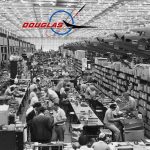
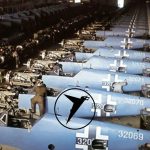
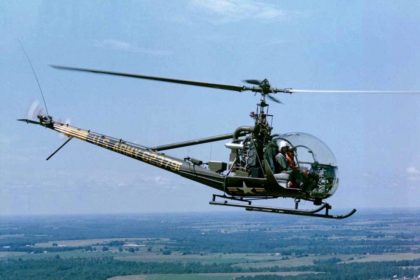
Fairchild also produced many Fairchild 24 aeroplanes (C-61/Argus) for the military, primarily as the Argus for the Royal Air Force, and continued to produce them for civilian use after the war. Fairchild ranked 73rd among US companies for the value of military production contracts during WWII. The C-82 Packet led to the development of the C-119 Flying Boxcar, a US military transport aircraft capable of carrying cargo, personnel, stretcher patients, and equipment. It could also drop cargo and troops from the air. The first C-119 flew in November 1947. By 1955, over 1,100 C-119s were built for the US Air Force, the Royal Canadian Air Force, and others. After they were retired from military service, many were converted into waterbombers. In 1949, Fairchild transformed the Chase XCG-20 glider into the C-123 Provider transport plane, which entered service in 1955. In 1954, Fairchild bought the American Helicopter Company, which included the XH-26 Jet Jeep. In 1956, the company obtained the rights to produce the Fokker Friendship and made 206 of them, naming them the Fairchild F-27 and Fairchild Hiller FH-227. During the 1950s, Fairchild was a major subcontractor for Boeing, building B-52 fuselage sections and wing panels. Later, the company made tail sections for the McDonnell-Douglas F-4 Phantom II and Grumman F-14 Tomcat, and stabilizers for the Space Shuttle orbiter. In 1964, the company bought Hiller Aircraft and became Fairchild Hiller. It produced the FH-1100 helicopter until 1973, when it sold the helicopter division back to Stanley Hiller. The company acquired the Republic Aviation Company in 1965.

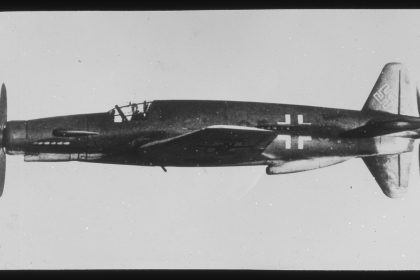
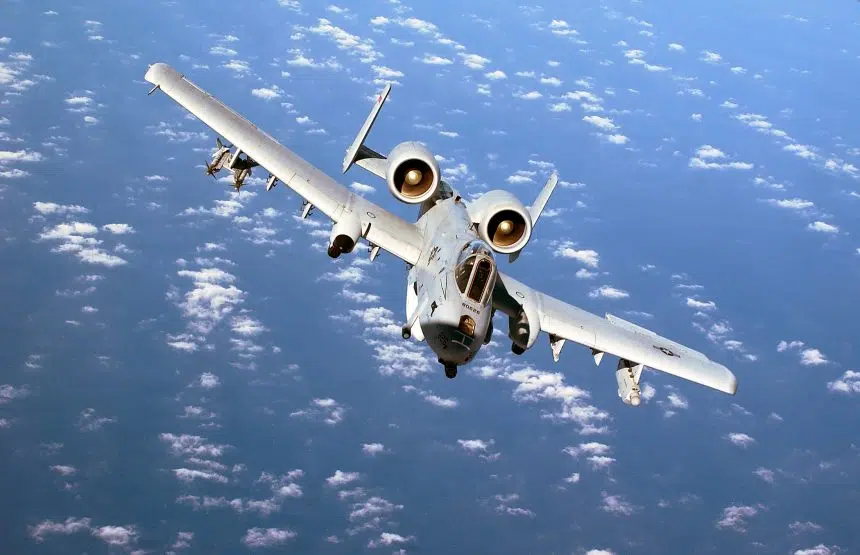
After the founder’s death, Fairchild changed its name to Fairchild Industries in 1971. It was a merger of several divisions and subsidiaries, including Fairchild-Hiller Corporation, Fairchild Aircraft Marketing Company, Fairchild Republic Division, Fairchild Aircraft Services Division, Fairchild Stratos Division, Fairchild Space and Electronics Division, Fairchild Aviation (Asia) Ltd., Burns Aero Seat Company, Inc., Fairchild Arms International, Ltd., Fairchild-Germantown Development Company, Inc., Fairchild Aviation (Holland) N.V., and S.J. Industries, Inc. Before 1971, Fairchild Industries referred to many of the companies started by Sherman Fairchild. After changing its name, the company acquired Swearingen and began producing the Fairchild Swearingen Metroliner. The commuter aircraft was successful and received orders from the US military as the C-26 Metroliner. In 1971, the company began working on the Fairchild Republic A-10 Thunderbolt II in Maryland. It won over the rival Northrop YA-9 in the A-X competition, leading to a production run of 716 aircraft. The company also developed the T-46 jet trainer to replace the old Cessna T-37 Tweet trainer, but the Air Force did not accept it due to performance problems. In 1996, the company acquired Dornier’s civil assets and renamed itself Fairchild Dornier. In 1998, the company began making the Dornier 328 under a license from Deutsche Aerospace AG (DASA). In December 1999, Fairchild Aerospace Corporation was bought by the German insurance company Allianz A.G. and the US investment group Clayton, Dubilier & Rice Inc. for $1.2 billion. In 2003, M7 Aerospace bought Fairchild’s assets and moved the company to San Antonio. On December 15, 2010, the US branch of the Israeli defense contractor Elbit Systems purchased M7 Aerospace. Now, M7 Aerospace does not manufacture aircraft but instead focuses on aerospace parts and support services.